0% read
Bio Protocol
Bio Protocol
Bio Protocol is a decentralized science (DeSci) platform designed to function as a financial layer for biotechnology research and development. It enables communities, including scientists, patients, and investors, to fund, govern, and co-own new therapeutics and scientific innovations through entities known as Biotech Decentralized Autonomous Organizations (BioDAOs). [1] [2]
Overview
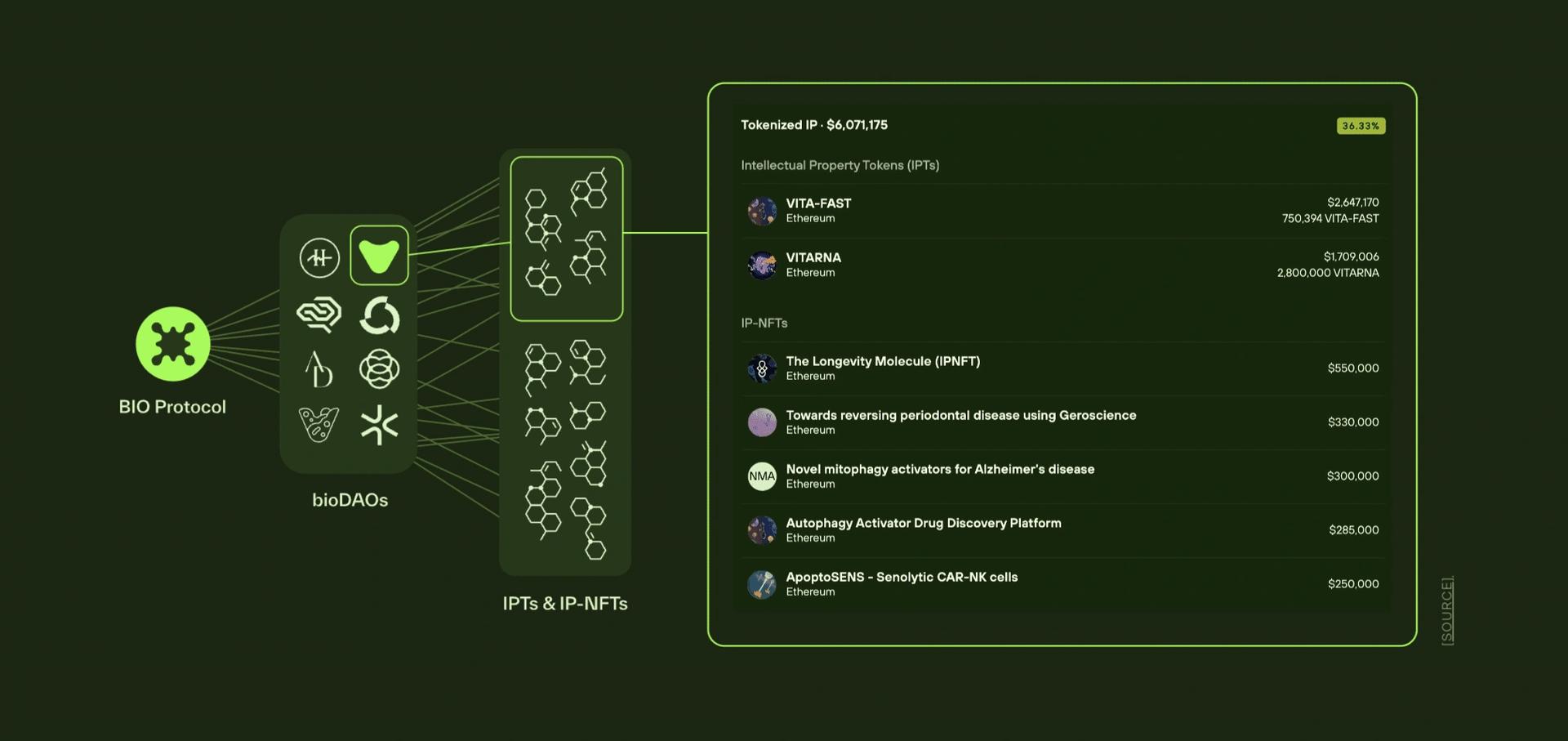
Bio Protocol aims to address funding and accessibility gaps present in traditional scientific and pharmaceutical development. The platform operates as a decentralized marketplace that connects researchers and their projects with a global pool of capital and talent. By tokenizing scientific intellectual property (IP) and research projects, it allows for community-driven funding and governance, creating an alternative to conventional venture capital and institutional grants. The core mission is to accelerate the commercialization of promising scientific research, particularly in underfunded areas such as rare diseases, longevity, and women's health. [1]
The protocol is built around a network of specialized BioDAOs, each focusing on a specific therapeutic area or research field. These DAOs function as independent, community-led organizations that source, fund, and manage research projects. The platform provides the infrastructure for these DAOs to launch, raise funds, and manage their assets on-chain. This model is intended to make early-stage biotech investment more accessible to a broader audience and to empower patient communities to take an active role in the development of treatments for their conditions. [2]
In 2025–2026, Bio Protocol began rolling out an AI-enabled research layer centered on Scientific AI Agents (BioAgents) and its AI scientist, BIOS, to help automate literature review, analysis, hypothesis generation, and to connect agentic workflows to funding and commercialization rails on Bio. [3]
History
The Bio Protocol initiative was first announced by Molecule in September 2022 as a biotech‑DAO accelerator and DeSci launchpad, positioning Bio as a DAO‑of‑DAOs with a program model, milestone‑based grants, and integrated IP tooling. [4]
Key milestones include:
- July 2021: VitaDAO is initiated (contextual origin of the BioDAO model). August 2021: first on‑chain scientific funding with the University of Copenhagen (ecosystem context). December 2022: Pfizer Ventures participates in a $4.1M funding round for VitaDAO. [1]
- May 25, 2024: “Introducing BIO” announces the BIO token as the native protocol token for governance, funding, and liquidity across BioDAOs and tokenized IP. [5]
- November 2024: Binance Labs makes a strategic investment in Bio Protocol, its first investment in the DeSci sector; the BIO Genesis event raises over $33 million. [1]
- Q1 2025: Bio Protocol V1 launches, introducing the Launchpad and Liquidity Engine. [1]
- Q3 2025: Bio Protocol V2 is introduced with the BioAgent Launchpad, BioXP, and updated Liquidity Engine; V2 features began rolling out around August 2025 alongside agent initiatives. [6] [3]
- January–March 2026: Bio publishes updates on its AI Scientist (BIOS), agent swarms and virtual biotech labs, and “agent‑paid science,” including on‑chain micropayments for agent services and commissioning of wet‑lab experiments via cloud labs. [3] [7]
By November 2023, the aggregate market capitalization of tokens associated with BioDAOs surpassed 33 million. The first version of the Bio Protocol platform, including its Launchpad and Liquidity Engine, went live in the first quarter of 2025. The project has announced and begun implementing a Scientific AI Agent Launchpad as part of its V2 platform upgrades. [1] [3]
Technology
The Bio Protocol's architecture is composed of several key components designed to facilitate the lifecycle of scientific research funding and development. [2]
- Curation and Funding: The protocol uses a community-driven curation mechanism where holders of the native BIO token can evaluate and select scientific projects for inclusion in the network. Participants who contribute to this curation process may receive priority access to investment opportunities in these projects through fundraising events called "Ignition Sales." This system is designed to create a meritocratic selection process and allow individual investors to participate in early-stage funding rounds. [1]
- Liquidity Management: An automated liquidity management system is integrated into the protocol to ensure stable funding flows for research projects. This feature manages trading pairs and builds protocol-owned liquidity, allowing research teams to focus on scientific work without managing complex financial operations. [2]
- Bio/acc Rewards System: A rewards program, known as Bio/acc, incentivizes progress and milestone achievement. Projects within the ecosystem can receive bonus rewards in BIO tokens for reaching significant goals, such as initiating clinical trials, developing new treatments, or securing patents. [2]
- Meta-Governance: The BIO token provides holders with meta-governance capabilities, allowing them to participate in decision-making across the various BioDAOs within the ecosystem. This creates an interconnected network where the community can influence the direction of multiple research initiatives. [2]
Scientific AI Agents
Bio is developing a platform for decentralized Scientific AI Agents to automate and accelerate key parts of the R&D pipeline. BIOS, the protocol’s AI scientist, orchestrates specialized subagents to perform iterative “plan–execute–refine” research, including literature synthesis, data analysis, novelty/IP checks, and in‑silico simulations, with human‑in‑the‑loop controls and persistent memory. Agents are paid per query via the x402 payment rail, enabling “agent‑paid science” and agent‑to‑lab micropayments in USDC. [3] [7]
Recent initiatives include:
- AI scientist swarms and agent‑run virtual biotech labs that organize role‑based workflows, conduct structured peer review, and can commission cloud‑lab experiments with results fed back into agent memory.
- Applied programs such as peptide drug discovery and domain agents (e.g., longevity), and consumer health use cases like DermaLabs’ skin science studies coordinated with agentic research and longitudinal tracking.
- Planned and partially launched features under V2 include a Scientific AI Agent Launchpad and APIs for integrating external agents and apps with BIOS and Bio’s economic rails. [3] [7]
Tokenomics
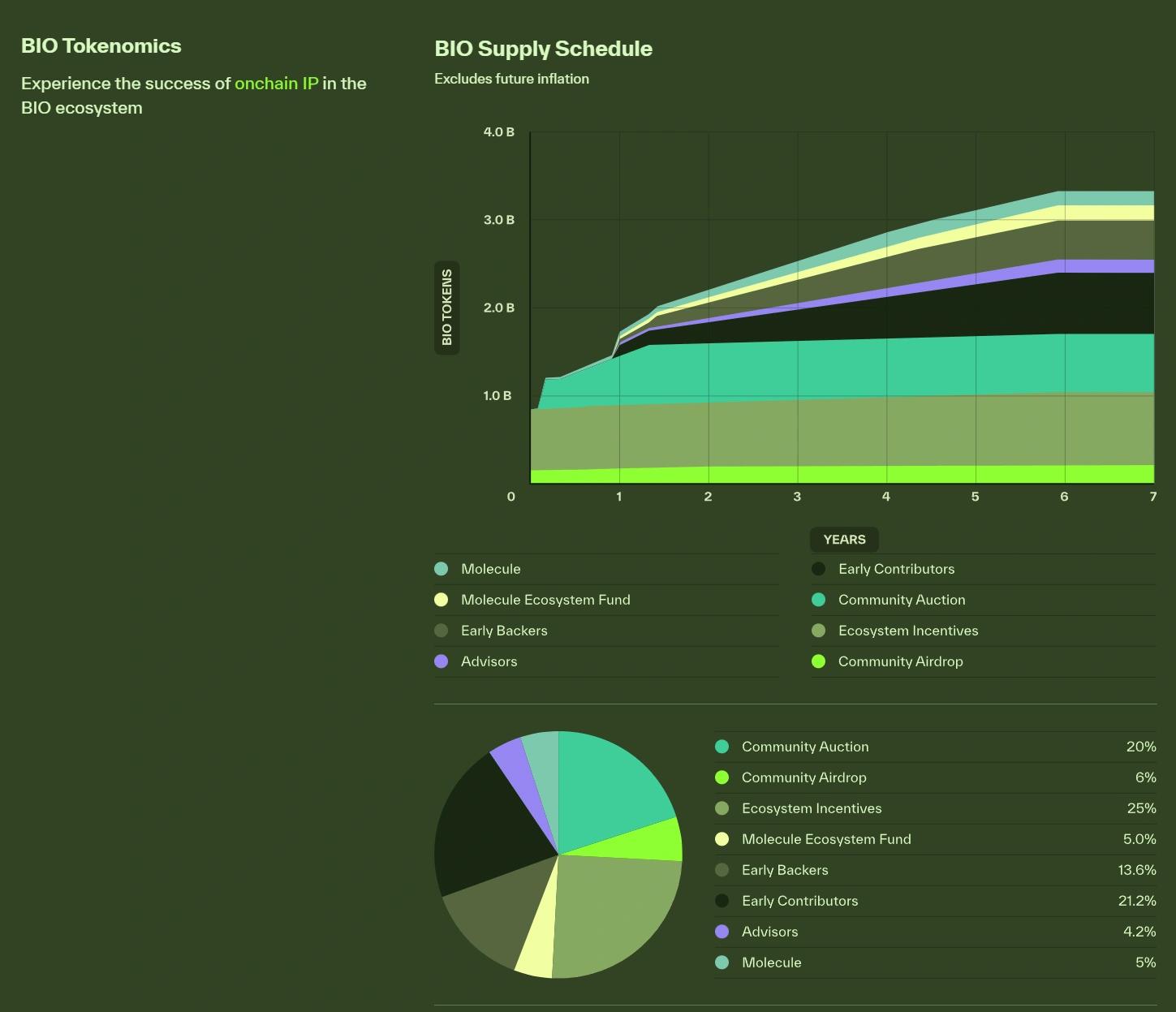
The native utility and governance token of the Bio Protocol is BIO. It is central to the platform's economic model and governance structure. The token has a maximum supply of 3.32 billion. [8]
The primary utilities of the $BIO token include:
- Governance: Token holders can vote on protocol-level decisions and signal support for specific BioDAOs and research projects.
- Access: Holding and staking BIO provides users with access to the BioXP rewards system, which in turn grants whitelisted access to the initial funding rounds (Ignition Sales) of new projects.
- Staking: Users can stake $BIO tokens to earn BioXP, which quantifies their contribution and engagement within the ecosystem. [8]
The protocol generates revenue through two main channels. First, it receives a 6.9% allocation of the tokens from each new project launched on its platform, in exchange for which it provides a grant of $100,000. Second, it earns fees from its automated systems that manage token trading and liquidity pools. All revenue generated flows into the BIO treasury, which is used to reinvest in new projects and further develop the platform, creating a self-sustaining economic cycle. A portion of the total BIO supply (approximately 4%) is allocated to the Bio/acc rewards program to incentivize scientific achievements across the network. [8] [5]
Ecosystem and Use Cases
The Bio Protocol serves as a foundation for a growing ecosystem of specialized BioDAOs, each targeting a distinct area of scientific research. These organizations leverage the protocol's infrastructure to fund and advance their respective fields.
Notable BioDAOs within the ecosystem include:
- VitaDAO: Focuses on funding and commercializing longevity and aging research.
- AthenaDAO: Dedicated to advancing research in women's health and reproductive medicine.
- PsyDAO: Supports progress in psychedelic science and related therapeutic applications.
- ValleyDAO: Funds research in synthetic biology with applications in environmental sustainability.
- HairDAO: An organization focused on finding and funding solutions for hair loss.
- CryoDAO: Supports research and development in the field of cryopreservation.
- Cerebrum DAO: Aims to advance brain health and prevent neurodegenerative diseases.
- Curetopia: Focuses on tackling rare diseases by uniting patient communities and researchers.
- Long COVID Labs: Works to accelerate the development of treatments for Long COVID.
- Quantum Biology DAO: Funds the development of advanced tools, such as quantum microscopes, for biological research.
In 2025–2026, Bio highlighted agent‑powered research and commercialization pathways alongside new consumer and translational programs. Examples include DermaLabs’ K‑beauty‑informed skin science studies using longitudinal AI‑assisted skin scans and Biofy commerce rails; BioAgent “deep research” features enabling persistent, multi‑run investigations; peptide drug discovery pipelines; and virtual biotech labs coordinating agentic research and wet‑lab commissioning. Bio also expanded BIO to BNB Chain to bring Launchpad, Liquidity Engine, and BioAgents to that ecosystem. [9] [10]
These organizations and initiatives demonstrate the protocol's application across a wide range of biotechnology and health sectors. [1]
Partnerships and Backers
Bio Protocol and its ecosystem projects have secured backing from a variety of venture capital firms and strategic partners in both the crypto and biotech industries. Key backers include 1kx, 50y, YZi Labs, and Northpond Ventures. The protocol has also received strategic investments from Binance Labs and has established a notable partnership through VitaDAO with Pfizer Ventures. [1]
Bio originated from Molecule’s DeSci work, with the program model and early BioDAOs announced via Molecule in 2022. The project maintains public company and ecosystem profiles on LinkedIn, Crunchbase, and X. [4] [11] [12] [13]
Team
The Bio Protocol team consists of professionals with backgrounds in tokenomics, research and development, product management, law, and marketing.
Core Team
- Paul Kohlhaas: Tokenomics
- James Sinka: R&D, Community
- Jose Pinto: Legal Counsel
- Clemens Ortlepp: Product
- Nate Hindman: Growth
- Stefano Glauser: Operations
- Alex Dobrin: Marketing
- Lukas Weidener: Operations
- Elliott Brunet: Tech
- Erik Van Winkle: Operations
Advisors
- Tyler Golato: Research Dealflow
- Vincent Weisser: AI + Research
- Beata Baranowska: Operations
- Jesse Hudson: Regulatory
- Schmackofant: Tech (IP-Tokens)
The team is supported by a broader group of contributors and advisors specializing in areas like artificial intelligence, decentralized finance, and bio-machine learning. [1]
See something wrong?
Average Rating
No ratings yet, be the first to rate!
How was your experience?
Give this wiki a quick rating to let us know!
Edited By
On July 16, 2026. 17:22 UTC
Edit summary:
Updated wiki content, adjusted tags: removed Protocols, added Infrastructure (Ethereum, Solana kept), changed category to Projects & Protocols