New

Integrate expert-curated crypto & blockchain knowledge into your app with the upcoming IQ.wiki API.

0% read

Fluid Protocol

Fluid Protocol

Fluid is a protocol developed from experience building infrastructure, combining a shared Liquidity Layer with lending, borrowing, and functionality. The protocol introduces mechanisms such as Vaults, Smart Collateral, and Smart Debt to connect lending and trading activities within a unified liquidity system. [13]

Overview

Fluid is a protocol developed by the team that provides a shared liquidity infrastructure for lending, borrowing, and applications. Rather than operating as a standalone lending protocol, Fluid is built around a common Liquidity Layer that pools liquidity across multiple applications, allowing new protocols to share the same liquidity rather than fragmenting capital across separate markets. The Liquidity Layer manages deposits, withdrawals, borrowing, utilization rates, and automated borrowing limits, while individual protocols implement their own application logic on top of this shared infrastructure.

The protocol includes three primary components: a Lending Protocol, a Vault Protocol, and a Protocol. The Lending Protocol provides -compatible lending markets for depositors, while the Vault Protocol enables collateralized borrowing with features such as interest-bearing , configurable loan-to-value (LTV) ratios, and a engine designed to reduce costs and partially liquidate positions rather than fully closing them. The Protocol introduces the concepts of smart collateral and smart debt, allowing users to use collateral or outstanding debt as liquidity in pools and integrating lending and trading functions into a single system.

Fluid also incorporates automated security mechanisms within its Liquidity Layer, including dynamically adjusted borrowing and supply limits that restrict unusually large transactions while allowing routine activity to continue. The protocol uses a pricing system that combines data from and to validate asset prices for liquidations and reduce the risk of price manipulation. Governance is managed via the token, which determines protocol parameters, including interest rate models, fees, borrowing limits, protocol configurations, and incentive programs. The architecture is intended to provide a modular foundation on which additional applications can be developed while sharing a common liquidity and risk-management framework. [1] [2]

Features

DEX Protocol

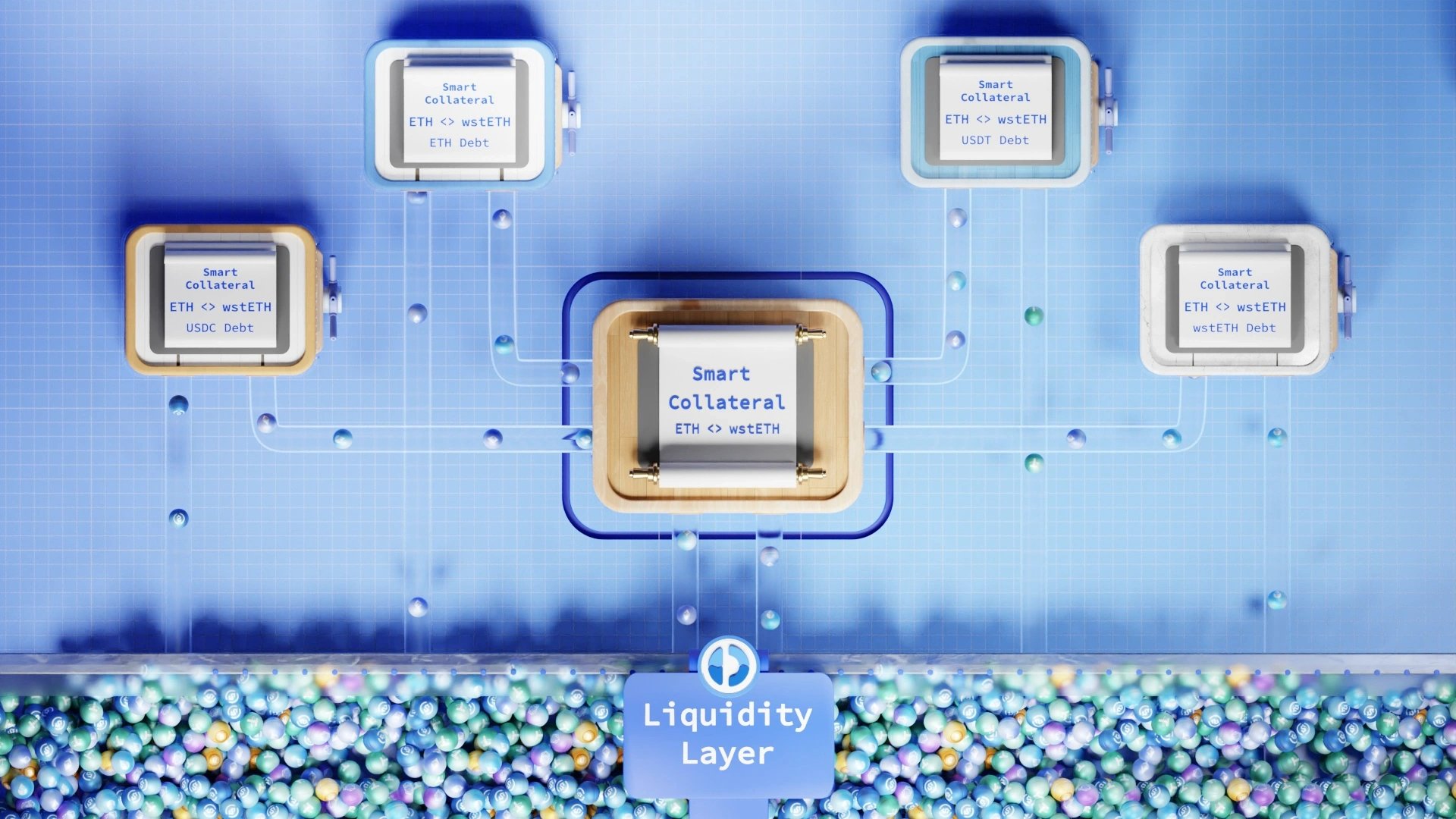
Fluid DEX is a built on Fluid's shared Liquidity Layer, allowing trading, lending, and borrowing protocols to access the same underlying liquidity rather than maintaining separate capital pools. The protocol introduces two core primitives—Smart Collateral and Smart Debt—that enable users to use collateralized assets or borrowed assets as liquidity while continuing to participate in lending and borrowing activities. Smart Collateral allows deposited assets to simultaneously serve as loan , earn lending yield, and generate , while Smart Debt enables borrowed assets to function as liquidity within trading pools, allowing to offset borrowing costs. These mechanisms are designed to combine multiple functions within a single capital position.

The protocol supports multiple vault configurations that combine standard or smart collateral with standard or smart debt, allowing users to create borrowing, liquidity provision, or leveraged trading strategies. Fluid DEX also incorporates shared liquidity with the broader Fluid ecosystem, reducing fragmentation between lending and exchange markets, while using the protocol's pricing, , and risk management systems to support collateralized positions. Governance determines supported asset pairs, fee structures, and protocol parameters, while the architecture is designed to integrate functionality with Fluid's lending infrastructure. [14]

Smart Collateral

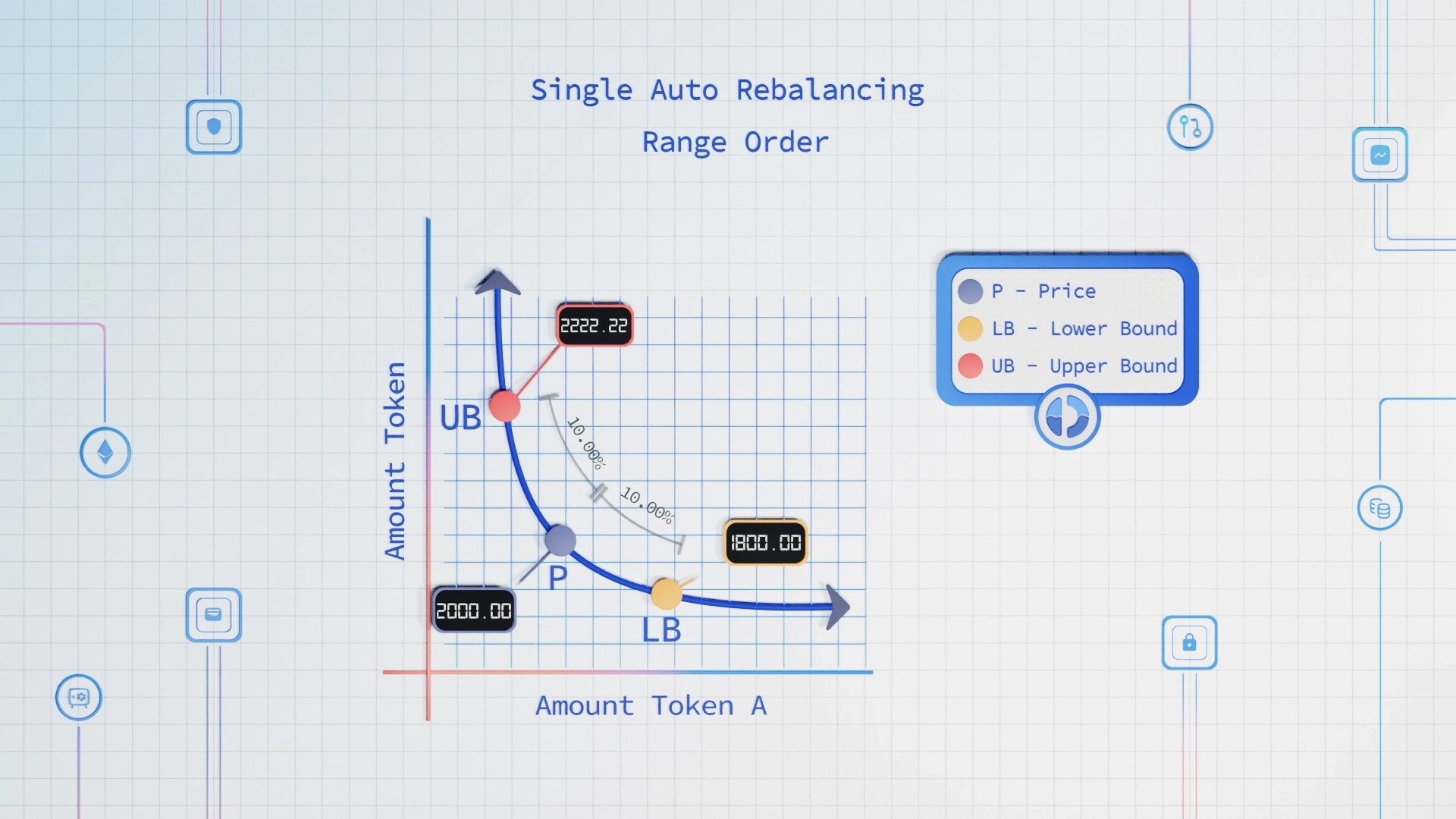
Smart Collateral is a Fluid DEX mechanism that allows users to use the same asset position for lending, borrowing, and providing liquidity simultaneously. It operates as a single auto-rebalancing range order, similar to a combination of and liquidity models, where users can earn lending fees and from activity. As , these positions can also be used to borrow assets, increasing capital efficiency by allowing users to access liquidity without removing their assets from the trading pool. In practice, Smart Collateral combines the functions of LP tokens with lending and borrowing capabilities, enabling assets to remain productive across multiple activities within the Fluid ecosystem. [4]

Smart Debt

Smart Debt is a Fluid DEX mechanism that enables borrowed assets to serve as liquidity in an , turning debt positions into productive assets. Unlike traditional borrowing systems, where borrowed funds leave the lending protocol, Smart Debt keeps the borrowed assets within the DEX liquidity system, allowing trades to generate fees that offset borrowing costs. When users borrow through a Smart Debt-enabled vault, their debt position receives a share of the corresponding , allowing the borrowed assets to participate in trading. Smart Debt functions as an inverse model, in which debt, rather than deposited tokens, provides liquidity, creating the potential to reduce borrowing costs through revenue while maintaining the underlying lending position. [9]

DEX v2

Fluid DEX v2 extends the original architecture with a singleton contract built on the Liquidity Layer, supporting multiple models within a unified framework. The upgraded version introduces Smart Collateral and Smart Debt range orders, on-chain dynamic fees, hooks, flash accounting, lending-enabled limit orders, and more modular deployment. It also expands support for permissionless and governance-controlled pool creation while enabling developers to build additional trading strategies and exchange models that share the same underlying liquidity infrastructure, improving composability, efficiency, and capital utilization across the protocol. [10]

Vault Protocol

Fluid Vaults are collateralized borrowing positions built on Fluid's shared Liquidity Layer, allowing users to borrow assets against specific collateral while managing each position independently. Each vault is isolated by its -to-debt pair, enabling users to create multiple borrowing positions with separate risk profiles. The protocol incorporates features such as configurable loan-to-value (LTV) ratios, automated borrowing limits, low penalties, and a liquidation mechanism designed to reduce transaction costs while sharing liquidity across the broader Fluid ecosystem.

Users create a vault by depositing and borrowing a supported asset, after which they can monitor metrics such as collateral value, debt balance, health ratio, net , and price. Vault positions can be modified by depositing additional , borrowing more assets, repaying debt, withdrawing , or closing the position through full repayment or deleveraging. The protocol also includes a simulation mode that allows users to evaluate borrowing strategies without executing on-chain transactions. [6]

Vault Strategies

Fluid Vault Strategies provide automated workflows to manage borrowing positions by combining multiple actions into a single transaction. These strategies include depositing collateral when borrowing assets, repaying debt when withdrawing , converting between wrapped and unwrapped assets, migrating positions via Vault Swap, and adjusting exposure via leverage or deleverage mechanisms. The Leverage strategy increases exposure by borrowing against deposited , swapping the borrowed assets into additional , and redepositing that into the vault, increasing the position’s borrowing capacity. In contrast, the Deleverage strategy reduces risk by withdrawing , exchanging it for the borrowed asset, and using the proceeds to repay outstanding debt. Strategy execution also includes configurable swap routes, slippage tolerance, and price impact settings, allowing users to manage , reduce debt, or modify leveraged positions without having to complete each step manually. [7] [8]

Liquidity Layer

The Fluid Liquidity Layer is the foundational infrastructure that supports the various protocols built within the Fluid ecosystem, including lending, borrowing, and applications. Instead of requiring each protocol to maintain its own independent , the Liquidity Layer consolidates available liquidity into a shared system, allowing different applications to access the same capital base. This design reduces liquidity fragmentation, improves capital efficiency, and enables protocols built on Fluid to interact with one another through a common liquidity framework.

The Liquidity Layer includes several mechanisms for managing risk and optimizing capital utilization. Automated ceilings dynamically adjust debt and limits based on utilization levels, helping restrict unusually large transactions and limit potential losses during abnormal market activity. The layer also supports Fluid’s liquidation system, which uses a slot-based design to process multiple efficiently, reduce gas costs, and allow positions to be liquidated with lower penalties. These features enable the protocol to support higher loan-to-value (LTV) ratios, including up to 95% for certain assets, while maintaining risk management controls across applications using the shared liquidity infrastructure. [15]

Lend Protocol

The Fluid Lending Protocol is a deposit-based lending system that provides users with access to Fluid’s shared Liquidity Layer by allowing them to supply assets and earn yield. Deposited capital is pooled into the Liquidity Layer, where it can be utilized across Fluid’s lending, borrowing, and other applications, improving capital efficiency compared with isolated liquidity markets. The protocol is designed with a simplified interface focused on deposit functionality, while allowing lenders to benefit from developments in Fluid’s borrowing infrastructure without moving their assets between protocols. Fluid Lending Protocol vaults are also compatible with the tokenized vault standard, enabling easier integration with external applications and portfolio management systems. [5]

See something wrong?

References (15 sources)

HomeCategoriesWiki MCEventsGlossary