Subscribe to wiki
Share wiki
Bookmark
Jeffrey Park
The Agent Tokenization Platform (ATP):Build autonomous agents with the Agent Development Kit (ADK)
0%
Jeffrey Park
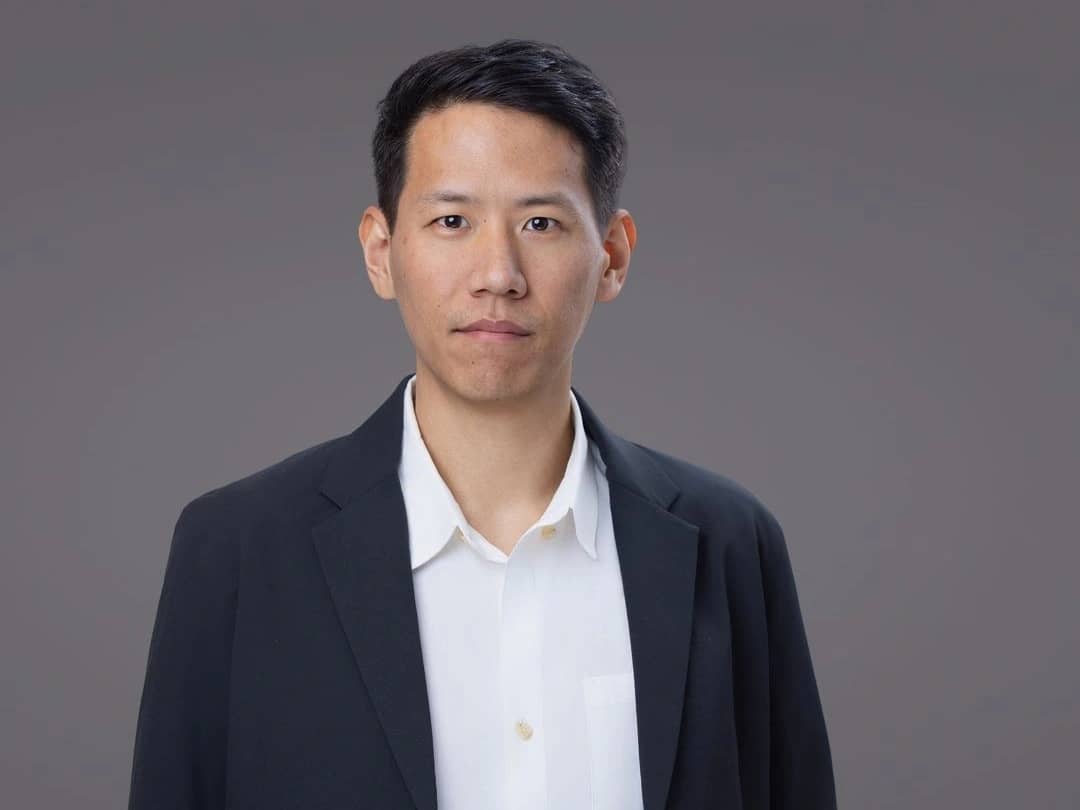
Jeffrey Park is the Partner and Chief Investment Officer (CIO) of ProCap, a Bitcoin-focused investment firm co-founded by Anthony Pompliano [1] [2]. Park has a background that bridges traditional finance and the digital asset industry, with previous senior roles at Bitwise Asset Management, Corbin Capital Partners, and Morgan Stanley [3] [4]. He is known for developing the "Bitcoin Rate of Return" (BRR) investment framework and was the first crypto industry professional to be named a "Hedge Fund Rising Star" by Institutional Investor magazine [1]. His full name is Jeffrey Jin Hyung Park [5].
Education
Park attended Stanford University, where he earned a Bachelor of Arts (B.A.) degree with a dual focus in Economics and International Relations, attending from 2004 to 2009 [3] [4]. He is also a Chartered Financial Analyst (CFA) charterholder, a designation he received from the CFA Institute in September 2013 [3] [4].
Career
Early Career in Traditional Finance
Park began his career on Wall Street in 2008 at Morgan Stanley, where he worked as an exotic equity derivatives trader [3] [2]. In this role, he was responsible for structuring complex equity-linked derivative products and managing their associated risks. Following his tenure at Morgan Stanley, which concluded around June 2011, he joined Harvard Management Company, the investment firm that manages Harvard University's endowment [4]. He served as a Senior Associate focused on U.S. corporate credit investments from July 2011 to December 2013, which served as a basis for working with digital assets. [3] [4]
Corbin Capital Partners
In 2014, Park joined Corbin Capital Partners, a multi-billion dollar alternative asset management firm based in New York that specializes in multi-strategy hedge funds [4]. During his nearly decade-long tenure, he was promoted to Partner and was credited with spearheading the firm's initiatives in digital asset investing, combining research and portfolio management responsibilities [3] [2]. He remained with the firm until 2021/2022, transitioning fully into the cryptocurrency sector [3] [4].
Bitwise Asset Management
Park joined Bitwise Asset Management, one of the world's largest crypto-specialist asset managers, in May 2021 [4]. At Bitwise, he held multiple senior titles, including Managing Director, Portfolio Manager, and Head of Alpha Strategies [3]. His responsibilities included launching and managing hedge fund and other alpha-generating opportunistic strategies for the firm [1]. After his departure, he reportedly continued to serve as an advisor to the company [6].
ProCap
In August 2025, Anthony Pompliano announced that Park had joined his new venture, ProCap BTC, LLC, as Partner and Chief Investment Officer [1] [2]. The firm was described as a "purpose-built, Bitcoin-native financial institution designed from the ground up to maximize shareholder value." Pompliano stated of the hire, "Jeff is one of the most respected investors in the digital asset industry. We are fortunate that he chose to bring his expertise and experience to the ProCap team" [4].
ProCap was formed in June 2025 through a business combination with a Special-Purpose Acquisition Company (SPAC) and trades on the NASDAQ under the ticker symbol BRR [2] [1]. On December 19, 2025, an SEC Form 4 filing disclosed that Park had purchased an additional 8,250 shares of ProCap Financial, Inc. common stock at a price of $3.20 per share. This transaction brought his total direct ownership in the company to 508,250 shares [5].
Investment Philosophy
Park's investment philosophy integrates principles from traditional finance with a deep, crypto-native understanding of market structure and monetary theory [3]. He is an outspoken advocate for Bitcoin and has developed several unique frameworks to articulate his views [6].
Radical Portfolio Theory™ and Bitcoin Rate of Return (BRR)
Park is the creator of what he calls "Radical Portfolio Theory™," an investment framework he promotes as a guide "for the decades to come" [6]. A central component of this theory is the concept of the "Bitcoin Rate of Return" (BRR), which is also the company's stock ticker [1]. Instead of using traditional fiat currencies like the U.S. dollar as a benchmark, the BRR metric evaluates an investment's performance by whether it is gaining or losing purchasing power relative to Bitcoin. Park has stated, "Companies that outperform in BRR terms don’t just preserve capital–they compound purchasing power in a regime of monetary entropy" [1].
Macroeconomic Views
Park frequently shares macroeconomic analysis, particularly regarding Bitcoin's role in the global financial system. In early 2025, he stated that his "highest conviction macro trade" was a "sustained tariff war" leading to a "Plaza Accord 2.0" scenario, which he predicted would send the price of Bitcoin "violently higher" [6]. He has also been critical of government policy, suggesting that the U.S. Strategic Reserve should have focused on acquiring Bitcoin [6].
He views Bitcoin as a superior financial protocol due to its programmatic scarcity and security, noting it is a system that "can’t accidentally mint $300 trillion dollars" [6]. He also sees Bitcoin's volatility not as a flaw but as "the price of freedom" and a source of monetizable optionality [1].
Institutional Approach
Coming from a background in institutional finance, Park's approach to digital assets prioritizes robust operational controls and risk management [3]. His methodology includes deep analysis of market flows, basis and funding rates, and liquidity regimes. He also emphasizes the importance of institutional-grade custody solutions, thorough counterparty diligence, and stress testing for portfolios. His public commentary is often aimed at institutional allocators, translating complex crypto market concepts into understandable frameworks for risk management and portfolio construction [3].
Recognition
In 2022, while at Bitwise, Park was named to Institutional Investor magazine's "Hedge Fund Rising Stars" list. He was the first individual from the cryptocurrency industry to receive this recognition, which highlights promising talent in the asset management sector [1].
Interviews
Credit Ratings, Staking ETFs, and Market Signals #01
On October 29, 2025, Jeff Park, Partner and Chief Investment Officer at ProCap BTC, participated in an interview on the YouTube channel hosted by Anthony Pompliano. The discussion addressed Strategy’s recent credit rating, the introduction of a Solana staking exchange-traded fund (ETF), and the role of prediction markets in contemporary financial and political discourse.
During the interview, Park examined Strategy’s B-minus credit rating and the analytical framework applied by rating agencies. He explained that Bitcoin held on the company’s balance sheet was classified as an intangible, non-capital asset within the risk-adjusted capital (RAC) model. According to his description, this treatment reduced the company’s calculated capital position and contributed to the assigned rating. He noted that Bitcoin’s liquidity characteristics differ from assets typically categorized as goodwill or other intangible holdings, and he described this classification as reflective of existing regulatory conventions rather than asset-specific attributes. Park also stated that the rating corresponded with prevailing credit spreads observed in the market for comparable speculative-grade instruments.
Park further indicated that current rating methodologies may affect how investment-grade corporations evaluate Bitcoin as a treasury asset. Under the RAC framework, holding Bitcoin could alter certain credit metrics, which may influence corporate balance sheet decisions. At the same time, the existence of a formal rating allows institutional investors to compare Strategy’s debt instruments within established high-yield categories.
The interview also addressed the launch of a Solana staking ETF. Park described the product as combining token exposure with participation in staking mechanisms within a regulated fund structure. He explained that staking involves validator selection, yield management, and liquidity considerations, distinguishing it from passive spot-holding structures commonly associated with Bitcoin ETFs. He also discussed the operational dimension of staking, including validator infrastructure and fund-level liquidity management, as factors that may influence performance outcomes across issuers.
In addition, Park commented on prediction markets and their interpretive limits. He referenced a widely circulated claim suggesting a probabilistic link between Donald Trump and the identity of Satoshi Nakamoto, clarifying that the cited example was based on a fabricated market interface rather than an active trading venue. He stated that prediction markets can reflect aggregated participant expectations but may also be affected by misinformation, liquidity constraints, and feedback effects. He observed that publicly visible probabilities can influence behavior, particularly in electoral contexts, potentially interacting with turnout and strategic decision-making.
The interview presented these topics within the broader context of interaction between digital asset markets and established financial systems, focusing on credit assessment practices, regulated investment products, and information signaling mechanisms. [7]
Monetary Reset and Ideological Investing #02
On January 9, 2026, Jeff Park participated in an interview on the WTFinance podcast. During the discussion, he outlined his assessment of ongoing changes in the global monetary and geopolitical environment. Park, who serves as Chief Investment Officer at ProCap Financial, stated that the post-World War II U.S.-centered economic framework, often associated with the Washington Consensus, is undergoing structural change. He attributed this shift to sustained fiscal deficits in the United States, long-standing trade imbalances, and evolving geopolitical conditions.
Park addressed the concept of the “risk-free rate,” traditionally associated with U.S. Treasury securities. He indicated that movements in the yield curve, including differences between short-term rate adjustments and longer-term yields, may reflect reassessments of inflation expectations and sovereign credit conditions. According to his explanation, these developments require adjustments to conventional investment assumptions that rely on stable benchmark rates.
A recurring concept in the interview was what Park refers to as the “ideological investor.” He described a market environment in which capital allocation is increasingly influenced by public policy decisions, geopolitical developments, and regulatory priorities. In this context, he compared certain dynamics in U.S. markets to policy-driven movements observed in other jurisdictions, including China, particularly in sectors connected to national security and industrial policy.
The discussion also addressed the role of artificial intelligence in investment processes. Park stated that AI-based advisory systems may enable individualized portfolio construction informed by user-defined inputs. He characterized this development as distinct from traditional active management and passive index tracking, suggesting that algorithmically generated allocation strategies could alter patterns of capital flows.
Regarding asset allocation, Park identified Bitcoin and gold as instruments he considers relevant within the current macroeconomic environment. He also discussed interest rate positioning, including the shape of the yield curve and duration exposure, as factors that may influence portfolio outcomes. His comments emphasized diversification across uncorrelated return sources rather than reliance on conventional allocation frameworks.
In concluding remarks, Park referenced cultural and political factors as variables that may affect financial markets. He stated that investor behavior may be influenced by broader social and geopolitical developments, and he emphasized the importance of evaluating market outcomes within a probabilistic framework rather than deterministic models. [8]
See something wrong?
The Agent Tokenization Platform (ATP):Build autonomous agents with the Agent Development Kit (ADK)