Subscribe to wiki
Share wiki
Bookmark
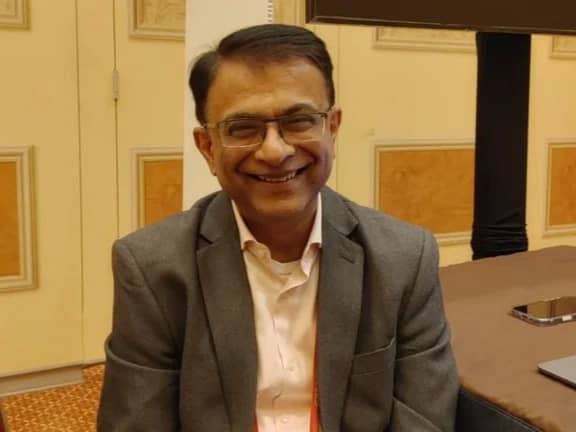
Kaushal Kurapati
The Agent Tokenization Platform (ATP):Build autonomous agents with the Agent Development Kit (ADK)
0%
Kaushal Kurapati
Kaushal Kurapati is the Group Vice President of AI Agents at Oracle, where he leads the strategy and development of the company's agentic AI initiatives, including the Oracle Fusion Applications AI Agent Marketplace. His career spans over two decades and includes senior leadership positions at Salesforce, Mastercard, Yahoo, and IBM.
Education
Kurapati holds multiple advanced degrees from institutions in the United States and India. He earned a Bachelor of Technology in Aerospace Engineering from the Indian Institute of Technology, Madras, from 1988 to 1992. Following his move to the U.S., he completed a Master of Science in Mechanical Engineering and Applied Mathematics at the University of Delaware between 1993 and 1995. He then pursued a second Master of Science degree in Computer Science from the University of Maryland Baltimore County, which he received in 1997. Later in his career, while working as a senior scientist, he attended the New York University Stern School of Business from 2000 to 2003, where he obtained an MBA with a focus on Strategy, Finance, and Entrepreneurship. [1]
Career
Kurapati's career has been centered on the development and application of AI and machine learning, from early recommender systems to modern agentic AI platforms.
Early Career: Philips, IBM, and Ask.com
Kurapati began his career in 1998 as a Senior Scientist and Team Lead at Philips, where his team focused on the emerging fields of personalization and recommender systems. He worked there until 2002. In 2003, he joined IBM as a Senior Software Engineer, contributing to the WebSphere Portal and its personalization technologies. His focus on AI and search technology grew in his next role at IAC, the parent company of Ask.com (then Ask Jeeves). From 2004 to 2007, he served as the Director of Search Relevance & Product Management, where he was responsible for the AI and ML algorithms that powered the search engine's relevance and backend systems. [1] [2]
Yahoo and Mastercard
In 2007, Kurapati joined Yahoo as a Senior Director of Product Management, a position he held for seven years. During his tenure, he managed products within the Web Search and Small Business divisions, continuing his work on consumer internet platforms. In 2014, he transitioned to the financial technology sector, becoming the Vice President of Product Management at Mastercard. Until 2018, he led product strategy for targeted offers, personalization, and analytics, applying his AI expertise to the a new domain. [1]
First Tenure at Oracle and Salesforce
Kurapati first joined Oracle in 2018, serving as a Group Vice President and General Manager within the Customer Data Platforms (CDP) and Marketing Cloud divisions until 2022. In this role, he was responsible for managing the CDP division with an emphasis on personalization, AI, and machine learning. [1] [3]
In early 2022, he moved to Salesforce to become the Senior Vice President of Product Management for Generative AI. At Salesforce, he led product initiatives for the company's AI and Search offerings. [1] During this time, he was a public-facing expert on the topic, authoring content such as the July 2024 article "What are Large Language Models (LLMs)?" for the official Salesforce blog. [3] His X (formerly Twitter) profile, , also lists his role at Salesforce, though it has not been updated to reflect his subsequent move. [4]
Return to Oracle and Leadership of AI Agents
Kurapati returned to Oracle in 2025 to lead the company's strategic push into agentic AI. As Group Vice President, AI Agents, he oversees the Oracle Fusion Applications AI Agent Marketplace and the underlying Oracle AI Agent Studio development platform. His role involves steering the product vision, ecosystem growth, and market strategy for embedding autonomous AI agents across Oracle's enterprise application suite. [5] [6]
Under his leadership, the AI Agent Marketplace experienced significant growth in 2025. By November 2025, the platform surpassed 400 available AI agents for Oracle Fusion applications, with a mix of agents built by Oracle (approximately 70%) and a growing number from partners (30%). [7] Another report from October 2025 stated Oracle offered approximately 600 total AI agents, with 400 integrated into Fusion and 200 for specific industry solutions. [8]
A major initiative in 2025 was a strategic partnership with IBM, announced on October 16, 2025. The collaboration involved IBM developing and launching Oracle-validated AI agents on the marketplace using Oracle's AI Agent Studio. The initial launch included three agents designed to streamline operations: an Intercompany Agent, a Smart Sales Order Entry Agent, and a Requisition to Contract Agent. [5] [6] Kurapati commented on the partnership, stating, "The new IBM AI agents in the Oracle AI Agent Marketplace, seamlessly built with Oracle AI Agent Studio, will help customers to address their unique business needs and drive growth with speed and confidence." [6]
Public Commentary and Views on Agentic AI
As a public-facing leader for Oracle's AI strategy, Kurapati has frequently commented on the evolution of AI and the specific architectural and philosophical choices behind Oracle's agentic platform. In a March 2025 podcast appearance, he discussed the progression from traditional AI to generative and agentic AI, identifying data, compute, and algorithms as the three essential pillars of AI innovation. [2]
Oracle's Agentic AI Strategy
Kurapati has detailed Oracle's strategy for its AI agents, emphasizing native integration, security, and user empowerment. The goal is to provide a unified AI layer across all Oracle applications, including ERP, HCM, and supply chain, to automate tasks and create what he terms "knowledge workers." [7]
Human-in-the-Loop Control
A key feature Kurapati has highlighted is the ability for users to maintain control over autonomous processes. At the Oracle AI World '25 conference, he explained how the Oracle AI Agent Studio allows for the insertion of a "human approval node" directly into an agent's workflow. This provides a formal checkpoint for tasks, such as requiring manual approval for a purchase requisition that exceeds a certain value, rather than relying on a conversational prompt. He explained, "It's asking, 'Wait for a human being.'" [8]
Agent Evaluation and Observability
To build customer trust and improve agent performance, Kurapati's team developed an agentic evaluation framework. He has stressed the importance of transparency, or "opening under the hood," to help users understand what an agent is doing. The framework includes a monitoring dashboard for metrics like latency and token usage, systematic performance evaluation tools, and detailed agent tracing for debugging. On this topic, Kurapati stated, "Explaining what's going on behind the scenes... tells customers and partners, 'Oh, I know what's going on, where the pinpointed errors are... and how much time it's taking,' - all of that so that you can optimize your agent, I think that's the key." [8]
Data Context and Security
Kurapati has spoken about the necessity of providing rich context to large language models (LLMs) to make them effective in an enterprise setting. He described the use of "annotations" to add descriptive metadata to enterprise data, explaining its semantic meaning (e.g., currency, tax status). He also introduced the concept of an "API graph," which maps the relationships between different APIs. In his view, "If you have an API graph and all the metadata associated, that's when an agent becomes much more intelligent and capable." [8]
He has also emphasized that security is a core tenet of the platform. Because the agents are built natively into Oracle Fusion, they inherit its security architecture. Kurapati explained this in a November 2025 interview: "Associating it with a user role is a mandatory field. You cannot proceed without that." This ensures agents can only access data permitted by the user's role. [7]
Accessibility and Competitive Positioning
Kurapati envisions a future where any employee, not just IT professionals, can create agents. He stated, "Our aim is ultimately so that anybody in the organisation should be able to create a knowledge worker of any kind." A key part of Oracle's strategy to encourage this adoption is its pricing model. Kurapati has noted that because Oracle is both an applications provider and a hyperscaler (with Oracle Cloud Infrastructure, or OCI), it can offer a cost advantage. He said, "If you're using a model on OCI, we are not charging additional tokens - all our competitors are." Many standard agents are included in existing Fusion subscriptions to drive adoption. [7]
New Section 5
Data and AI Driven Creativity #01
On January 8, 2019, Kaushal Kurapati participated in a keynote interview on the ad:tech New Delhi YouTube channel, discussing data and artificial intelligence in the context of creativity and marketing, from his position as an executive at Oracle.
Kurapati describes artificial intelligence as a factor that influences approaches to creativity and marketing through the integration of large-scale data, cloud computing, and accessible algorithms. He characterizes AI as a tool that can support human decision-making, experimentation, and personalization rather than replace human input.
He notes that core marketing principles, including trust, service, loyalty, and customer experience, have remained consistent over time. Changes in consumer behavior and technology, however, have introduced new demands that require marketing to shift from intuition-based decisions to approaches informed by aggregated customer data across channels.
Kurapati references applications of AI in fields such as healthcare, content generation, and language translation to illustrate current capabilities, while acknowledging limitations. He observes that AI systems may lack general understanding and can reflect biases from training data, highlighting the importance of oversight and human evaluation.
According to Kurapati, integrating AI analytics with awareness of human responses can assist organizations in tailoring experiences across interactions. He notes that AI adoption should be approached as a complementary element to human work, rather than a replacement, with attention to coordination and responsible implementation. [9]
Agentic AI and Business Applications #02
On August 14, 2025, Kashik Kurapati participated in an interview on the Wipro YouTube channel, discussing developments in artificial intelligence and its application in business processes. According to Kurapati, AI has evolved from rule-based systems in the 1980s to current generative AI and emerging agentic AI, supported by the combination of large-scale data, high-performance computing, and algorithmic methods including transformers.
Kurapati stated that AI is currently capable of automating individual tasks, such as generating customer service call summaries and enhancing enterprise data quality, while complete job automation remains an area for future development. He described agentic AI as systems able to make decisions, plan workflows, and interact with complex processes, noting that human supervision continues to be necessary in high-stakes situations.
He highlighted the role of chief data and analytics officers in managing AI adoption, ensuring data privacy, enforcing security measures, and reducing the occurrence of inaccurate outputs. Kurapati also referred to trends including composable AI, reasoning models that adjust computing resources according to task complexity, and the increased availability of open-source AI models.
Kurapati projected that AI integration into business operations and everyday technologies will continue, with task automation expanding, workforce skills evolving, and AI systems increasingly supporting human work while remaining subject to oversight. [10]
See something wrong?
The Agent Tokenization Platform (ATP):Build autonomous agents with the Agent Development Kit (ADK)