Isa Fulford
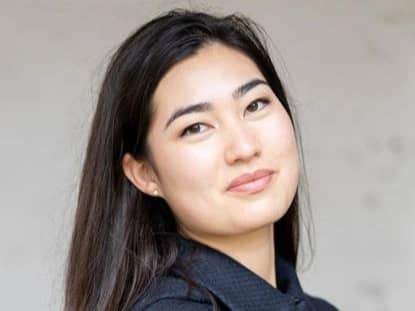
Isa Fulford (Isabella Fulford) is a British researcher and engineer at OpenAI who works in post-training research and leads the company's Deep Research and ChatGPT Agent teams.[1][2]
Early Life and Education
Fulford was educated in London before moving to the United States for university. She attended St Paul's Girls' School and then Westminster School, where she completed A-levels and Pre-U examinations in Mathematics, Further Mathematics, Chemistry, and Physics.[5] At Westminster she received school prizes in physics, including recognition for an essay and for practical research, as well as a music prize for her contributions to school music.[5]
She went on to Stanford University, graduating with a Bachelor of Science in Mathematical and Computational Science with Honors and Distinction, taking an honors concentration in Logic and Language and being elected to Phi Beta Kappa.[4][1] Her undergraduate studies included international terms at Stanford's programs in Oxford and Florence, and she furthered her study of mathematics at the University of Oxford through the Bing Overseas Studies Program, concentrating on Mathematical Logic, Model Theory, and Set Theory.[5][4] She subsequently completed a Master of Science in Computer Science at Stanford.[4]
Early Career
Before joining OpenAI, Fulford accumulated engineering and research experience through a series of internships, fellowships, and early-career roles. In 2018 she worked as a business development intern at Huma in London, and in 2019 she participated as a Nexus Fellow in the research division of The D. E. Shaw Group in New York.[5]
She held software engineering positions at Amazon Web Services (AWS), where she worked in the Automated Reasoning Group exploring mathematical tools to predict computer system behavior. She has stated that, using a program verification tool in an independent project, she wrote what she describes as Amazon's first unbounded proofs of memory safety for IoT code and communication protocols.[5][4] In 2020 she worked as an AI Instructor at Inspirit AI, and from 2021 to 2022 she was a Mayfield Fellow with the Stanford Technology Ventures Program (STVP).[5][4]
From 2021 to 2022 she was a software engineer at Mem Labs, a Los Altos Hills, California, company founded in 2019 that builds an artificial-intelligence-powered application.[5][4] During her time there the company adopted OpenAI's APIs to improve developer productivity.[5]
Work at OpenAI
Fulford joined OpenAI as a member of the technical staff in November 2022 and works in post-training research, the stage of model development that shapes a base model's behavior after its initial training.[1][6] One of her early contributions was the design and construction of ChatGPT's document retrieval and file upload features, which allow the assistant to draw on user-supplied documents.[3] In March 2023 she publicized the ChatGPT Retrieval Plugin, an open-source tool that lets ChatGPT access personal and organizational documents by combining OpenAI's embeddings model with vector databases, and demonstrated it against United Nations annual reports from 2018 to 2022.[5] She also co-taught a ChatGPT prompt-engineering course offered through DeepLearning.AI alongside Andrew Ng.[7][5]
As of 2025 Fulford is described as a research lead in OpenAI's post-training organization, having spearheaded the development of Deep Research and ChatGPT Agent, two products the company launched that year.[3] ChatGPT Agent is software that navigates a computer on its own to execute tasks on the internet, such as booking a hotel or returning a pair of shoes; Fulford announced its launch in July 2025 and leads its development on the post-training side.[3][5]
Deep Research
Fulford heads the team behind Deep Research, an agentic capability within ChatGPT that conducts multi-step research online to complete complex tasks. The system carries out comprehensive research across public and private sources and produces thoroughly-sourced reports; Forbes reported that the product drove a large number of ChatGPT Pro subscriptions.[3][2] Deep Research launched in ChatGPT in early 2025 as one of OpenAI's early agents and was later extended with a lightweight version powered by an o4‑mini model and access to a visual browser through ChatGPT Agent.[9] Fulford has said the system spends between 5 and 30 minutes searching numerous web sources and reasoning about their content before delivering a fully cited report "at around the level of a research analyst," and that "it's able to do in a few minutes what would take a human many hours."[2]
According to Fulford, Deep Research grew out of OpenAI's internal progress with reinforcement learning and reasoning models. She has described the genesis as coming from seeing generalization from training on math, science, and coding tasks to other domains, which led the team to wonder what would happen if they trained models directly on the tasks users perform in daily life.[2] The team chose web browsing as a starting point because online research is ubiquitous and because "read-only agents" present a more constrained environment with fewer safety considerations than agents that take actions in the world.[2] In early development, Fulford and colleagues Yash Patil and Thomas Dimson built a prototype demo by prompting existing models to illustrate what Deep Research might look like, without training new models, in order to generate internal excitement and secure organizational buy-in.[2]
The team then trained models specifically for browsing and data analysis by creating reinforcement learning tasks to teach browsing, developing tools for the model to use during training, giving the model a browser for searching, clicking, and scrolling, and providing code execution for data analysis and visualization.[2] The resulting product is a version of OpenAI's o3 model fine-tuned for web browsing and data analysis; Fulford has stated that "o3 is good at searching because it's trained with the same tools and browsing datasets that we developed for Deep Research."[2] The design includes an initial clarification step in which the system asks questions to better understand a request before beginning, increasing the specificity and relevance of results.[2] OpenAI describes Deep Research as a next-generation agent in ChatGPT that independently finds, analyzes, and synthesizes hundreds of online sources and as accomplishing in tens of minutes work that would take a human many hours, and notes that it is powered by a version of the o3 reasoning model optimized for web browsing and data analysis.[9]
Fulford has demonstrated Deep Research on use cases including analyzing venture capital investment trends in AI companies with data visualization, finding well-rated food stalls at night markets in Korea using both English and Korean sources, and identifying gene therapies with US regulatory approval for treating hemophilia with citations and explanations.[2] She has acknowledged that the system is not perfect and can sometimes hallucinate information. Among future directions she has outlined improving reliability to reduce hallucinations, integrating Deep Research into OpenAI's main reasoning model, bringing private context such as internal company knowledge and paywalled sources into the system, and moving beyond information synthesis toward enabling the system to take actions.[2] Over the course of 2025 Deep Research became one of OpenAI's key agentic products; the company expanded access from Pro users to Plus, Team, Enterprise, and EDU users, and later to free users through a lightweight variant powered by an o4‑mini model.[9]
BrowseComp Benchmark
Fulford is a co-author of "BrowseComp: A Simple Yet Challenging Benchmark for Browsing Agents," a 2025 arXiv preprint filed as arXiv:2504.12516 and created on April 16, 2025.[7][8] The paper introduces BrowseComp as a benchmark for measuring an agent's ability to browse the web, comprising 1,266 questions that require persistently navigating the internet to find hard-to-find, entangled information whose answers are short and easily verifiable against reference answers.[8] The authors compare BrowseComp for browsing agents to programming competitions as an incomplete but useful benchmark for coding agents, noting that it sidesteps challenges such as generating long answers or resolving ambiguity in order to measure the core capability of exercising persistence and creativity in finding information.[8] Her co-authors on the paper are Jason Wei, Zhiqing Sun, Spencer Papay, Scott McKinney, Jeffrey Han, Hyung Won Chung, Alex Tachard Passos, William Fedus, and Amelia Glaese.[8]
Sequoia Capital
Alongside her work at OpenAI, Fulford has served as a Scout at Sequoia Capital since March 2023, a role within the venture capital firm's scouting operations that supports the identification and backing of early-stage founders.[6][4] The Org places her within Sequoia's Scouting Operations team and lists her as having no direct reports.[4]
Music
Fulford is a classically trained violinist whose musical training paralleled her academic career. She studied in the Junior Department of the Royal College of Music in London as a First Study violinist, where she served as Principal Second Violin of the symphony and chamber orchestras, and she was concertmaster of the Symphony Orchestra at Westminster School.[5] From January 2015 to September 2017 she was a violinist with the National Youth Orchestra of Great Britain, and she participated in the Chamber Music Program during her studies at Stanford.[5][4]
Talks and Interviews
Fulford was a featured speaker at "Deep Research in the OpenAI Forum," an event posted on March 28, 2025, in which she was introduced alongside Zhiqing (Edward) Sun. She spoke about the Deep Research project's background, the reasoning models underpinning it, safety, limitations, and next steps, and participated in the event's question-and-answer session.[1] In an interview published by Sequoia Capital on May 9, 2025, she gave a detailed account of Deep Research's capabilities and development journey, describing its origins in OpenAI's reinforcement learning work, its training methodology, and its future directions.[2]