0% read
Last updated:
Mark Chen
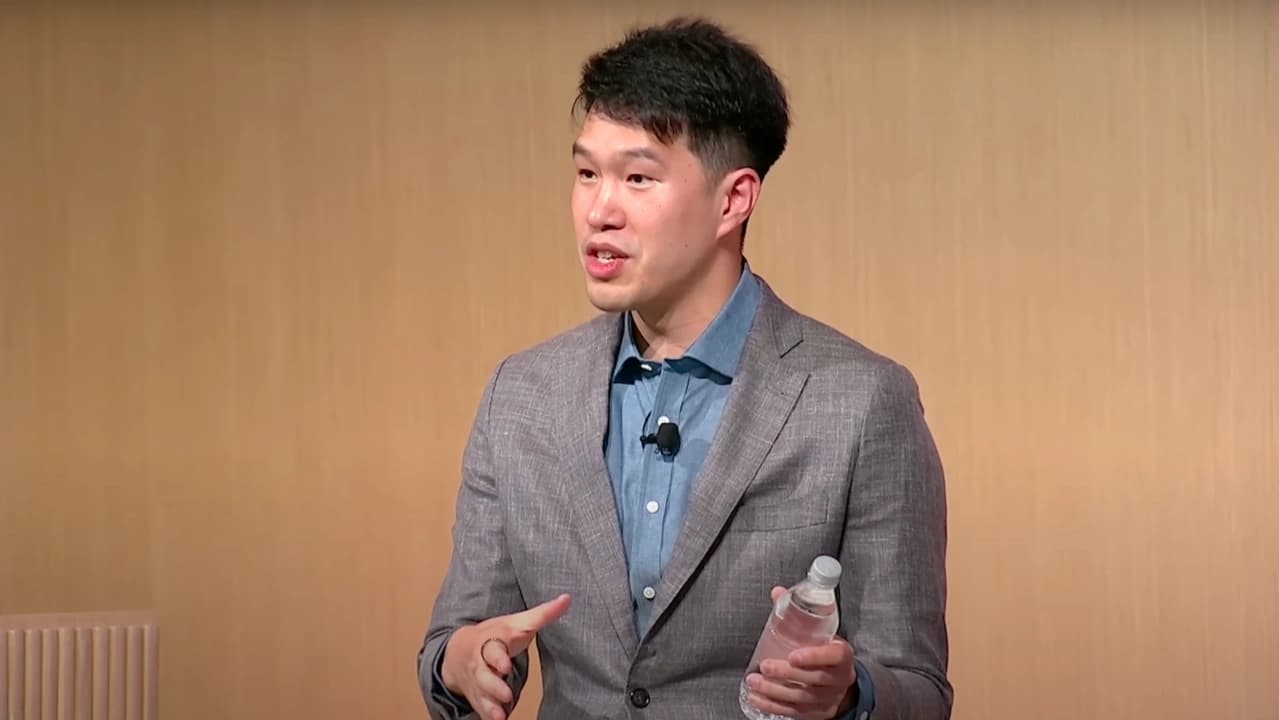
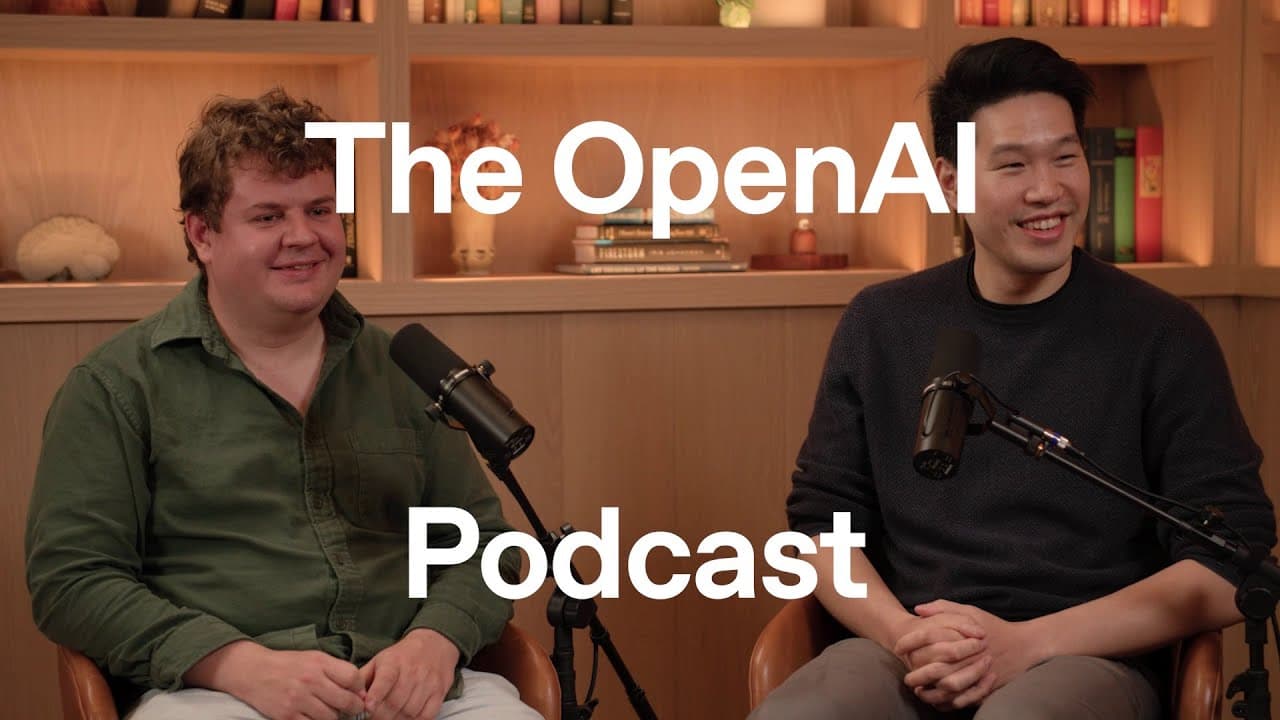
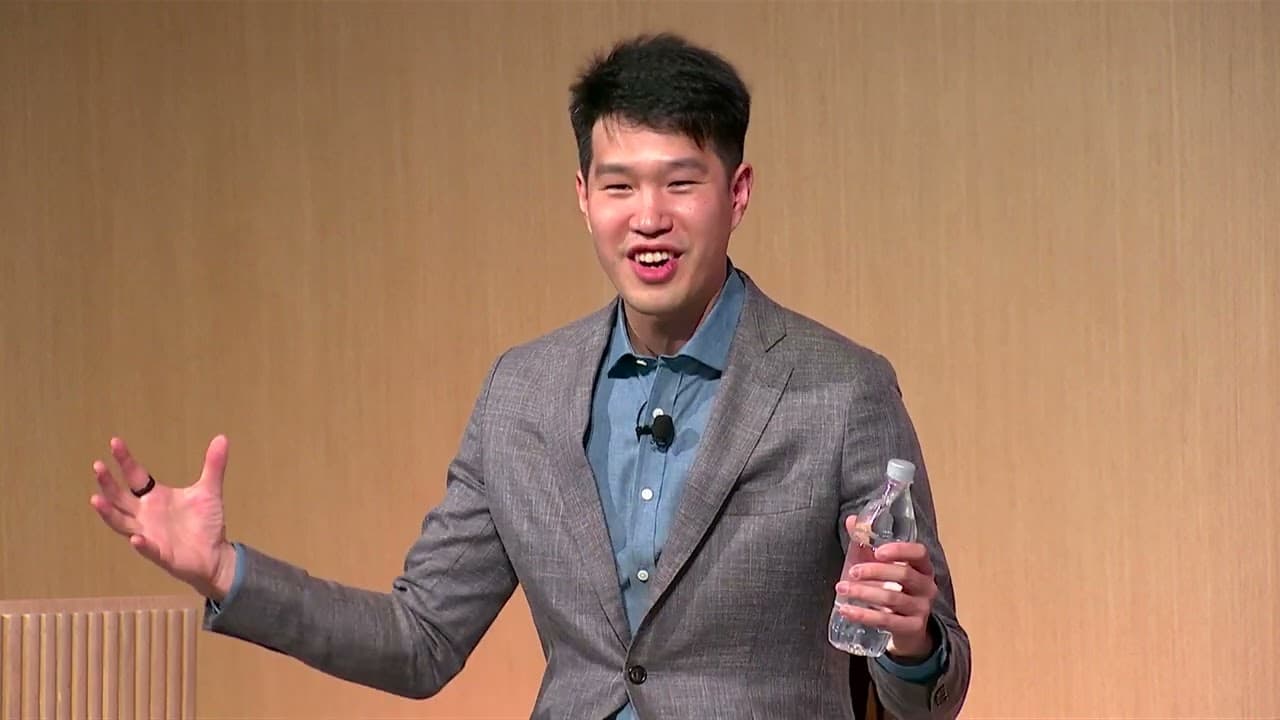
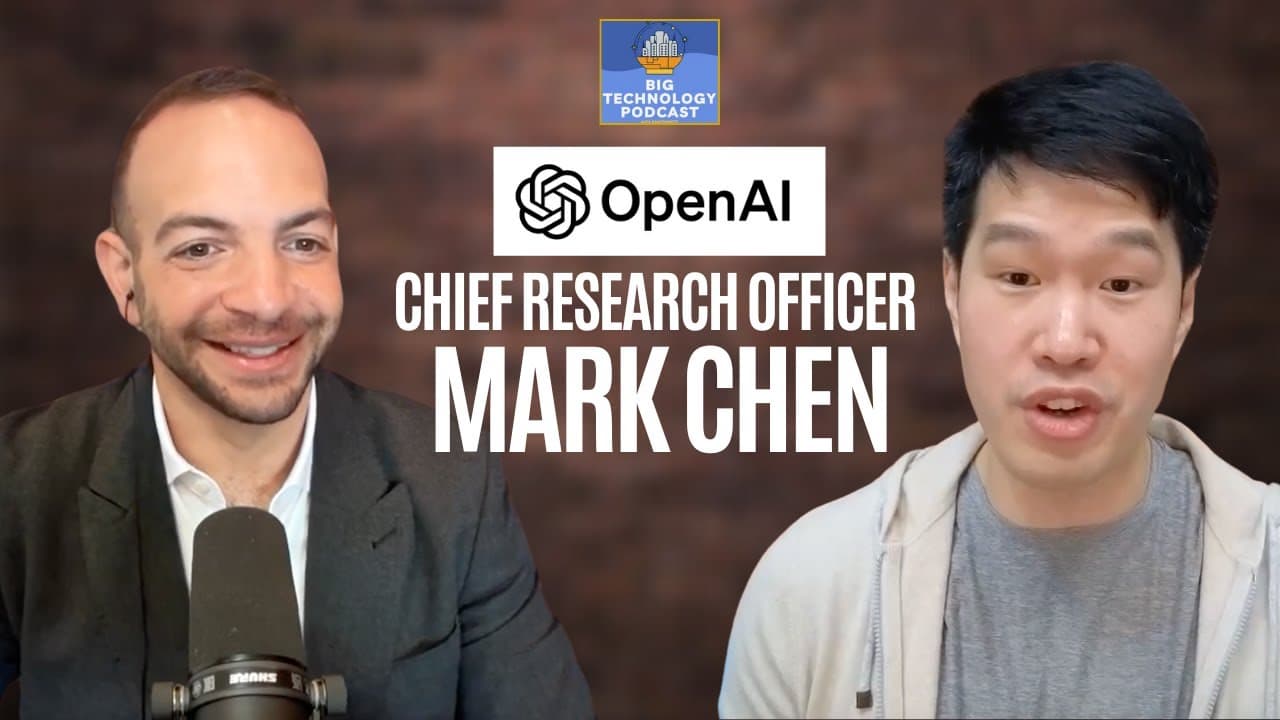
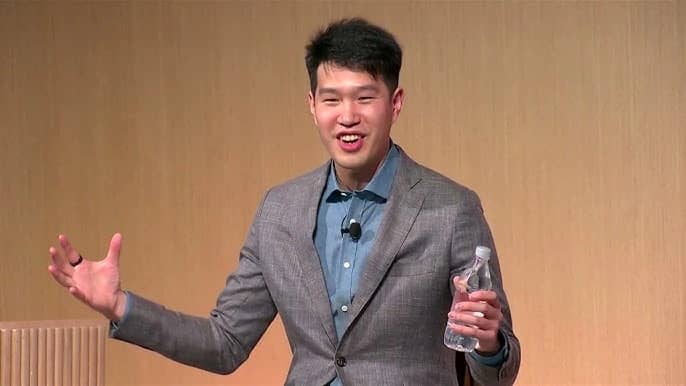
Mark Chen is an artificial intelligence researcher who serves as the Chief Research Officer at OpenAI. His role was formally expanded in March 2025, when OpenAI CEO Sam Altman announced that Chen would drive scientific progress and more tightly integrate research and product development as part of an enlarged Chief Research Officer remit.[4] He co-leads OpenAI's overall research direction with Chief Scientist Jakub Pachocki, coordinating work on frontier models across the organization.[2] He is also a coach for the United States team that competes in the International Olympiad in Informatics (IOI).[1][2]
Education
Chen is a Taiwanese-American computer scientist who was born in the United States and spent much of his upbringing in Taiwan.[5] He moved there with his family for middle and high school and entered the bilingual program at National Experimental High School at Hsinchu Science Park, where he developed a strong interest in mathematics and computing.[6]
During high school, Chen took advanced university-level courses such as discrete mathematics at National Tsing Hua University and achieved perfect scores on the AMC10, AMC12, and AIME mathematics competitions.[5] His mother, Chiou Jing-Te, is a professor at National Tsing Hua University's Institute of Information Systems and Applications, and his father, Chen Chien-Jen, previously served as chairman of the fiber-optic company LuxNet.[5] Chen later returned to the United States to attend the Massachusetts Institute of Technology (MIT), where he earned dual bachelor's degrees in mathematics and computer science.[5]
Career
OpenAI
After graduating from MIT, Chen spent several years in quantitative finance, working at a hedge fund and in high-frequency trading, including a role at Jane Street Capital where he developed machine-learning models for futures trading.[7][2] He joined OpenAI in 2018 as a research resident under then–Chief Scientist Ilya Sutskever and later became Head of Frontiers Research before being appointed Chief Research Officer.[7][2] At OpenAI, Chen has worked on Codex (the generative coding model underlying GitHub Copilot), GPT-3, and Image GPT, and later led the team that created DALL·E 2 and added vision capabilities to GPT-4 and GPT-4o.[5] His work also spans reasoning-focused models such as the o1 and o3 series and agentic systems such as Operator, which aim to chain model calls into longer workflows.[7][8]
As Chief Research Officer, Chen shares leadership of OpenAI's research division with Chief Scientist Jakub Pachocki, jointly setting research direction and overseeing the portfolio of frontier-model projects.[2] In a March 2025 leadership update, CEO Sam Altman announced that Chen had stepped into an expanded role as Chief Research Officer, stating that Chen would "drive scientific progress and make sure we continue to push the frontier in capability and safety" and praising his development "from an amazing researcher into an amazing leader over many years."[4] By 2026, Chen was described as overseeing a research organization of roughly 400–500 people managing around 300 simultaneous research projects, including responsibility for allocating GPU compute across them and for investing more compute in exploratory, paradigm-shifting research than in training short-term product models.[6][5] His public communications often involve announcing or demonstrating significant OpenAI projects and milestones. For example, in April 2022, he shared images generated by the DALL-E 2 model, and in March 2025, he posted about the launch of native image generation capabilities within GPT-4o. In February 2025, Chen announced that a feature called "Deep research" was being rolled out to all professional-tier users of ChatGPT, designed to enable the AI to find, analyze, and synthesize information from hundreds of online sources to generate comprehensive reports.[1][2]
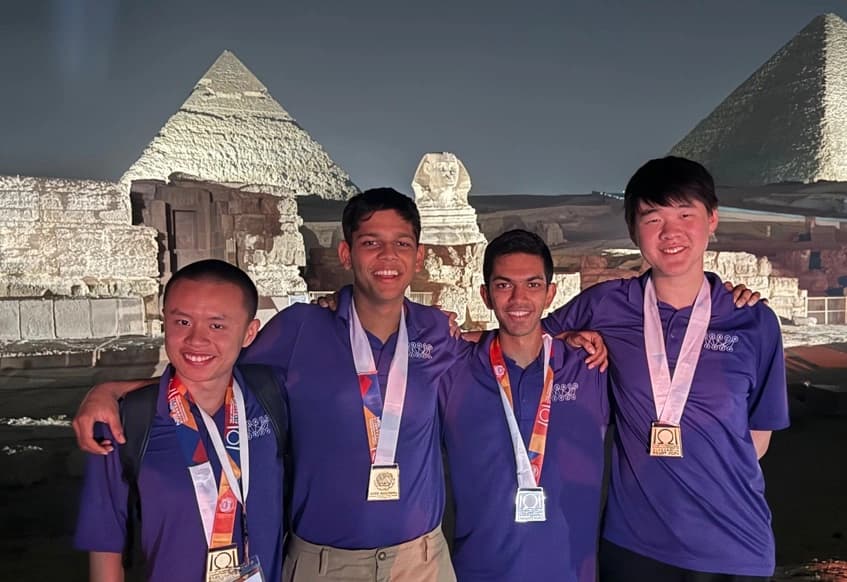
In addition to his corporate role, Chen is actively involved in competitive programming as a coach for the USA International Olympiad in Informatics (IOI) team.[1] He has connected this coaching work to his professional motivations, stating a long-term goal of creating AI models that can perform at the level of the most elite human competitors, and has highlighted model performance on Olympiad-style tasks as a benchmark for progress in reasoning.[2] In September 2024, he announced that OpenAI's models had achieved a performance level equivalent to a gold medal on that year's IOI competition problems.[1][2]
Leadership and Management
In his leadership role, Chen is responsible for navigating the competitive landscape of AI research, including talent retention. In June 2025, following the recruitment of four senior OpenAI researchers by Meta, Chen addressed the company in an internal memo. He expressed a "visceral feeling... as if someone has broken into our home and stolen something" and assured staff that leadership was actively working to retain employees. He stated that OpenAI was "recalibrating comp" and exploring "creative ways to recognize and reward top talent." While committing to fight for his staff, Chen also emphasized his "high personal standards of fairness," noting he would not retain talent "at the price of fairness to others." In the same memo, he cautioned against getting "too caught up in the cadence of regular product launches and in short-term comparison with the competition," urging a focus on the "main quest" of advancing toward artificial general intelligence (AGI). OpenAI CEO Sam Altman publicly praised Chen's leadership during this period.[3]
Chen has described his role during the November 2023 leadership crisis at OpenAI, when Altman was briefly removed as CEO, as focused on holding the research team together. He recounted inviting colleagues to gather at his home, helping maintain morale, and encouraging them to sign an internal petition calling for Altman's reinstatement and governance changes, actions that he framed as essential to preserving continuity of the research program.[6] He has since characterized the episode as a turning point that reinforced his commitment to organizational resilience and to clear communication with researchers during periods of uncertainty.[6]
In public interviews, Chen has articulated a research philosophy summarized as "don't chase, create," arguing that OpenAI should prioritize paradigm-shifting exploratory work over optimizing for incremental benchmark gains or reacting to competitors' product launches.[6] He has said that he and Chief Scientist Jakub Pachocki regularly review a portfolio of around 300 projects, pruning and reorienting work to maintain what he calls high "talent density" and stating that he aims to avoid hiring people whose marginal contribution to the research organization would be effectively zero.[6] In the same discussions, he emphasized that OpenAI deliberately invests a substantial share of its compute budget into exploratory research that may not immediately translate into products, viewing this as necessary to stay ahead of structural bottlenecks and to discover new model paradigms.[5]
Chen has also spoken about competition with other AI labs, including Meta, in what has been described as a "Soup Wars" contest for talent. He recounted episodes in which Meta pursued aggressive recruiting of OpenAI researchers, including social gatherings framed around informal meals, while OpenAI declined to match top-of-market salary offers.[6] According to Chen, OpenAI's approach is to offer compensation it considers fair but to rely primarily on mission alignment and research opportunity to retain staff, arguing that many researchers stay because they believe AGI is more likely to be built at OpenAI than elsewhere.[6]
Research and Commentary
Chen publicly comments on developments and trends within the artificial intelligence industry. In January 2025, he acknowledged the work of competitor DeepSeek on producing an "o1-level reasoning model," noting that their research had independently arrived at some of the same core concepts that OpenAI had discovered. In the same discussion, he addressed public narratives around the high cost of developing advanced AI. Chen stated that the response was "somewhat overblown," explaining that by separating the development process into two paradigms—pre-training and reasoning—it becomes possible to optimize for capability across two axes instead of one, which can lead to lower operational costs. He affirmed OpenAI's focus on improving model efficiency and its commitment to executing its research roadmap to release more advanced models throughout the year.[1]
In later talks and interviews, Chen has argued that compute and energy, rather than algorithmic ideas alone, are the primary bottlenecks in the AI race. He has stated that OpenAI could immediately put multiple times its current compute budget to productive use if hardware and energy costs allowed, and has framed access to power and datacenter-scale infrastructure as a central strategic constraint on model progress.[5][8] At the Anti Fund Summit, he argued that large-scale pre-training has not yet hit a fundamental wall and suggested that an industry-wide shift of resources from pre-training to reinforcement learning would be, in his view, a strategic misallocation, because scaling diverse pre-training data remains the most reliable way to unlock new capabilities.[5]
Chen has also discussed how increases in "autonomous time," as described in his views on AGI development, relate to automated AI research. He has outlined a long-term goal of feeding real research problems back into models so that they can design experiments, interpret results, and propose follow-up work, creating what he describes as an "AI doing AI research" feedback loop.[7][5] In this vision, human researchers focus on setting directions and evaluating progress while models increasingly handle day-to-day experimental iteration.
From interviews with industry and hardware partners, Chen has highlighted the importance of data-efficient reasoning models for specialized domains and of multimodal models such as GPT-4o that can jointly process text, images, and audio.[8][7] He has suggested that current systems already exhibit more inventive capability than many observers expect, pointing to competitive programming contests and Olympiad-style problem sets as examples where models can generate creative solution strategies that differ from standard textbook approaches.[7][5]
Views on AI Development
Chen has articulated that his personal background in competitive programming informs his research goals. He has stated a desire to "create models which accelerate ourselves," viewing it as a rapid path to progress. He and his colleagues argue that proficiency in math and coding serves as the "bedrock for a far more general form of intelligence" capable of novel problem-solving.[2] Drawing on his experience coaching the USA IOI team, he has pointed to programming contests as evidence that current models can already discover surprising and nonstandard solution strategies when given sufficient context and compute, which he interprets as an early sign of emergent inventive ability.[7]
Regarding the path to AGI, Chen has highlighted the concept of "autonomous time" as a key metric. He defines this as "the amount of time that the model can spend making productive progress on a difficult problem without hitting a dead end."[2] He has linked increases in autonomous time to the possibility of automating more of the AI research workflow, describing a future in which models are tasked with real research problems, design and execute experiments, and then feed the results back into their own training process, with human researchers supervising and steering strategy rather than handling every intermediate step.[7][5] He has also expressed continued confidence in scaling laws, which posit that models improve with more computational power, stating, "I don’t think there’s evidence that scaling laws are dead in any sense." He believes that research breakthroughs will continue to overcome bottlenecks in data or model architecture.[2]
When asked about the 2024 departures of key members from OpenAI's superalignment team, Chen characterized the situation as a result of "highly personal decisions." He suggested that in a "very dynamic field," a company may not evolve in the way a particular researcher anticipates, leading them to leave. He noted, "Sometimes the field is just evolving in a way that is less consistent with the way that you’re doing research."[2]
See something wrong?
Wiki Powered byIQ
Categories
Tags
Verification
Events
Views
1,177
Categories
Tags
Verification
Events
Views
1,177
Average Rating
No ratings yet, be the first to rate!
How was your experience?
Give this wiki a quick rating to let us know!
Edited By
On September 11, 2026. 16:31 UTC
Edit summary:
Update Mark Chen wiki: expand summary, add timeline and tags