Plasma Finance
Plasma Finance (PPAY) (launched in 2018) was a self-custodial digital asset management platform and DeFi dashboard that aggregated popular DeFi protocols and tools in one place. As of May 4, 2026, public operations have ceased and the Plasma Finance dashboard and PlasmaPay wallet/fiat-rails are inactive/archived. The PPAY token has minimal liquidity and is delisted or unlisted on most major exchanges; a Kraken price page remains for reference and indicates the asset is not tradable on Kraken, and market availability is limited [6].
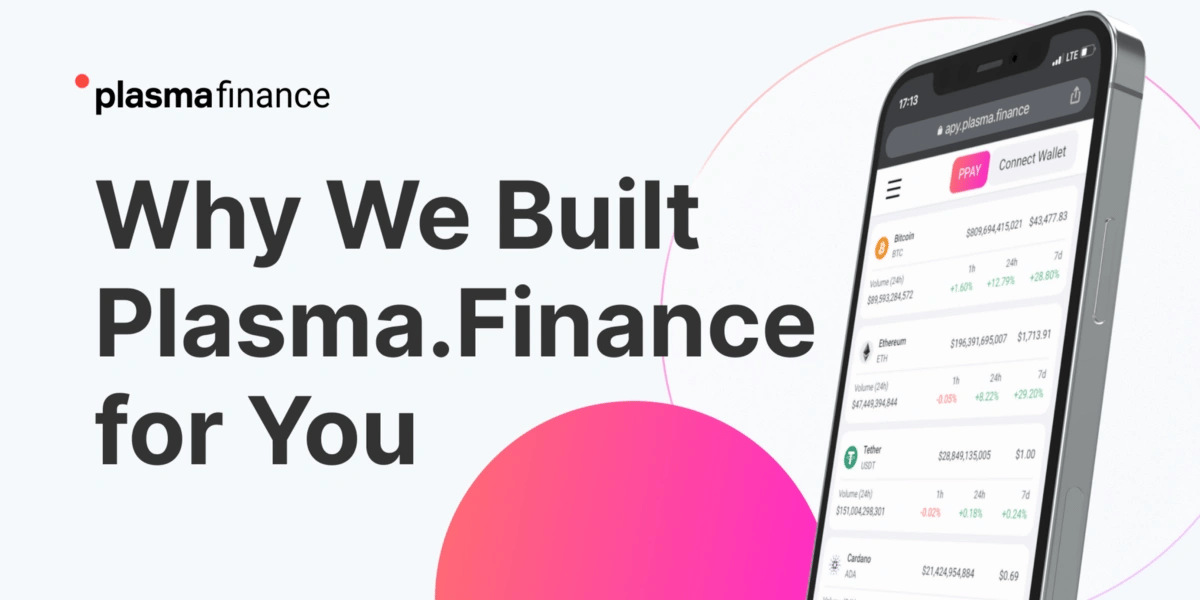
Plasma.Finance was designed to make DeFi accessible for all, without compromise, for the greater benefit of people. It served as a gateway to DeFi focused on user-friendly, self-custodial tools. The website remains accessible but no longer offers active services; information on the site should be treated as historical [1].
The platform historically brought decentralized protocols under one interface; users could interact with integrated DEXs and DeFi protocols and perform cross-chain swaps where supported. The platform expanded to Polygon in July 2021 to reduce gas costs and improve speed for users; this integration is a past milestone [7].
Overview
Founded in 2017/2018 by Ilia (Illia) Maksimenka, Plasma.Finance was a self-custodial DeFi dashboard that aggregated leading decentralized finance protocols in one place. It aimed to simplify and democratize DeFi and lower barriers to entry through a single interface for portfolio management, swaps, yield tools, and fiat rails. In July 2021, Plasma Finance went live on Polygon, providing users lower fees and faster confirmations compared with using Ethereum mainnet alone; this should be viewed as a historical milestone. The dashboard and live features have since been deprecated/archived, and users should not rely on fiat rails, swaps, or staking being operational [1] [7].
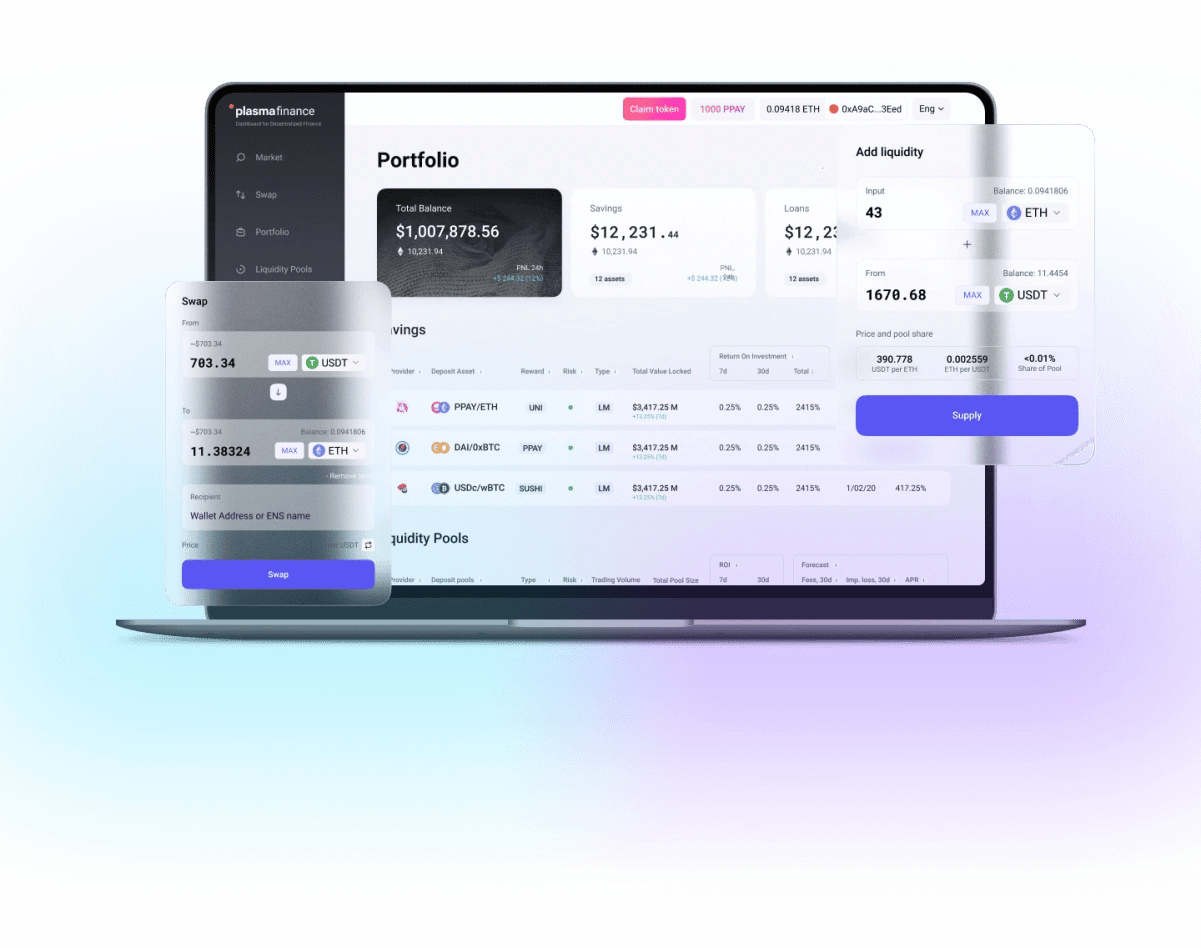
Historically, users managed their DeFi portfolio from a single interface using MetaMask or other Web3 wallets. These features are no longer actively maintained; availability is discontinued and may not function. Users should independently verify any smart contracts and avoid depositing funds into legacy interfaces or contracts without a thorough, independent risk review [1].
Plasma.Finance offered advanced financial tools designed to keep users in control without requiring deep technical expertise; these descriptions are historical and do not imply current operability [1].
Bridging centralized and decentralized finance via integrated fiat on
- and off-ramps was a key focus; these services are not maintained and should be treated as discontinued/archived [1].
Cross-chain access was supported historically (e.g., via Polygon). Current functionality should be assumed inactive by default; consult archived snapshots or past official statements for historical details [7].
At Plasma.Finance we see people as time travelers, hurtling towards the future at the speed of 60 seconds a minute, 60 minutes an hour, 24 hours a day. We can’t travel through time any faster than that, but we can increase the pace of technological innovation. With a clear vision, application and ambition we hasten that future closer
Historically, the dashboard supported swapping via integrated DEXs, liquidity, staking and savings features, and portfolio management. PPAY functioned as the ecosystem utility token used for rewards and participation across Plasma Finance products.
Plasma Dashboard
Plasma’s DeFi Dashboard historically aggregated popular DeFi protocols across supported blockchains and allowed users to manage their DeFi portfolio in a single interface. These features have been deprecated; the dashboard is inactive/archived and should not be considered operational.
Historical features on the dashboard included:
- Portfolio Management
- Liquidity Pools
- Staking/Yield (Savings)
- Fiat On/Off Ramp
- DEX & SWAP Aggregation
- Cross-Chain Access on supported networks (e.g., Polygon)
Feature availability and integrations are no longer maintained; archived materials and the historical Polygon announcement provide context for past functionality [1] [7].
Features
Swap
Historically, the swap feature aggregated popular DEXs and determined available routes and rates in real time. This feature is no longer actively maintained and should be considered discontinued/inactive by default. Any legacy contracts or interfaces should be independently audited before use [1] [7].
Liquidity Pools
The Dashboard historically surfaced liquidity opportunities and analytics from integrated DEXs and protocols. These integrations are not maintained and should be treated as archived; users should not assume deposits or withdrawals work as intended [1].
Borrow
Borrowing/lending links to external protocols were historically accessible from the dashboard. This functionality is no longer maintained and should be considered discontinued [7].
Onboarding
Past on-boarding flows for setting up Web3 wallets and buying crypto via fiat on-ramps are not maintained and should be treated as discontinued [1].
Market Overview
The Market Overview historically provided market data and DeFi highlights. This section is no longer maintained and may not reflect live data; treat as archived [1].
Plasma Chain
PlasmaChain was described by the project as core infrastructure for PlasmaPay and DeFi services—an L1 for financial use cases, payments, and dApps. As of 2026‑05‑04, PlasmaChain is discontinued/archived and not maintained. All claims below are historical; users should verify any infrastructure or contracts independently before interacting [1].
Plasma’s architecture and tooling historically aimed to support Web3 builders with components for payments processing, sending/receiving cross-border transactions, and integrating liquidity with minimal friction.
A first layer protocol optimized for cross border payments, digital currency innovation and speed
Top Layer: DApps — Distributed applications (games, services, platforms, social networks) running on Plasma infrastructure.
Middle Layer: Financial Assets — Tokenized financial assets (e.g., fiat, stocks, commodities) for trading and storage in digital wallets.
OAuth Connector For Web 3.0 Dapps: An authorization layer for decentralized applications on Plasma infrastructure without the need for external extensions.
Layer One: Plasma — A base chain for Web3 transactions and dApps, focused on practical throughput and cost-efficiency.
PPAY Token
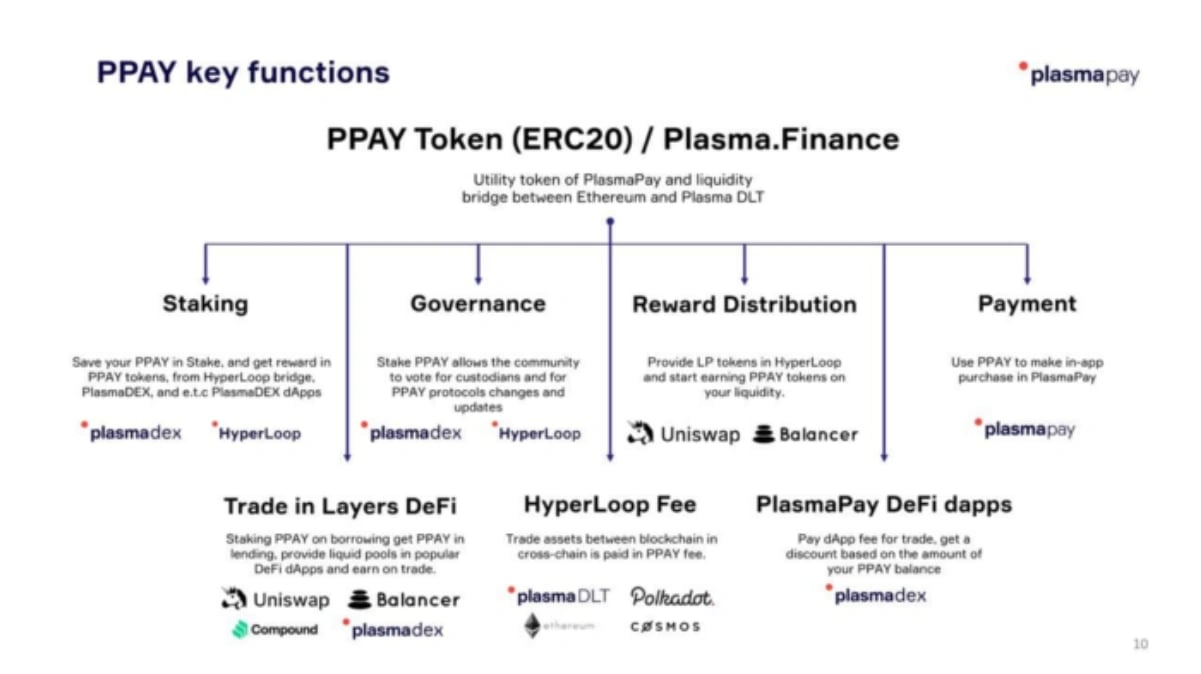
PPAY (ERC‑20) was the utility token of Plasma Finance and PlasmaPay. As of 2026‑05‑04 the project is inactive, market activity is minimal, and PPAY liquidity is low; the asset is not tradable on Kraken and appears delisted or unlisted on many venues. Treat PPAY primarily as a historical asset and exercise extreme caution; market figures fluctuate and may not be reliable due to illiquidity [6].
PPAY Key Function (historical):
- Rewards: Provide liquidity or participate in supported programs to earn PPAY rewards.
- Staking/Savings: Stake PPAY (e.g., via Savings) and receive xPPAY, reflecting a claim on future rewards.
- Governance: Stake-based governance mechanisms for protocol updates where activated.
- Fees/Utility: Fee discounts and utility across Plasma dApps where applicable. [6]
PPAY Tokenomics
Historical tokenomics (launch model): PPAY’s maximum supply was set at 1 billion, with emissions and allocations across private, community, and team/advisory pools, including a significant portion reserved for community rewards/liquidity mining. Distribution and vesting schedules were structured across multiple pools and periods. Over time, circulating supply increased as allocations vested and rewards were distributed; see the “Current market data” section for a historical snapshot. Treat all tokenomics data as historical [6].
Distribution (Historical)
PPAY Emission Model: PPAY was issued across pools with various lockups and cliffs, with more than half of supply earmarked for community rewards at launch design.
Distribution & price model: The token generation event brought a limited tradable supply to market at launch, with subsequent unlocks per vesting.
| Rounds | percent % | PPAY (1b) | TGE day | Monthly Thereafter |
|---|---|---|---|---|
| Seed Round $0.01/PPAY | 5.0% | 50,000,000 | 10% | 10% |
| Private Round 1 |
- $0.015/PPAY | 10.0% | 100,000,000 | 16% | 16.8% | | Private Round 2 - $0.02/PPAY | 7.5% | 75,000,000 | 33% | 33.5% | | | | | Cliff,m | Vesting | | Market Making & Exchanges | 1.0% | 10,000,000 | - | - | | Team Options | 10.0% | 100,000,000 | 6 | 18 | | Advisory | 2.5% | 25,000,000 | 1 | 5 | | Equity Holders allocation | 6.5% | 65,000,000 | 2 | 6 | | Community | 52.5% | 525,000,000 | 2 | 24 | | Reserves | 5.0% | 50,000,000 | 4 | 3 |
Notes: The table reflects the initial emission and vesting design communicated at launch; live circulating supply later reflected unlocks and distribution over time. See the “Current market data” section for a dated snapshot [6].
xPPAY
xPPAY is a PPAY derivative token representing a share of the historical staking/savings pool and a claim on accrued rewards over time. These mechanisms are not maintained; users should avoid interacting with legacy contracts without independent verification and risk assessment [1].
PPAY Staking via Savings
Historically, Plasma.Finance users could stake PPAY via the Savings module:
- Deposit PPAY to receive xPPAY (reflecting a claim on future rewards per product terms).
- Redeem xPPAY for PPAY to unstake and withdraw.
These flows are not maintained; APY, accrual, and redemption mechanics referenced in past UIs are archival and should not be relied on [1].
Funding
Plasma Alliance raised a total of $1.6M in funding over 1 round, a Seed round raised on Oct 5, 2017. [8]