0% read
Anna Kazlauskas
Anna Kazlauskas
Anna Kazlauskas is the founder of Vana, a blockchain-based platform for decentralized data management and OpenData Labs, an infrastructure for consented AI training data. Her work centers on AI applications, blockchain technology, and user-controlled data ecosystems. [1] [2] [7]
Education
Kazlauskas holds a dual degree in Computer Science and Economics from the University of California, Berkeley.
Her academic background includes research in machine learning, which later informed her professional focus on integrating technical and socioeconomic perspectives in technology development. [1] [2] [4] [7]
Career
Kazlauskas started her career in 2014 as a researcher across various international organizations.
In 2017, she co-founded Iambiq, a YC-backed company using machine learning to sort documents and served as the CTO until 2018. [1]
In 2018, she joined Celo as a core engineer focused on building for all. She worked to make the Celo blockchain work on mobile so that the billion people who need financial infrastructure most can safely store value on their phones. [1]
In 2022, Kazlauskas founded Vana, a platform using blockchain infrastructure to allow users to manage and monetize personal data via smart contracts. The platform operates as an alternative to centralized data storage models, enabling individuals to retain control over their information.
Kazlauskas has written articles for CoinDesk__ and participated in discussions on podcasts such as BlockHash, addressing topics like blockchain’s role in data governance. She has also mentored startups in Web3-focused accelerators and spoken on panels about diversity in technology leadership.
In 2022, she co-founded OpenDataLabs[12] , a platform that builds the infrastructure for consented AI training data at scale, and she serves as the CEO. [1]
Awards and Recognition
- Forbes 30 Under 30, Technology (2023)
- The Org’s "Top Women in Web3" (2022)
Kazlauskas promotes initiatives aimed at increasing gender diversity in STEM fields, including Girls Who Code. Her social media activity includes commentary on technology trends and literature.
Vana and Corsali are frequently cited in discussions about decentralized data management and collaborative AI. Kazlauskas’s projects are referenced in analyses of user-centric approaches to blockchain and AI development. [1] [2] [3] [4] [5] [6] [7] [8]
Interviews
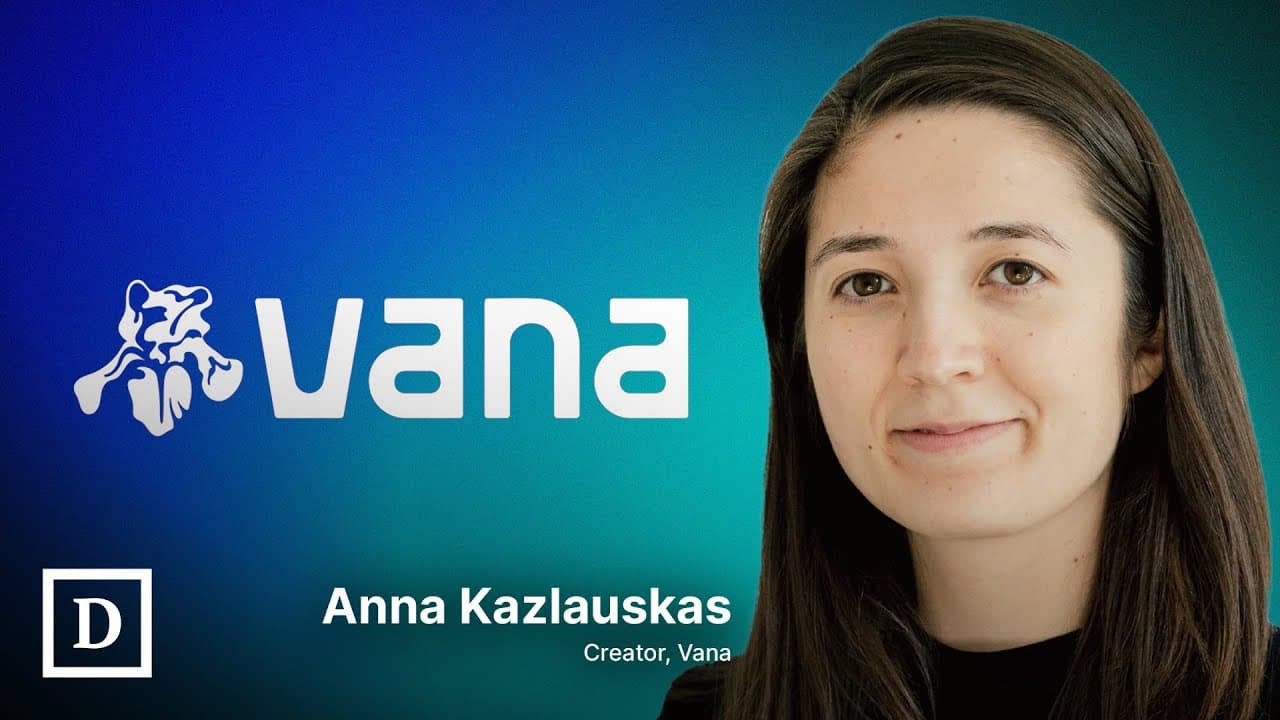
The Defiant Interview #01
In a December 2024 interview on The Defiant YouTube channel, Anna Kazlauskas outlined Vana’s approach to decentralizing data ownership through blockchain-based systems. According to her, Vana enables users to reclaim control over their personal data via decentralized autonomous organizations (DAOs), which allow collective pooling and monetization of information. Kazlauskas argued that this model challenges centralized tech companies by shifting governance and economic benefits to individuals.
She emphasized the integration of AI and blockchain, stating that user-owned data could improve AI model training by addressing the scarcity of diverse datasets. By allowing users to contribute data through DAOs, Kazlauskas suggested that AI researchers might access broader information while compensating individuals for their contributions.
She also discussed the legal implications of data ownership, noting that Vana’s framework ensures users retain legal rights over their data.
Regarding future developments, Kazlauskas mentioned plans to expand Vana’s ecosystem, including shared ownership of AI models trained on user-contributed datasets. She described this as part of a broader vision to decentralize AI development, enabling users to participate directly in the value generated by their data. [9]
Beacon Podcast (Web3 Unlocked) #02
In an October 2024 interview on the Beacon Podcast, Anna Kazlauskas discussed her transition from traditional finance to decentralized AI and Web3. She described Vana’s framework, which allows users to retain ownership of their data while contributing it to AI models through blockchain-based systems.
Kazlauskas highlighted the role of tokenomics in incentivizing user participation, noting that the platform’s design ensures direct economic benefits for data contributors.
When addressing challenges in building a Web3 company, she emphasized the importance of hiring team members aligned with the company’s mission, particularly in navigating market fluctuations. Kazlauskas also explored the concept of data DAOs, contrasting them with traditional data trusts and unions.
She cited the Reddit Data DAO as an example of collective bargaining power, where users negotiate terms for data usage collectively rather than individually.
Kazlauskas acknowledged the scarcity of diverse AI training datasets, arguing that decentralized ownership models like Vana’s could address this by enabling broader access to user-controlled data. She outlined plans to expand Vana’s ecosystem, including shared governance of AI models trained on contributed datasets. [10]
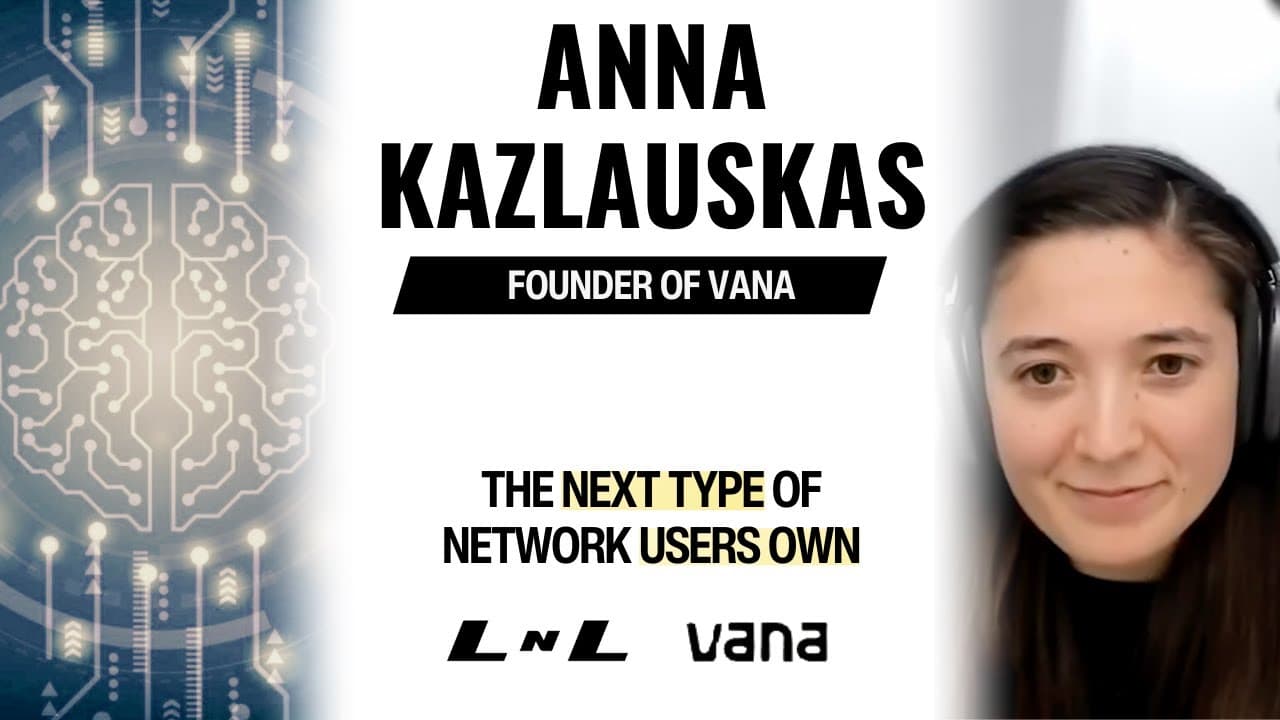
Anna Kazlauskas on Vana's $5M Funding #03
In a September 2024 interview with LegendsNLeaders, Anna Kazlauskas discussed Vana’s $5 million funding round led by Coinbase, which supported her vision of community-driven AI development.
She explained that Vana’s platform enables users to collaboratively contribute personal data to train AI models while retaining ownership through blockchain infrastructure. At the time of the interview, Vana reported over one million users accessing its decentralized data tools.
Kazlauskas cited a collaboration with Reddit that resulted in 140,000 sign-ups for a data-pooling initiative, illustrating the potential of collective user participation.
She emphasized the importance of aligning fundraising strategies with long-term goals, noting that investor partnerships should prioritize shared ecosystem growth over short-term gains.
When asked about Vana’s future, she outlined ambitions to expand the platform’s user base to one billion, aiming to establish decentralized data ownership as a standard in AI development. [11]
See something wrong?

Average Rating
Based on over 1 ratings
How was your experience?
Give this wiki a quick rating to let us know!
Edited By
On July 10, 2026. 10:13 UTC
Edit summary:
Updated wiki content: removed Corsali and UC Berkeley phrase, added and OpenData Labs; changed tags to Founder, Speaker; added 1 reference