Austin Thomas Griffith is a developer, educator, and product builder in the Ethereum ecosystem, known for creating foundational tools that facilitate developer onboarding and rapid prototyping. [1] He is the creator of influential open-source projects including Scaffold-eth, Speed Run Ethereum, and the BuidlGuidl. [2] [3] Griffith’s work focuses on improving the developer experience (DevEx) by creating accessible educational content and practical applications. [4] For his success in leveraging community funding to support his full-time open-source contributions, he was nicknamed "The Quadratic Freelancer" by Ethereum co-founder Vitalik Buterin. [2] As of December 2025, he serves as the Head of Developer Growth for the Optimism Foundation, focusing on expanding the Superchain developer ecosystem. [2] [1]
Austin Griffith attended the University of Wyoming, where he earned both a Bachelor of Science (2003–2008) and a Master of Science (2008–2010) in Electrical Engineering. [1] [5] During his master's program, his thesis work involved developing new curriculum and hardware for a microprocessors class. He transitioned the course from software simulation to physical implementation by creating a platform for students to build autonomous, wall-navigating robots. During his undergraduate studies, he was a lab instructor for an electronics course and developed several hardware and software projects, including an automated drink mixer and an economics game for the College of Agriculture. [1]
Griffith began his professional career outside of the blockchain space, gaining experience in industrial automation and working with SCADA systems for the oil and gas industry. [3] From October 2010 to November 2018, he worked at Madwire, a marketing and software company. He started as a Lead Developer and was later promoted to Director of Product Development, a role in which he led the creation of "Captain," a cloud service orchestration software that used Docker to streamline service deployment. [1]
Around 2018, Griffith became deeply involved in the Ethereum ecosystem. He won First Place Overall at the Wyoming Hackathon for a project called "Token Subscriptions," a system for creating recurring crypto payments using meta transactions. [1] In 2019, he began using Gitcoin Grants to fund his open-source work. After a successful campaign in Gitcoin's third funding round, he was able to leave his job at Madwire to focus full-time on building tutorials and public goods for Ethereum. This transition marked his emergence as "The Quadratic Freelancer," a term coined by Vitalik Buterin to describe his success with the platform's quadratic funding model. [2]
In September 2018, Griffith joined the Ethereum Foundation, where he worked on Research & Development and Developer Experience until January 2022. [1] During this tenure, he created many of his most well-known educational tools, including the initial versions of Scaffold-eth, eth.build, and the Burner Wallet. His focus was on mentoring developers and creating public goods tooling to lower the barrier to entry into the ecosystem. [1] [3]
In January 2022, Griffith moved from the Ethereum Foundation to Optimism, where he took on the role of Head of Developer Growth. His work now centers on fostering the developer community around the OP Stack and the broader Superchain ecosystem. In this capacity, he has also participated in Optimism's governance as a "Citizen." [1] [2] [6]
Griffith is a prolific open-source builder whose projects primarily serve as educational and prototyping tools for the web3 community. His work has been supported by over 10,000 unique contributors on Gitcoin, where he has raised over $220,000 for his public goods projects. [2]
Scaffold-eth is an open-source, forkable toolkit designed for the rapid prototyping of decentralized applications on Ethereum and other EVM-compatible chains. [1] It packages a pre-configured development stack that allows builders to focus on application logic rather than setup. The second iteration, Scaffold-eth 2, incorporates modern web3 tools such as Next.js, RainbowKit for wallet connections, and Wagmi hooks, with support for both Hardhat and Foundry as smart contract environments. Key features include hot-reloading for both the frontend and smart contracts, as well as a built-in burner wallet for seamless testing. The project is widely used in hackathons and tutorials and is considered a foundational resource for new web3 developers. As of April 2023, the original Scaffold-eth repository had over 9,100 stars and 3,400 forks, while the newer Scaffold-eth 2 continues to see active development. [7] [3]
Speed Run Ethereum is a hands-on educational challenge that teaches developers the fundamentals of Solidity and smart contract development. [3] Built on Scaffold-eth, it requires users to clone a repository and complete a series of tasks, such as creating a staking contract or a token vendor. [4] This practical, project-based learning path serves as a public good for developer education. The platform's effectiveness as a learning tool is demonstrated by its GitHub metrics; as of April 2023, its repository had a high fork-to-star ratio, with 3,800 forks to 392 stars, indicating that thousands of developers have used it to complete the challenges. [2]
The BuidlGuidl is a curated collective of skilled Ethereum developers founded by Griffith. It functions as a talent pipeline and collaborative community, with admission gated by the successful completion of the Speed Run Ethereum challenges. [3] Once accepted, members can participate in paid "builds," which are short-term projects funded by protocols, DAOs, and other organizations within the ecosystem. The BuidlGuidl aims to create a sustainable model for funding public goods and prototypes. The collective has launched over 600 builds and has paid out more than 300 ETH to its member builders for their contributions. [2]
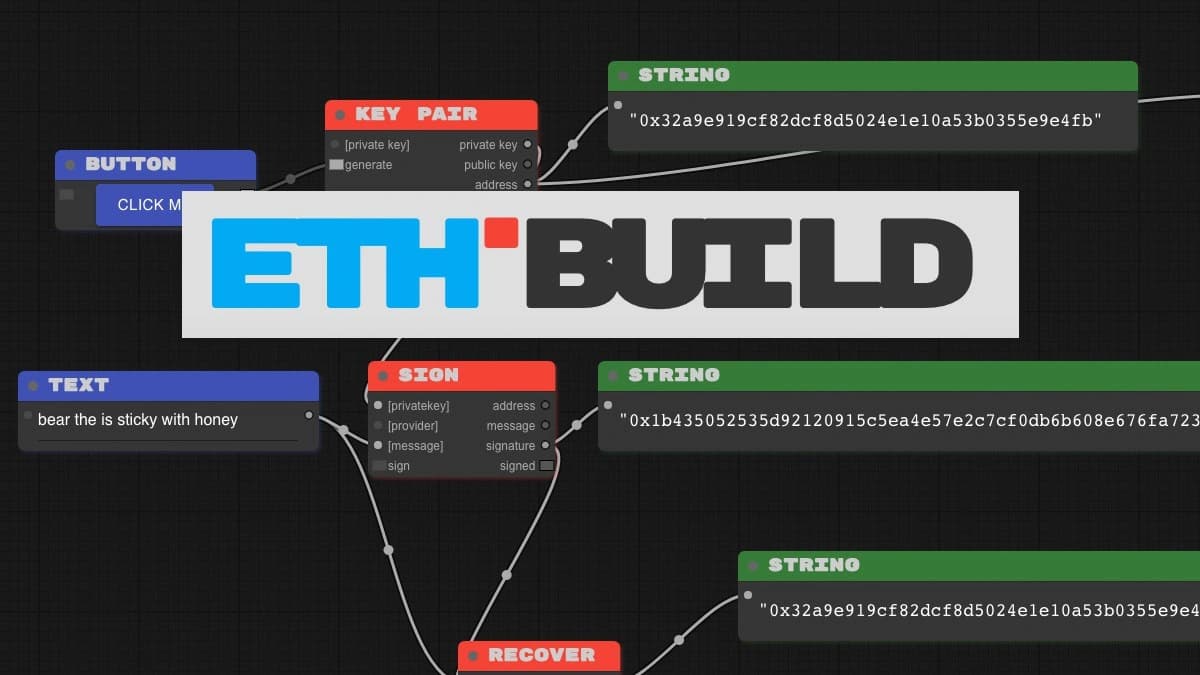
eth.build is a visual, web-based educational sandbox for learning and experimenting with core Ethereum concepts without writing code. [1] Users can drag and drop functional blocks representing Ethereum primitives—such as accounts, transactions, and cryptographic signatures—to understand how they interact. The tool provides a "shallow end of the pool" for newcomers to tinker with web3 protocols and understand low-level mechanics in an intuitive way. [3]
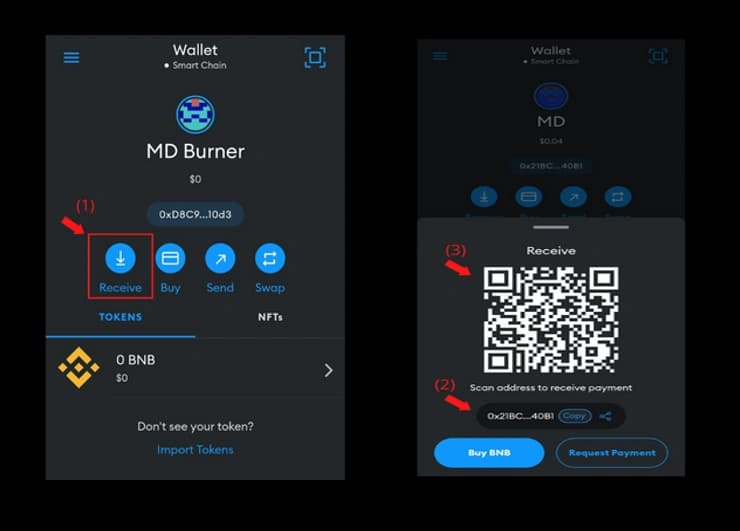
The Burner Wallet is a concept popularized by Griffith for a temporary, browser-based Ethereum wallet designed for fast, low-stakes transactions. [1] It eliminates the friction of downloading a browser extension or mobile app, allowing new users to be onboarded instantly via a QR code or link. The wallet's private key is stored in the browser's local storage, making it ideal for event ticketing, conference POAPs, or simple dApp interactions. The concept often utilizes meta-transactions to abstract away gas fees and sidechains like Gnosis Chain (formerly xDai) for fast, inexpensive transactions. [1]
In an April 2019 study at Emojicoin.Exchange, Griffith distributed 50 paper wallets to students, 80% of whom began playing a mobile blockchain game within seconds of scanning the QR code. The 40 participating players generated over 20,000 transactions on the xDai network in 24 hours, demonstrating the wallet's effectiveness at reducing user friction and enabling high-volume engagement. [4]
Griffith has created numerous other open-source dApps and games that often serve as proof-of-concepts for new blockchain mechanics:
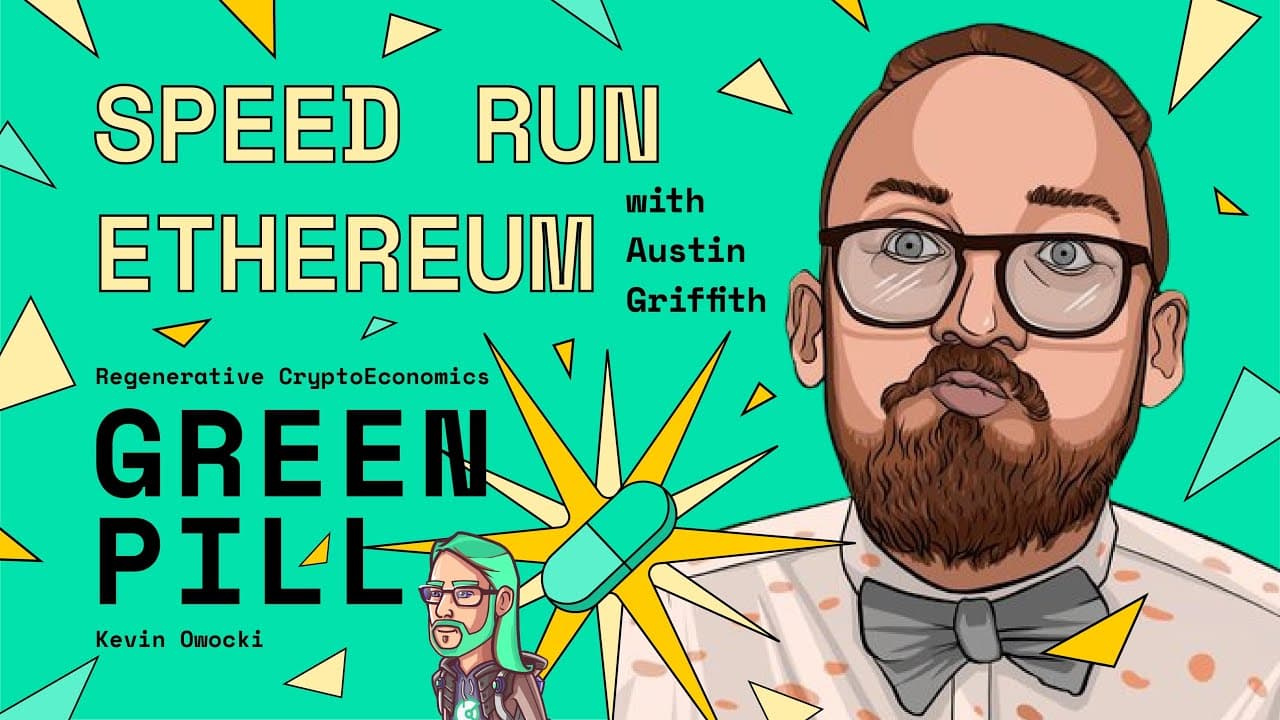
In an interview published on July 21, 2022, on the Green Pill YouTube channel, Austin Griffith outlined his views on Ethereum development, education, and ecosystem organization. The discussion, hosted by Kevin Owocki, addressed Speedrun Ethereum, Scaffold-ETH, and Build Guild, as well as broader considerations related to developer participation during periods of market contraction.
According to Griffith, Speedrun Ethereum was developed as a structured, practice-oriented curriculum intended to introduce developers to Ethereum through incremental application-building exercises. He described the initiative as an attempt to reduce entry barriers by emphasizing direct interaction with smart contracts and decentralized application workflows, rather than focusing primarily on theoretical instruction. In his account, Scaffold-ETH functions as a complementary toolset by offering preconfigured components and templates that simplify early-stage development and testing.
Griffith also discussed Build Guild as a mechanism designed to combine community coordination with financial support. He explained that the project distributes ETH to participants through ongoing, contribution-based streams, which, in his view, allows developers to allocate time to open-source work without relying on conventional employment arrangements. He framed this structure as an experiment in sustaining collaborative development through transparent reporting and continuous evaluation.
During the interview, Griffith stated that he views Ethereum primarily as an infrastructure for coordination, with potential applications extending to governance systems, identity frameworks, and public goods. He noted recurring challenges within the ecosystem, including the transition from experimental prototypes to production-ready software, and characterized these challenges as recurring features of open and iterative development environments.
The interview presents Griffith’s perspective on Ethereum as an ecosystem shaped by developer education, shared tooling, and incentive mechanisms, reflecting his interpretation of how long-term participation and coordination can be maintained within decentralized development communities. [8]
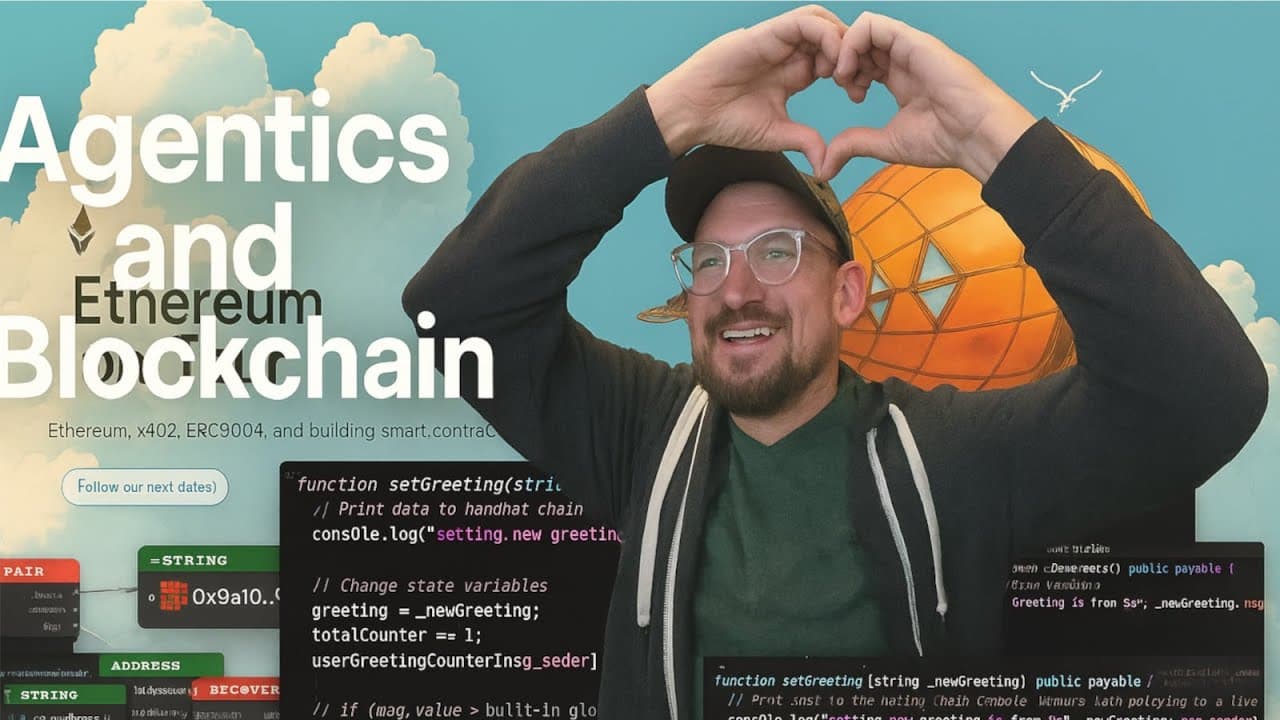
This article summarizes a guest lecture published on the YouTube channel Austin Griffith on October 27, 2025. The content reflects the viewpoints presented by Austin Griffith, an educator and developer associated with the Ethereum Foundation.
The lecture was delivered at Columbia University on October 15, 2025. It addresses the interaction between AI agents and blockchain systems, outlining Ethereum as a platform based on smart contracts, cryptographic key pairs, and immutable transaction records. These elements are described as enabling coordination between participants without reliance on centralized intermediaries.
Within this context, Griffith references deployed smart contracts such as Wrapped Ether and decentralized finance mechanisms that operate through overcollateralization and liquidation processes. These examples are used to describe how protocol rules and incentives are enforced through code rather than through external authorities.
The lecture also covers scalability approaches through Ethereum Layer 2 networks, using Arbitrum as an implementation example. A live deployment is presented to show the process of publishing decentralized applications using commonly available development tools.
Another section of the lecture focuses on emerging standards for AI agents on Ethereum. ERC-8004 is introduced as a registry structure intended to support agent identification and reputation tracking. The registry is described as a mechanism for enabling interactions between autonomous agents based on recorded metadata and historical activity.
In addition, the lecture examines payment-based access models using the HTTP 402 status code in combination with on-chain verification and facilitator patterns. This model is demonstrated through an example deployed on Base, illustrating how blockchain transactions can be linked to web-based service access.
Overall, the lecture outlines how Ethereum’s architectural properties, including immutability and decentralized validation, are applied to decentralized applications and agent-oriented systems. The presentation combines conceptual descriptions with implementation examples to document current development practices within the Ethereum ecosystem. [9]