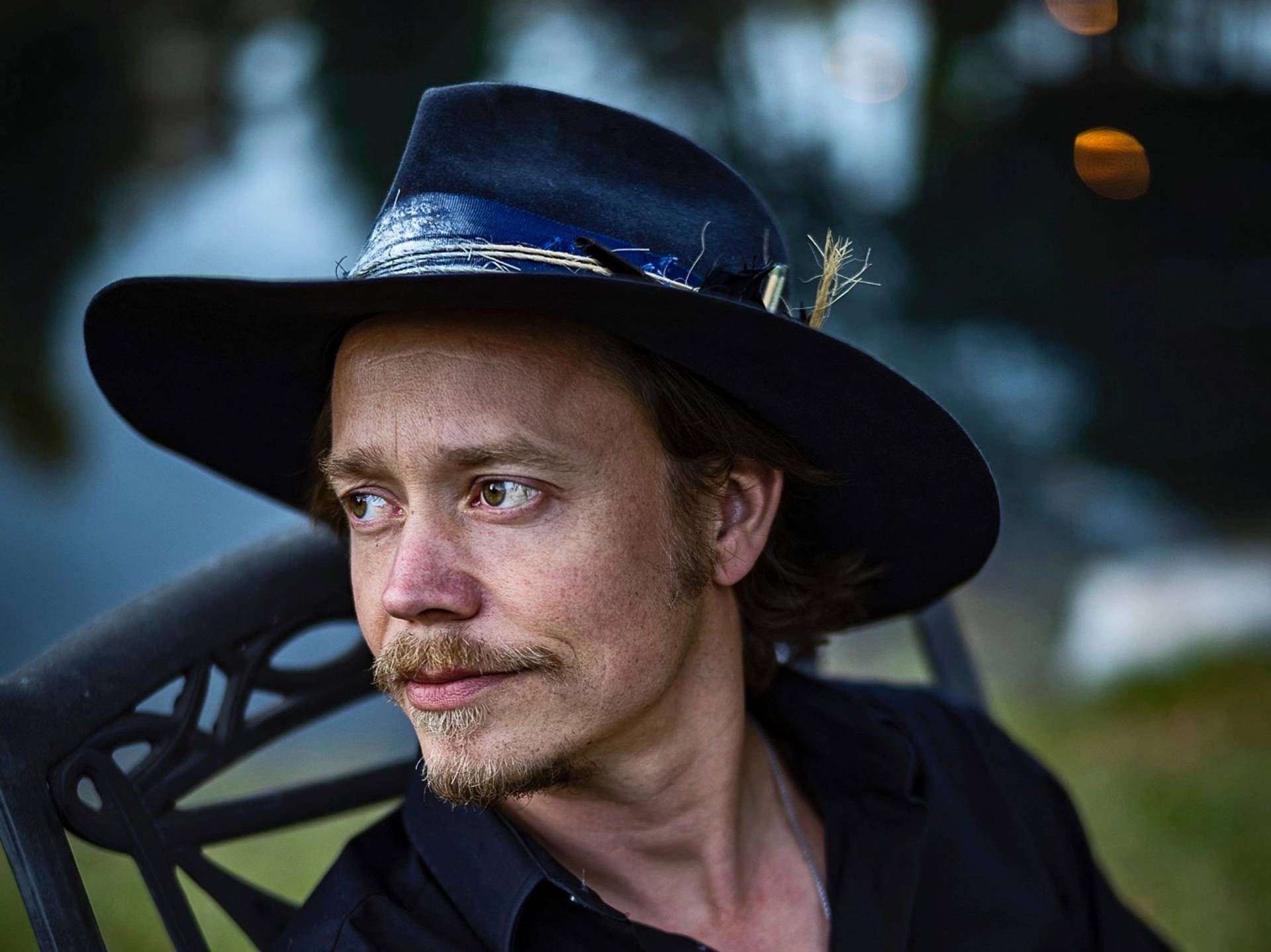
Brock Pierce
Brock Jeffrey Pierce is an American entrepreneur, futurist, philanthropist, economist, creator, and previous actor known primarily for his work in the cryptocurrency industry. He is a co-founder of companies including Tether, Blockchain Capital, Block.one, and Mastercoin (the first Initial Coin Offering). [35] In 2020, he ran as an independent candidate in the United States presidential election. [1]
Education
Brock Pierce studied Film at the University of Southern California but dropped out in the first year and did not graduate. [9]
Career
Brock Pierce is a futurist, entrepreneur, philanthropist, and impact investor with a track record of founding, advising, and investing in disruptive businesses. He is credited with pioneering the market for digital currency and has raised more than $5B for companies he has founded, opening opportunities for millions of people. [9] [35] In 2020, Brock Pierce received the first U.S. presidential vote cast on blockchain when he ran as an independent candidate. [14]
Pierce is the Chairman of the Bitcoin Foundation and co-founder of EOS Alliance[2], Block.one[3], Blockchain Capital[4], Tether, and Mastercoin[5] (first ICO). Pierce is an early investor in Bitcoin and one of the largest investors in the Ethereum crowdsale. He is the founder of IMI Exchange[6], the world’s leading digital currency marketplace for games, with annual sales exceeding 100M. Investors in the company included Goldman Sachs. [9] [35]
Pierce founded ZAM[7], one of the world’s largest media properties for gamers, which was acquired by Tencent[8] in 2012. He founded IGE[10], the pioneer of digital currency in online games, achieving revenues exceeding $100 million in 2006 and sold in 2007. Pierce is also a co-founder of D10e[11], GoCoin[12], Blade Payments[13], Five Delta (sold NASDAQ: SRAX), Xfire 2.0, Evertune, GamesTV, and DEN. He joined the board of Titan Gaming in 2010, becoming CEO in 2012 when it was rebranded to Playsino. [9] [35]
Pierce is a sought-after speaker who has spoken about the power of blockchain technology and decentralization at global events and institutions. Brock Pierce has been a lecturer at Singularity University and has spoken at Milken Global Conference, Mobile World Congress, Wired, INK, Stanford University, USC, and UCLA. He has also been featured in numerous publications including The New York Times, Forbes, Fortune, Wired, and Rolling Stone. [9]
Actor
Brock Pierce was born in Minnesota and appeared in commercials as a toddler. His first major role was playing a young Gordon Bombay in The Mighty Ducks (1992) and its sequel D2: The Mighty Ducks (1994). He starred as Luke Davenport in First Kid (1996). Pierce had small roles in Little Big League (1994), Ripper Man (1995), Problem Child 3 (1995), Three Wishes (1995), Earth Minus Zero (1996), and The Ride (1997). [15] [35]
Digital Entertainment Network (DEN)
Brock Pierce retired from acting at the age of 16 and joined as an executive vice-president and minor partner with Marc Collins-Rector[16] and Chad Shackley[17] in setting up a Digital Entertainment Network (DEN), which succeeded in raising 250,000 a year and held 1% of the company's shares. [1]
DEN became slated for a $75 million IPO in October 1999, however, the IPO was withdrawn in the wake of allegations of sexual assault against Collins-Rector[16]. All three executives subsequently resigned. Layoffs followed in February 2000. While a new executive team led by former Capitol Records President Gary Gersh and former Microsoft executive Greg Carpenter attempted to relaunch in May 2000, DEN filed for bankruptcy and shut down in June 2000. [1]
Bitcoin & Cryptocurrency
In 2013, Brock Pierce joined brothers Bart[19] and Bradford Stephens[18] in founding venture capital firm Blockchain Capital (BCC).[4] By October 2017, the firm had reportedly raised $85 million in two venture funds. Blockchain Capital later raised a 3rd fund using a digital security offering on the blockchain, one of the first traded security tokens. The firm has since made over 100 investments across four funds. [21] [35]
Pierce worked with Mastercoin[5], a startup that raised capital via an initial coin offering (ICO) in 2013. According to Bloomberg, this “kicked off a worldwide ICO craze, with hundreds of startups raising billions of dollars”. [26]
In 2014, Pierce purchased the defunct exchange Mt. Gox for two Bitcoin and filed an offer to buy its assets through a Cypriot entity called Sunlot Holdings Ltd. The month before, Mt. Gox had shut down operations and filed for bankruptcy in Tokyo after announcing that it had lost 850,000 Bitcoin. In February 2019, Pierce announced the "Gox Rising Project" with the goal of reviving the exchange and compensating creditors. [22] [35]
In May 2014, Brock Pierce was elected Director of the Bitcoin Foundation[34]. Several members of the Bitcoin Foundation resigned over concerns about the directors, and the organization announced its insolvency in July 2015. [23][24]
After Hurricane Maria devastated Puerto Rico in 2017, Pierce relocated to the island to assist in rebuilding efforts and help establish it as a cryptocurrency hub. He has also served as an advisor for multiple crypto companies, including Airswap, Bancor, BitGo, BlockV, Bloq, Metronome, Shyft, and tZERO. [35]
In a February 2018 issue of Forbes magazine, Pierce was named in the "top 20 wealthiest people in crypto" with an estimated net worth between 1.1 billion. [25]
In 2021, Pierce joined the board of the Bitcoin mining company Bit Digital. He later purchased $1 million worth of the company's shares in 2025, around the time Bit Digital announced a new strategy involving its Ethereum treasury. [36]
Tether
Brock Pierce co-founded the cryptocurrency Tether with Reeve Collins and Craig Sellars in 2014. Tether surpassed Bitcoin in trading volume with the highest daily and monthly trading volume of any cryptocurrency on the market in 2019. Tether is a blockchain-based stablecoin pegged 1:1 to the U.S. dollar and backed 100% by actual assets in the Tether platform’s reserve account. In 2020, a court permitted the Attorney General of New York to pursue a claim that Bitfinex, an affiliated exchange, did not disclose the loss of over $800 million in commingled funds. [26]
In an interview in July 2020, Pierce said his involvement in Tether ended in 2015 but described Tether as "one of the most important innovations in currency." [27]
"I was one of the principal founders of Tether, but I was never a director, nor officer of the business. I was passively involved. In 2015, I transferred 100 percent of my ownership to our minority partners in exchange for zero consideration. I have never made one cent from Tether." - Brock said.
Block.one
Pierce co-founded Block.one[3] in 2017, a company that released the EOS.IO software[2]. The ICO raised more than $4 billion, the largest in history. By March 2018, Pierce's role at Block.one[3] had changed to Chief Strategy Officer and he resigned from the company that month to pursue community building. [28]
Philanthropy
Brock Pierce is the vice chair and spokesperson of the U.S. Marines Toys for Tots Foundation of New York, Long Island, and Puerto Rico. [29] His philanthropic work focuses on due process, the rule of law, and the judicial system, leading him to support organizations such as the ACLU, the Foundation for Individual Rights in Education (FIRE), the Center for Individual Rights, and the Brennan Center for Human Rights. [35]
During the COVID-19 pandemic, the Brock Pierce Foundation donated 44.5 bitcoin (valued at over $400,000 at the time) to acquire and distribute personal protective equipment (PPE) in Puerto Rico and the Caribbean. In late 2021, Pierce also funded a new NYPD Gaming Trucks initiative in New York City. [35] [30]
Personal Life
Brock Pierce was born on November 14, 1980. He is married to Crystal Rose, CEO of Sensay, via a smart contract. Their first child, a daughter named Aurora Rose Pierce, was born in March 2019. [35] [31]
Allegations and Legal Issues
DEN Lawsuit
In 2000, a lawsuit was filed against Marc Collins-Rector and Brock Pierce by three former employees of the Digital Entertainment Network (DEN). The suit alleged that Collins-Rector and Pierce supplied drugs to the plaintiffs and engaged in sexual coercion. At the time of the alleged events, Pierce and one of the plaintiffs were minors. [32]
Following the allegations, Pierce left the United States and was later arrested in Spain in 2002, though he was subsequently released without being charged. Collins-Rector pleaded guilty to separate charges and departed the U.S. [32]
The lawsuit against Pierce was voluntarily dismissed by the three plaintiffs, who received no financial settlement. Court documents indicate that Pierce paid $21,600 to an attorney for one of the plaintiffs to cover legal expenses, as a precondition for the attorney to file the dismissal requested by his client. [33]
Association with Jeffrey Epstein
In early 2026, documents released by the U.S. Justice Department provided details about the association between Brock Pierce and Jeffrey Epstein. Reports on these documents indicate their interactions began in 2011, after Epstein's 2008 conviction. Pierce attended a conference on Saint Thomas, which was reportedly organized to improve Epstein's public image. [37]
Their email correspondence reportedly continued until spring 2019. A 2019 statement from a spokesperson for Pierce had characterized their communications as infrequent and business-related. [37]
The released documents reportedly include details of multiple meetings, including one at Epstein's residence in Manhattan in 2011. In 2017, Pierce is said to have invited Epstein to a Masonic Temple in San Juan, Puerto Rico. [37]
The documents also shed light on business dealings between the two. Pierce reportedly brought the opportunity to invest in Coinbase to Epstein, leading to a $3 million investment from Epstein in 2014. Their discussions also included Pierce's plans to acquire the then-defunct crypto exchange Mt. Gox. [37]