0% read
Last updated:
Chuk Okpalugo
Chuk Okpalugo is a product leader, product strategist, author, angel investor, startup advisor, and recognized authority on stablecoin infrastructure and on-chain finance. He is known for his work in both traditional finance and the crypto-native industry, particularly for his in-depth analysis of the stablecoin market. Okpalugo is the author of the newsletter the Stablecoin Blueprint, the editor of The Weekly Stable, and co-host of the Money Code podcast. [3] [1] [2] [4] His career includes roles at financial institutions like Morgan Stanley and Silver Lake Partners, as well as product leadership positions at crypto-focused companies such as Paxos. [1]
Education
Chuk Okpalugo attended the University of Oxford, where he studied Medical Sciences. He later pursued graduate studies at Harvard Business School, earning a Master of Business Administration (MBA) with Distinction. [1] [4]
Career
Okpalugo's career spans traditional finance, private equity, and crypto product leadership. He began his career as an Analyst at Morgan Stanley, where he focused on UK Mergers & Acquisitions (M&A). Following this, he joined the private equity firm Silver Lake Partners as an Associate, where he was involved in technology investments. [1] [4]
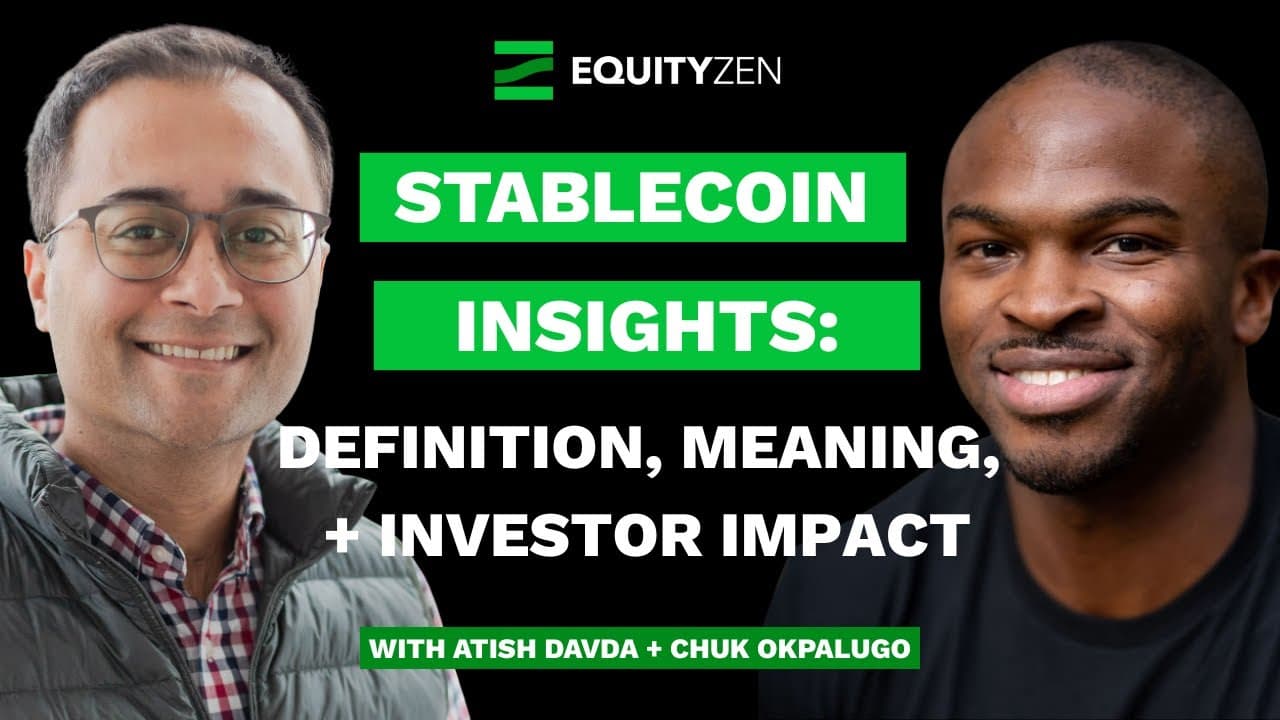
After his time in traditional finance, Okpalugo transitioned into product management roles within the technology sector. He held senior product positions at EquityZen, a marketplace for pre-IPO company shares, and later at Ribbon, a real estate technology company. [1]
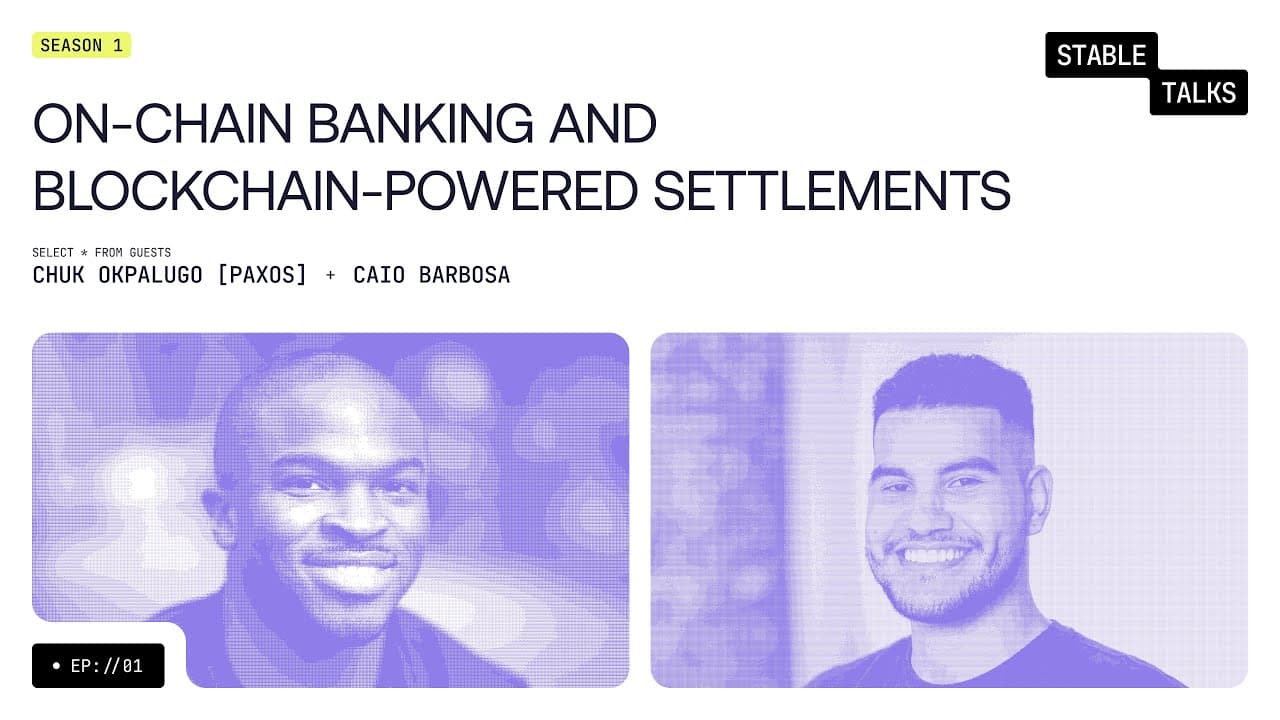
Okpalugo later became a Product Leader at Paxos Trust Company, a regulated blockchain and tokenization infrastructure platform. At Paxos, his work concentrated on driving innovation in payments, blockchain integrations, and digital asset settlement. He focused on powering cross-border treasury applications for global enterprises and fintech companies, with the goal of establishing regulated stablecoins as a foundational rail for modern finance. [1] Sources indicate that by the latter half of 2025, Okpalugo was a former employee of Paxos. On September 15, 2025, he publicly announced that he was "exploring a stablecoin payments startup," noting the venture's potential to accelerate growth in B2B payments and on-chain foreign exchange (FX) markets. [2]
In addition to his product leadership roles, Okpalugo runs newsletter called Stablecoin Blueprint and acts as an advisor to financial institutions and fintech companies on product strategy. He has over a decade of experience in building and investing in B2B, B2C, and enterprise fintech products. [3]
Media and Publications
Okpalugo is an active author, editor, and commentator in the digital finance space, contributing to several media properties focused on stablecoins and financial technology. His writing often covers topics such as stablecoin payments, on-chain banking, and foreign exchange (FX). [2] [4]
The Weekly Stable
Okpalugo is the editor of The Weekly Stable, a prominent industry newsletter that provides insights and analysis on the evolving global stablecoin ecosystem. [1] The publication is affiliated with the fintech media brand 'This Week in Fintech' and has a readership of over 85,000 subscribers. [1] [2]
The Stablecoin Blueprint
He is the author of the newsletter titled The Stablecoin Blueprint. The work is aimed at providing a comprehensive guide to understanding the stablecoin landscape. [2]
Money Code Podcast
Okpalugo co-hosts the Money Code podcast. The podcast focuses on discussions related to stablecoins, digital money, and their impact on the financial system. [2]
Industry Commentary and Views
Through his public commentary, primarily on his X (formerly Twitter) account, Okpalugo provides analysis on trends, competition, and adoption within the stablecoin industry. [2]
On Stablecoin Adoption
Okpalugo has argued that conversations about stablecoin adoption are often too narrowly focused on direct benefits like lower transaction fees and faster settlement times. In an August 2025 post, he emphasized that payments are "multiplayer games" that involve a complex ecosystem of participants, including end-users, banks, stablecoin issuers, and liquidity providers. He suggests that successful adoption depends on aligning the incentives of all these players, rather than just on technological superiority. [2]
On USDC vs. USDT
In June 2025, Okpalugo presented a framework he called "A Tale of Two Cities" to explain the different roles of the two largest stablecoins, USDC (issued by Circle) and USDT (issued by Tether). He posited that the two are not direct competitors but are incumbents in two distinct financial paradigms. [2]
- World 1 (USDC): He characterized this world as representing "dollars that are compliant, programmable, and institution-ready." This positions USDC as a tool for the regulated, traditional financial system as it integrates with blockchain technology. [2]
- World 2 (USDT): This world, in his view, represents "dollars that are permissionless and often politically adversarial." This characterizes USDT as a tool for users and markets that operate outside or in opposition to the traditional, permissioned financial system, particularly in emerging markets or for censorship-resistant transactions. [2]
On Stripe and the Payments Industry
Okpalugo has also commented on the strategic positioning of major payment companies entering the stablecoin space. On June 11, 2025, he predicted that "Stripe will acquire the full stablecoin payments stack before most people learn what a stablecoin is," suggesting the company would move aggressively to integrate stablecoin infrastructure into its core services. [2]
In August 2025, following announcements from both Stripe and Circle about plans to launch their own Layer 1 blockchains, he analyzed their differing strategies. He stated that Stripe was "playing offense" by leveraging its massive, built-in distribution network of merchants to push stablecoin adoption. In contrast, he described Circle's move as "playing defense," aimed at protecting its position and creating a dedicated environment for USDC in an increasingly competitive market. [2]
On Industry Talent
In September 2025, Okpalugo commented on the human capital aspect of the stablecoin sector. He stated his belief that there is "insane demand for people who can understand and explain stablecoins in a compelling way," highlighting a talent gap in the industry for individuals who can bridge the gap between the complex technology and broader market understanding. [2]
Public Appearances
Okpalugo is a speaker at industry conferences on fintech and digital assets. In October 2025, he spoke at multiple events, including the Africa Fintech Summit (AFTS) in Accra, Ghana. [1] Later that month, he appeared at the Money20/20 US conference, where he hosted a live session of the "Money Code Podcast". [3] His areas of expertise listed for such events include stablecoin infrastructure, on-chain finance, digital asset settlement, cross-border treasury applications, payments, and blockchain integrations. [1]
See something wrong?

Average Rating
No ratings yet, be the first to rate!
How was your experience?
Give this wiki a quick rating to let us know!
Edited By
On November 24, 2025. 20:48 UTC
Edit summary:
Removed overview section