0% read
Last updated:
Cynthia Lo Bessette
Cynthia Lo Bessette is a financial services lawyer who is the Head of Fidelity Digital Asset Management at Fidelity Investments. She has held senior legal and asset management positions at Fidelity and other investment management firms throughout her career. [1]
Education
Bessette earned her BA in East Asian Studies and Economics from the University of Michigan. She also earned her JD from Fordham University School of Law. [2]
Career
Lo Bessette began her legal career as an Associate at Whitman Breed Abbott & Morgan from 1995 to 1996, followed by an Associate position at Shearman & Sterling from 1996 to 1998. She then joined Scudder Investments as a Vice President, serving from 1998 to 2001, before becoming Associate General Counsel at UBS Global Asset Management from 2001 to 2004. From 2004 to 2005, she worked as Counsel at Dimensional Fund Advisors, followed by a Senior Corporate Counsel role at Mercer Investments from 2005 to 2008, where she worked across multi-manager asset management platforms in the United States, Canada, and Europe.
From April 2008 to February 2012, Lo Bessette served as Deputy General Counsel at Lord Abbett. She then joined Jennison Associates as Vice President, Corporate Counsel and Deputy Chief Legal Officer from February 2012 to March 2015. At OppenheimerFunds, she served first as SVP and Deputy General Counsel from March 2015 to February 2016 and then as Executive Vice President and General Counsel from February 2016 to May 2019. Lo Bessette joined Fidelity Investments in 2019 as Head of Asset Management Legal, a position she held through March 2023 while also taking on responsibility for digital assets legal matters in June 2022. In February 2023, she became Head of Fidelity Digital Asset Management, overseeing the firm's digital asset management activities alongside her broader experience in asset management law. [3]
Interviews
Integrating TradFi
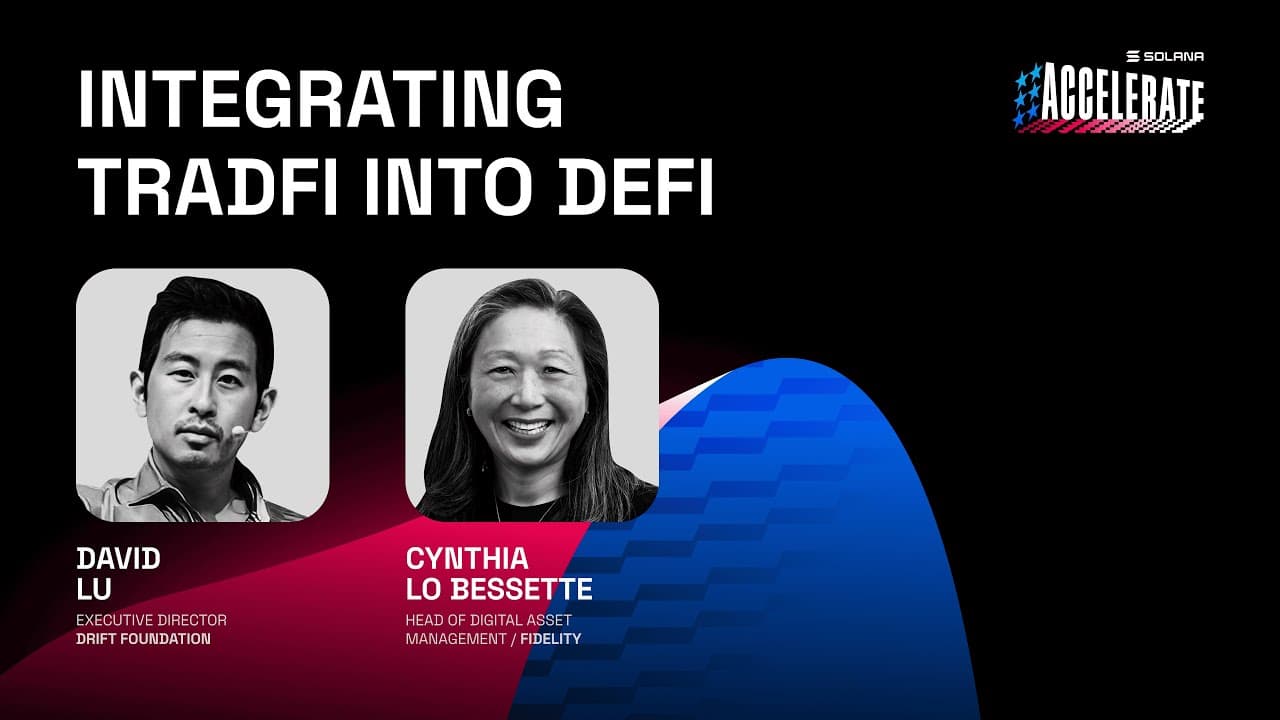
In May 2025, Bessette participated in a fireside chat with David Lu of the Drift Foundation at Accelerate: Ship or Die, discussing Fidelity’s long-running work in blockchain and digital assets and the broader transition toward onchain financial markets. Bessette described how Fidelity’s research into blockchain since 2014–2015 had developed into custody and asset-management businesses, while noting the large gap between the crypto and traditional financial markets and the potential for onchain settlement to improve transaction speed, capital efficiency, and portfolio management. The discussion examined how settlement times had fallen from T+5 to T+1 and how different asset classes could benefit from varying degrees of onchain efficiency without compromising market integrity. They also considered the relationship between DeFi’s trustless architecture and institutional requirements around identity, KYC, and asset verification, with Bessette discussing the potential for automated verification systems to enable cross-border transactions without requiring extensive disclosure of personal information. The conversation concluded with the growing feasibility of native onchain asset issuance and tokenized IPOs following greater regulatory clarity, as well as the need for traditional financial institutions and crypto developers to align around broader market access, regulatory requirements, and the migration of financial assets onto blockchain-based infrastructure. [4]
Why Tokenize
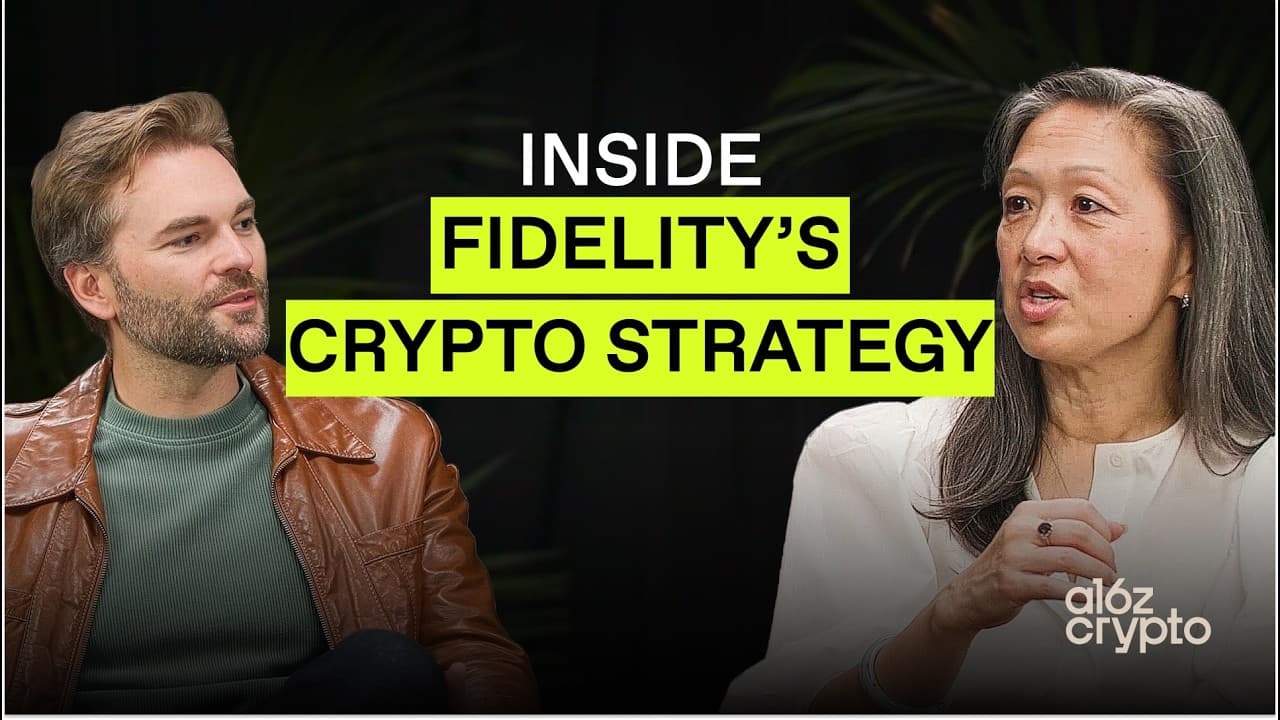
In a March 2026 interview on the a16z Crypto Show, Bessette discussed the development of tokenized assets and their potential role in the next phase of digital-market adoption. She explained that Fidelity’s asset management division had progressed from helping clients access and hold crypto assets toward making them more useful onchain through applications such as collateral, yield generation, and eventually personalized portfolios combining tokenized traditional assets with crypto-native assets. Bessette emphasized that the case for moving assets onchain depends on identifying functions that blockchain infrastructure enables beyond existing financial systems and determining which investors benefit from those capabilities. She described the emerging spectrum between traditional offchain wrappers such as exchange-traded products and fully onchain instruments, including tokenized funds, and noted the rapid growth of tokenized assets, particularly U.S. Treasuries and private credit. She attributed part of this expansion to market events such as the regional banking crisis and challenges surrounding stablecoins, which highlighted potential applications for onchain payments, cash management, and yield. Bessette also discussed Fidelity’s history of developing cash-management products and its continued work on tokenized money-market funds and other onchain cash solutions, while explaining that decisions to build internally or partner with outside firms depend on factors such as control, speed to market, strategic fit, regulatory expertise, and relationships with counterparties. [5]
Panels
Institutional Crypto Opportunities
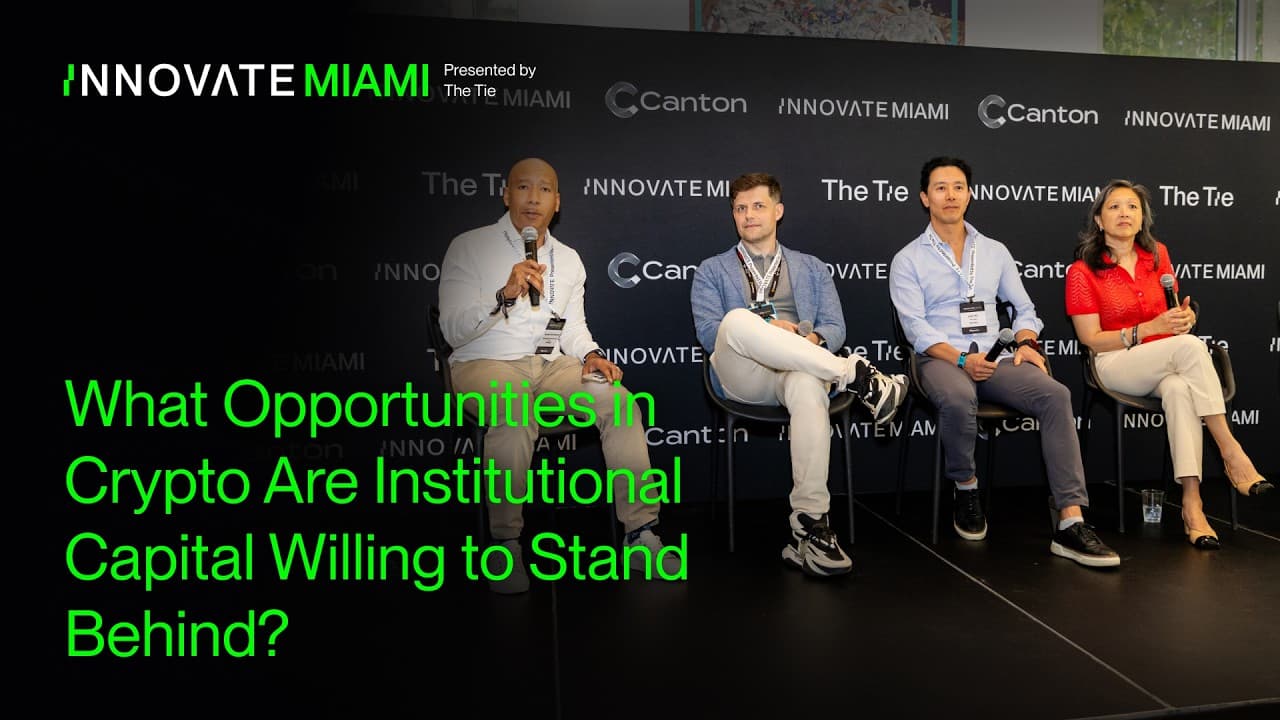
In June 2026, Bessette participated in a panel at Innovate Miami with Michael Heinrich of 0G Labs and John Wu of Ava Labs, moderated by German Soto Sanchez of Broadridge, discussing institutional capital and the infrastructure required for broader adoption of blockchain technology. The panel examined areas of institutional interest including stablecoins, tokenized assets, private credit, and real-world financial applications such as credit receivables in Brazil, with participants discussing how blockchain could combine traditional financial products with greater efficiency and access to liquidity. Bessette and the other panelists also considered the convergence of onchain and traditional markets, drawing comparisons with the evolution of electronic trading and discussing future applications such as tokenized private equities and AI-related assets. The discussion addressed the need for interoperable and scalable standards as tokenization expands beyond financial assets into areas such as loyalty points and AI models, while emphasizing that large-scale institutional adoption would require reliable infrastructure, regulatory clarity, strong security, and technology capable of operating at institutional scale [6]
See something wrong?

Average Rating
No ratings yet, be the first to rate!
How was your experience?
Give this wiki a quick rating to let us know!
Edited By
On August 18, 2026. 16:33 UTC
Edit summary:
Added 22 hyperlinks to the content