Subscribe to wiki
Share wiki
Bookmark
Dong-Seon Chang
The Agent Tokenization Platform (ATP):Build autonomous agents with the Agent Development Kit (ADK)
0%
Dong-Seon Chang
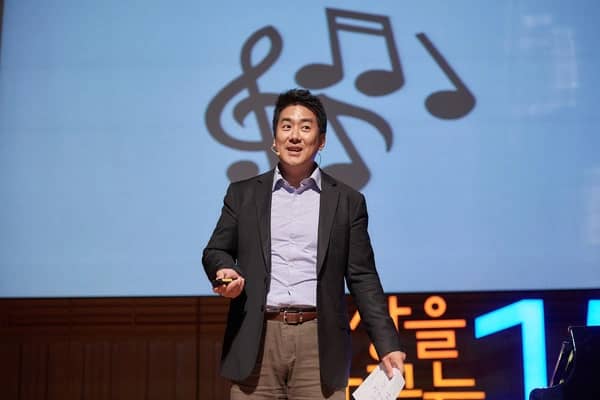
Dong-Seon Chang is a German neuroscientist, researcher, and science communicator whose work integrates cognitive science, technology strategy, and public engagement. He is the founder of the Seoul-based initiatives Curious Brain Lab and the Future Explorer Society. His career has spanned academia, research at institutions like the Max Planck Institute, and corporate strategy at companies including Hyundai Motor Group. [1]
Education
Chang completed a Master’s degree in Biology at the University of Konstanz between 1999 and 2007. During his time at the university, he was an elected student representative in the student body organization. He later pursued doctoral studies in neural and behavioral sciences from 2012 to 2016 through the International Max Planck Research School, a joint program with the University of Tübingen. He earned a Doctor of Natural Sciences (Dr. rer. nat.) for his neuroscience research, which was conducted at the Max Planck Institute for Biological Cybernetics and focused on social cognition and the perception of human actions. [6]
Career
Chang’s career began in 2000 with an internship at Siemens, where he was involved in the development of a language recognition data system for postal automation. He pursued academic research as a visiting researcher at Rutgers University’s Center for Cognitive Science from 2003 to 2004, studying visual attention, cognition, and multimodal integration. From 2006 to 2007, he conducted master's-level research on perception and motion processing at the Max Planck Institute for Biological Cybernetics. Following this, he worked as a staff research scientist at Kyung Hee University from 2008 to 2011, where he used neurophysiological and imaging methods to investigate topics such as pain, placebo effects, empathy, and doctor-patient relationships.
Between 2011 and 2012, Chang transitioned to a role as a project manager at the German Academic Exchange Service (DAAD) in Seoul, where he was responsible for public relations and the coordination of international academic networks. He then returned to the Max Planck Institute for Biological Cybernetics to complete his doctoral research from 2012 to 2016. After earning his doctorate, he served in a brief advisory role to the scientific board at the German Center for Neurodegenerative Diseases (DZNE).
In 2017, Chang joined the Hyundai Motor Group, where he held several senior roles related to future mobility and technology strategy. His positions included Mobility UX Lead, Head of the Future Technology Strategy Team, and Project Leader for technology innovation business development. In these capacities, he contributed to research, foresight, and strategic planning initiatives. In 2020, while still associated with Hyundai, he founded Curious Brain Lab, an independent initiative in Seoul dedicated to neuroscience and science communication. He later served as an assistant professor at Hanyang University from 2023 to 2024, teaching courses on neurotechnology and future technology literacy. In October 2024, he founded the Future Explorer Society to continue his work on cognitive science, future trends, and public engagement. He also engages in science communication as a speaker and science slammer, primarily in Germany. [7]
Interviews
Brain Reset
In a September 2024 episode of the Big Brain Brothers podcast by Curious Brain Lab, Chang discussed the concept of the “Eureka Effect,” describing it as a neurological phenomenon in which sudden insights can significantly alter an individual’s perspective. He referenced experiences such as heightened emotional responses to music, explaining how these are linked to brain activity studied in neuroscience, including the release of chemicals that can produce feelings of clarity, excitement, and perceived certainty. During the interview, Chang also examined methods people use to initiate personal change, noting that some approaches involve reducing external input or engaging in intense sensory experiences to disrupt habitual thinking patterns. He emphasized the importance of ongoing adaptation in response to changing environments, arguing that deliberate, self-directed change is generally more effective than reactive change imposed by external circumstances. [3]
AI and Web3
At BUIDL Asia 2024 in April, Chang sat down with Yat Siu of Animoca Brands for a fireside chat examining how artificial intelligence and Web3 technologies are reshaping human connection and social structures. Drawing on his background in neuroscience, Chang discussed the contrast between the relative stability of human cognitive processes and the rapid evolution of communication tools, from language and writing to AI-driven systems. The discussion framed these developments within a broader shift toward increasingly digital forms of interaction.
The conversation also addressed the role of blockchain and Web3 in creating alternative frameworks for online engagement. Chang and Siu considered how these technologies could support more participatory and community-oriented systems, particularly in response to concerns about social fragmentation and digital isolation. They emphasized the importance of trust, authenticity, and user agency. They noted that future developments may involve a closer integration of digital identity with human experience, requiring systems designed to sustain meaningful interaction and collective participation. [4]
Panels
Success with Neuroscience
At the World Knowledge Forum in November 2024, Adam Gazzaley, Paul Zak, and Chang explored the intersection of neuroscience and technology to enhance human well-being. They emphasized that the focus is not solely on achieving business success but on fostering healthier, happier lives through the innovative use of technology. Gazzaley addressed a "cognition crisis," highlighting the decline in cognitive abilities among individuals and the need for new paradigms in mental health care, proposing the use of experiential technologies to facilitate cognitive improvement. Zak contributed insights from his neuroeconomics work, discussing the role of social connections and emotional experiences in enhancing mental health. Both speakers underscored the importance of intentional technological design to improve emotional well-being, arguing that, as humans, we thrive when we are connected with others. The session concluded with a call for proactive engagement and practical strategies to foster emotional fitness, integrating their scientific expertise and personal philosophies to lead fulfilling lives. [5]
See something wrong?
The Agent Tokenization Platform (ATP):Build autonomous agents with the Agent Development Kit (ADK)