Subscribe to wiki
Share wiki
Bookmark
Ertem Nusret Tas
The Agent Tokenization Platform (ATP):Build autonomous agents with the Agent Development Kit (ADK)
0%
Ertem Nusret Tas
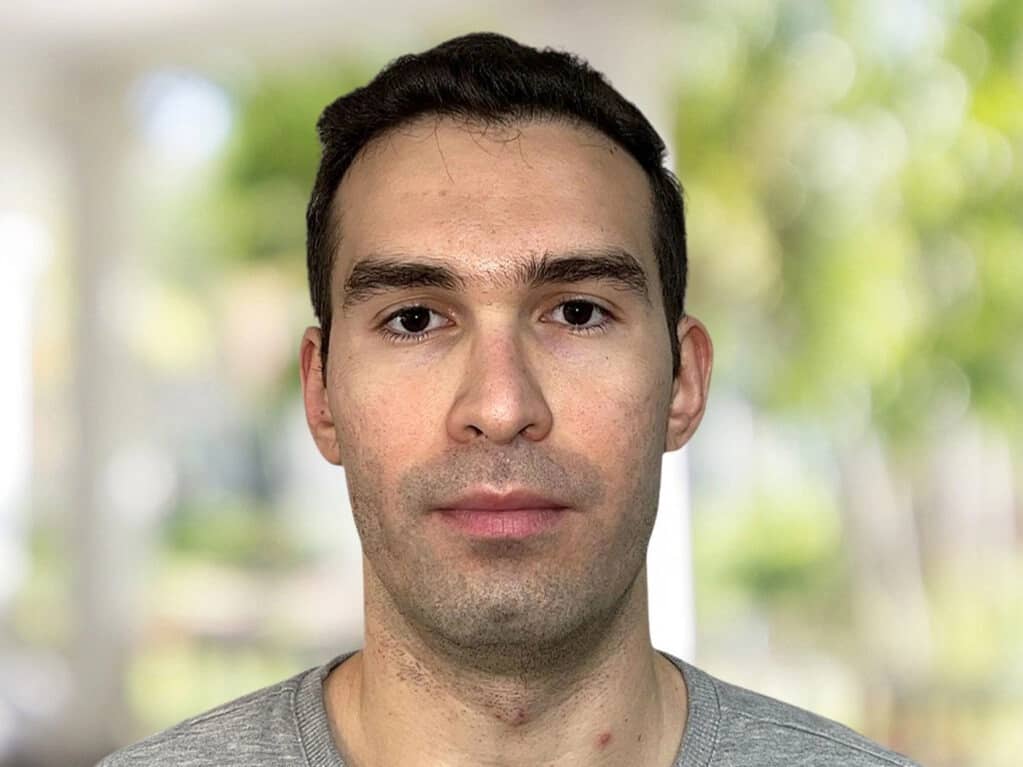
Ertem Nusret Tas is a Turkish computer scientist, researcher, and research partner at a16z crypto known for his work on the security and performance of blockchain systems, particularly in the areas of Proof-of-Stake (PoS) consensus, data availability, and interoperability. He completed his Ph.D. in Electrical Engineering at Stanford University, where he was advised by David Tse and Dan Boneh. His research has identified significant vulnerabilities in major blockchain protocols and proposed novel designs for more secure and scalable decentralized systems. [1] [2]
Education
Ertem Nusret Tas pursued his doctoral studies at Stanford University, completing his Ph.D. in Electrical Engineering in 2025. His research, conducted with a 4.0 GPA, focused on the security of blockchain systems under the supervision of David Tse and Dan Boneh, two prominent figures in information theory and cryptography. Prior to his Ph.D., Tas attended the Massachusetts Institute of Technology (MIT), where he earned both a Master of Engineering (M.Eng.) and a Bachelor of Science (B.S.). He completed his M.Eng. in Electrical Engineering and Computer Science in 2019, with his thesis on "Coflow scheduling in data center networks" supervised by Eytan Modiano. He graduated from his B.S. program in 2018 with a perfect 5.0/5.0 GPA in Electrical Engineering and Computer Science, along with a minor in Economics. [1]
His academic foundation was marked by early achievements, including ranking first among approximately two million participants in Turkey's national University Entrance Exam and winning a silver medal at the 2014 International Physics Olympiad (IPhO). [1]
Career and Research
Tas's career has been characterized by deep engagement with both academic research and its practical application in the technology and blockchain industries. His work has transitioned from foundational computer engineering roles to specialized research focused on securing the next generation of decentralized infrastructure. [1]
Professional and Academic Roles
During his Ph.D. at Stanford from 2019 to 2025, Tas served as a Research Assistant, working closely with his advisors on blockchain security. His early academic research at MIT included work on coflow scheduling with Professor Eytan Modiano and research on infrared sensors based on graphene flake films under Professor Tomas Palacios. [1]
He gained significant industry experience through a series of internships at leading technology and cryptocurrency firms. His later internships reflect a dedicated focus on the core challenges in the blockchain space:
- a16z crypto research (Summer 2023): As an intern in New York, he contributed to the research initiatives of Andreessen Horowitz's crypto division.
- Babylon (Summer 2022): Based at Stanford, he conducted research on interchain security protocols that leverage the security of Bitcoin, a concept foundational to Babylon's architecture.
- Celestia (Summer 2021): He interned with the project (then known as Lazyledger), focusing on research related to rollups and data availability, which are central to Celestia's modular blockchain design.
- Apple Inc. (Summer 2018): Before specializing in blockchain, he was an intern with the Silicon Engineering Group's Formal Verification Team in Austin, Texas.
- NetApp Inc. (Summer 2017): He interned at the company's Research Triangle Park location.
- Linear Technology (Summer 2016): His earliest industry experience was as an intern in North Chelmsford, Massachusetts.
These experiences provided him with a broad perspective, spanning from formal verification in silicon engineering to the theoretical and practical challenges of decentralized protocols. [1]
Research Contributions
Tas's research has been published in premier academic conferences on security, cryptography, and distributed computing. A central theme of his work is the rigorous, formal analysis of blockchain protocols to uncover vulnerabilities and inform the design of more robust systems. His contributions are often co-authored with his advisors and other leading researchers in the field, with authorship frequently listed alphabetically to denote equal contribution. [1]
Proof-of-Stake (PoS) Security
A significant portion of Tas's research focuses on the security of Proof-of-Stake consensus mechanisms, with a particular emphasis on Ethereum. He co-authored a series of influential papers that identified and analyzed novel attack vectors. His 2022 paper "Three Attacks on Proof-of-Stake Ethereum," presented at the Financial Cryptography and Data Security conference (FC '22), detailed vulnerabilities that could disrupt the network's consensus. This was complemented by "Two Attacks On Proof-of-Stake GHOST/Ethereum" (WDC '22). His work in "Breaking the Balance of Power: Commitment Attacks on Ethereum’s Reward Mechanism" (Euro S&P '25) further explored how rational actors could manipulate the block reward system. He also contributed to the discourse on solutions in a follow-up paper, "No More Attacks on Proof-of-Stake Ethereum?" (FC '24), which analyzed potential fixes. [1]
Consensus Protocol Design
Beyond specific implementations, Tas has contributed to the fundamental theory of consensus protocol design. His paper "Ebb-and-Flow Protocols: A Resolution of the Availability-Finality Dilemma," published in IEEE Symposium on Security and Privacy (S&P '21), proposed a new class of protocols that navigate the trade-offs between liveness (availability) and safety (finality). This work provides a framework for building protocols that can dynamically adapt their properties based on network conditions. Another foundational paper, "Everything is a Race and Nakamoto Always Wins" (CCS '20), provides a formal analysis of the race between honest and adversarial miners in Nakamoto-style, longest-chain consensus protocols. [1]
Scalability and Data Availability
Tas's work addresses critical blockchain scaling challenges, particularly regarding data availability—the guarantee that all data for a new block has been published and is accessible. This is crucial for the security of light clients and layer-2 scaling solutions like rollups. His research for Celestia informed the paper "Light Clients for Lazy Blockchains" (FC '24), which analyzes security systems for light clients in modular blockchain architectures. In "Cryptoeconomic Security for Data Aavailability Committees" (FC '23), he explored the economic incentives and security models necessary to ensure that off-chain data availability committees behave honestly. [1]
Interoperability and Shared Security
Tas has also focused on interoperability and mechanisms for blockchains to share security. His work with Babylon produced papers on using Bitcoin's security to bolster other PoS chains. The paper "Bitcoin-Enhanced Proof-of-Stake Security" (IEEE S&P '23) details a method for PoS chains to inherit security from the Bitcoin network, making them more resilient to attack. A related paper, "Interchain Timestamping for Mesh Security" (CCS '23), explores how chains can create a secure, decentralized timestamping service for one another, forming the basis of a "mesh security" model. [1]
Publications and Public Engagement
Tas has a significant record of publications in top-tier computer science venues, including ACM CCS, IEEE S&P, and FC. In 2024, his paper "Atomic and Fair Data Exchange via Blockchain" received the Distinguished Paper Award at the ACM SIGSAC Conference on Computer and Communications Security (CCS '24). In addition to his formal academic publications, Tas actively communicates his findings to a wider technical audience through blog posts on platforms like the Ethereum Research forum, the Celestia blog, and the Babylon Substack, where he often translates complex security concepts into more accessible language. [1]
Teaching and Leadership
Throughout his academic career, Tas has been involved in teaching and has held several leadership positions within the university community. [1]
Teaching
At Stanford University, Tas served as a lecturer for the course CS 251, "Cryptocurrencies and Blockchain Technologies," in the fall semesters of 2022 and 2023, where he delivered lectures on consensus protocols. He was also a Teaching Assistant for EE 276, "Information Theory," in the spring of 2023. During his undergraduate studies at MIT, he was a Teaching Assistant for 6.046J, "Mathematics for Computer Science," in the spring of 2018. [1]
Leadership and Professional Service
Tas has taken on several organizational roles in the academic community. He was a workshop organizer for the Science and Engineering of Consensus conference in 2024 and served as a colloquium organizer for the Information Systems Laboratory (ISL) at Stanford from 2022 to 2024. During his time at MIT, he was President of the MIT Turkish Student Association (2016-2017) and held secretarial roles in the MIT chapters of the Tau Beta Pi (TBP) and Eta Kappa Nu (HKN) engineering honor societies. He also participated in the Gordon-MIT Engineering Leadership Program. [1]
Awards and Honors
Tas has received numerous awards and honors for his academic and research achievements: [1]
- Distinguished Paper Award, ACM CCS (2024)
- Finalist, Meta PhD Research Fellowship in Blockchain and Cryptoeconomics (2022)
- Winner, Niantic Augmented Reality Prize at HackMIT (2018)
- Member, Tau Beta Pi (TBP) Engineering Honor Society
- Member, Eta Kappa Nu (HKN) Electrical and Computer Engineering Honor Society
- Landsman Undergraduate Research and Innovation Scholar, MIT SuperUROP (2016-2017)
- Ranked 1st, University Entrance Exam of Turkey
- Silver Medalist, International Physics Olympiad (IPhO) (2014)
See something wrong?
The Agent Tokenization Platform (ATP):Build autonomous agents with the Agent Development Kit (ADK)