Subscribe to wiki
Share wiki
Bookmark
Jarindr Thitadilaka
The Agent Tokenization Platform (ATP):Build autonomous agents with the Agent Development Kit (ADK)
0%
Jarindr Thitadilaka
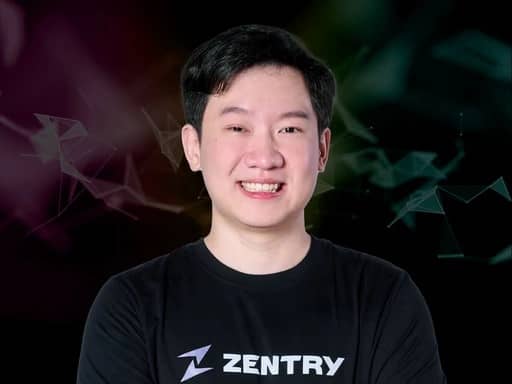
Jarindr Thitadilaka is the co-founder and Chief Executive Officer of Zentry, a Web3 gaming infrastructure company. He led the company's transition from its original identity as GuildFi, a prominent play-to-earn gaming guild, to its current focus on developing a "Gaming Superlayer" designed to unify disparate gaming and social experiences. [1] [2]
Early Life
Thitadilaka was born in Bangkok, Thailand, circa 1993. He became active in the Web3 and blockchain industry in 2015, developing a career focused on software engineering and decentralized technologies. In 2021, prior to founding his own company, he was an active player in the play-to-earn game Axie Infinity, reportedly earning at least $2,000 per month from his in-game activities. This direct experience with the burgeoning GameFi sector provided him with insights into the mechanics and community dynamics of blockchain-based gaming, which later influenced his entrepreneurial ventures. [1]
Education
Thitadilaka pursued higher education in the field of technology, earning a degree in Computer Engineering from a top-ranked university in Thailand. His academic background in engineering provided the technical foundation for his subsequent roles in software development and blockchain protocol integration. [3]
Career
Thitadilaka has over a decade of experience in software and blockchain development, holding key technical roles at several prominent cryptocurrency companies before founding his own venture. His career has been marked by a focus on blockchain scalability, protocol integration, and the application of Web3 technologies to the gaming industry. [3]
Early Career and Technical Contributions
Before his entrepreneurial career, Thitadilaka worked as a Senior Software Engineer at OMG Network (formerly OmiseGo), which was recognized as one of Ethereum's early financial scaling solutions. He also served as a Team Lead at the digital asset exchange Bitfinex. During this period, he made significant technical contributions to the blockchain space. He was instrumental in pioneering research into the tokenization of non-fungible tokens (NFTs) on Layer 2 networks, exploring methods to improve the efficiency and reduce the cost of NFT transactions. Additionally, he led various protocol integrations and developed associated libraries. A notable achievement from this time was his creation of the first-ever proof-of-concept (POC) blockchain game built on the plasma protocol, an early Layer-2 scaling framework for Ethereum. [3] [1]
GuildFi
In July 2021, Thitadilaka co-founded GuildFi in Bangkok with a group of friends. Serving as the company's CEO, he launched GuildFi as one of the earliest and largest Web3 gaming guilds. The company's initial business model was centered on the "Play-to-Earn" (P2E) trend, which gained significant traction with games like Axie Infinity. GuildFi operated on a scholarship model, where the organization would purchase and own the expensive NFT assets required to play these games and then lease them to players, known as scholars. In return for access to these assets, the players would share a portion of their in-game earnings with the guild. This model lowered the barrier to entry for thousands of players and allowed GuildFi to build a large community network, initially with a strong focus on the Thai market. The venture attracted significant investor interest, and GuildFi successfully raised $140 million from prominent backers, including Binance Labs, Coinbase Ventures, and Animoca Brands. [1] [4]
Zentry
Recognizing the long-term unsustainability of the P2E guild model, which was heavily dependent on the speculative value of in-game tokens, Thitadilaka initiated a strategic pivot. On April 23, 2024, he announced that GuildFi would rebrand to Zentry, shifting its focus from a gaming guild to building a comprehensive gaming infrastructure layer. As CEO of Zentry, he introduced the vision of a "Gaming Superlayer" or "Metagame Layer," an overarching system designed to connect various games, social platforms, and real-world activities into a single, unified "Play Economy." This new model aims to capture value from the economic flows of integrated games rather than relying on an internal, self-sustaining token economy. [1] [5]
Under his leadership, Zentry has pursued several strategic initiatives to realize this vision. In May 2024, the company secured a strategic funding round from Spartan Capital, Synergis, LongHash Ventures, and DWF Labs, which brought its treasury value to over $150 million, including holdings of over 16,000 ETH. [6] On June 20, 2024, Thitadilaka announced that Zentry had acquired a major stake in Maxion, a game publisher with an official partnership with Gravity, the creator of the popular MMORPG Ragnarok. This acquisition positioned Maxion as Zentry's dedicated Web3 game-publishing division, tasked with bringing iconic gaming titles on-chain. [7]
In December 2024, Thitadilaka furthered this strategy by announcing a partnership with Sky Mavis to launch Ragnarok Landverse, a Web3-enabled version of the classic game, on the Ronin network in the first quarter of 2025. As part of the collaboration, Zentry also became a node validator on the Ronin network. [8]
Vision and Philosophy
Thitadilaka has been vocal about the evolution of his perspective on the Web3 gaming industry, particularly regarding the shift away from what he views as flawed economic models. He has publicly stated that the original P2E guild model proved to be unsustainable due to its over-reliance on speculative "earn" mechanics.
In an interview, he reflected on this shift, stating, "The original model of the game guild relied too much on the concept of 'earning while playing', and it has been proven that this is unsustainable." [1]
His vision for Zentry is built on the concept of a "Play Economy," which he distinguishes from Play-to-Earn. He described this new model as follows: "If you are familiar with 'earn while playing', you will know its economic risks and unsustainability. The play economy is different. It combines the economies of various games and ecosystems to form a large lifelong economy." [1]
This philosophy underpins Zentry's mission to create a foundational layer that integrates and adds value to existing games and platforms. Thitadilaka articulated this technical and conceptual vision in an official company announcement:
“Think of the Zentry as a new layer, which does the computing, gamifying, bridging, connecting and rewarding for everything that happens in other layers, permeating through various applications, platforms, and virtual worlds.” [2]
He believes that Web3 technologies should serve as a catalyst to enhance gaming rather than being the sole attraction. His strategy for bringing major gaming intellectual properties (IPs) into Web3 focuses on prioritizing high-quality, engaging gameplay and true asset ownership, rather than token-based incentives. Speaking on the partnership with Sky Mavis, he emphasized this point:
“By focusing on engaging gameplay, global accessibility, and blockchain-powered asset ownership – without relying on incentives like tokens – Ragnarok Landverse demonstrates that web3 gaming success is possible through quality alone.” [8]
Interviews
GuildFi and the Transition of Blockchain Gaming #01
In an interview released on October 7, 2022, on the GuildFi YouTube channel, Jarindr Thitadilaka, founder of GuildFi, discussed the development of blockchain gaming and the changes occurring within the sector. Thitadilaka described the play-to-earn (P2E) phase as an early stage that revealed structural limitations in token-dependent game economies. He stated that the industry was gradually moving toward models such as play-and-own and free-to-own, where blockchain elements serve a functional role rather than acting as the main attraction.
He observed that game creation demands larger teams, longer development cycles, and greater financial resources compared to decentralized finance (DeFi) initiatives. Thitadilaka noted that market downturns tend to highlight sustainable projects and allow developers to focus on improving the underlying quality of games and their economic frameworks.
GuildFi, according to Thitadilaka, was established during the expansion of the P2E trend. The organization initially operated through scholarship programs for titles like Axie Infinity but later expanded into a broader platform designed to connect traditional and blockchain-based gaming environments. Its stated purpose is to create a system that enables players to interact with blockchain games without requiring prior experience in cryptocurrency or NFT ownership.
During the discussion, Thitadilaka referred to GuildFi’s collaborations with studios such as Netmarble and Mabellakes, along with its seed funding of approximately six million dollars. He mentioned planned updates to the platform, including a mixed on-chain and off-chain marketplace, new quest mechanics, and game discovery features. Concerning the platform’s GF token, he explained that it functions as a governance asset and is expected to gain additional uses, such as in staking and marketplace transactions.
Thitadilaka concluded by noting that the long-term viability of blockchain gaming depends on stable in-game economies and consistent user engagement. He expressed that GuildFi’s objective is to operate as an infrastructure layer for blockchain-integrated gaming, emphasizing interoperability and scalability rather than promotional expansion. [13]
Zentry and the Global Play Economy #02
On November 21, 2024, Jarindr Thitadilaka, CEO and co-founder of Zentry, participated in the Injective Summit 2024 on the Injective YouTube channel, in a session titled “Zentry: The Rise of Gaming Culture, Ecosystem Happy Hour.”
During the discussion, Thitadilaka described the development of Zentry’s ecosystem, which applies gaming structures to everyday activities through blockchain technology. The approach involves integrating elements of gamification into daily interactions, such as visiting restaurants, making purchases, or engaging with digital platforms, by linking them to a system of digital rewards.
The interview focused on Radiant GG, a platform designed to connect real-world activities with in-game item rewards that can be exchanged within Zentry’s network. Thitadilaka explained that the initiative aims to merge physical and digital participation under a single economic framework supported by tokenization and interoperability.
According to information presented during the event, Zentry’s network includes Radiant GG, Nexus, Vault, and Maxon, and reports figures exceeding 700,000 users, over 30 partnerships, approximately $40 million in revenue, and $140 million in treasury assets.
Thitadilaka referred to the broader concept as a “real-life MMO RPG economy,” describing it as an interconnected model that links user behavior across multiple sectors, such as gaming, decentralized finance, and entertainment, through blockchain infrastructure. [12]
See something wrong?
The Agent Tokenization Platform (ATP):Build autonomous agents with the Agent Development Kit (ADK)