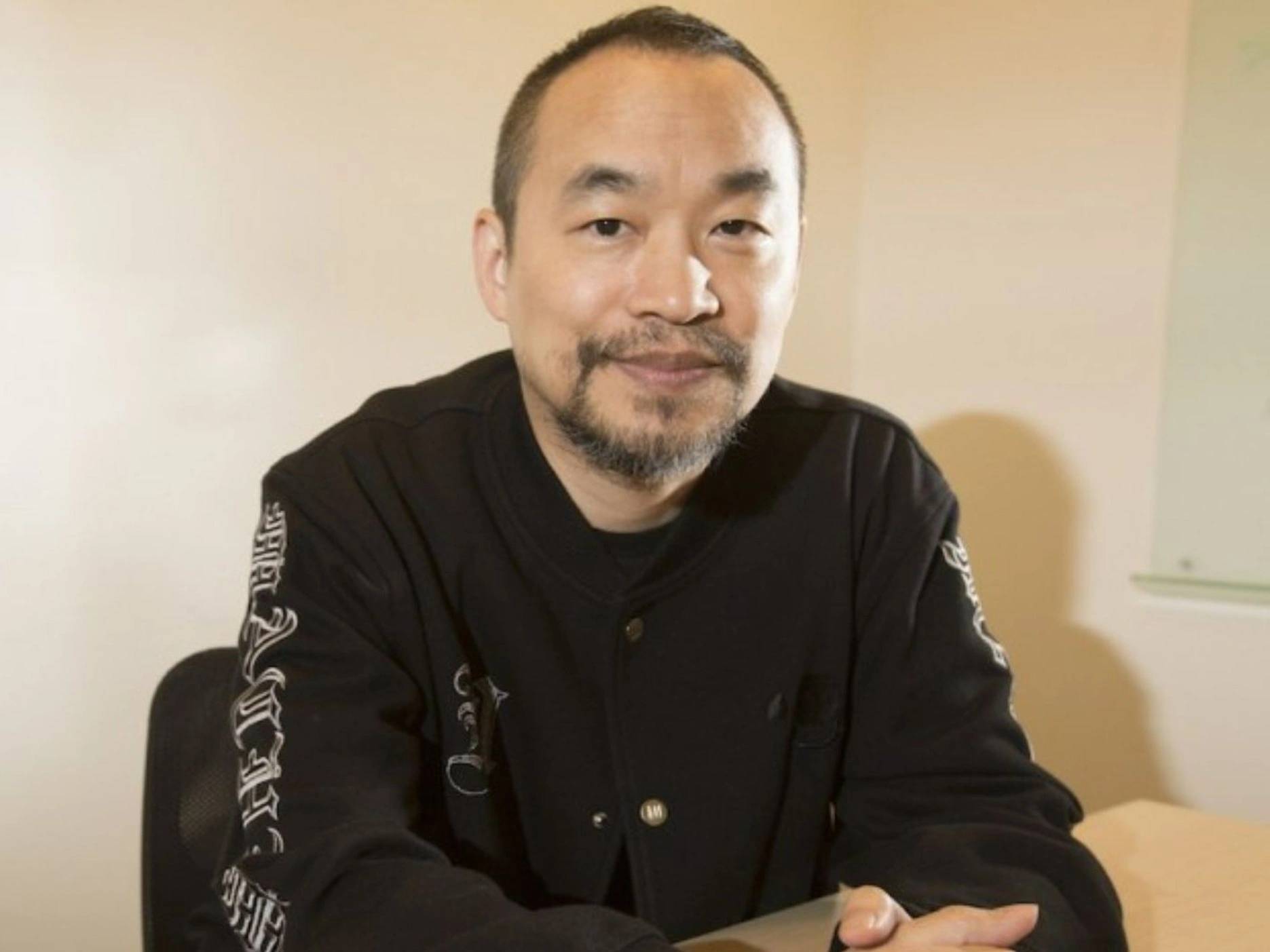
Jeffrey Huang
Jeffrey Huang (also known as MachiBigBrother) is an entertainer, entrepreneur, and DeFi entrepreneur. He is the founder of Cream Finance. He's also known for being a member of the Taiwanese hip-hop group, L.A. Boyz. Huang founded a Taiwanese entertainment company, Machi 17 in 2017 and Mithril Cash in late 2020.[5][21]
Early Life and Education
Jeffrey Huang was born in Huwei Township, Yunlin County, Taiwan, on November 7, 1972.[1][22] Huang moved to the United States with his family when he was two years old and grew up in Southern California.[1][22] He attended the Art Center College of Design in Pasadena and graduated from University High School in Irvine, California, but did not go on to complete a university degree.[22][23] Musically, Huang was inspired by the defiant attitudes of early rap acts like the Beastie Boys, NWA, Run–D.M.C., Public Enemy, and Rage Against the Machine, which later influenced both his work in music and his interest in cryptocurrency and DeFi (Decentralized Finance).[22]
Career
LA Boyz
At 18, Jeffrey Huang joined the Taiwanese hip-hop group, L.A. Boyz, with his brother Stan Huang and cousin Steven Lin. They learned to dance from parties around Orange County and Los Angeles and borrowed their sense of style from Compton and South-Central LA. They were first discovered and signed by Pony Canyon Records. L.A. Boyz is widely regarded as one of the first rap groups in Taiwanese popular music and helped popularize hip-hop in Taiwan.[22][24] Their first album, SHIAM! 閃, sold 130,000 copies, and subsequent releases were met with similar success. They released more than ten albums in total and were active for about seven years.[1][24]
The group gained popularity shortly after a pop group that was ruling the scene called Little Tigers dissolved due to a member getting drafted. They were profiled in the Los Angeles Times in 1993 in an article titled: "Rapping to a Bicultural Beat: Dancing Trio From Irvine--the L.A. Boyz--Scores a Hit in Taiwan."[1][25][26][27][28][2][29]
Awards
LA Boyz received recognition at major Mandarin-language music award shows during the 1990s, and member Stanley Huang later achieved solo success. Huang won the Golden Melody Award for Best Mandarin Male Singer in 2005 for his work as a solo artist.[22][24]
Breakup
The group broke up to pursue other interests. Steven Lin pursued a solo music career and later became an orthopedic surgeon.[30][24] After L.A. Boyz disbanded, Jeffrey Huang shifted his focus toward technology and business ventures, while Stanley Huang continued as a solo artist and went on to win the Golden Melody Award for Best Mandarin Male Singer in 2005.[22][24]
17 Machi Entertainment
Jeffrey Huang co-founded the live-streaming platform 17 Media (also known as 17 Live) around 2015.[3][22] In 2017, Singapore-based dating app Paktor merged with 17 Media under a holding structure to form M17 Entertainment, combining live-streaming and social-dating businesses across Asia.[31][32] After an aborted attempt to list its shares on the New York Stock Exchange in 2018, M17 Entertainment raised an additional US$25 million in funding from investors including Pavilion Capital to support regional expansion.[33]
Cryptocurrency
Huang's first venture in crypto was Mithril (MITH), a social-media-oriented token project that aimed to reward content creators and users for social interactions, developed by Huang and members of the 17 Media team.[34][35] The project was named after mithril, a powerful and malleable metal from The Lord of the Rings trilogy, and early materials compared its positioning to messaging and social platforms such as WeChat.[34][36]
In 2019, he started Cream Finance, an open financial system built on smart contracts.[37][38] The platform was assembled from design elements pioneered by other DeFi projects including Compound, Balancer, Curve Finance, Uniswap, and BlackHoleSwap.[37] C.R.E.A.M. Finance was announced in July 2020, with the first version of the lending protocol going live in August 2020.[37][39] In late 2020, they announced a collaboration with Andre Cronje and the yEarn ecosystem.[38]
He also launched an algorithmic stablecoin called Mithril Cash (MIC), which was introduced in December 2020 as a fork of the Basis Cash protocol and used a multi-token design intended to algorithmically track a target price.[21][40][41] As of June 2023, Mithril Cash traded with negligible volume and the project appeared inactive.[5][41]
When entering the crypto space, Huang dug back to his hip-hop roots, dropping apps called "Lit" and "Swag", the "YOLO" Alpha reward pool for Cream Finance (cryptocurrency), which is itself an homage to Wu-Tang Clan's "C.R.E.A.M (Cash Rules Everything Around Me)" and even the ticker for Mithril Cash is $MIC. To make it official, Method Man rapped the Cream Finance theme song.[42]
NFTs
In August 2022, Huang came into the limelight when he sold 13 MAYCs for about $350,000 and transferred 1,496,600 ApeCoins to Binance within nearly a week. He stated on Twitter (X) that he sold his MAYCs because he was not interested in staking for $APE, but he still wants to keep all his BAYCs. He holds a sizable portfolio of NFTs in his Ethereum wallet associated with machibigbrother.eth, which contains multiple NFT collections.[4]
Defamation Lawsuit against ZachXBT
A conflict emerged between blockchain investigator ZachXBT and Jeffery Huang, culminating in legal action. As a result, Huang initiated a lawsuit against ZachXBT on June 17, 2023. The lawsuit came after Huang accused ZachXBT of "publishing and maliciously promoting an article that falsely presented him as a criminal that had embezzled millions of dollars of cryptocurrency and manipulated markets". Huang requested that the post and associated tweets be taken down by ZachXBT, but the latter refused.[6][18][7]
Huang's lawsuit pertains to an article titled "22,000 ETH Embezzled and Over Ten Projects Failed: The Story of Machi Big Brother (Jeff Huang)"[8] published on June 16, 2022. The author, ZachXBT, claimed that Huang, a Taiwanese-American entrepreneur, and former musician, allegedly embezzled 22,000 ETH ($37 million) from Formosa Financial, a treasury management platform, in 2018. The article also discussed Huang's involvement in multiple unsuccessful cryptocurrency and NFT projects since then.[7][8]
While announcing the lawsuit to his followers on Twitter, Huang wrote:
“I have consistently maintained that the allegations in his article are false, look forward to proving through the lawsuit that @ZachXBT unlawfully defamed me."[10]
ZachBXT responded to the lawsuit by saying:
"It’s unfortunate I have to make this thread but I am being sued by MachiBigBrother for an article I published in June 2022, Today Machi filed the defamation lawsuit. The lawsuit is baseless and an attempt to chill free speech. I intend to fight back & defend free speech."[7][9]
In August 2023, Huang voluntarily withdrew the defamation lawsuit after ZachXBT amended the article to change wording around the Formosa Financial allegations while keeping the general narrative intact.[19][20] Both parties stated on social media that they had mutually agreed to move on from the dispute, and ZachXBT said he would return unused funds that had been donated to support his legal defense.[19][20]
Huang's NFT Trading Loss
In June 2023, Huang experienced a significant loss in Ethereum (ETH) while attempting to farm tokens using Bored Ape NFTs. Huang actively participated in trading activities on the Blur NFT marketplace, which involved the buying and selling of a large number of NFTs to earn Blur tokens as rewards. Huang incurred realized losses of approximately 2,400 ETH, equivalent to $4.2 million.[11] Commentators reported that his selling spree coincided with, and was seen as contributing to, a sharp drop in BAYC’s floor price.[11][12][43][44][45]
Trading Activities
Hyperliquid Profit and Loss
In late 2025, Jeffrey Huang engaged in high-profile trading activities on the decentralized exchange (DEX) Hyperliquid, experiencing a significant reversal of fortune. By mid-September 2025, his account had accumulated a profit of approximately $44 million, largely from a 5x leveraged long position on the Plasma (XPL) token.[13][14]
However, within two weeks, by early October 2025, this gain had turned into an unrealized loss of nearly $9 million as the value of XPL declined. During this period, on September 29, 2025, he also exited a $25 million position in Hyperliquid's native token (HYPE) at a $4.45 million loss.[13]
On October 10, 2025, it was reported that Huang had closed his positions in XPL, ASTER, and PUMP, realizing a total loss of $21.53 million. The primary source of this loss was the XPL token, which accounted for $18 million of the total. In the preceding 20 days, his trading activities had reportedly erased a total of $40 million in profits.[15]
On-chain data compiled by Arkham Intelligence and summarized by DailyCoin and Bitget indicated that by March 2026 Huang’s Hyperliquid account had swung from an unrealized profit peak of approximately US$44.84 million in September 2025 to roughly US$75.19 million in cumulative realized losses over the following six months, with more than 335 liquidations recorded during that period.[53] The same reporting characterized his activity as highly leveraged, with frequent large perpetuals positions that left him exposed to rapid reversals when market conditions changed.[53]
In June 2026, The Defiant reported that on-chain analytics from Arkham showed Huang’s cumulative losses on Hyperliquid since September 2025 had surpassed US$80 million and that he had begun selling Bored Ape Yacht Club NFTs at substantial losses to raise margin, with the coverage describing his trajectory as a cautionary example cited by some observers of the risks associated with sustained high-leverage trading.[54]
On August 31, 2026, on-chain analytics from Hyperbot, summarized by CryptoRank, reported that Huang had opened a 40x leveraged long position of about 155 BTC on Hyperliquid, with a notional size of approximately US$12.1 million, while simultaneously holding a 25x leveraged long position of roughly 41,150 ETH with a notional value around US$100 million.[46] According to the same data, the BTC and ETH positions had estimated liquidation prices near US$50,000 and US$2,323 respectively, meaning relatively small adverse price movements could trigger rapid liquidations of these highly leveraged trades.[46]
As of September 14, 2026, BeInCrypto reported that Huang was holding approximately US$151 million in leveraged long positions on Hyperliquid, consisting of around 39,800 ETH at 25x leverage, 569 BTC at 40x leverage, and 88,000 HYPE at 10x leverage, against an account value of roughly US$5.95 million, mostly in perpetual futures. The same analysis stated that these positions showed about US$1.2 million in unrealized profit, almost entirely from ETH, and that over the prior week two of the three assets had declined in price while Ethereum traded roughly flat to slightly positive.[55]
On-chain monitoring and coverage through September 2026 from dashboards and research outlets such as Hyperbot, Finst, BTCC and Phemex showed that Huang continued to run very large, highly leveraged long positions on Hyperliquid, with his BTC, ETH and HYPE exposure shifting configuration repeatedly.[56][57][58][59] Reports in early September 2026 described roughly US$147–151 million of open long exposure across ETH, BTC and HYPE, sometimes showing multi-million-dollar unrealized gains and at other moments small unrealized losses, and characterized his strategy as aggressive, concentrated and vulnerable to liquidations when markets moved against him.[56][57] A September 10, 2026 analysis by QuiverCrypto reported that he sold several Bored Apes at realized losses and reduced his ETH long position by about half to lower liquidation risk, behavior that aligned with earlier coverage of him using NFTs as a source of funds to support margin on Hyperliquid.[60][54]
Ethereum Liquidation
On-chain analytics from Arkham Intelligence and coverage by outlets including Bitget and The Defiant have described Huang’s Ethereum trades on Hyperliquid as part of a broader pattern of repeated high-leverage positions and liquidations over multiple months.[53][54]
Following these losses, Huang suffered a more substantial financial setback. On October 17, 2025, his holdings in Ethereum were liquidated, resulting in a loss of NT$1.6 billion (approximately US$54.5 million). Reports indicated he had been taking a long position on Ethereum in an attempt to recover from previous losses when the cryptocurrency's value dropped. This event left his trading account with an accumulated loss of NT$399 million (US$13 million).[16]
On October 22, 2025, Huang incurred a further loss of NT$1.1 billion (approximately US$34.2 million) when his long positions on Ethereum were again forcibly closed. This liquidation event was reportedly influenced by a market downturn following a large sell-off from fellow whale trader James Wynn. The loss increased Huang's total accumulated losses on the platform to NT$1.5 billion (US$47.2 million).[17]
On May 23, 2026, a report based on on-chain trackers and analytics from CryptoRank and Bitcoin World stated that Huang lost approximately US$33 million when a 25x leveraged long position in Ethereum futures was mostly closed and partially forcibly liquidated, leaving him with about 1,700 ETH.[50] A later analysis published via Yahoo Finance and CCN in March 2026, drawing on Hyperliquid trading data aggregated by analytics platforms, described him as the “King of Crypto Liquidations” and estimated that he had realized around US$74–75 million in cumulative losses over a six‑month period from repeated high‑leverage ETH longs on Hyperliquid, with more than 250 liquidations during that span, illustrating the scale of risk associated with aggressive leveraged trading strategies.[51]
Friend.tech Bid and Leveraged BTC Position
In late August 2026, Jeffrey Huang, known online as Machi Big Brother, publicly offered US$1 million to acquire the @friendtech account on X (Twitter) and the associated domain from Friend.tech co-founder Racer and venture firm Paradigm, which had led the project’s seed round in 2023.[47][48] Reporting by The Defiant noted that Friend.tech’s smart contracts had already been renounced in September 2024 to Ethereum’s null address (0x0000000000000000000000000000000000000000), meaning control of the protocol could not be transferred and that Huang’s proposal therefore related to the project’s branding and social media presence rather than on-chain governance or upgrade authority.[47] Following his post on August 27, 2026 announcing the US$1 million bid, The Defiant reported that the FRIEND token’s price briefly surged intraday by roughly 1,500%–1,590%, or about 28 times within around one hour, pushing its market capitalization to approximately US$4.8–4.9 million before giving back a substantial portion of those gains.[47] The same coverage, along with subsequent analysis by BeInCrypto, stated that Huang had previously accumulated around 11 million FRIEND tokens for approximately 5,200 ETH and estimated that, at prevailing prices, he was facing realized or unrealized losses exceeding US$16 million on the position.[47][48]
On September 5, 2026, Startup Fortune reported that Huang rescinded the US$1 million bid in a follow-up post suggesting, without providing evidence, that Paradigm had blocked the deal.[49] In the same post, he called for Friend.tech to be relaunched on Robinhood Chain, described in coverage as an Arbitrum-based Layer 2 network, and pledged his support for such a move.[49] Subsequent reporting by The Defiant and Startup Fortune noted that after the initial rally, the FRIEND token’s price and market capitalization later fell back toward levels close to those seen before his August 27 announcement.[47][49]
Boba Oppa Memecoin Presale
In March 2024, Huang launched a Solana-based memecoin called Boba Oppa (BOBAOPPA), which CoinMarketCap Academy reported raised around US$40 million in a presale.[52] According to the same report, BOBAOPPA began trading at about US$0.001474 on March 30, 2024 before rapidly falling roughly 74% to around US$0.0003854, prompting backlash from some presale investors on social media who highlighted heavy losses relative to their initial contributions.[52] CoinMarketCap Academy noted that Huang publicly characterized the token as a “dump-and-pump,” rather than a conventional “pump-and-dump,” and said it was intended to behave differently from typical memecoin schemes, although critics argued that the sharp drawdown and subsequent volatility still raised concerns about presale expectations and risk for participants.[52]