Subscribe to wiki
Share wiki
Bookmark
Jessica Angel
The Agent Tokenization Platform (ATP):Build autonomous agents with the Agent Development Kit (ADK)
0%
Jessica Angel
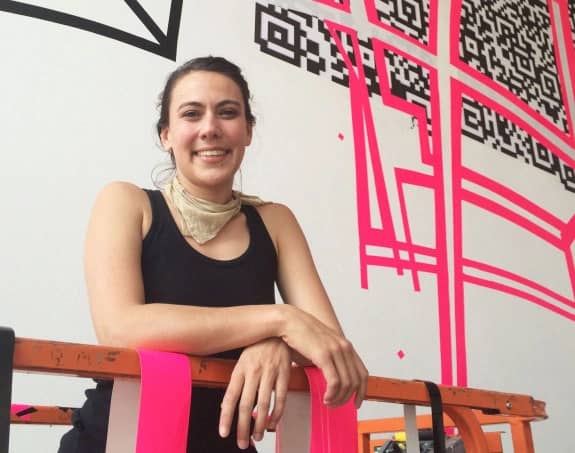
Jessica Angel is a Colombian-born visual artist based in Brooklyn, New York, whose work encompasses large-scale installation art, public space interventions, and digital media. She is recognized for her exploration of the intersection between art and technology, particularly through the use of augmented reality (AR), blockchain, and non-fungible tokens (NFTs) in her creative practice. [1]
Education
Angel graduated from the National University of Colombia in 2005 with a Master of Fine Arts in Visual Arts. [2]
Career
Angel began her independent studio practice in Brooklyn in January 2000, creating large-scale, site-specific installations that transformed architectural interiors through techniques like perspective, mural painting, and immersive spatial interventions. Throughout her career, she has been deeply involved in arts education, serving as a teaching artist resident at The Cooper Union from May to August 2012, a teaching artist at Groundswell from November 2014 to February 2019, and a museum educator at the Bronx Museum of the Arts between June 2015 and February 2020. In January 2017, she was the first long-term resident artist and lecturer at the University of Alabama at Birmingham’s Abroms-Engel Institute for the Visual Arts, where she produced a major installation. Concurrently, she has provided long-term guidance on design and creative strategy as a creative advisor at BKDF | Brooklyn Design Factory since January 2013.
Her career took a significant turn toward technology in late 2017 when she became the Operations and Creative Lead at Truebit, a role she held until June 2019, where she helped develop platforms for art and technology collaboration. Since February 2018, Angel has served as the Creative Director for ETHDenver, where she oversees the event's artistic direction, venue and stage design, hardware integration, and blockchain-focused art education. Her role is also described as "Head Creative." Also in 2018, she began working with the Vancouver Biennale as an installation artist, leading initiatives that integrate augmented reality, virtual reality, and blockchain into public art. During this period, she founded the #ArtProject initiative in 2018 to foster connections between the art and blockchain communities. She also served as a board member for the Foundation for Art and Blockchain from August 2019 to July 2020. More recently, Angel held roles at Metaversal, first as MetaLetters Lead from December 2021 to September 2022, and subsequently as an advisor for NFT curation and metaverse initiatives from October 2022 to December 2023. [4]
Voxel Bridge
Voxel Bridge is a large-scale public art installation developed in collaboration with the Vancouver Biennale. The project is an immersive augmented reality experience located under the Cambie Street Bridge in Vancouver, Canada. It was designed to span 600 feet across 11 of the bridge's columns, combining a physical vinyl application with an interactive AR layer. The work is conceptualized as a "sensory journey through the Kusama network," visualizing the blockchain's structure and activity. The project's development relied on specialized software, including the 3D modeling program Rhinoceros and its algorithmic modeling plugin Grasshopper, to ensure the precise alignment of the digital AR elements with the physical architecture of the bridge. The location-based AR technology was developed in partnership with Spheroid Universe. The funding for Voxel Bridge was secured through a community-governed treasury system on the Kusama network. The project was a collaboration with Raul Ramanuti, a representative from the Kusama Network. The concept was adapted from an in-person conference experience to a public AR installation partly in response to the global COVID-19 pandemic, which limited physical gatherings. [1] [5]
#ArtProject
Founded by Angel in 2018, #ArtProject is an initiative designed to connect the art and blockchain communities. Its mission is to foster creative experimentation and facilitate new fundraising models for ambitious art projects that leverage technology. The initiative also aims to create a supportive ecosystem for artists entering the Web3 space. The Voxel Bridge installation served as the primary inspiration for the #ArtProject2020 virtual expo hosted by the Vancouver Biennale in November 2020, which featured over 80 international speakers across 40 events focused on digital art. [4] [7]
Presentations
Voxel Bridge
In a November 2020 presentation at the Vancouver Biennale, Angel introduced herself and Raul Ramanuti from the Kusama Network to discuss the Voxel Bridge art installation. She explained that the project, originally planned for an in-person conference, shifted to a virtual format due to the COVID-19 pandemic and would be installed beneath the Cambie Street Bridge. Angel described the installation as a 600-foot-long augmented reality experience spanning 11 columns, designed to create an immersive sensory journey through the Kusama network. She outlined the technical process behind the project, including the use of software such as Rhinoceros and Grasshopper to ensure precise alignment between the virtual elements and the physical bridge. Collaborators from Spheroid Universe demonstrated early tests of location-based augmented reality and discussed the challenges of synchronizing digital content with real-world environments. The presentation also covered strategies for improving visual accuracy and occlusion to enhance user immersion. Ramanuti provided an overview of the Kusama network’s governance structure and treasury system, explaining how community-funded proposals supported art and technology projects. He detailed the funding process and milestones for the installation, noting that initial production had been approved and that augmented reality integration and documentation were planned. The session concluded with references to upcoming panels on NFT strategies and encouraged artists to explore blockchain-based collaboration opportunities. [5]
Art and Blockchain
In August 2020, Angel participated in a workshop at Latincouver focused on the intersection of art and blockchain. The session opened with introductions from event organizers, who framed the workshop within the broader Latin American Experience and highlighted the relevance of art and technology during the pandemic. Angel discussed her background as an artist working across physical and digital spaces and outlined how blockchain technology enabled new forms of digital scarcity through non-fungible tokens, allowing for unique ownership of digital artworks. She connected these concepts to installation and public art, referencing planned projects that combined augmented reality with physical sites in Vancouver. The workshop also addressed virtual collaboration, including ideas for online festivals and community-driven art initiatives that used digital tools to expand participation. Breakout discussions explored creative ways to maintain social connection during isolation, such as interactive public artworks and QR code–based engagement. The session concluded with discussion of future projects, opportunities for community feedback, and an emphasis on continued dialogue around technology, art, and collaboration among Latino artists. [6]
See something wrong?
The Agent Tokenization Platform (ATP):Build autonomous agents with the Agent Development Kit (ADK)