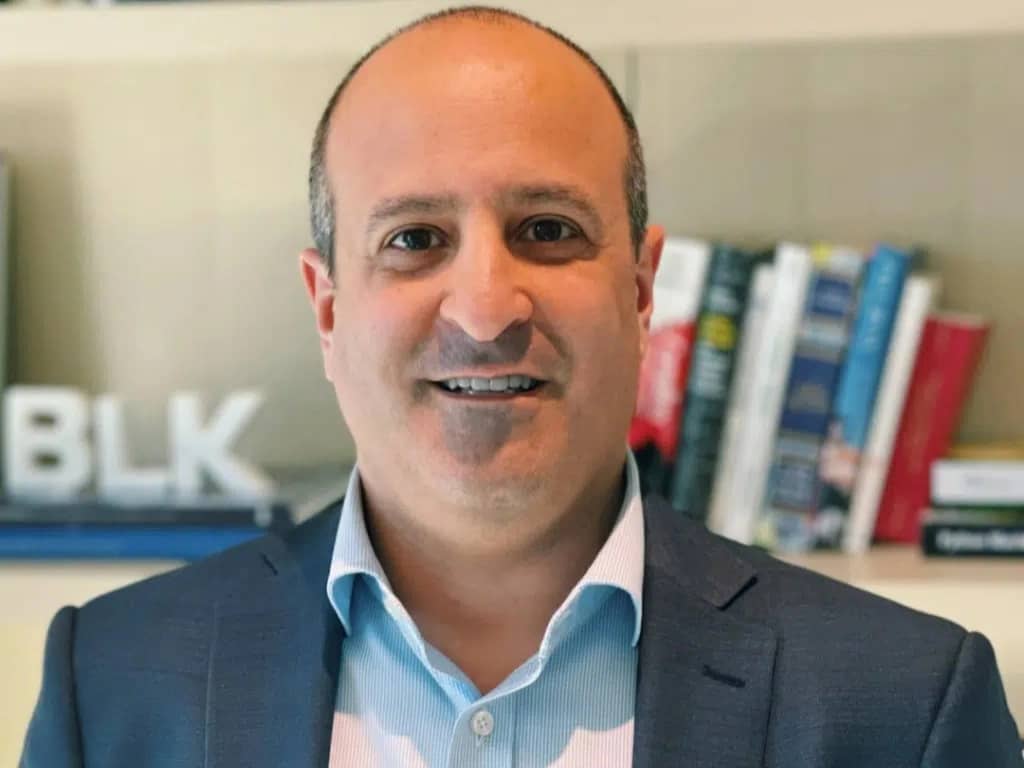
Joseph Chalom
Joseph Chalom is a financial executive known for his work at the intersection of traditional finance and digital assets. A former Managing Director at BlackRock who was instrumental in developing the firm's digital asset strategy, he became the Co-Chief Executive Officer of SharpLink in July 2025, a company focused on implementing an Ethereum-based corporate treasury strategy. [7]
Education
Chalom earned a Bachelor of Arts degree in International Affairs from Johns Hopkins University in 1993. He continued his education at Columbia Law School, where he earned a Juris Doctor degree in 1997. [8]
Career
Chalom began his career in law, working as an Associate at Arnold & Porter from 1997 to 2000, followed by four years as a Senior Associate at Skadden, Arps, Slate, Meagher & Flom LLP. In 2005, he joined BlackRock, where he remained for two decades in various leadership roles. He first served as Chief Operating Officer of BlackRock Solutions, overseeing daily operations and the expansion of Aladdin, the firm’s portfolio and risk management platform. He later became Managing Director and Head of Strategic Ecosystem Partnerships, leading global strategy on digital assets, index and data relationships, and fintech investments. In this capacity, he was involved in developing exchange-traded products, such as the iShares Bitcoin Trust and the iShares Ethereum Trust, as well as initiatives in tokenization, including a tokenized U.S. Treasury fund on the Ethereum blockchain. He also guided strategic collaborations with companies in the blockchain and fintech sectors.
In July 2025, Chalom became Co-Chief Executive Officer of SharpLink, where he is responsible for the company’s global strategy at the intersection of public markets and Ethereum-based infrastructure. Alongside his executive work, he has held board roles with firms such as Securitize and Clarity AI, reflecting his involvement in capital markets innovation and sustainability-focused technology. [1] [8]
Interviews
DATs
Chalom, the co-CEO of SharpLink, appeared on the CryptoNews podcast in September 2025, where he discussed the company's focus on Ethereum digital asset treasury management and its potential for long-term investment. He shared insights from his extensive experience in traditional finance, noting how many in the institutional sector initially struggled to understand the nuances of digital assets, particularly Ethereum's role as a foundational layer for decentralized finance and smart contracts. Chalom emphasized the importance of transparency and risk management in their business model, which involves accumulating, staking, and leveraging Ethereum to create value for investors. He outlined SharpLink's partnerships and strategic positioning in the market, highlighting their commitment to generating returns while also supporting the broader Ethereum ecosystem through operational businesses. He concluded by discussing the company's plans to explore innovative yield-generating opportunities while maintaining a focus on long-term growth and risk-adjusted investments. [5]
Reshaping Global Finance
On the Welthion podcast in September 2025, Chalom discussed his views on Ethereum's potential to transform the global finance industry. He highlighted the long-term macro trend favoring decentralized platforms, particularly Ethereum, which he believes will play a crucial role in tokenizing various asset classes such as stocks, bonds, real estate, and private equity. Chalom recounted his transition from a successful career at BlackRock, where he led initiatives in digital assets, to his current role as co-CEO of Sharplink. He emphasized the importance of transparency and building a strong institutional team to navigate the evolving digital asset landscape. Chalom's perspective reflects a broader optimism about the capabilities and future of Ethereum, suggesting that it could drive significant changes in financial structures and asset management. [4]
All on ETH
In September 2025, Chalom discussed his career and his beliefs in cryptocurrency on the Bankless podcast. He transitioned from traditional finance to the cryptocurrency sector, with a specific focus on Ethereum (ETH). After briefly retiring, he became co-CEO of ESBET, a significant Ethereum treasury company. His aim was not merely to hold ETH as an investment but to actively influence institutional adoption and build a successful business ecosystem revolving around ETH. Chalom emphasized the unique advantages of ETH over Bitcoin, particularly its ability to generate yield and offer programmability through decentralized applications. He recognized that the narrative surrounding Ethereum required extensive education for traditional finance professionals, who had historically viewed Bitcoin as the primary digital asset. By integrating sophisticated treasury management practices and fostering partnerships within the ecosystem, Chalom was committed to leveraging the potential of Ethereum to cater to evolving financial landscapes. [2]
Sharplink
On the DeFi Dad podcast, Chalom and Jason Linehan, the Chief Strategy Officer of Consensus, discussed Ethereum's potential as a treasury asset compared to Bitcoin. Chalom noted that while Bitcoin's story was easily grasped, Ethereum required more explanation regarding its network and the decentralized platform where financial assets and AI agents could operate. They elaborated on SharpLink's strategy to accumulate Ethereum and generate staking yield for investors, highlighting the unique position of Ethereum as it moves towards a new phase of adoption and economic activity. The conversation also addressed the challenges of educating institutional investors on the value of Ethereum, particularly regarding its potential for liquidity in decentralized finance (DeFi), as well as the impact of tokenization on global finance. Overall, the episode highlighted the significance of Ethereum’s value proposition and the strategic partnership between SharpLink and Consensus as they strive to attract institutional investors in the evolving cryptocurrency landscape. [6]
Panels
Global Crypto Adoption
At the Wyoming Blockchain Symposium, a panel discussion led by David Burke explored the factors driving global institutional adoption of cryptocurrency. Panelists included executives from various prominent firms, such as Carlos Domingo from Securitize, Amy Oldenburg from Morgan Stanley, Mike Belshe from BitGo, and Chalom from BlackRock. The conversation touched on the complexities of institutional adoption, highlighting the significance of regulated products, such as ETFs, in bridging traditional finance with digital assets. They addressed challenges such as market volatility, infrastructure needs, and the regulatory landscape, with insights on the evolving perceptions and accessibility of cryptocurrencies across different demographics. The discussion underscored a consensus that while technology facilitates new investment avenues, education, transparency, and adaptability remain crucial to foster confidence among institutional investors in the crypto space. [3]