Subscribe to wiki
Share wiki
Bookmark
Josip Heit
The Agent Tokenization Platform (ATP):Build autonomous agents with the Agent Development Kit (ADK)
0%
Josip Heit
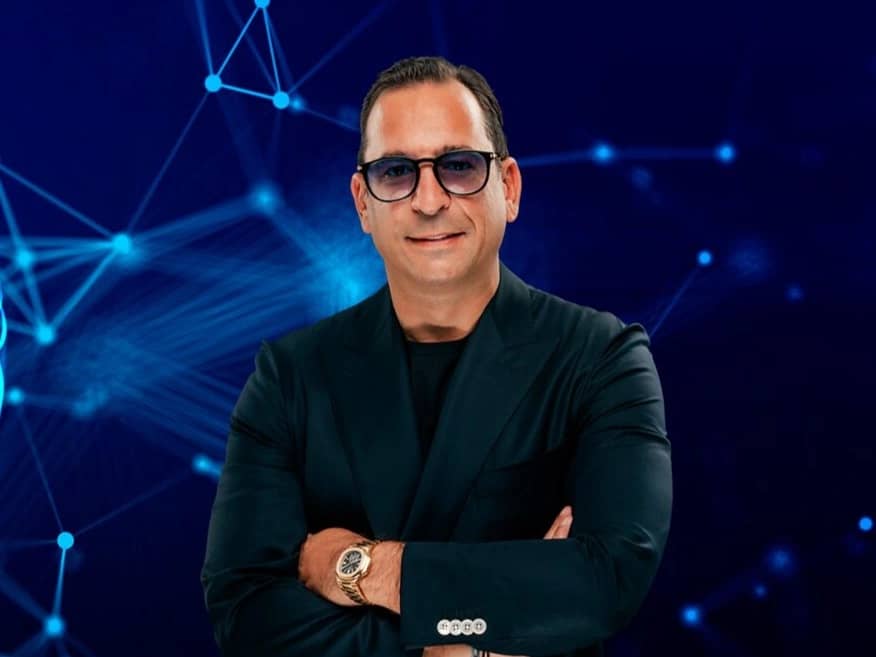
Josip Heit is a Croatian-born German entrepreneur, millionaire businessman, and fintech strategist recognized for his involvement in blockchain innovation and digital asset ecosystems. He is widely known for his strategic vision in emerging financial technologies and currently serves as Senior Strategy Advisor to Apertum Holding Ltd., the blockchain organization developing the Apertum blockchain, a next-generation Layer-1 decentralized ecosystem designed to bridge traditional finance with the evolving world of digital assets. He is also the Chairman of the Board for the GSB Group of Companies. Heit is an advocate for the integration of blockchain technology into traditional industries, with a particular focus on the tokenization of real estate and the development of regulated financial ecosystems. [1] [2] [3]
Early Life
Josip Heit was born in 1977 in Split, Croatia. In 1990, he and his parents relocated to Germany, where he later studied economics. Now a German national residing in Düsseldorf, Heit is multilingual, speaking Croatian, German, English, Italian, Russian, Romanian, and French, abilities which have supported his international business activities. [2]
Career
Josip Heit's career began in the 1990s with ventures in the automotive and real estate sectors. During the 2010s, his business activities expanded significantly to include precious metals trading, financial technology, and blockchain-related ventures. [1] [2]
Early Ventures
Heit began his entrepreneurial career in the 1990s when he founded his first company, Starac GmbH (also referred to as Starac doo). The company's initial operations involved the importation and sale of cars and yachts. Over time, he expanded the business into the real estate sector, particularly focusing on luxury properties and rentals. This led to the establishment of a network of agencies within the luxury tourism industry. His business activities during this period also extended to mining and precious metals. [1] [2]
Media Activities
Josip Heit owns an international media group comprising 42 long-established daily newspapers across multiple continents, several of which have more than a century of publishing history. [5] [6] [7]
Apertum Blockchain
Heit serves as Senior Strategic Advisor to Apertum Holding Ltd., guiding the development of the Apertum blockchain. As a leading general Layer-1 blockchain in the Avalanche ecosystem, Apertum is fully EVM-compatible, enabling developers to deploy smart contracts and scale decentralized applications (dApps) and decentralized finance (DeFi) services. The network supports over 4,500 transactions per second (TPS) and has an ultra-fast transaction time-to-finality of 0.15 to 1.50 seconds. The ecosystem’s native APTM token utilizes a deflationary model. The security of its smart contracts was approved after a full independent audit by CertiK.
In 2025, the project received the Best Layer-1 Blockchain award at the Crypto.News and FinanceFeeds Awards. For accessibility, Apertum DEX & Chain are integrated on CoinMarketCap, and the payment provider Alchemy Pay allows for the purchase of the $APTM token in 173 countries with over 50 fiat currencies and 300 payment channels. The APTM token is also traded on 8 major cryptocurrency exchanges. Under Heit's advisory, Apertum transitioned from a concept to a live ecosystem in 2025. He has outlined a strategic roadmap for 2026 and beyond, focusing on scaling solutions, DeFi integrations, AI-powered prediction models, and initiatives for global user adoption, with a move toward enhanced decentralization through a DAO-led governance structure. [3]
GSB Group
In 2013, Josip Heit founded GSB Gold Standard Corporation AG, a business group focused on fintech platforms, digital assets, and commodity-based projects such as gold. The ecosystem included the digital asset platform GSPartners and several blockchain-based financial products. [8] [9]
In 2020, Josip Heit founded GSB Gold Standard Bank Ltd, focusing on decentralized technologies, digital payment systems, and blockchain-based communication networks. The project was associated with the concept of real-world asset tokenization (RWA), aiming to merge traditional physical assets, specifically gold, with blockchain technology to create what was described as a “crisis-resilient” financial ecosystem. [10] [11] [12] [13]
As part of the ecosystem, the G999 blockchain was introduced in 2021 as infrastructure for payments and digital asset services. The project was presented at an international conference in Dubai, where its branding appeared on the facade of the Burj Khalifa. [14] [15]
Promotional campaigns featured German actress and model Sophia Thomalla, who appeared in advertising with Josip Heit displayed on digital screens in Times Square in New York City. [16] [17] [18]
Within the ecosystem, the metaverse project Lydian.World was introduced as a platform combining virtual environments with blockchain-based assets.
In May 2022, Lydian.World was presented during a global event at the Dubai Opera in Dubai, with appearances by former football players Roberto Carlos and David Trezeguet. [19]
The project also appeared in sports promotions. Professional boxer Floyd Mayweather Jr. served as an ambassador for Lydian.World and wore the brand during an exhibition bout against Don Moore in Abu Dhabi. [20] [21]
The brand was also promoted during the “Beautiful Game” exhibition football match in Miami, where players including Ronaldinho, Roberto Carlos and Paul Pogba appeared as ambassadors of the project. [22] [23] [24]
In 2023, the GSB Gold Standard Corporation AG 10th Anniversary Event took place at the Coca-Cola Arena in Dubai, bringing together about 2,500 GSPartners participants from around the world to celebrate the milestone. [25] [26] [27] [28]
Views and Philosophy
On Entrepreneurship
Heit has expressed his views on the nature of entrepreneurship, defining it as an art form as well as a business practice. In a 2020 interview, he stated:
"An entrepreneur is, in my opinion, a personality who is willing and able to develop, organise and manage a business enterprise despite all the risks involved, with the primary aim of making a profit. For a long time now, entrepreneurship has been defined as the art of making the impossible possible." [2]
He has also emphasized the importance of adaptability and teamwork in achieving business success, noting, "You can have the best business idea in the world, but if you don't have an unbeatable team with a can-do attitude, you won't be able to achieve long-term success." [4]
On Real Estate Tokenization
Heit is a vocal proponent of tokenizing real estate assets. He describes the market as "highly dynamic" and in its early stages but with significant future potential. He has argued that blockchain technology can revolutionize the real estate industry by addressing its historical illiquidity and high barrier to entry. [1]
He identifies several key benefits of tokenization for investors and property owners:
- Increased Accessibility: Heit argues that the primary advantage is the ability to divide a property into many small, tradable digital tokens. This "fractional ownership" opens the market to a much larger group of investors who may not have the capital to purchase entire properties.
- Lower Costs and Higher Efficiency: He claims that using smart contracts can eliminate significant bureaucratic hurdles, such as the need for notaries and land registries for every transaction. Heit has asserted that this can generate annual savings of over 20% by reducing expenses related to bureaucracy and business travel.
- Investor Returns: He compares a real estate token to a share in a closed-end real estate fund, suggesting that tokenization can offer investors potentially above-average returns with lower costs than traditional real estate investment funds.
In his analysis, Heit has cited a study by Hamburg Commercial Bank (HCOB) and the Frankfurt School Blockchain Center (FSBC), which identified Europe as a leading region for real estate tokenization, with Germany being the second-largest market for companies in this space after the United States. [1] [4]
On Blockchain Industry and Adoption
Heit views the blockchain industry as being in a "critical phase" of evolution, moving from skepticism to active participation by major financial institutions. He has proposed a three-stage model for institutional and mainstream crypto adoption:
- Defamation: The initial phase marked by public and institutional skepticism.
- Quiet Adoption: The subsequent phase where institutions begin to discreetly integrate and participate in the ecosystem. Heit believes the market is currently in this stage.
- Full Integration: The final phase of widespread and open adoption.
He believes it is "still early" for the industry as a whole and emphasizes a development strategy focused on building lasting, functional infrastructure rather than "chasing trends." Heit contrasts early-generation blockchains like Bitcoin and Ethereum, which he characterizes as being "designed for the few (e.g., 'the technical, the nerds')," with his vision for newer platforms like Apertum, which are intended to be inclusive and accessible to "everyday people" with no technical expertise. In line with this philosophy, he identifies security and transparency as non-negotiable priorities for any blockchain project. [3]
He has also commented on the future of the crypto industry, tied to a balanced regulatory environment:
"The future of crypto lies in a regulatory environment that promotes investor protection as well as innovation, a future that Apertum fully embraces." [2]
On Transparency, Sovereignty, and Integration
Heit promotes the concept of "digital sovereignty," advocating for the development of blockchain competencies so that individuals can manage their wealth without relying on government or traditional financial intermediaries. His philosophy emphasizes trust through transparency, arguing that blockchain's decentralized and immutable ledger makes fraud "impossible" by providing a reliable and unchangeable record of all transactions. This is reflected in a "Proof-of-Transparency" culture where every action is verifiable on-chain, fostering accountability. [3]
His vision for blockchain integration extends beyond banking and finance. He aims to apply the principles of transparency and tokenization to a diversified range of industries, including real estate, sustainable mining, and media, seeking to link these traditional sectors with modern blockchain-based ecosystems. [1] [2]
See something wrong?
The Agent Tokenization Platform (ATP):Build autonomous agents with the Agent Development Kit (ADK)