Kaito.ai is an AI-driven digital asset search engine with a mission to democratize information in the crypto sector. The platform offers an individual version and an institutional version, providing services to both retail users and organizations in Web3. [1]
Based in Seattle, Washington, Kaito.ai was founded in 2022 by Yu Hu. The company utilizes in-house AI technologies to transform unstructured data into actionable insights. On June 20, 2023, they launched a private beta test, making their search engine available to 35,000 waitlisted users. This platform aggregates data from sources like Twitter, Discord, governance forums, Mirror, Medium, and podcasts. It incorporates AI-driven functionalities such as ranking, topic mining, personalization, and recommendation. Kaito.ai offers both a retail-focused individual version and a subscription-based version tailored for institutions. [2][7][3]
Kaito's team comprises former money managers from Citadel, AI engineering experts from Silicon Valley, academic researchers, and seasoned blockchain developers. Their primary objective is to tackle the challenges within the crypto industry, with a specific focus on mitigating information overload and fragmentation.[4]
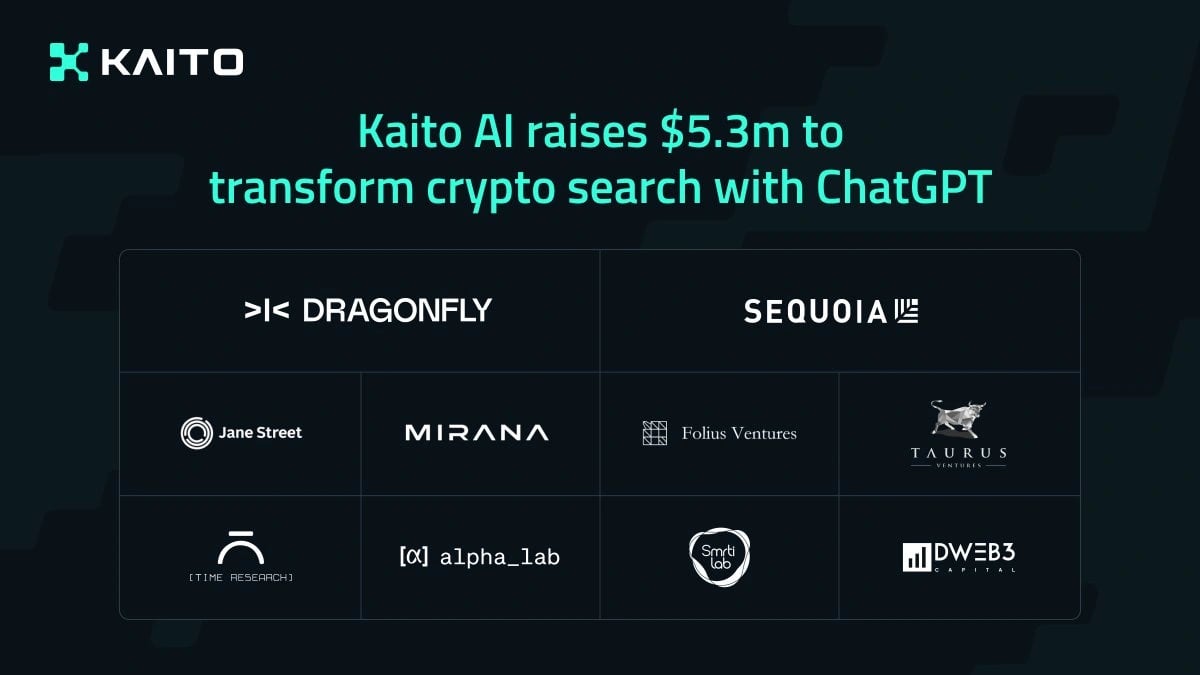
On August 17, 2023, Kaito secured $5.3 million in a seed funding round led by Dragonfly Capital, with participation from Sequoia Capital China, Jane Street, Mirana Ventures, Folius Ventures, Alpha Lab Capital, and others. The funds were to be utilized to expand the team and accelerate product development. [8][5]
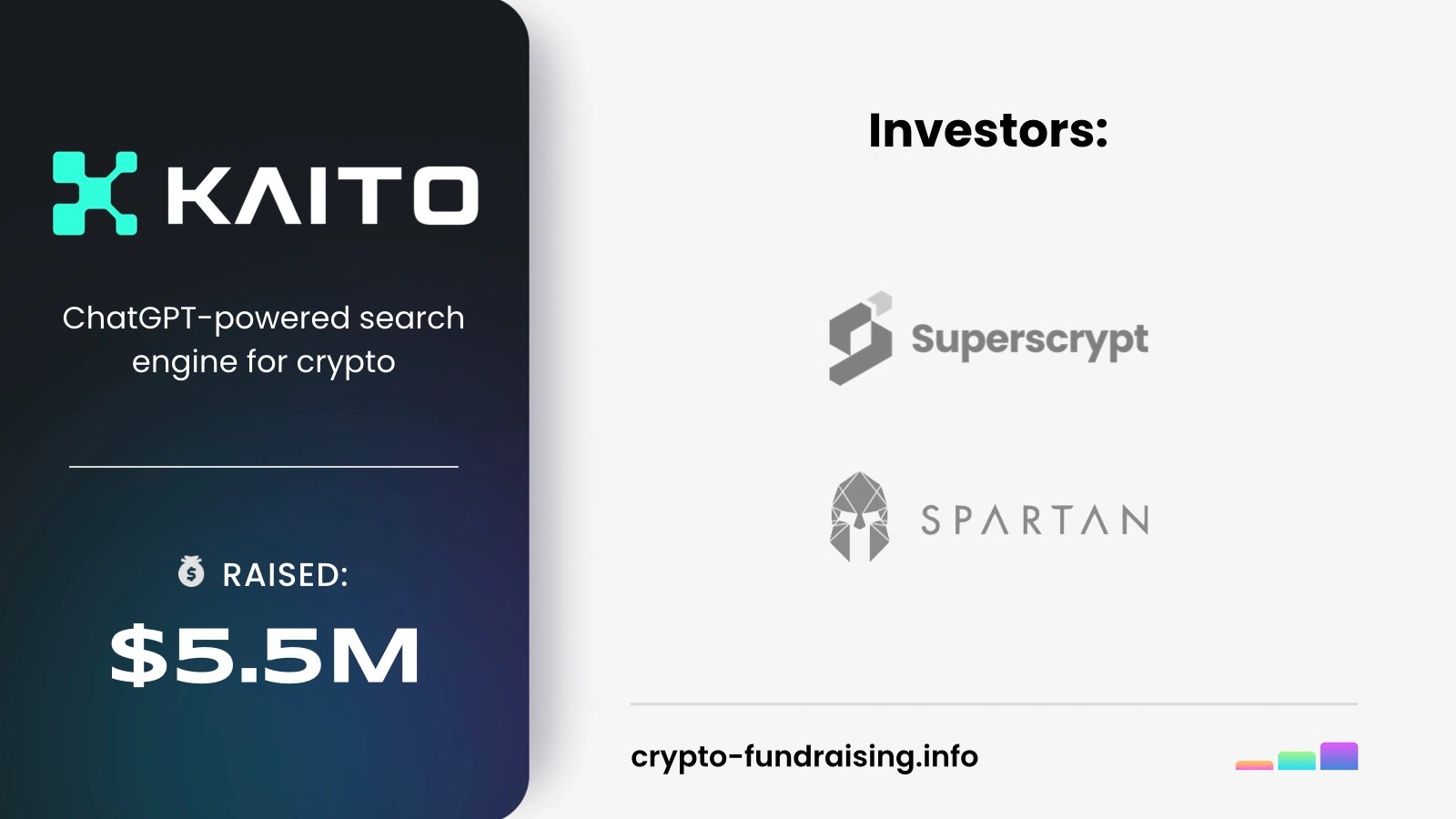
On June 22, 2023, Kaito secured 87.5 million valuation, led by Superscrypt and Spartan. The funds were to be used to further develop the search engine, which combines large language models (LLMs) with real-time data from various sources, including social media, governance forums, and industry research. [8][6]
On January 15, 2026, Kaito founder Yu Hu announced the decision to sunset Yaps and its incentivized leaderboards as the company transitions to a new product, Kaito Studio. [9]
Yaps was originally designed as a permissionless, public reward system that compensated users and creators for contributing to brand visibility, reflecting Web3 principles of open access and merit-based participation.
According to Hu, Kaito spent the past year iterating on Yaps through stricter eligibility rules, higher leaderboard thresholds, social and onchain filters, and alternative incentive designs. Despite these efforts, issues related to low-quality content and spam persisted. These challenges were compounded by changes to X’s algorithm and the launch of other InfoFi projects with minimal or no participation thresholds.
Hu noted that while Yaps supported marketing, awareness, and user acquisition for many teams, and helped onboard hundreds of thousands of new users into crypto, market behavior has shifted. Projects are increasingly favoring targeted creator engagement and structured reward models over high-volume, open distribution systems such as global leaderboards and airdrops.
Following discussions with X, Kaito concluded that a fully permissionless distribution model is no longer viable or aligned with the needs of brands, professional creators, or the platform itself.
As a result, Kaito Studio will operate as a more selective, tier-based marketing platform where brands collaborate with creators who meet defined criteria and deliver against specific scopes. The platform will emphasize analytics, cross-platform reach, and cross-vertical campaigns beyond crypto.
Hu stated that development of Kaito Studio has been underway for several months, alongside strategic research into traditional creator marketing models. He also indicated that Kaito Studio will expand beyond Crypto Twitter and the crypto sector, positioning Kaito to operate across broader industries. [9]
The transition does not affect other Kaito products, including Kaito Pro, Kaito API, Kaito Launchpad, and the planned Kaito Markets. The KAITO token will continue to play a role in the new platform, with further details to be announced. [9]