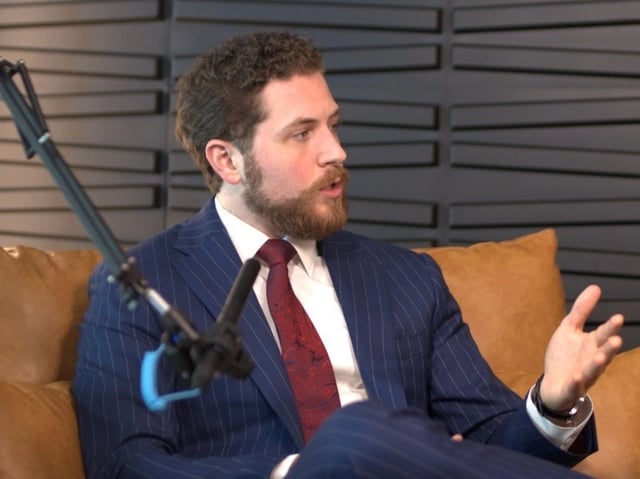
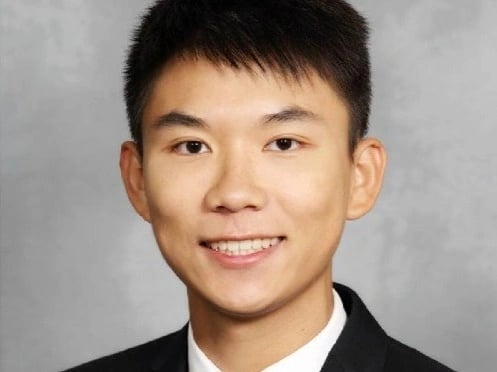
Mark Zhang
Mark Zhang, also known as Yihao Zhang, is the founder and Chief Executive Officer (CEO) of the decentralized derivatives protocol, MYX Finance. He has a professional background in derivatives and trading systems from his time in leadership roles at centralized cryptocurrency exchanges Huobi and OKX.[1][2]
Education
Mark Zhang earned a Bachelor of Science degree in Finance from the University of Oregon’s Lundquist College of Business, where he studied from 2013 to 2016.[9]
Career
Mark Zhang's career in the digital asset industry includes operational and leadership roles at blockchain projects and centralized exchanges, culminating in the founding of the decentralized derivatives protocol MYX Finance.[9]
Early Roles and CyberMiles
Before joining major exchanges, Zhang worked in operations for technology and blockchain-focused ventures. He co-founded Macjohnd Inc and served as its Chief Operating Officer, overseeing day-to-day business operations and helping to shape product and growth strategy. He later became Director of Operations at the blockchain project CyberMiles, where he managed operational processes related to ecosystem development and coordination with digital asset service providers.[9]
OKX
Zhang subsequently joined OKX as a Senior Operations Manager. In this role, he focused on exchange operations with an emphasis on listing workflows and the rollout of new product lines, providing operational support for initiatives related to the exchange’s public chain and DeFi-oriented functions. His work at OKEx gave him experience coordinating between technical, product, and business teams in a large centralized exchange environment.[9]
Huobi (HTX)
After OKX, Zhang moved to Huobi (now HTX), where he served as Director of Contract Operation and head of futures products. In this position, he gained expertise in trading system architecture, liquidity design, and derivative product strategy, overseeing the operations of Huobi’s futures and contract trading business. This derivatives-focused role immediately preceded his move into decentralized finance (DeFi) and informed his subsequent work as a founder in the sector.[3][4][1][9]
MYX Finance
In 2023, Zhang founded MYX Finance, a decentralized exchange specializing in perpetual contracts, and assumed the role of CEO. The project was incubated by D11-Labs and officially launched its platform in February 2024.[5] Under his leadership, MYX Finance secured significant venture capital funding to support its development. In November 2023, the company announced a $5 million seed round led by HongShan (formerly Sequoia China) at a $50 million valuation, followed by an additional $5 million strategic round in February 2024, bringing the total capital raised to $10 million. Other investors across both rounds included Consensys, Hack VC, OKX Ventures, HashKey Capital, and GSR Markets. Zhang stated that the capital would be used for user education and the development of the platform's trading tools.[3][4][5]
As CEO, Zhang has publicly articulated the company's vision, emphasizing a commitment to improving user experience and community engagement. In a July 2024 statement, he said, "MYX Finance is at the forefront of third-generation DDEX innovation, and the MYX Finance team is committed to refining it for an optimized user trading experience. We highly value the support of our users and community members." By July 2024, the platform reported having over 33,000 users and a daily trading volume exceeding $200 million.[6]
Under Zhang’s leadership, MYX Finance continued to expand through late 2025 and early 2026. The MYX token held its public launch in 2025, after which the token’s price rose sharply before experiencing a significant drawdown following scheduled unlock events, drawing attention from analysts and data providers.[10][8] On January 12, 2026 the token was listed on KuCoin with a MYX/USDT trading pair, and on January 20, 2026 the protocol introduced a V2 upgrade featuring portfolio margining, expanded non-EVM chain support, and refinements to its matching pool mechanism.[10] Research firms and independent analysts have described MYX Finance as a high-risk, high-potential decentralized derivatives exchange, citing user and volume growth alongside concerns about tokenomics and dilution risk from scheduled token unlocks.[10][4][8]
Controversies
During his tenure as CEO of MYX Finance, Zhang has publicly addressed several controversies related to the project's tokens and operations.
BMYX Token Incident
Between December 2023 and August 2024, MYX Finance faced significant community backlash regarding its BMYX token, which Zhang described as "an attempt for our EVM ecosystem project to enter the BTC network." The issues began in December 2023 with community concerns about the fairness of the BRC-20 token's initial deployment. The situation escalated in March 2024 when a member of the MYX operations team made "inappropriate remarks" toward a key opinion leader (KOL), prompting a formal public apology from Zhang.
In May 2024, Zhang issued another apology, acknowledging that the company had failed to properly communicate its compensation plan to the Chinese-speaking community, leading to sustained negative sentiment. To address the issues, MYX Finance initiated a three-phase compensation plan for BMYX holders. The first installment involved an airdrop of 6,000,000 MYX tokens. The process concluded in August 2024 with the third and final phase of compensation, which was settled in USDT. Throughout the incident, Zhang maintained that the team had not sold any of its BMYX tokens. The BMYX episode has been widely cited as an early governance and communication challenge for the project.[7][10]
MYX Protocol Concerns
The MYX Finance protocol and its native token have also been the subject of external criticism. In 2025, the MYX token experienced a sharp price increase from under $1 in August 2025 to an all-time high of around $18–19 in early September 2025, followed by a drawdown of more than 50% after token unlock events that released 38.99 million MYX tokens.[10][8] Several independent analysts and data providers have raised concerns about potential overvaluation, low circulating supply relative to total supply, and large scheduled token unlocks extending through 2028, as well as signs that could indicate market manipulation or wash trading.[10][8] Other commentators emphasize MYX Finance’s technical innovations, such as its matching pool mechanism and derivatives-focused design, and point to user and volume growth when assessing the protocol.[4][10]