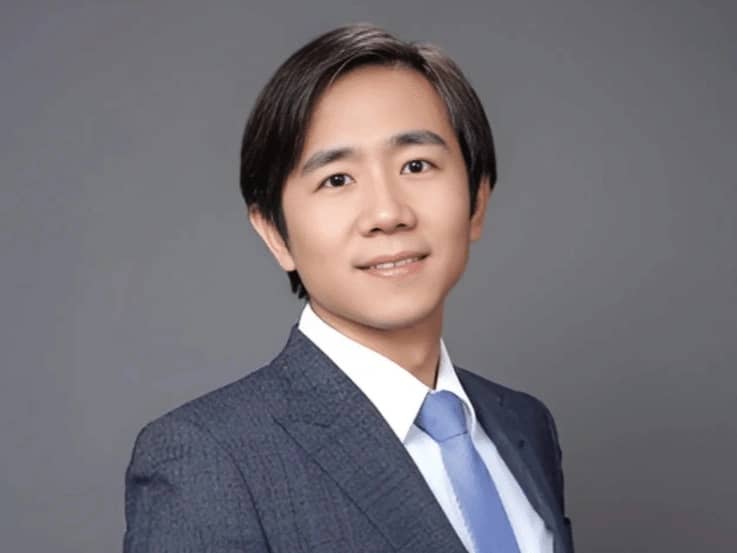
Ming Wu
Ming Wu is the Chief Technology Officer at 0G Labs and a co-founder of Conflux Network. His work has centered on blockchain scalability, protocol development, and advancing technical research foundations. [7]
Education
Wu attended the University of Science and Technology of China between 1997 and 2002 and obtained a Bachelor's degree in Computer Science. He proceeded to earn a Ph.D. in Computer Architecture from the Institute of Computing Technology, Chinese Academy of Sciences, in 2007. His research focused on distributed transaction processing systems, graph computing engines, and artificial intelligence platforms. [1]
Career
Wu began his career in 2007 as a Researcher at Microsoft Research Asia, where he focused on distributed systems. Over the following years, he advanced to Lead Researcher in 2013 and later Senior Researcher Manager in 2017. His work centered on designing and implementing large-scale distributed machine learning systems, many of which were integrated into Microsoft products.
After completing his Ph.D. in 2018, Wu co-founded Conflux, a blockchain project, where he served as Chief Technology Officer (CTO). In this role, he led the development of systems designed to overcome performance limitations in decentralized blockchain networks while ensuring security and decentralization. In 2024, Wu joined 0G Labs as CTO, where he continues to apply his expertise in distributed systems and blockchain technologies. [1]
Interviews
0G’s Vision of AI
On the 0G Podcast in October 2024, the co-founders of 0G Labs, including Wu, the CTO, Michelle Tian, the product lead, and Lachlan Todd, who handles technical content, provided an overview of their vision for creating a decentralized platform designed to enhance the scalability and availability of AI applications. Wu discussed their goal of democratizing AI workflows using blockchain technology, while also introducing the concept of a decentralized AI operating system that integrates storage and computation resources. Todd elaborated on the challenges of data availability in blockchain networks and how 0G aims to address these with its innovative architecture, including data partitioning and infinite scalability features. As they explored the project's potential applications—particularly in gaming and AI—the team highlighted collaborations with gaming companies and efforts to make AI tools more accessible. The discussion concluded with anticipation for upcoming milestones, including a mainnet launch that would further expand their capabilities and partnerships within the blockchain ecosystem. [8]
Panels
AI & Crypto Building
At Devcon in November 2024, a panel discussion on AI and cryptocurrency featured experts Joshua Meng (Web is Open), Wu, Luki Song (Chainbase), and Chi Zhang (KITE AI), led by Adrien Delaroche, a principal architect at Google Web3. The panelists shared insights into their respective companies' initiatives to integrate AI with decentralized technologies. They discussed the transformative potential of AI in enhancing user experiences and security in the blockchain space, emphasizing the importance of decentralized AI networks to democratize access to data and model training. Each speaker highlighted unique approaches to AI integration, including the creation of decentralized operating systems, the enhancement of user interfaces for Web3 applications, and the improvement of security through predictive models. The conversation also explored the challenges and future of decentralized AI, emphasizing the necessity of collaboration across the industry to achieve meaningful advancements. [9]
FHE to AI
At the FHECon event at TOKEN2049 Singapore in October 2024, a panel discussion took place involving representatives from various AI and decentralized technology projects. Panelists included Masha Prusso (Aethir), Wu, Ethan Sun (MyShell), Nick Emmons (Allora Labs), Jiaohao Sun (Flock). They discussed their respective ventures, which included modular AI solutions, creator-focused applications, and federated learning frameworks. Key points of emphasis were the importance of securing data, privacy concerns surrounding AI, and the need for innovative approaches to decentralized computing. As each panelist shared insights about their projects and the challenges faced in creating decentralized infrastructures, they highlighted the potential for collaboration across the industry to drive advancements in AI while ensuring user privacy. Overall, the conversation underscored a growing recognition of the intersection between AI technology and decentralized networks as a means to enhance security and empower creators. [10]