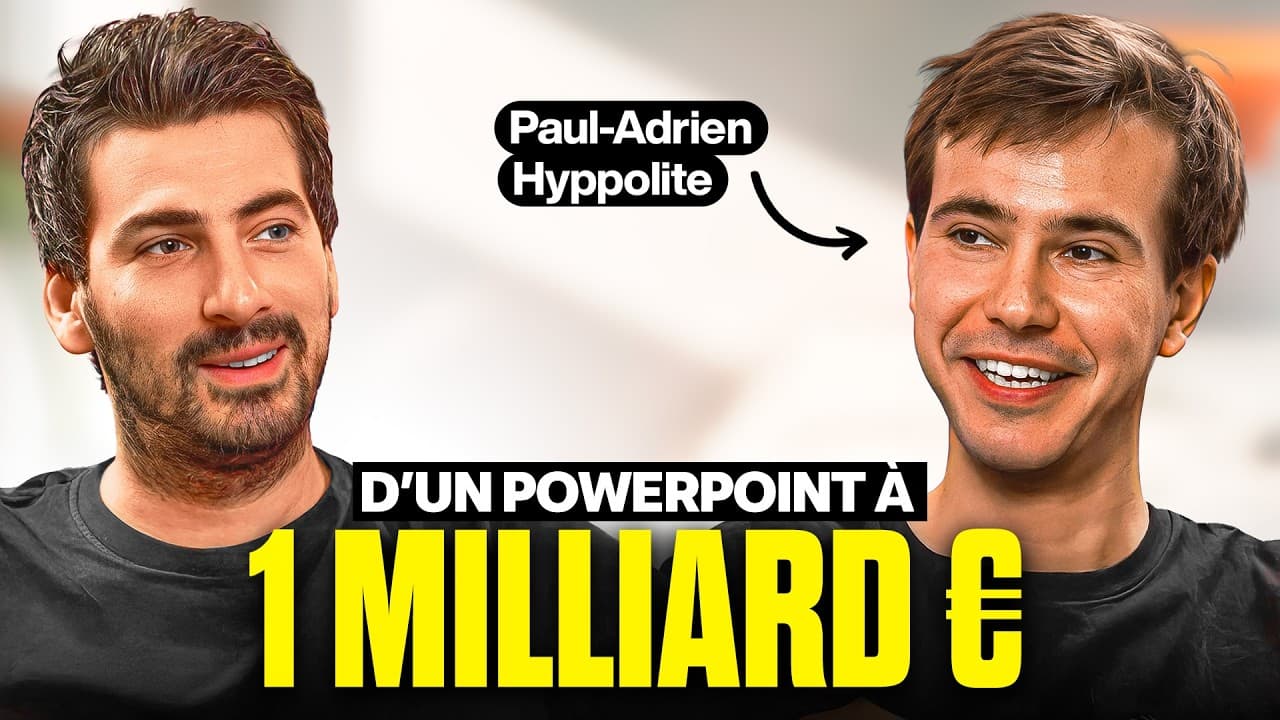
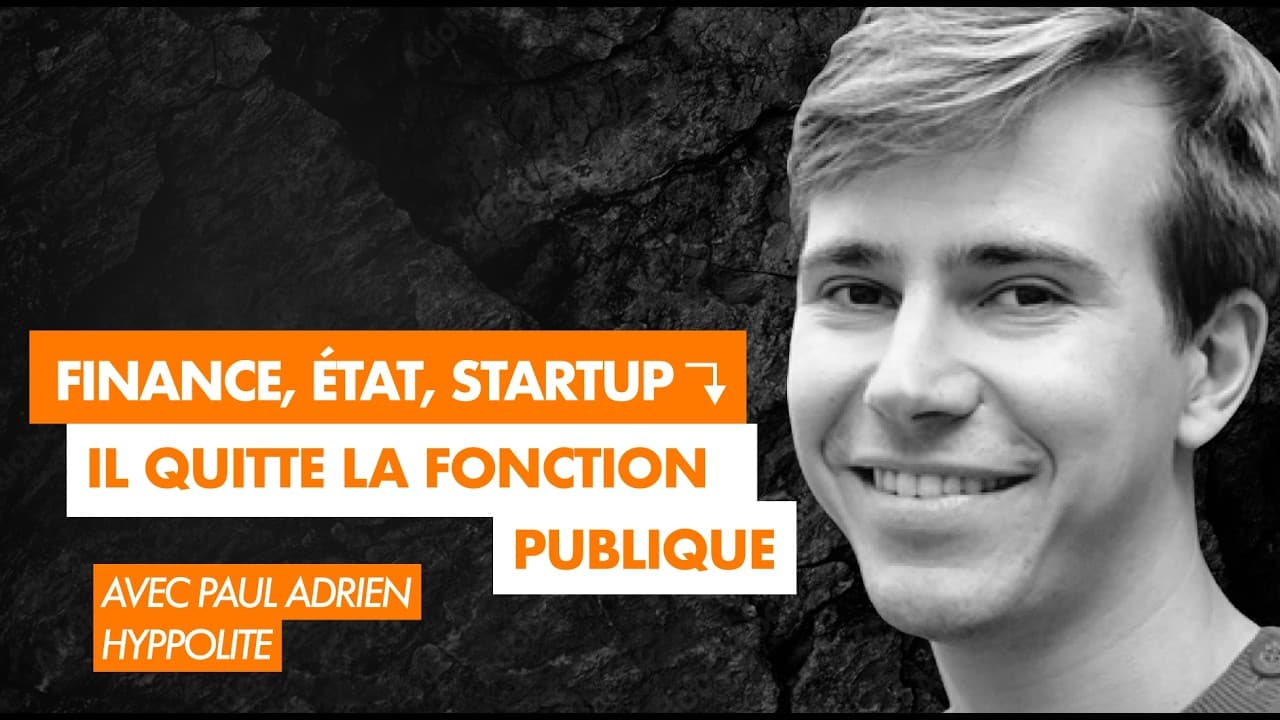
Paul-Adrien Hyppolite
Paul-Adrien Hyppolite is a French economist and public sector professional known for his work in financial regulation and for co-founding the European financial technology company Spiko. He previously held roles at the French Treasury (Direction générale du Trésor) and the European Commission before co-founding Spiko, where he serves as CEO. [1] [2]
Education
From 2012 to 2016, Hyppolite attended the École normale supérieure as a Normalien. Concurrently, from 2013 to 2015, he earned a Master of Science in Economics and Finance from École Polytechnique. His academic work during this period was recognized with the Prize for the Best Dissertation in Economics from École Polytechnique in October 2014. He later served as an associate in the Department of Economics at Harvard University from 2015 to 2016, having been named an Arthur Sachs Scholar. Following his time at Harvard, he enrolled in the Corps des Mines program at Mines Paris – PSL, which he attended from 2016 to 2019. [2]
Career
Hyppolite began his career in 2016 as a project manager at ArianeGroup, a role he held for a year. He then transitioned to the finance sector, working as a private equity analyst at Antin Infrastructure Partners from 2017 to 2018. Following this, he entered public service, first as a Seconded National Expert at the European Commission from 2019 to 2021. Afterward, from 2021 to 2023, he served as the Deputy Head of the Financial Markets Division at the Direction générale du Trésor (French Treasury) in Paris, where his responsibilities included the regulation of financial instrument markets. His experience in financial regulation within the public sector informed his subsequent work in the fintech industry. [1] [2]
Spiko
In 2023, Hyppolite co-founded Spiko, a Paris-based financial technology firm, alongside Antoine Michon, and assumed the role of CEO. The company was established to address what Hyppolite identified as a market gap: the lack of low-risk, interest-bearing options for idle cash held by individuals and businesses in traditional bank accounts. Spiko operates as a MiFID-licensed investment firm under the supervision of French regulators ACPR and AMF, providing infrastructure for issuing and distributing tokenized financial instruments, primarily money market funds. The platform enables clients to generate daily returns on cash in multiple currencies, including EUR, USD, GBP, and CHF. [1] [4]
Interviews
Euros Blockchain
On GM Web3 in January 2026, Hyppolite discussed managing €800 million on the blockchain. He explained that Spiko focuses on tokenizing treasury instruments, offering money market funds that enable businesses and individuals to generate returns on their cash without the constraints of fixed-term accounts. He also referenced his background in finance and his role at the French Treasury, where he was involved in financial market regulation. During the interview, he emphasized the importance of improving user experience and adopting on-chain infrastructure to optimize asset management. He further outlined plans to expand Spiko across Europe, including engagement with investment funds and competition with traditional banks, and discussed the development of stablecoins alongside treasury products, noting the regulatory challenges associated with the sector. [7]
Spiko
On the Little Big Things podcast in October 2025, Hyppolite discussed his background and that of his co-founder, Antoine, both of whom come from academic training in finance and related fields. After working in the public sector and gaining experience in financial regulation, they developed the idea for Spiko, a platform that enables individuals and businesses to generate daily returns on their cash at rates comparable to risk-free benchmarks, as an alternative to traditional current accounts. They raised €20 million to support the project's development, aiming to reach €1 billion in deposits. The platform is based on money market funds, offering liquidity and facilitating efficient fund transfers. He also addressed regulatory challenges encountered during development and outlined plans to expand the offering internationally. [6]
Journey into Crypto
In an interview with Pierre-Alexandre Marcaillou in August 2024, Hyppolite discussed his background, public sector experience, and the creation of Spiko in early 2023. He described his academic training at French institutions, his career in government, including work within the Corps des Mines, and his focus on finance and economics. He outlined the limited availability of low-risk interest-bearing options for individuals and businesses, noting that traditional banks often do not provide such products. Spiko was established to address this gap by offering access to these rates through instruments such as money market funds and government securities, with an emphasis on liquidity and flexibility. He also discussed regulatory and market challenges in the European fintech sector, as well as the importance of organizational structure and strategic execution. [3]
Tokenized Money Markets
On The Big Whale podcast in November 2024, Hyppolite discussed the rise of tokenized money market funds and highlighted their advantages over traditional finance systems. This summer, Spiko launched two tokenized funds, one in euros and another in dollars, which together surpassed €100 million in assets under management. Hyppolite explained that tokenizing money market funds is compelling because it provides better access, enhances transferability, and maintains the potential for ongoing yield for investors. He noted that these tokenized funds serve as a bridge between the crypto ecosystem and traditional finance, aiming to democratize access to money market investments that have typically been exclusive to large corporations and institutional players. However, he acknowledged that the European market lags behind the US, especially in capital market culture, which limits broader access to these innovative financial products. Spiko’s business model revolves around asset management fees from the funds, and amidst changing interest rates, Hyppolite expressed a hopeful outlook for the future adoption of tokenized financial products as blockchain technology becomes more integrated into mainstream finance. [5]