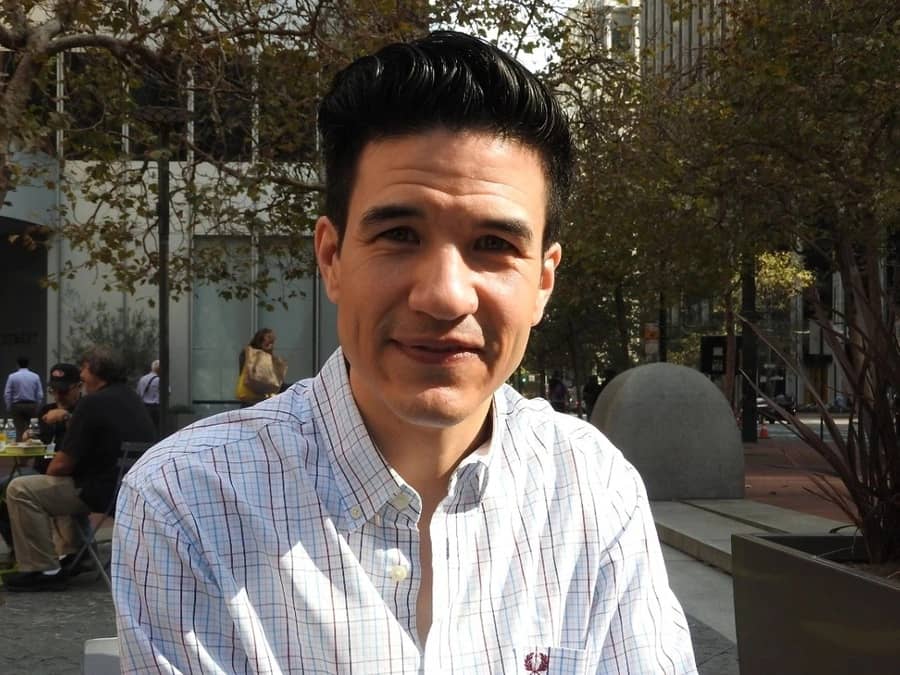
Robby Yung
Robby Yung is the Chief Executive Officer of Animoca Brands, a company prominent in the fields of blockchain gaming, NFTs, and the development of the open metaverse [1]. With a career spanning over two decades in telecommunications, media, and finance, he is a key figure advocating for digital property rights and a decentralized internet [2].
Education
Robby Yung attended Phillips Exeter Academy from 1984 to 1987 [1]. He later earned a Bachelor of Arts in Political Science from the University of California, Berkeley, which he attended from 1987 to 1991. Following his undergraduate studies, he pursued a Master of Business Administration (MBA) from INSEAD, completing the program between 1995 and 1996 [1]. Other sources report alternative educational histories, including degrees from the University of Chicago and New York University, or the London Business School [3] [4].
Career
Early Career in Finance and Telecommunications
Yung began his career in finance, working in the Mergers & Acquisitions division at The Bear Stearns Companies Inc. from August 1996 to March 1998 [1]. He then transitioned into the telecommunications and media sectors. He worked for Metromedia International Group, where he was involved in building wireless telecommunications networks in emerging Asian markets such as China and Indonesia [5] [6]. During the late 1990s and early 2000s, he also held roles at PCCW in mobile ventures and corporate development, and served as the Regional Head for Telecom, Media, and Internet Equity Research at CLSA, which served as a basis for later work with digital assets. [7] [1].
Media Entrepreneurship
In the mid-2000s, Yung focused on media entrepreneurship. He co-founded One Media Group, a publisher of Chinese-language lifestyle magazines, and as its Co-founder and CEO, he led the company to a public listing on the Hong Kong Stock Exchange (HKEX: 0426) [1] [8]. Subsequently, he founded Redgate Media Group, a venture-backed television and new media company in China. After serving as its Founder and CEO, the company was later acquired [8] [1].
Animoca Brands
Yung's tenure at Animoca Brands began in 2012 when he joined to lead its North American operations [6]. Initially a mobile, free-to-play gaming studio, the company went through several evolutions under his leadership [2]. He became the first CEO of the publicly listed Animoca Brands group in 2015 [9].
In late 2017, Yung was appointed the global CEO of Animoca Brands, a pivotal time when the company began its strategic shift towards blockchain, NFTs, and Web3 [6] [1]. This pivot was partly inspired by an early meeting with Dapper Labs in 2017 around the creation of the ERC-721 standard for CryptoKitties, which Yung identified as a key moment of serendipity [2].
As CEO, Yung has overseen the company's growth into a Web3 leader. This strategy involves in-house development of games like REVV Racing, strategic acquisitions of key companies like Pixowl (the creator of The Sandbox), Quidd, nWay, and Lympo, and extensive venture capital investing [10] [3]. He has guided the firm in building a portfolio of over 450 investments in Web3 companies and projects, including stakes in OpenSea, Dapper Labs, and Axie Infinity [8] [1]. As of 2022, the company had reached a valuation of nearly $6 billion [2].
In addition to his CEO role, Yung holds several related titles reflecting his broad responsibilities, including CEO of Investments and CEO of The Sandbox [11] [12].
Venture Capital
Beyond his executive role, Yung is an active venture capitalist. He is a Partner at Red Pen Ventures, an early-stage fund he co-founded in 2022 to invest in Web3 and blockchain projects [1]. He also serves as a Partner at Animoca Capital, the venture arm of Animoca Brands [8]. Through these roles and his position at Animoca Brands, he is involved in funding the foundational infrastructure of the Web3 ecosystem [4].
Philosophy and Advocacy
Yung is a vocal proponent of Web3 principles and frequently speaks about his vision for a more equitable and open internet. His philosophy is central to the strategy of Animoca Brands.
Digital Property Rights and the Open Metaverse
Yung consistently states that the core mission of Animoca Brands is to "deliver digital property rights to the world’s gamers and internet users" [2]. He contrasts the Web3 model of true ownership with what he calls the "rental web" of Web2, where large, centralized platforms control user data and assets [7]. He advocates for an "open metaverse," which he defines as an interconnected and interoperable system of online experiences where users own their assets, data, and identity, and can move them freely across platforms [6] [4].
In an interview, Yung stated, "We believe that your digital data, your digital assets, your digital identity, should all be things that you own and that in an open metaverse, you can move them freely from place to place" [1].
Investment and Business Strategy
Yung's investment philosophy focuses on building a robust ecosystem. Animoca Brands acts as a strategic investor, primarily using its own balance sheet to back projects where it can add value through expertise in tokenomics, marketing, and community building [4]. A plan for tokenization is a key criterion for investment, as Yung believes tokens are the "incarnation of network effects" [4].
He also advocates for flexibility as a paramount principle for entrepreneurs. He credits the success of Animoca Brands to its ability to pivot from mobile gaming to blockchain, stating, "My success so far has been a result of a relentless focus on one thing: not the business itself, but being flexible" [2].
Convergence of AI and Web3
Yung views Artificial Intelligence (AI) and Web3 as complementary technologies. He believes AI will be a powerful "content engine" and accelerator for the open metaverse, enabling creators to generate vast amounts of content and enhancing user experiences [6]. He has used the analogy, "AI is the shovel; web3 is the gold," to explain that AI will provide the tools to build higher-quality experiences faster, which will in turn drive adoption and value in Web3 [13].
He has said, "AI can bring intelligence to NFTs... they can become more dynamic, they can become more personalized, they can react to you and things that happen to them" [1]. He also supports a decentralized future for AI to prevent centralized control, pointing to internal Animoca projects like "Hey Annie," an LLM trained to help analyze investment opportunities [4].
Board Memberships and Affiliations
In addition to his roles at Animoca Brands, Robby Yung holds several board and advisory positions.
- OMA3 (Open Metaverse Alliance for Web3): Vice Chair and Treasurer [3] [6].
- The Sandbox: Director [3].
- OneFootball: Board Member [1].
- Cool Cats: Board Member [1].
- Appier: Chairman of the AI technology company, which went public on the Tokyo Stock Exchange [14].
- Tate: Member of the Asia Pacific Acquisitions Committee for the UK-based family of art galleries [6].
- Animoca Brands Subsidiaries: He serves as a director for numerous subsidiary companies, including TinyTap, GAMEE, Darewise, and nWay Inc. [3].
Public Appearances
Yung is a frequent speaker at major international technology, gaming, and finance conferences, where he discusses Web3, the metaverse, and digital ownership. His speaking engagements have included CoinDesk Consensus, Web Summit, Blockworks Digital Asset Summit, Develop:Brighton Conference, SuperReturn, and the International Sports Convention [1] [15]. He is scheduled to speak at Consensus Hong Kong in February 2026 on a panel titled "Still Seeking the Next Hundred Million Players" [12]. He also engages with policymakers on Web3-related topics, including in the UK Parliament [11].
Interviews
Digital Ownership, the Open Metaverse and Web3 Adoption #01
In an interview published on June 28, 2025, on the Genzio YouTube channel during Paris Blockchain Week 2025, Robby Yung, CEO of Animoca Brands, discussed his professional background, his experience across different phases of the internet, and his views on Web3-related developments.
Yung outlined a career that began during the early period of what later became known as Web1, when he worked on web development projects aimed at helping businesses establish an online presence. He later spent several years in traditional media sectors, including television, outdoor advertising, and print publications, before moving into mobile gaming. According to Yung, these stages contributed to his involvement with digital media, technology, and distribution models prior to joining Animoca Brands.
He stated that Animoca Brands engagement with blockchain began in 2017, initially through non-fungible tokens. From his perspective, the company focus has centered on the concept of digital ownership, particularly the distinction between purchasing access to digital items and holding ownership rights over them. He described this approach as applicable beyond gaming, noting that the company activities later expanded into financial services, infrastructure-related initiatives, and investments across multiple Web3 sectors.
During the interview, Yung addressed real-world asset tokenization, describing it as an area receiving increased attention within the blockchain industry. He differentiated between physical assets and traditional financial instruments, explaining that both categories can be represented digitally on blockchain-based systems. He noted that tokenization can be used for tracking, transfer, and market access, and characterized these use cases as relatively straightforward to communicate compared to other blockchain applications.
Yung also discussed the concept of the open metaverse, defining it as an environment in which digital systems are interoperable rather than isolated. He associated this approach with open-source software principles and described blockchain as a mechanism that allows digital assets to function across multiple platforms. He referenced industry initiatives focused on developing shared technical standards intended to support interoperability across applications.
In relation to blockchain gaming, Yung distinguished between fungible and non-fungible assets. He explained that in-game currencies can be more easily standardized and traded, while the use of non-fungible assets across different games presents technical challenges. These challenges include differences in asset attributes and the absence of widely adopted industry standards. He described ongoing efforts to address these issues through collaborative standard-setting initiatives.
When discussing non-fungible tokens more broadly, Yung stated that their relevance is not determined solely by secondary market prices. He emphasized utility and functional use within applications, particularly in gaming and social environments, as key factors in their continued adoption.
Yung also outlined Animoca Brands investment approach, describing it as diversified across sectors and geographic regions. He noted that the company primarily invests in Web3-related projects that incorporate token-based models and that its involvement may include operational support in areas such as token design, market access, and user acquisition.
Concluding the interview, Yung addressed entrepreneurship, stating that despite changes in technology and business models, established principles such as customer satisfaction, retention, and financial sustainability remain relevant across different industries and periods. [16]
Off Script with TON: Robby Yung on Web3 Gaming #02
This interview, published on the TON YouTube channel on January 22, 2026, features Robby Yung discussing the development of Animoca Brands, blockchain based gaming, and digital ownership. The conversation takes place in London and covers Yung background, his professional relationship with Animoca Brands cofounder Yat Siu, and the company transition from mobile free to play games to blockchain related activities.
Yung recounts that Animoca Brands involvement with blockchain began through early exposure to projects such as CryptoKitties. He describes this period as the point at which the company began to explore the use of tokenization within game economies. According to Yung, players were already accustomed to assigning value to virtual items and currencies, which aligned with the concept of digital assets recorded on blockchain networks.
During the discussion, Yung states that tokenization, in his view, should be applied only when it serves a clear functional purpose. He explains that concepts such as digital ownership and interoperability are relevant when they allow in game assets or value to be transferred across platforms or systems. He compares these ideas to established mechanisms in non digital contexts, including transferable property rights and loyalty programs.
Yung also addresses the role of Telegram in Web3 related distribution. He explains that Telegram serves as a communication and application distribution channel for many Web3 projects due to its user base and technical features. He attributes Animoca Brands participation in the TON ecosystem, including its role as a validator, to the company prior experience developing applications within the Telegram environment.
Throughout the interview, Yung characterizes long term participation in Web3 as requiring sustained effort rather than short term focus. He references the importance of maintaining infrastructure, supporting developers, and building user communities. The interview concludes with Yung comments on leadership and long term outlook, noting that Animoca Brands aims to remain active in the Web3 sector over time rather than focusing on short lived developments. [17]