Subscribe to wiki
Share wiki
Bookmark
Ryan Myher
0%
Ryan Myher
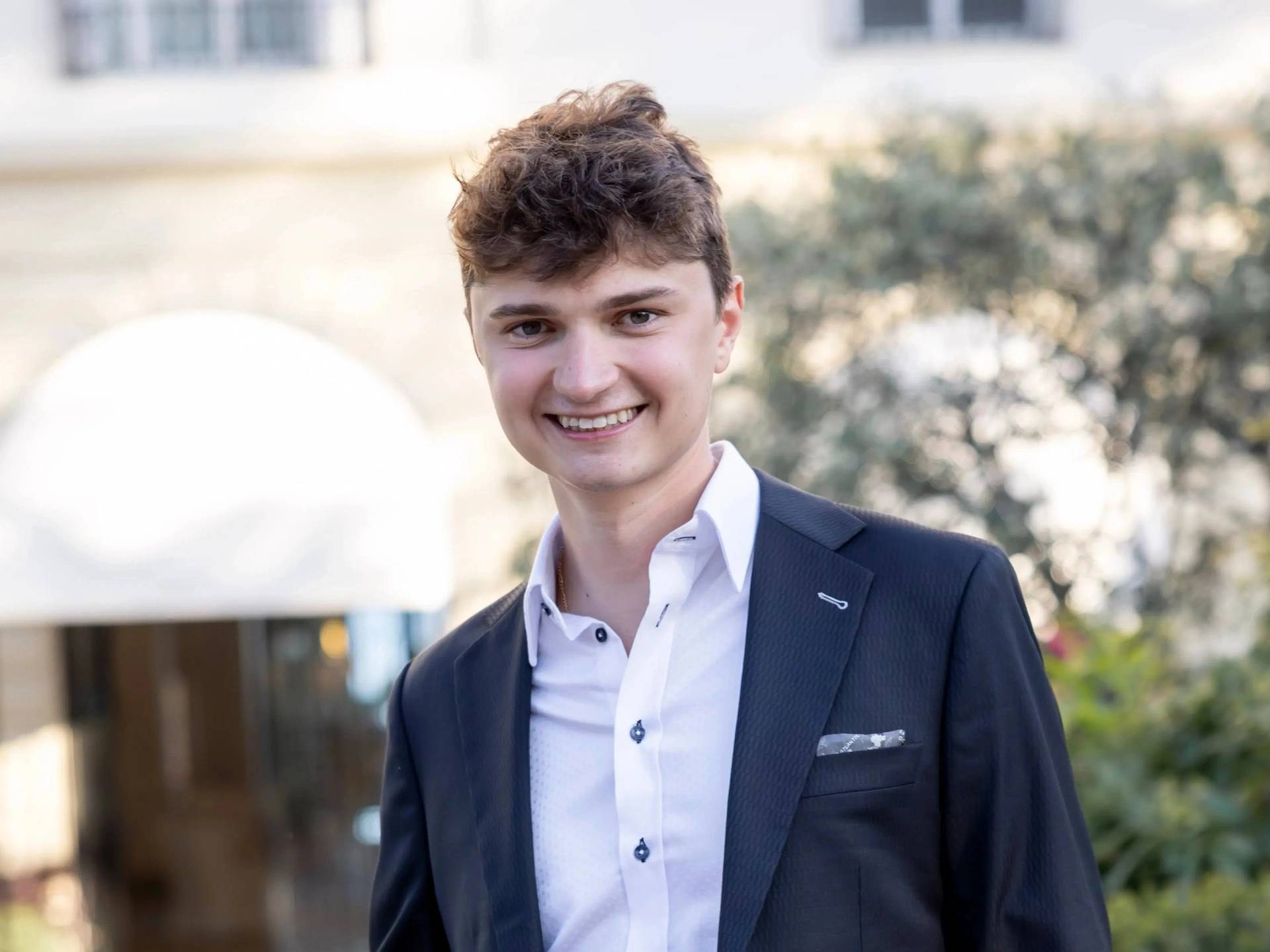
Ryan Myher is the co‑founder and Chief Operating Officer of Shuttle Labs, the company building Genius, a self‑custodial, cross‑chain trading terminal for decentralized markets. Myher previously founded the media and software venture No Code No Problem, which was acquired in 2022, and the Figma plug‑in Majestic AI, reported at over 50,000 users. He is based in New York City and is also active as an angel investor. [1] [2]
Education
Education history, including institutions and degrees, is not listed on Myher’s public site or the accessible snapshot of his LinkedIn profile. Media coverage related to Genius refers to the core team’s origins at Yale University, but does not specify which founders held affiliations or degrees; dedicated biographical sources for individual educational details were not available in the cited materials. [4] [2]
Career
Early ventures and investing
Before co‑founding Shuttle Labs, Myher founded No Code No Problem, a media brand and custom software development agency. The venture was acquired in 2022; the acquiring party and terms were not publicly disclosed in the sources cited here. He also founded Majestic AI, described as a generative‑AI plug‑in for Figma, which the site reports surpassed 50,000 users. Alongside operating roles, he is active as an angel investor focused on AI, crypto, and developer tools, and has participated in programs including Soma Fellowship, Floodgate Fellowship, and a SALT Entrepreneur‑in‑Residence. [2]
Shuttle Labs and Genius Trading
Myher co‑founded Shuttle Labs in New York City and serves as Chief Operating Officer on Genius, which sources characterize as a self‑custodial, cross‑chain trading terminal designed for professional DeFi execution. The project’s public materials emphasize on‑chain architecture, multi‑chain access to liquidity, and a terminal‑style user experience. In coverage dated January 14, 2026, Genius is described as supported by a custom MPC wallet, proprietary cross‑chain routing, and direct integrations with major decentralized exchanges, enabling spot, perpetuals, and decentralized copy trading. [1] [4]
Press and company communications name Armaan Kalsi as CEO, Ryan Myher as COO, and Brihu Sundararaman as CTO. As of January 2026, Genius and Shuttle Labs reported an 11‑person, globally distributed team headquartered in New York City, with plans to expand hiring cautiously. The public narrative presents Shuttle Labs as the builder of Genius, while “Genius Trading” or “Genius” is used as the product and organizational brand in press materials. [4]
Interviews
Crypto Market Cycles and Shuttle Labs #01
In an interview published on January 9, 2025, on the YouTube channel David Meltzer TV, Ryan Myher discussed his activities in the cryptocurrency sector and his role as co-founder of Shuttle Labs. He stated that his involvement in the field spans several years within an industry characterized by frequent technical and market changes.
Myher described Shuttle Labs as developing infrastructure intended to facilitate interactions between multiple blockchain networks. According to his explanation, the company’s approach involves coordinating liquidity across chains to enable asset transfers between different blockchain environments. He illustrated this structure through an analogy comparing blockchains to separate locations connected by a shared transport layer.
He reported having experienced multiple market cycles, including periods of decline, which influenced his approach to decision-making and risk assessment. He indicated that fluctuations in the crypto market can alter short-term business conditions and investor sentiment.
On fundraising practices, Myher stated that companies may seek capital under conditions that do not signal immediate financial pressure, as this can affect investor perception. He also noted that investors often evaluate opportunities based on projected scale, which can influence how early-stage ventures present their scope and objectives.
The discussion also included references to blockchain adoption. Myher stated that adoption levels vary across regions and may be influenced by access to financial infrastructure. He indicated that decentralized systems are used in contexts where traditional banking services are limited.
Throughout the interview, Myher presented these points as observations based on his experience in the sector, without extending them beyond the scope of his direct involvement. [7]
Cryptocurrency Market Perspectives and Policy Considerations #02
In an interview published on December 16, 2024, on the YouTube channel of Justin Colby, Ryan Myher presented his views on cryptocurrency markets, with a focus on Bitcoin and potential policy-related developments in the United States.
Myher stated that a possible factor influencing future market activity could be the establishment of a United States Bitcoin reserve. He indicated that alignment between Donald Trump and lawmakers supportive of cryptocurrency, including Cynthia Lummis, could result in the U.S. government acquiring an estimated 2% to 5% of the total Bitcoin supply over time. He further noted that, in his view, such a policy could lead other countries to consider similar actions.
He also identified several elements associated with market activity, including venture capital liquidity events, exchange-traded funds (ETFs), and political developments. According to Myher, these factors are part of broader market cycles observed in the cryptocurrency sector, involving both institutional and retail participants.
During the discussion, Myher described categories of digital assets, including stablecoins, primary blockchain-based assets such as Bitcoin, Ethereum, and Solana, alternative blockchain tokens, and meme-based tokens. He stated that these categories are associated with different functions, such as facilitating transactions, supporting blockchain operations, or reflecting market-driven demand.
Myher also referred to investment approaches, stating that he uses a diversified allocation strategy combined with dollar-cost averaging. He mentioned maintaining exposure to both widely established assets and higher-risk categories. These statements were presented as personal practices rather than general recommendations.
The interview also addressed regulatory conditions in the United States, including the role of agencies such as the Securities and Exchange Commission (SEC), as well as references to asset tokenization and the use of blockchain systems in areas such as real estate and financial infrastructure. Myher’s comments were presented as interpretations based on his perspective within the industry. [8]
See something wrong?