0% read
마지막 업데이트:
Spencer Applebaum
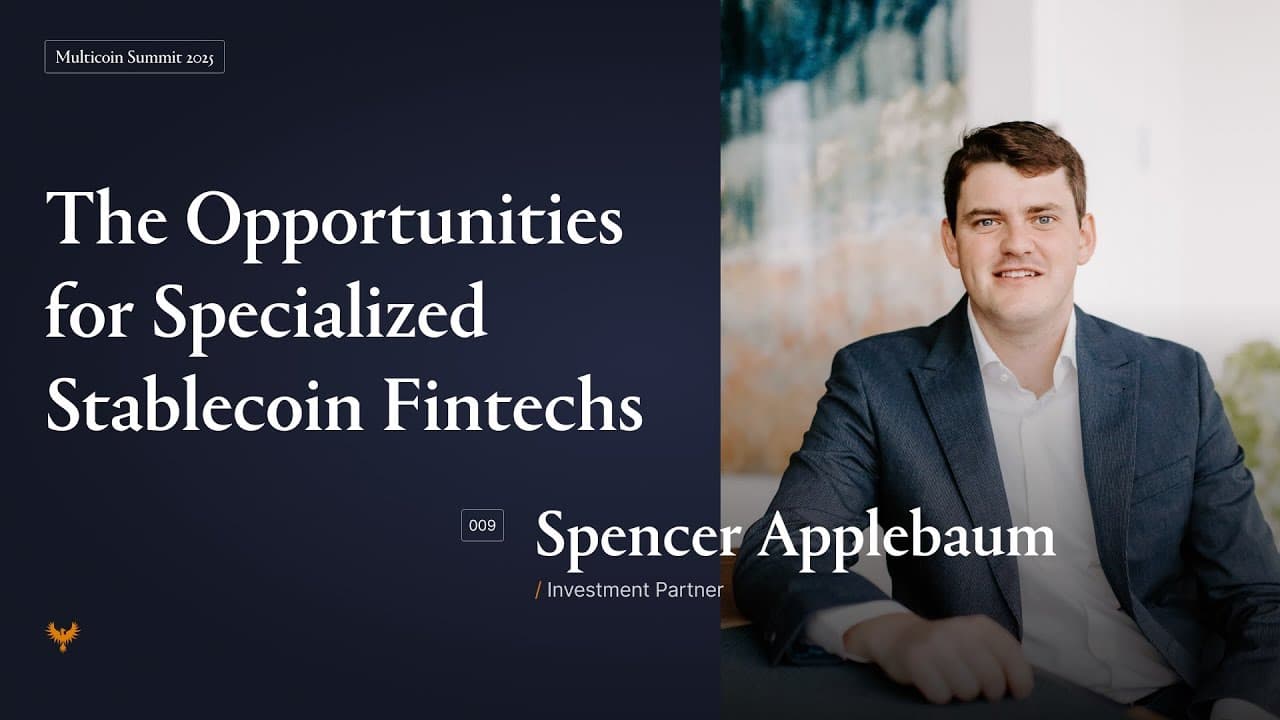
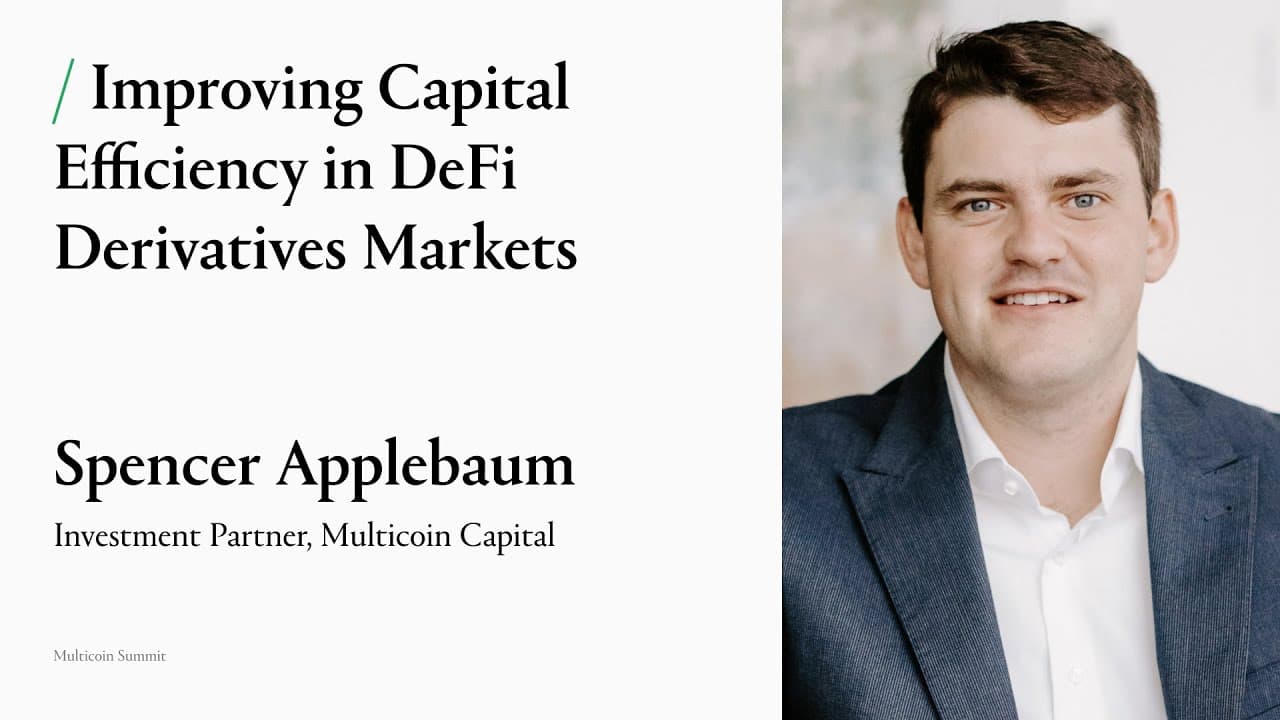
**스펜서 애플바움(Spencer Applebaum)**은 암호화폐 전문 투자사인 멀티코인 캐피털(Multicoin Capital)의 투자 파트너입니다. 그의 업무와 공개 분석은 암호화폐 시장 구조, 탈중앙화 금융(DeFi), 자본 효율성, 파생상품 시장, 그리고 금융 기술 비즈니스 모델의 진화에 초점을 맞추고 있습니다. [1]
경력
애플바움은 2017년 홍콩의 비트스파크(Bitspark)에서 인턴으로 커리어를 시작했습니다. 2018년 초에는 신시내티 지역의 딜로이트(Deloitte)에서 다주세(Multistate Tax) 인턴으로 근무하며 세무 관련 프로젝트를 수행했습니다. 2018년 3월, 애플바움은 텍사스주 오스틴에 위치한 멀티코인 캐피털에 애널리스트로 합류했습니다. 그는 2020년에 어소시에이트(Associate)로, 2022년에 프린시펄(Principal)로 승진했습니다. 2023년 3월에는 회사의 투자 파트너(Investment Partner)가 되어 현재까지 활동하고 있습니다. [2]
발표
특화된 스테이블코인 (Specialized Stablecoin)
2025년 12월 멀티코인 서밋(Multicoin Summit) 발표에서 애플바움은 디지털 유통, 네오뱅크, 임베디드 금융, 그리고 현재의 스테이블코인 및 허가 없는(permissionless) 금융 시대로 이어지는 핀테크의 4단계 진화 과정을 설명했습니다. 그는 이전의 물결이 사용자 경험과 접근성은 개선했지만 핵심 금융 인프라를 현대화하는 데는 실패했으며, 그 결과 낮은 수익성, 규제 병목 현상, 기존 은행 및 결제 네트워크에 대한 의존도를 초래했다고 주장했습니다. 이는 특히 2022년경 업계의 둔화 시기에 두드러졌습니다. 애플바움은 스테이블코인을 근본적인 변화로 규정하며, 이를 즉시 결제, 투명성, 결합성, 운영 비용 절감과 같은 구조적 이점을 가진 프로그래밍 가능하고 전 세계적으로 상호 운용 가능한 화폐로 묘사했습니다. 그는 이러한 인프라가 틈새 커뮤니티와 수직 시장을 더 효율적으로 지원하는 더욱 특화된 핀테크 모델을 가능하게 하며, 이는 프런트엔드 혁신에서 금융 스택 자체를 재구축하는 단계로의 전환을 의미한다고 제안했습니다. [4]
자본 효율성 (Capital Efficiency)
2024년 12월 멀티코인 서밋 발표에서 애플바움은 DeFi 파생상품 시장의 구조적 자본 비효율성과 탈중앙화 거래소가 거래량 면에서 여전히 중앙화 거래소에 뒤처지는 이유를 분석했습니다. 그는 DeFi 파생상품이 지연 시간(latency) 제약, 파편화된 유동성, 열악한 자본 효율성으로 인해 중앙화된 활동의 아주 작은 부분만을 점유하고 있으며, 마켓 메이커들이 자본을 동적으로 배치하기보다는 여러 플랫폼에 걸쳐 포지션을 과잉 담보화해야 하는 상황이라고 주장했습니다. 애플바움은 DeFi의 투명성, 특히 담보화 현황, 청산 임계값, 온체인 리스크 엔진의 가시성이 교차 마진(cross-margining), 포트폴리오 상계(portfolio netting), 통합 "슈퍼 프로토콜"을 통해 더 효율적인 시스템을 구축할 기회를 제공한다고 설명했습니다. 또한 그는 사용자 대면 애플리케이션 하단에 위치하여 프로토콜 간의 과소 담보 대출, 유동성 라우팅, 통합 마진 관리를 가능하게 하는 DeFi 프라임 브로커리지 계층의 개념을 소개했습니다. 이는 궁극적으로 개선된 자본 효율성과 리스크 조정을 통해 DeFi가 중앙화 금융(CeFi)과 더 효과적으로 경쟁할 수 있도록 포지셔닝하는 것입니다. [5]
잘못된 내용이 있나요?

평균 평점
아직 평가가 없습니다
경험은 어땠나요?
빠른 평가를 해서 우리에게 알려주세요!
편집자
February 23, 2026. 18:53 UTC
편집 요약:
Added Spencer Applebaum wiki page