Subscribe to wiki
Share wiki
Bookmark
Sylvain Prigent
The Agent Tokenization Platform (ATP):Build autonomous agents with the Agent Development Kit (ADK)
0%
Sylvain Prigent
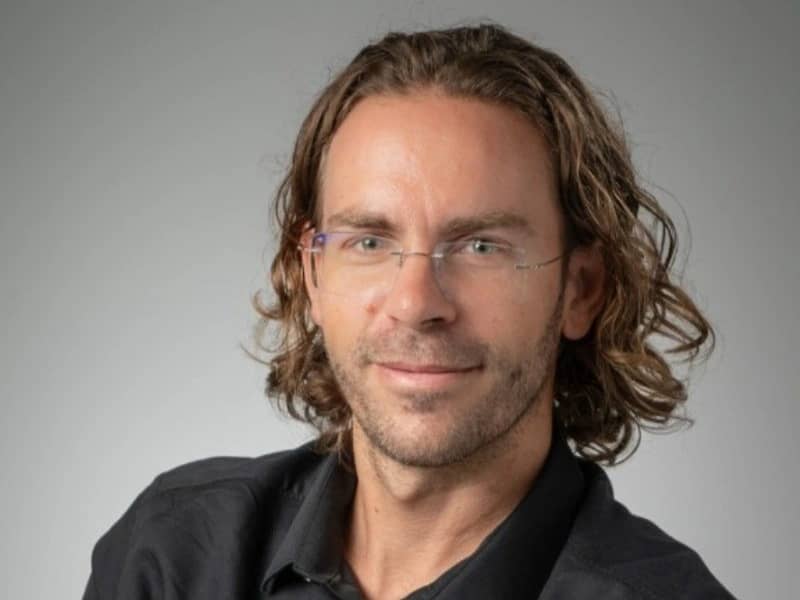
Sylvain Prigent is he Co-founder and Chief Product Officer (CPO) of Societe Generale - Forge (SG-Forge), the digital asset subsidiary of the French banking group Societe Generale [1] [2] [3]. With nearly two decades of experience in capital markets, he is a central figure in the institutional adoption of blockchain technology and the integration of traditional finance (TratdFi) with decentralized finance (DeFi) [1] [4]. Prigent is widely recognized for his leadership of the landmark project that saw SG-Forge borrow a stablecoin from the DeFi protocol MakerDAO, using tokenized real-world assets (RWAs) as collateral [5] [6].
Education
Prigent's academic background is concentrated in finance, risk management, statistics, and mathematics. He earned a Master's degree in Trading and Asset Management from Paris ESLSCA Business School between 2010 and 2014 [3]. He further specialized at Université Paris-Dauphine (PSL), where he obtained a Master 2 (203) in Financial Markets, Commodities & Risk Management for the 2014-2015 academic year [3]. He also holds a DU PRM (Professional Risk Manager) certification in Risk Management from Paris-Dauphine, which he completed from 2012 to 2013 [1]. His earlier education includes a Master of Science and Techniques (MST MPM) in Statistics, Mathematics, and Modeling from Paris-Dauphine (2000-2002) and a DEUG (Diplôme d'études universitaires générales) in Economics and Management from CY Cergy Paris Université (1998-2000) [1].
Additionally, Prigent is a certified Financial Risk Manager (FRM), a certification issued by the Global Association of Risk Professionals (GARP) in October 2007. He also holds a Professional Scrum Product Owner I (PSPO I) certification from Scrum.org, issued in June 2021 [6].
Career
Prigent has spent the majority of his career within the Societe Generale group, progressing through various capital markets roles before co-founding its digital asset subsidiary. He began his career outside the group as an Electronic Stock Trading Negotiator at NATIXIS SECURITIES from 2006 to 2008 [1].
He joined Societe Generale in 2008, initially serving as an Assistant Trader on Equity Derivatives until 2011. He then transitioned to operations and management roles, working as a Middle Office Manager on Structured Products from 2011 to 2014. Following this, he became a Trading Risk Officer from 2014 to 2018, where he was responsible for monitoring and managing the risks associated with the bank's trading activities [1].
Societe Generale - Forge
In 2018, Prigent became a pivotal figure in the creation of Societe Generale - Forge, the bank's internal startup dedicated to digital assets, which was later established as a fully integrated and licensed subsidiary [1] [3]. He officially took on the role of Co-founder and Chief Product Officer (CPO) in 2018 [3]. In this capacity, he leads the product strategy and development for SG-Forge's offerings, which include the structuring of security tokens, institutional-grade digital asset custody, and the transfer of digital assets on both private (permissioned) and public blockchains [1]. He reports directly to Jean-Marc Stenger, the CEO of SG-Forge [2] [3].
Key Projects and Achievements
As CPO of SG-Forge, Prigent has been central to several pioneering initiatives that demonstrate the practical application of blockchain technology in institutional finance.
MakerDAO and DeFi Integration
Prigent was a key leader in the landmark collaboration between SG-Forge and MakerDAO, one of the most prominent decentralized finance protocols. This project represents one of the first instances of a major, systemically important financial institution using a public DeFi protocol for liquidity by collateralizing a tokenized traditional asset [2] [4].
The initiative began publicly on September 30, 2021, when SG-Forge, represented by Prigent, submitted a governance proposal to the MakerDAO community. The proposal sought to have a new asset class, the "OFH Token," accepted as collateral within the Maker protocol. These OFH tokens are security tokens representing obligations de financement de l’habitat (covered bonds) issued by Societe Generale on the Ethereum public blockchain. The objective was to establish a refinancing facility, allowing SG-Forge to borrow DAI, a decentralized stablecoin pegged to the U.S. dollar, against its holdings of tokenized bonds [4].
After the proposal was successfully validated by the MakerDAO community, SG-Forge executed its first transaction in January 2023. The company completed an initial drawdown of 7 million DAI from a MakerDAO lending vault [1] [6]. To secure this loan, SG-Forge deposited a security token representing a €40 million portfolio of its OFH covered bonds as collateral. These underlying bonds carried top credit ratings of Aaa from Moody's and AAA from Fitch, making the transaction a significant test case for using high-quality real-world assets in DeFi [2] [5].
The transaction was hailed as a milestone in bridging the gap between TradFi and DeFi, demonstrating a viable model for institutional interaction with decentralized protocols for on-chain refinancing operations [7] [8].
Community Engagement and Innovation
Beyond specific transactions, Prigent is actively involved in fostering innovation within the broader financial technology ecosystem. He has served as a judge for multiple hackathons, including the "Societe Generale - FORGE Challenge: Issue your own security tokens" at HackerFest 2021 and the "Societe Generale - Forge Global Markets Challenge 2" [1] [9]. These events aimed to encourage developers to build new solutions and explore the potential of security tokens and digital assets [4].
Public Appearances
Prigent is a frequent speaker at major financial and blockchain conferences, where he shares his expertise on digital assets, tokenization, and the intersection of TradFi and DeFi.
He is scheduled to speak at the GARP Paris Chapter Meeting on April 9, 2026. Different sources have listed his topic with slight variations, including "Blockchain and Digital Assets," "Digital assets: what are the operational and risk challenges for financial players?," and "Exploring the Opportunities and Managing the Risks of Digital Assets," indicating a focus on the practical and risk-related aspects of institutional adoption [10] [4].
His past engagements include:
- European Blockchain Convention (2023): He was a panelist for a session titled "When DeFi Meets TradFi: The Unconventional Partnership Between Societe Generale & MakerDAO," where he discussed the landmark transaction [1] [2].
- Paris Blockchain Week: He has been featured as a speaker at this prominent European blockchain event, reinforcing his public profile in the ecosystem [11].
- Future of Finance Webinar (October 20, 2020): He participated as a speaker in a webinar titled "Settlement and Custody of Digital Assets Part II," highlighting his long-term involvement in shaping the infrastructure for digital assets [12] [1].
Significant Quotes
In the context of the MakerDAO DAI drawdown in January 2023, Prigent commented on the project's significance:
"This refinancing transaction is a prime example of SG-FORGE’s innovative approach to combining traditional capital market activities with the emerging and fast-growing DeFi ecosystem. It demonstrates the possibilities that lie at the crossroads between regulated and open-source initiatives. In addition to refinancing digital bonds held by Societe Generale and successfully integrating with one of the leading DeFi protocols, we are helping to shape and define the necessary legal, technical and operational frameworks to complete future DeFi to TradFi transactions." [5] [6]
On the same topic, he stated:
"Ce test à taille réelle nous a permis d’améliorer notre processus d’évaluation des risques, tout en gardant une structuration de dette similaire avec une approche basée sur des actifs réels." (Translation: "This real-life test allowed us to improve our risk assessment process, while maintaining a similar debt structure with an approach based on real-world assets.") [8]
Interviews
Security Tokens in Capital Markets #01
This interview with Sylvain Prigent, Co-founder and Chief Product Officer at Société Générale Forge (SG-FORGE), was streamed live on February 24, 2022, as part of the Hack to the Future series organized by Finastra.
In the session, Prigent outlines his view on the use of security tokens within capital markets. He describes blockchain as an infrastructure used for issuing and managing digital representations of financial instruments, distinguishing this application from the use of cryptocurrencies.
He states that Société Générale Forge has conducted projects involving tokenized financial instruments, including covered bonds and asset-backed securities. These projects involve the issuance and management of assets on blockchain systems while operating within existing regulatory frameworks.
Prigent refers to the use of multiple blockchain protocols to address operational factors such as transaction processing, cost management, and system compatibility. He describes an approach that involves combining different technologies depending on specific use cases.
The discussion includes references to regulatory considerations, with mention of interactions with institutions such as the Banque de France. According to Prigent, these interactions relate to aligning blockchain-based processes with current financial regulations.
The session also covers the relationship between tokenized assets and decentralized finance (DeFi). Prigent cites examples involving protocols such as MakerDAO, where tokenized assets are used within collateralization mechanisms.
He also refers to the use of open-source frameworks and standardized models in the development of security token systems, describing their role in enabling coordination between market participants such as issuers, custodians, and investors.
Additional points include operational constraints such as liquidity, integration with market data providers, and the development of trading and post-trade infrastructure for digital securities.
The interview presents Prigent’s perspective on the ongoing integration of blockchain-based systems into capital markets, describing a model in which digital and traditional infrastructures operate in parallel. [13]
See something wrong?
The Agent Tokenization Platform (ATP):Build autonomous agents with the Agent Development Kit (ADK)