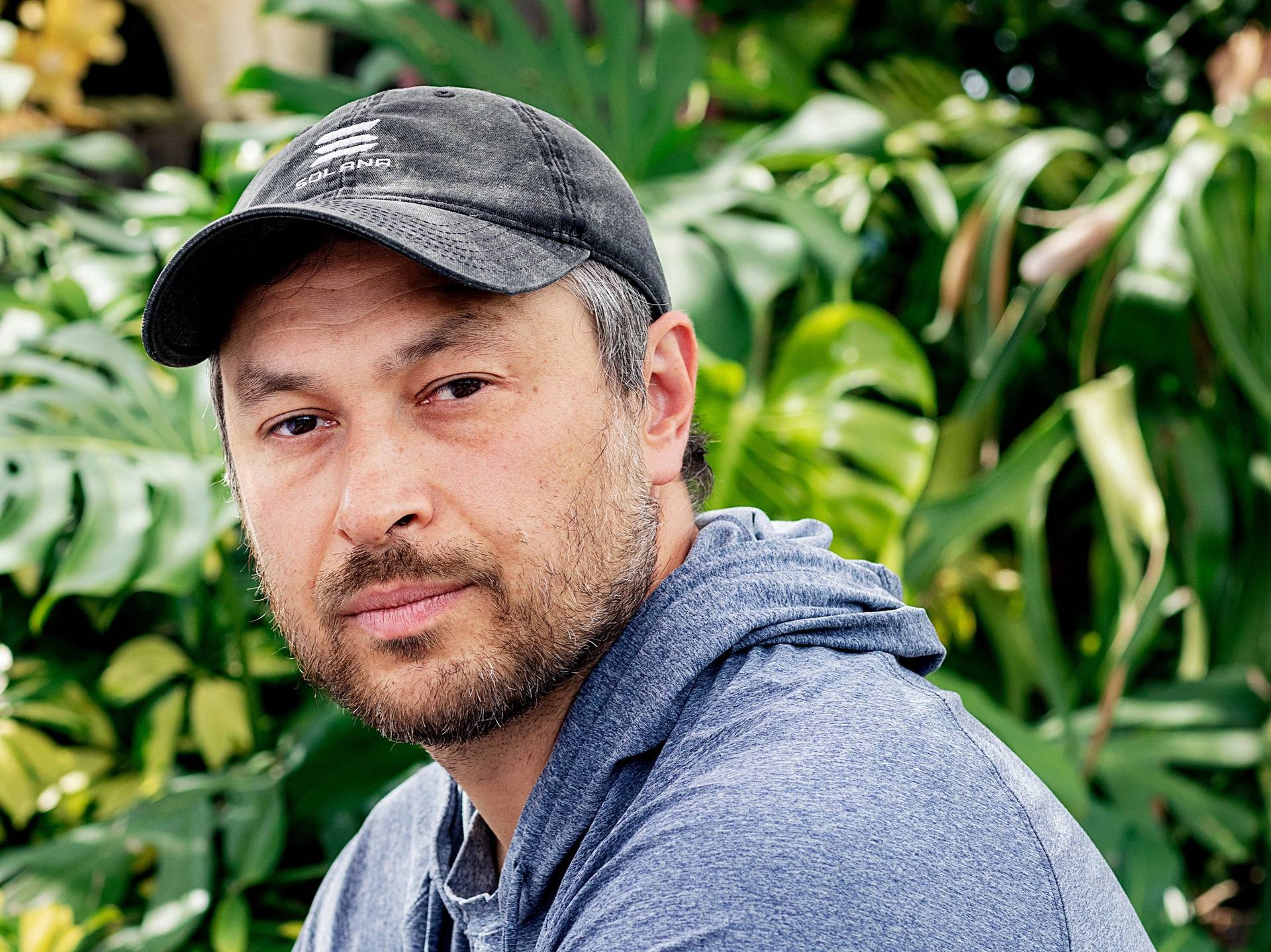
Anatoly Yakovenko
Anatoly Yakovenko is the co-founder of the Solana blockchain and CEO of Solana Labs, the software company that develops much of its core infrastructure.[1] Before launching Solana in 2017, he led operating systems engineering at Qualcomm, worked on distributed systems at Mesosphere (now D2iQ), and focused on compression and distributed systems at Dropbox.[1] Yakovenko is a prominent voice in industry debates on blockchain scalability and decentralization, the role of memecoins and NFTs in crypto markets, and long-term security risks such as the potential impact of quantum computing on Bitcoin and other networks.[11][13]
Early Life & Education
Yakovenko was born in Ukraine and later immigrated to the United States, where he obtained a degree in computer science from the University of Illinois at Urbana–Champaign in 2003. While growing up, he enjoyed making bows and arrows, and as a teenager he built computers and programmed on early versions of Linux. He has cited writers such as Franz Kafka, William Burroughs, and Kurt Gödel among his major intellectual influences.
As a college student, he took part in a project building Voice over Internet Protocol (VoIP) systems in South Central Illinois. That experience led to a job interview with Qualcomm, which was working on similar technology, and he subsequently moved to San Diego to join the company.
Career
Yakovenko’s career spans early work on VoIP systems, more than a decade of operating systems and signal-processing engineering at Qualcomm, and roles in distributed systems at Mesosphere and Dropbox before co-founding Solana. He later became CEO of Solana Labs, overseeing the development of the Solana blockchain protocol and related products.
Alescere
Yakovenko was one of the co-founders of Alescere, a Voice over Internet Protocol (VoIP) startup, where he led the development of Session Initiation Protocol (SIP) and Real-time Transport Protocol (RTP) stacks and server components for a VoIP system aimed at small businesses.
Qualcomm
Yakovenko joined Qualcomm in 2003, initially working on systems related to wireless communications and embedded software. Over 12 years at the company, he held a range of engineering roles and was eventually promoted to Senior Staff Engineer Manager, a position he held for almost three years until July 2016. At Qualcomm, he served as lead architect for a team of 10 that built a high‑performance Hexagon DSP off‑loading software stack on Qualcomm chipsets for next‑generation applications, including augmented reality, virtual reality, 3D camera processing, 4K video post‑processing, and Google X’s Project Tango.
Mesosphere
From July 2016 to April 2017, Yakovenko worked as a software engineer at Mesosphere, later rebranded as D2iQ, where he contributed to building a distributed operating system for managing large-scale compute resources.
Dropbox
Before the creation of Solana, Yakovenko was a software engineer at Dropbox from May 2017 to October 2017. While at Dropbox, he focused on distributed systems and data compression.
Early Blockchain Involvement
Yakovenko initially experimented with mining Bitcoin when it was first released. He later became more interested in Ethereum and the Ethereum Virtual Machine (EVM), which he viewed as more innovative than Bitcoin, although conceptually similar to JavaScript. In 2017, he and several friends considered starting a cryptocurrency mining startup using graphics processing units (GPUs), planning to offset costs by using the GPUs for deep learning tasks. While he was originally more interested in deep learning than cryptocurrency, he became increasingly focused on the question of how to solve blockchain scalability.[2]
I started thinking about how we solve scaling for these kinds of problems at Qualcomm with wireless protocols and that’s what really got me to go deep down the rabbit hole.
Solana
Anatoly Yakovenko founded Solana in 2017 and authored its original white paper, outlining a high‑throughput, low‑latency blockchain aimed at handling large volumes of transactions. Although the project has experienced outages and security incidents, the Solana ecosystem has continued to grow, attracting developers and applications across DeFi, NFTs, and other use cases.[3]
To support this vision, Yakovenko and his team designed a consensus mechanism centered on Proof of History (PoH), which uses a verifiable delay function to create a cryptographic record of time between events. Combined with parallel transaction processing, this architecture allows the Solana blockchain to handle up to 50,000 transactions per second under test conditions.[4]
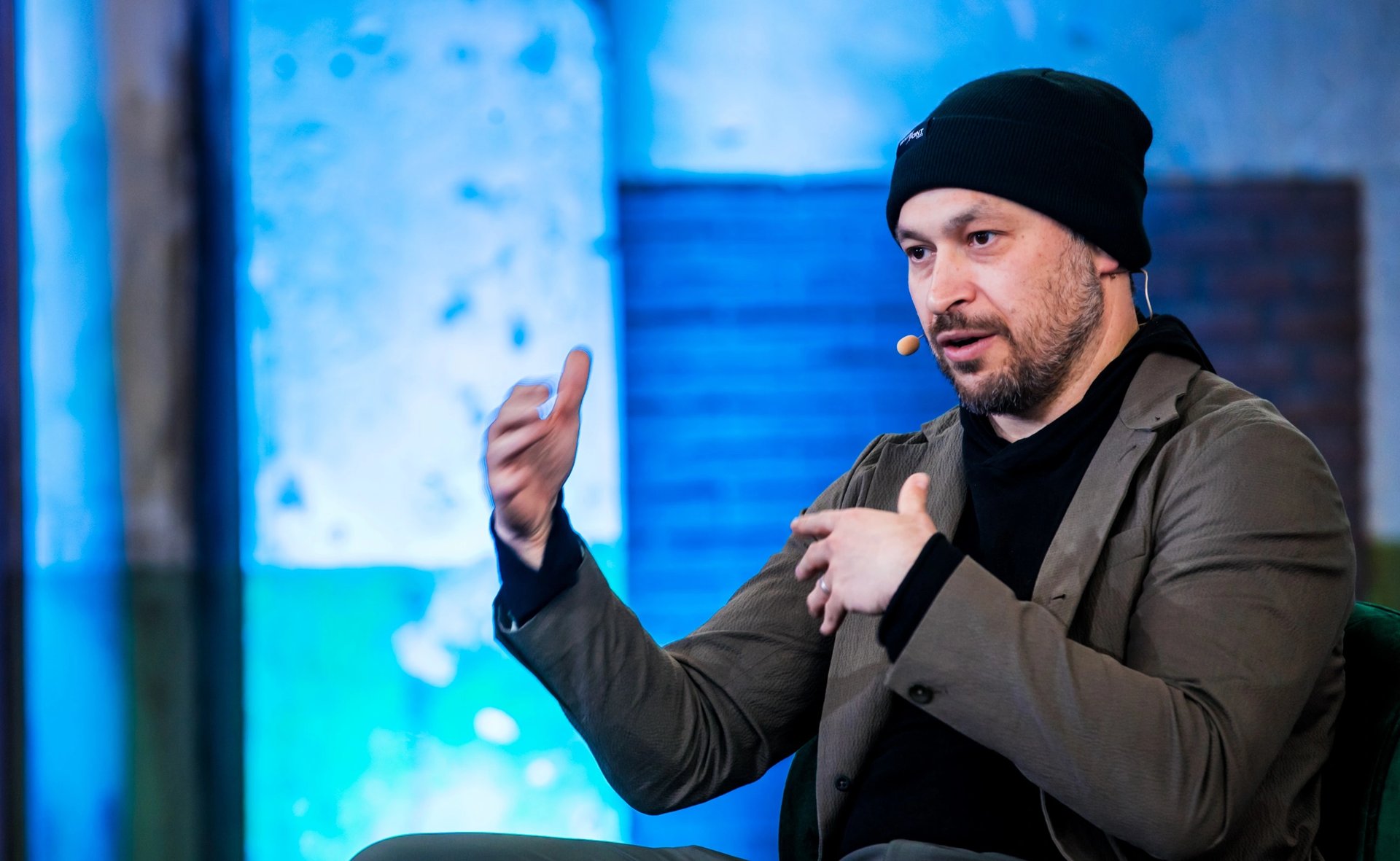
In 2022, during an interview at Messari’s Mainnet conference, Yakovenko discussed how a small engineering team with limited funding built the initial network by focusing on a fast blockchain with parallel execution rather than compatibility with the Ethereum Virtual Machine.
During the same interview, he described Saga, a mobile phone project developed by Solana Mobile, a subsidiary of Solana Labs, in collaboration with hardware and software company OSOM. He framed Saga as an effort to combine self‑custody of digital assets with the capabilities of modern smartphones.[5]
Solana’s roots are linked to Yakovenko’s journey as a computer engineer. Having spent much of his career at Qualcomm in San Diego alongside co‑founder Raj Gokal, Yakovenko’s idea for the platform drew on techniques from wireless networking and signal processing.[9] He worked on a side project where he built hardware for deep learning, deployed GPUs, and mined cryptocurrencies to test the system. The platform’s design was influenced by time division multiple access, in which cellular towers alternate transmissions based on specific time intervals, and by research on verifiable delay functions.
Yakovenko has described his “science fiction” end goal for Solana as providing a global standard for financial data, with state changes propagating as quickly as news so that prices on Solana‑based markets and traditional venues like the New York Stock Exchange converge with minimal arbitrage opportunities.[6]
Percolator Project
In his role as Solana Labs CEO, Yakovenko began designing a protocol for a high‑performance, on‑chain decentralized perpetual futures exchange (perps DEX) called Percolator in 2025. Built on Solana, Percolator’s design uses sharded matching engines to split the order book into independent, parallel engines, along with an on‑chain routing program for position and collateral management. As of October 2025, the project’s core data structures were described as complete and “implementation‑ready” on its GitHub, while the liquidation engine remained in development.[16]
Solana Labs and Ecosystem Growth
As CEO of Solana Labs, Yakovenko has overseen the protocol’s expansion into a broader ecosystem of applications and financial products. In October 2025, speaking at TechCrunch Disrupt, he discussed Solana’s growth as the network reported $2.85 billion in annual revenue, driven largely by activity on crypto trading platforms.[18] Around the same time, asset manager Bitwise launched the first Solana exchange‑traded fund (ETF), which reportedly attracted nearly $70 million in inflows on its first day of trading.[18]
During the same TechCrunch Disrupt appearance, Yakovenko described “agentic” AI coding tools as a significant shift in software development and said that, after more than 15 years as an engineer, he was increasingly comfortable delegating routine coding tasks to systems like these.[18] He characterized AI as a “force multiplier” for experienced developers and noted that such tools were influencing how he approached engineering work at Solana Labs.
Talks and Interviews
Yakovenko has frequently used public talks, interviews, and social media to articulate his views on the broader crypto ecosystem. In a December 2023 post on X (formerly Twitter), he rejected the idea of Solana as an “Ethereum killer,” arguing instead that multiple layer‑1 blockchains could coexist.[7] He expressed optimism that future Ethereum upgrades such as danksharding could eventually provide enough bandwidth to store all of Solana’s data, framing both networks as complementary rather than mutually exclusive.[7][8]
In early 2026, during an online debate about network structure, Yakovenko argued that the Solana network was as decentralized as, or more decentralized than, Ethereum. He pointed to the ability of individuals to run nodes and independently verify the ledger, and to an architecture that he said avoided centralized control over user funds.[17] Critics countered that Solana had historically relied on a single main software client from Solana Labs and required high‑performance hardware to run validator nodes, while alternative clients such as Jito and Jump Crypto’s Firedancer were still being developed to improve client diversity.[17]
In a 2025 appearance on the All‑In Podcast, Yakovenko commented on the rise of memecoins and NFTs on the Solana blockchain, saying that their popularity was an unintended consequence of slow regulatory development rather than the project’s original mission.[11] He stated that the Solana team had aimed to build infrastructure capable of bringing traditional finance on‑chain at high speed, but speculative assets gained traction more quickly, and he described it as “annoying” that memecoins and NFTs had outpaced what he viewed as Solana’s core goals, even while acknowledging their significant revenue potential.[11]
At the All‑In Summit in September 2025, Yakovenko warned that advances in quantum computing could pose a medium‑term threat to Bitcoin, estimating a “50/50” chance that quantum computers would be powerful enough to break Bitcoin’s existing cryptography by 2030.[12][13] He urged the Bitcoin community to migrate to a quantum‑resistant signature scheme before such systems materialize, arguing that algorithms like Shor’s algorithm could eventually compromise the Elliptic Curve Digital Signature Algorithm (ECDSA) that secures Bitcoin private keys. Implementing such a change would require a hard fork, and other industry figures, including Blockstream CEO Adam Back and Jan3 founder Samson Mow, have argued that the quantum threat is likely one or two decades away rather than imminent.[12][14]
In a 2023 op‑ed for Fortune, Yakovenko called on the United States government to take a more active role in blockchain research and development, noting that technologies such as GPS, rockets, and the internet had benefited from early public‑sector support.[10] He argued that ethics rules limiting officials’ use of digital assets made it harder to craft sound policy, and suggested pilot projects such as using crypto rails for humanitarian relief payments or decentralized communications networks in low‑connectivity regions as ways for policymakers to gain hands‑on experience with the technology.[10]
At TechCrunch Disrupt in October 2025, Yakovenko also discussed his own use of “agentic” AI coding tools, describing artificial intelligence as a “force multiplier” that allowed him to oversee complex software development while delegating routine implementation tasks to automated systems.[18]