0% read
DigiByte
DigiByte
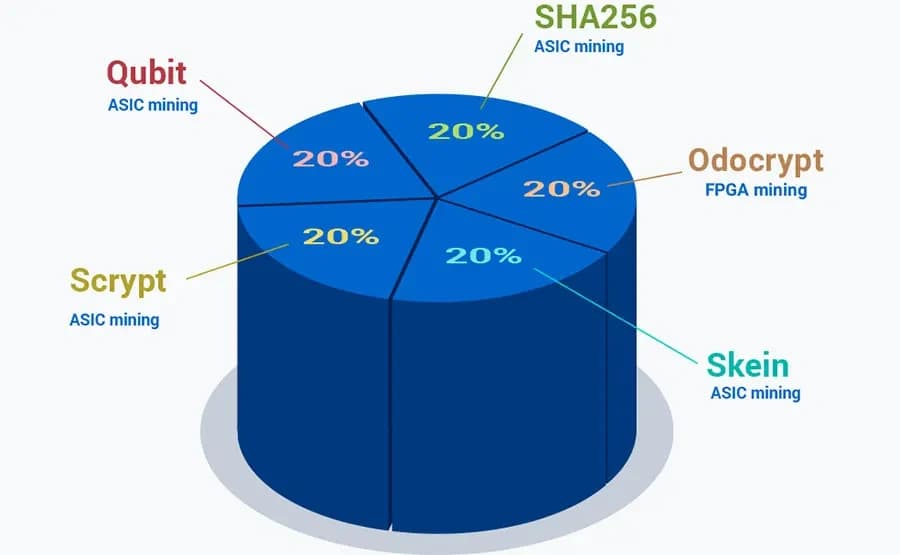
DigiByte (DGB) is an open-source, permissionless UTXO blockchain and cryptocurrency. It is a 100% Proof-of-Work network that employs five mining algorithms (SHA-256, Scrypt, Odocrypt, Skein, Qubit) to reduce mining centralization and improve security. DigiByte is designed for speed, with an average block time of about 15 seconds, and scalability through a multi-layer architecture for digital assets and applications [6] [1] [2] [3] [4].
Compare Cryptoassets
Select an asset to compare its price and other stats against DigiByte.
Ecosystem map
Explore the wikis DigiByte is connected to and their relationships on the map.
History
DigiByte was developed beginning in 2013 and launched in January 2014 by Jared Tate [6] [9].
Within its first month the project implemented DigiShield, a real-time difficulty adjustment algorithm intended to protect the chain from large mining pools and difficulty swings [6] [7].
Over time, DigiByte continued to evolve its security and scalability features, including MultiShield, which extends DigiShield-style difficulty adjustments across multiple mining algorithms [6] [7].
Features
DigiByte is a UTXO-based blockchain that aims to provide faster confirmations than many comparable networks through a target block time of approximately 15 seconds [6] [7].
Key protocol features commonly highlighted by the project include:
- Multi-algorithm mining: DigiByte runs five hashing algorithms in parallel (SHA-256, Scrypt, Groestl, Skein, Qubit) to make mining more decentralized and resistant to single-algorithm dominance [6] [7].
- Fast block times: Target block time is approximately 15 seconds, enabling quicker transaction confirmations than many other UTXO chains [6] [7].
- DigiShield and MultiShield: On-chain difficulty adjustment systems intended to protect the network from sudden hashrate changes and multi-pool attacks [6] [7].
- Permissionless and decentralized participation: Any node or device can participate in the network; the protocol is open-source and maintained by a distributed community [6].
- Layered architecture: DigiByte separates the protocol into layers (core protocol and networking, digital asset issuance, and applications) to support tokenization, identity, and app functionality while leveraging the base layer’s Proof-of-Work security [6] [9].
Digi-ID
Digi-ID is a DigiByte-native authentication solution that uses cryptographic signatures from DigiByte private keys instead of passwords. It is designed to enable phishing-resistant authentication for websites and applications by having users sign a challenge with a DigiByte-compatible wallet [6] [9].
Digi-Assets
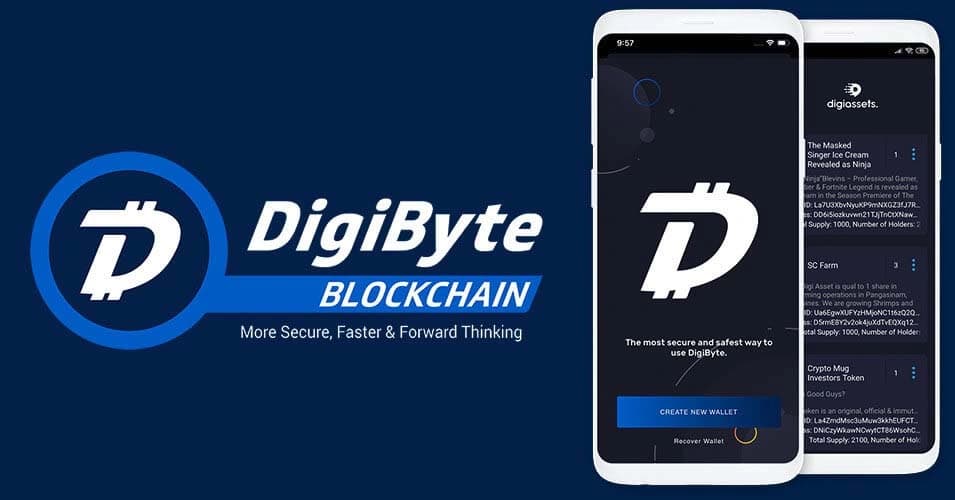
Digi-Assets is DigiByte’s system for issuing tokens and digital assets on top of the DigiByte blockchain. It is described as a second-layer approach that leverages the security of the DigiByte base layer for creating tokens, smart-asset functionality, digital identities, and asset-backed documents [6] [9].
Participation and Software
Anyone can run a DigiByte node or use one of the official or community wallets to send, receive, and store DGB. Development is maintained through open-source repositories and community contributions [6].
See something wrong?

Average Rating
No ratings yet, be the first to rate!
How was your experience?
Give this wiki a quick rating to let us know!
Edited By
On July 18, 2026. 15:27 UTC
Edit summary:
Added DigiByte wiki