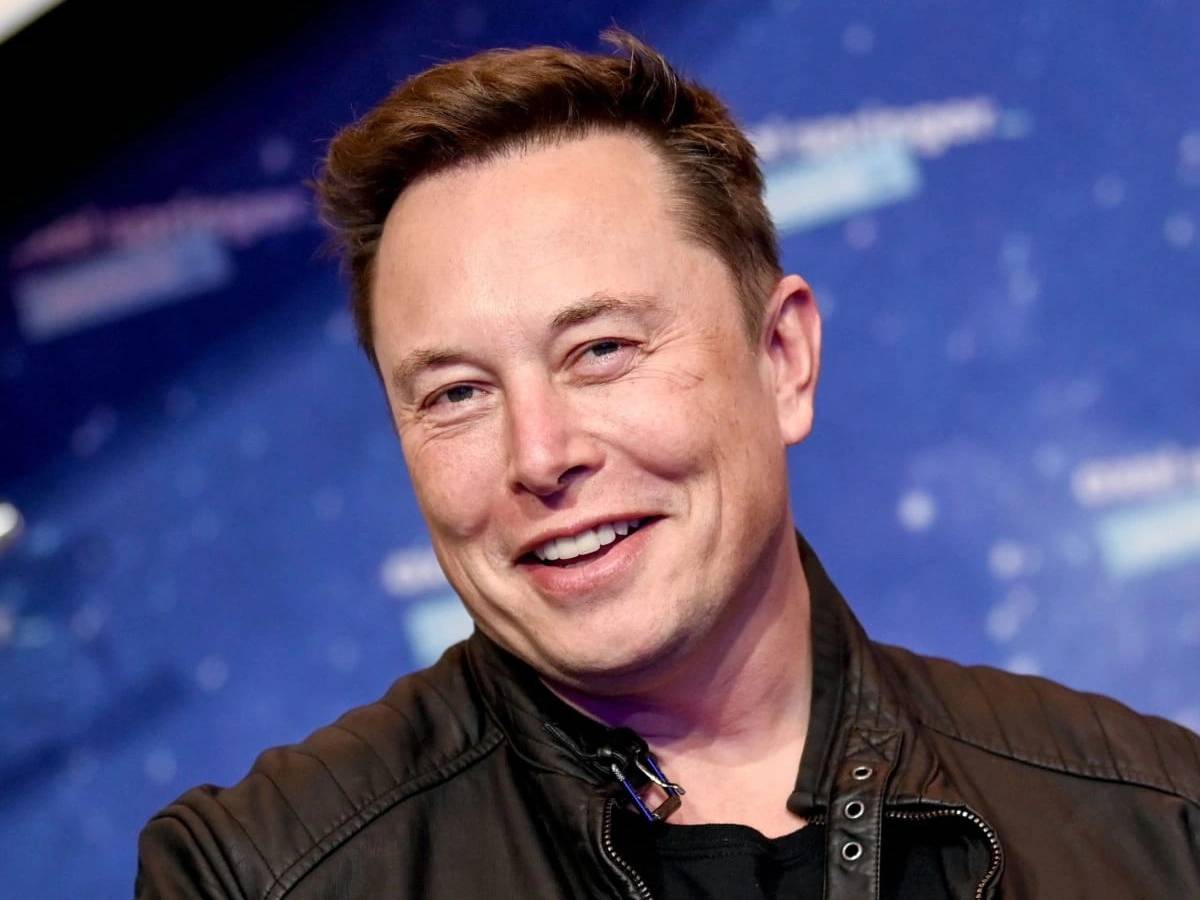
Elon Musk
Elon Reeve Musk (born June 28, 1971) is a South African–born American entrepreneur, investor, and business magnate. He is the founder, CEO, and chief engineer of SpaceX; the CEO of Tesla, Inc.; a co-founder of Neuralink; and the owner and CTO of the social media platform X (formerly Twitter). Musk has been ranked among the wealthiest people in the world by business publications, including the Bloomberg Billionaires Index, which listed him as the world's richest person as of September 2026.[7] His work in space exploration, electric vehicles, and artificial intelligence has received extensive global media coverage and business-profile treatment.[6][2]
Musk has stated that the goals of companies like SolarCity, Tesla, and SpaceX revolve around his vision to change the world and humanity. His goals include reducing global warming through sustainable energy production and consumption, and reducing the "risk of human extinction" by "making life multiplanetary" by setting up a human colony on Mars.[1]
He has envisioned a high-speed transportation system known as the Hyperloop, and has proposed a VTOL supersonic jet aircraft with electric fan propulsion, known as the Musk electric jet.[2]
Early Life
Early Childhood
Musk was born June 28, 1971, in Pretoria, Transvaal, South Africa, the son of Maye (née Haldeman), a model from Regina, Saskatchewan, Canada; and Errol Musk, a South African-born electromechanical engineer. He has a younger brother, Kimbal (born 1972), and a younger sister, Tosca (born 1974).
His paternal grandmother was British, and he additionally has Pennsylvania Dutch ancestry. After his parents divorced in 1980, Musk lived mostly with his father in locations in South Africa.[10]
At age 10, he developed an interest in computing with the Commodore VIC-20. He taught himself computer programming and at age 12, sold the code for a BASIC-based video game he created called Blastar to a magazine called PC and Office Technology for approximately US$500.[10] A web version of the game is available online.
Musk has described being severely bullied throughout his childhood, including an incident in which a group of boys beat him and he was briefly hospitalized.[10][11]
Musk was initially educated at private schools, attending the English-speaking Waterkloof House Preparatory School. Musk later graduated from Pretoria Boys High School and moved to Canada in June 1989, just before his 18th birthday, after obtaining Canadian citizenship through his Canadian-born mother.
University
At the age of 19, Musk was accepted into Queen's University in Kingston, Ontario, for undergraduate study. In 1992, after spending two years at Queen's University, Musk transferred to the University of Pennsylvania, where, at the age of 24, he received a Bachelor of Science degree in physics from its College of Arts and Sciences, and a Bachelor of Science degree in economics from its Wharton School of Business. Musk extended his studies for one year to finish the second bachelor's degree. While at the University of Pennsylvania, Musk and fellow Penn student Adeo Ressi rented a 10-bedroom fraternity house, using it as an unofficial nightclub.
In 1995, at age 24, Musk moved to California to start a PhD in applied physics and materials science at Stanford University, but left the programme after two days to pursue his entrepreneurial aspirations in the areas of the Internet, renewable energy and outer space. In 2002, he became a U.S. citizen.
Career
Zip2
In 1995, Musk and his brother, Kimbal, founded Zip2, a web software company that provided online business directories and maps to newspapers.[10] In February 1999, Compaq agreed to acquire Zip2 for about US$307 million in cash; Musk received roughly US$22 million for his 7% stake.[12][10]
X.com and PayPal
In March 1999, Musk co-founded X.com, an online financial services and e-mail payment company that later merged with Confinity to form the company that became PayPal.[10] In October 2002, eBay acquired PayPal in an all-stock transaction valued at about US$1.5 billion.[13] As PayPal's largest shareholder, Musk's proceeds from the sale have been reported at roughly US$165 million.[10]
SpaceX
In 2001, Musk conceptualised "Mars Oasis"; a project to land a miniature experimental greenhouse on Mars, containing food crops growing on Martian regolith, in an attempt to regain public interest in space exploration. In October 2001, Musk travelled to Moscow with Jim Cantrell (an aerospace supplies fixer), and Adeo Ressi (his best friend from college), to buy refurbished ICBMs (Dnepr-1) that could send the envisioned payloads into space.
The group met with companies like NPO Lavochkin and Kosmotras, however, according to Cantrell, Musk was seen as a novice and was consequently spat on by one of the Russian chief designers, and the group returned to the United States empty-handed. In February 2002, the group returned to Russia to look for three ICBMs, bringing along Mike Griffin, who had worked for the CIA's venture capital arm, In-Q-Tel; NASA's Jet Propulsion Laboratory; and was just leaving Orbital Sciences, a maker of satellites and spacecraft.
The group met again with Kosmotras, and were offered one rocket for US$8 million, however, this was seen by Musk as too expensive; Musk consequently stormed out of the meeting. On the flight back from Moscow, Musk realised that he could start a company that could build the affordable rockets he needed. According to early Tesla and SpaceX investor Steve Jurvetson, Musk calculated that the raw materials for building a rocket actually were only 3 percent of the sales price of a rocket at the time. By applying vertical integration and the modular approach from software engineering, SpaceX could cut launch price by a factor of ten and still enjoy a 70-percent gross margin. Ultimately, Musk ended up founding SpaceX with the long-term goal of creating a "true spacefaring civilization".
With US$100 million of his early fortune, Musk founded Space Exploration Technologies, or SpaceX, in June 2002. Musk is chief executive officer (CEO) and chief technology officer (CTO) of the Hawthorne, California-based company. SpaceX develops and manufactures space launch vehicles with a focus on advancing the state of rocket technology. The company's first two launch vehicles are the Falcon 1 and Falcon 9 rockets, named in reference to Star Wars’ Millennium Falcon, and the Dragon spacecraft, whose name alludes to the song "Puff, the Magic Dragon". In seven years, SpaceX designed the family of Falcon launch vehicles and the Dragon multipurpose spacecraft. In September 2008, SpaceX's Falcon 1 rocket became the first privately funded liquid-fueled vehicle to put a satellite into Earth orbit. On May 25, 2012, the SpaceX Dragon vehicle berthed with the ISS, making history as the first commercial company to launch and berth a vehicle to the International Space Station.[8]
In 2006, SpaceX was awarded a contract from NASA to continue the development and test of the SpaceX Falcon 9 launch vehicle and Dragon spacecraft in order to transport cargo to the International Space Station, followed by a US$1.6 billion NASA Commercial Resupply Services programme contract on December 23, 2008, for 12 flights of its Falcon 9 rocket and Dragon spacecraft to the Space Station, replacing the US Space Shuttle after it retired in 2011. At that time, astronaut transport to the ISS was handled solely by the Russian Soyuz spacecraft, and SpaceX was one of two companies awarded contracts by NASA under the Commercial Crew Program, which originally targeted the restoration of US crew launch capability by the late 2010s. The Crew Dragon spacecraft later flew its first crewed mission, Demo-2, to the ISS in May 2020 and has since been used for regular NASA crew rotation flights.[14] On 22 December 2015 SpaceX successfully landed the first stage of its Falcon 9 rocket back at the launch pad, the first time an orbital-class rocket stage had returned for a vertical landing, a key step toward reusability. This first stage recovery was replicated several times in 2016 by landing on an autonomous spaceport drone ship, an ocean-based recovery platform. Falcon Heavy, a heavy-lift derivative of Falcon 9 that SpaceX had originally planned to debut in 2016, conducted its first successful flight in February 2018.[15]
SpaceX has developed the Merlin family of liquid-fueled rocket engines used on its Falcon rockets and the Draco and SuperDraco thrusters used on its Dragon spacecraft, producing large numbers of engines for its launch manifest.[16] In combination, the nine Merlin engines in the Falcon 9 first stage produce between about 5.8 and 7.6 MN of thrust at liftoff, depending on the rocket version.[16]
From 2019 onward, SpaceX developed and flight-tested its fully reusable Starship launch system through a series of suborbital and orbital test flights, gradually increasing vehicle size, altitude, and mission complexity.[17] On September 28, 2026, SpaceX's Starship completed its first successful orbital flight on Flight 14, with Ship 41 reaching low Earth orbit and deploying 26 next-generation Starlink V3 satellites.[9] Starship is central to NASA's Artemis lunar program, which has selected the vehicle as a crewed lander for missions intended to place astronauts near the moon's south pole.[17]
Musk was influenced by Isaac Asimov's Foundation series and views space exploration as an important step in expanding—if not preserving—the consciousness of human life. Musk said that multiplanetary life might serve as a hedge against threats to the survival of the human species.
An asteroid or a super volcano could destroy us, and we face risks the dinosaurs never saw: an engineered virus, inadvertent creation of a micro black hole, catastrophic global warming or a few as-yet-unknown technology could spell the end of us. Humankind evolved over millions of years, but in the last sixty years atomic weaponry created the potential to extinguish ourselves. Sooner or later, we must expand life beyond this green and blue ball—or go extinct.
His goal is to reduce the cost of human spaceflight by a factor of 10. In a 2011 interview, he said he hopes to send humans to Mars' surface within 10–20 years. In Ashlee Vance's biography of Musk, the entrepreneur reportedly stated that he wants to establish a Mars colony by 2040, with a population of 80,000. Musk stated that, after Mars' atmosphere lacks oxygen, all transportation would have to be electric (electric cars, electric trains, Hyperloop, electric aircraft). Earlier plans to send uncrewed Dragon spacecraft to Mars and to field a dedicated Mars Colonial Transporter concept on specific early-2020s timelines were later superseded by the broader Starship architecture and did not proceed on their original schedules.[17]
Tesla, Inc.
Tesla, Inc. (originally Tesla Motors) was incorporated in July 2003 by Martin Eberhard and Marc Tarpenning, who financed the company until the series A round of funding. Musk is a major shareholder in the company.
Both men played active roles in the company's early development prior to Elon Musk's involvement. Musk led the Series A round of investment in February 2004, joining Tesla's board of directors as its chairman. Musk took an active role within the company and oversaw Roadster product design at a detailed level, but wasn't deeply involved in day-to-day business operations.
Following the financial crisis in 2008, Musk assumed leadership of the company as CEO and product architect, positions he still holds today. Tesla first built an electric sports car, the Tesla Roadster, with sales of about 2,500 vehicles to 31 countries. Tesla began delivery of its four-door Model S saloon on June 22, 2012.
It unveiled its third product, the Model X, aimed at the SUV / minivan market, on February 9, 2012; the Model X launch was however delayed until September 2015. In addition to its own cars, Tesla sells electric powertrain systems to Daimler for the Smart EV, Mercedes B-Class Electric Drive and Mercedes A Class and to Toyota for the RAV4 EV. Musk was able to bring in both companies as long-term investors in Tesla.
Musk has favoured building a sub
- US$30,000 subcompact Tesla model and building and selling electric vehicle powertrain components so that additional automakers can produce electric vehicles at affordable prices without having to develop the products in-house. Several mainstream publications have compared him with Henry Ford for his work on advanced vehicle powertrains.[3]
In a May 2013 interview with All Things Digital, Musk said that to overcome the range limitations of electric cars, Tesla is "dramatically accelerating" its network of supercharger stations, tripling the number on the East and West coasts of the U.S. that June, with plans for more expansion across North America, including Canada, throughout the year. As of 2015, Musk held roughly one-fifth of Tesla’s shares, making him the company’s largest shareholder.[50]
As of 2014, Musk's annual salary is one dollar, and he has not taken this nominal cash salary in practice; instead, his compensation has consisted primarily of stock options and performance-based awards tied to Tesla’s market value and operational targets.[50][51]
In the late 2010s, Tesla ramped up high-volume production of the Model 3 sedan and later the Model Y crossover, making them its best-selling vehicles.[18] The company expanded and updated its Autopilot and Full Self-Driving driver-assistance systems, drawing regulatory scrutiny and several safety investigations and recalls in the United States and abroad.[19] By the mid‑2020s, Musk increasingly emphasized plans for autonomous robotaxis and the Optimus humanoid robot as major long-term focuses for Tesla alongside its vehicle and energy businesses.[20] In 2018, the U.S. Securities and Exchange Commission (SEC) charged Musk with securities fraud over tweets stating that he was considering taking Tesla private at US$420 per share with “funding secured”; Musk and Tesla settled without admitting wrongdoing, each paying a US$20 million civil penalty, while Musk agreed to step down as Tesla chair for at least three years and to have certain Tesla-related communications pre‑approved.[52] Musk later sought to terminate or narrow the settlement’s speech-related provisions, but federal courts upheld it, and in 2024 the U.S. Supreme Court declined to hear his appeal.[53]
In 2014, Musk announced that Tesla will allow its technology patents to be used by anyone in good faith in a bid to entice automobile manufacturers to speed up development of electric cars. "The unfortunate reality is electric car programmes (or programmes for any vehicle that doesn't burn hydrocarbons) at the major manufacturers are small to non-existent, constituting a relatively small share of their overall vehicle sales at the time."[21][22]
SolarCity
Musk provided the initial concept and financial capital for SolarCity, which was then co-founded in 2006 by his cousins Lyndon and Peter Rive. Before SolarCity was acquired by Tesla in 2016, Musk was its largest shareholder.[51]
The underlying motivation for funding both SolarCity and Tesla is to help combat global warming. In 2012, Musk announced that SolarCity and Tesla Motors are collaborating to use electric vehicle batteries to smooth the impact of rooftop solar on the power grid, with the programme going live in 2013.
On June 17, 2014, Musk committed to building in Buffalo, New York, a SolarCity advanced production facility that would triple the size of the largest solar plant in the United States. Musk stated the plant will be "one of the single largest solar panel production plants in the world", and it will be followed by one or more even bigger facilities in subsequent years.
Hyperloop
On August 12, 2013, Musk unveiled a concept for a high-speed transportation system incorporating reduced-pressure tubes in which pressurised capsules ride on an air cushion driven by linear induction motors and air compressors. The mechanism for releasing the concept was an alpha-design document that, in addition to scoping out the technology, outlined a notional route where such a transport system might be built: between the Greater Los Angeles Area and the San Francisco Bay Area.[54]
After earlier envisioning Hyperloop, Musk assigned a dozen engineers from Tesla and SpaceX who worked for nine months, establishing the conceptual foundations and creating the designs for the transportation system. An early design for the system was then published in a whitepaper posted to the Tesla and SpaceX blogs. Musk's proposal, if technologically feasible at the costs outlined in that document, would make travel cheaper than existing long-distance modes of transport such as high-speed rail or air travel.[54] The alpha design was proposed to use a partial vacuum to reduce aerodynamic drag, which it is theorised would allow for high-speed travel with relatively low power, with certain additional features like air-bearing skis and an inlet compressor to reduce air drag. The alpha design document estimated the total cost of an LA-to-SF Hyperloop system at about US$6 billion and characterised this estimate as preliminary and speculative rather than a firm project cost.[54]
In June 2015, Musk announced a design competition for students and others to build Hyperloop pods to operate on a SpaceX-sponsored mile-long track in a 2016 Hyperloop pod competition. The test track at SpaceX’s Hawthorne, California, headquarters was subsequently completed, and the first Hyperloop Pod Competition was held in 2016, during which student teams tested prototype pods on the track.[55]
The Boring Company
The Boring Company is an infrastructure and tunnel construction firm founded by Elon Musk in 2016–2017 to develop tunneling technology and underground transportation systems intended to help alleviate urban traffic congestion.[23] The venture began as an internal project at SpaceX before being spun out as a separate company.
Its first commercial project, the Las Vegas Convention Center Loop, consists of tunnels beneath the Las Vegas Convention Center that transport passengers in Tesla vehicles between stations on the campus.[24] The Boring Company has proposed or begun planning additional tunnel-based transit systems in other US cities, though several have been revised or cancelled during the permitting and negotiation process.[25]
OpenAI
In December 2015, Elon Musk announced the creation of OpenAI, a not-for-profit artificial intelligence (AI) research company he co-founded. OpenAI aims to develop artificial general intelligence in a way that's safe and beneficial to humanity. Musk joined OpenAI's initial board of directors and was among its early financial supporters.[26]
In 2018, OpenAI announced that Musk was stepping down from its board to avoid potential conflicts of interest as Tesla expanded its own AI work on autonomous driving, while remaining a donor and informal advisor to the organization.[27][28]
By making AI available to everyone, OpenAI wants to "counteract large corporations who might gain too much power by owning super-intelligence systems devoted to profits, as well as governments which might use AI to gain power and even oppress their citizenry".
Neuralink Corporation
Neuralink Corporation is an American neurotechnology company co-founded by Elon Musk in 2016 to develop implantable brain–computer interfaces (BCIs).[29] The founding team has included researchers such as Ben Rapoport, Dongjin Seo, Max Hodak, Paul Merolla, Philip Sabes, Tim Gardner, Tim Hanson and Vanessa Tolosa, and the company is headquartered in San Francisco. The trademark "Neuralink" was purchased from its previous owners in January 2017.
Neuralink's initial implant, known as the N1, is designed to allow people with severe paralysis to control computer cursors or other devices by thought, using a coin-sized implant placed in the skull and flexible electrode threads inserted into the brain.[30] Neuralink received US Food and Drug Administration (FDA) clearance in 2023 to begin its first in-human clinical trial and began implanting volunteers in 2024–2025.[31] Since its founding, the company has hired several high-profile neuroscientists and engineers from various universities and research institutions.[32]
X (formerly Twitter)
Musk completed his acquisition of the social media platform Twitter for $44 billion in late 2022, subsequently rebranding it as X.[56] The period following the takeover was marked by significant operational changes, including a series of rapid management changes, large-scale layoffs and frequent public announcements via his own account on the platform, which news reports linked to internal disruption and concerns among some advertisers.[56][4]
The company faced financial instability, with Musk warning employees in December 2022 that bankruptcy was a possibility. That same month, his family office reportedly began seeking new investors to help service the debt taken on during the acquisition, offering shares at the original purchase price.
At the same time, some existing investors, like Fidelity, marked down the carrying value of their stake by over 50%. The company also struggled to meet advertising targets. In January 2023, sports and entertainment company Endeavor, led by CEO Ari Emanuel, made an investment in X, becoming the first known outside investor since Musk's acquisition.[4] X and Musk also faced regulatory and legal scrutiny, including an SEC investigation into the timing and disclosure of Musk’s large 2022 Twitter stake and related talks about a potential settlement, as well as inquiries in multiple jurisdictions into the platform’s content-moderation and transparency practices.[56] Musk’s decisions to reinstate a number of previously banned accounts and to alter moderation policies prompted high-profile public disputes over hate speech and misinformation on the service, and some major advertisers paused or reduced spending while they reassessed the platform’s brand-safety environment.[56][57]
Opinions
Artificial Intelligence
Musk has frequently spoken out about the potential dangers of artificial intelligence, declaring it "the most serious threat to the survival of the human race". Throughout an interview at the MIT AeroAstro Centennial Symposium, Musk described AI as "[humanity's] biggest existential threat", further stating, "I'm increasingly inclined to think that there should be a few regulatory oversight, maybe at the national and international level, just to make sure that we don't do something quite foolish". Musk described the creation of artificial intelligence as "summoning the demon".
Despite this, Musk has previously invested in DeepMind (an AI firm) and Vicarious, a company working to improve machine intelligence. In January 2015, he donated US$10 million to the Future of Life Institute, an organisation focused on challenges posed by advanced technologies.[44] He was an initial co-chair and board member of OpenAI, a non-profit artificial intelligence research company, before stepping down from its board in 2018.[26][28]
Musk has said that his investments are, "not from the standpoint of actually trying to make any investment return... I like to just keep an eye on what's going on with artificial intelligence." Musk continued, "There have been movies about this, you know, like Terminator – there are a few scary outcomes. And we should try to make sure the outcomes are good, not bad."
Cryptocurrency
Musk's public comments and social-media posts about Bitcoin and other cryptocurrencies have repeatedly coincided with short-term price movements and spikes in trading activity. Analyses of episodes such as Tesla's 2021 announcement that it had purchased Bitcoin and Musk's later remarks about meme coins like Dogecoin have found that his statements were followed by abrupt changes in market capitalization and trading volume across multiple exchanges.[45][46] Commentators have described this pattern as an illustration of how high-profile figures can influence sentiment in relatively thinly regulated digital-asset markets.[47]
Philanthropy
Musk is chairman of the Musk Foundation, one of the largest private foundations in the United States, which has funded projects in areas such as renewable energy, space exploration, pediatric research, and science and engineering education. Its grants have included approximately US$250,000 toward a solar power project in Sōma, Japan, a city that had been recently devastated by a tsunami, and a US$10 million gift to the Future of Life Institute for AI safety research.[5]
The foundation operates with minimal staff and no functional website, and its activities have drawn criticism. Analyses of its tax filings indicated that in 2021 the Musk Foundation fell about US$41 million short of the U.S. legal requirement that private foundations distribute at least 5% of assets, while in 2022 it gave away about 2.25% of its roughly US$7 billion in assets, a shortfall of about US$193 million; taken together, the foundation was estimated to be about US$234 million behind its cumulative payout obligation by the end of 2022.[5][48] Critics have also pointed to what they describe as self-interested grantmaking, with funds directed to a non-profit school his children attended, civic improvements in a town adjacent to SpaceX facilities, and a UN program that later saw participating countries become customers of Musk's Starlink service.[48]
In another instance, Musk made a public pledge via Twitter to "fund fixing the water in any house in Flint [Michigan] that has water contamination above FDA levels." The Musk Foundation later donated US$1 million to Flint schools for water filters and laptops, a contribution that addressed water access but did not fulfill the broader pledge of fixing systemic infrastructure in homes.[5]
In the 2010s, Musk served as a trustee of the X Prize Foundation and became a signatory of The Giving Pledge.
Awards and Recognition
- In 2006, Musk served as a member of the United States National Academy of Sciences Aeronautics and Space Engineering Board.
- R&D Magazine Innovator of the Year for 2007 for SpaceX, Tesla and SolarCity.
- Inc Magazine Entrepreneur of the Year award for 2007 for his work on Tesla and SpaceX.
- 2007 Index Design award for his design of the Tesla Roadster. Global Green 2006 product design award for his design of the Tesla Roadster, presented by Mikhail Gorbachev.
- American Institute of Aeronautics and Astronautics George Low award for the most outstanding contribution in the field of space transportation in 2007/2008. Musk was recognised for his design of the Falcon 1, the first privately developed liquid-fuel rocket to reach orbit.
- National Wildlife Federation 2008 National Conservation Achievement award for Tesla Motors and SolarCity. Other 2008 recipients include journalist Thomas Friedman, U.S. Senator Patrick Leahy (D-VT), and Florida Governor Charlie Crist.
- The Aviation Week 2008 Laureate for the most significant achievement worldwide in the space industry.
- National Space Society's Von Braun Trophy in 2008/2009, given for leadership of the most significant achievement in space. Prior recipients include Burt Rutan and Steve Squyres.
- Automotive Executive of the Year (worldwide) in 2010 for demonstrating technology leadership and innovation via Tesla Motors. Prior awardees include Bill Ford Jr, Bob Lutz, Dieter Zetsche and Lee Iacocca. Musk is the youngest ever recipient of this award.
- Listed as one of Time ' s 100 people who most affected the world in 2010.
- The world governing body for aerospace records, Fédération Aéronautique Internationale, presented Musk in 2010 with the highest award in air and space, the FAI Gold Space Medal, for designing the first privately developed rocket to reach orbit.[62] Prior recipients include Neil Armstrong, Burt Rutan of Scaled Composites and John Glenn.
- Named as one of the 75 most influential people of the twenty-first century by Esquire magazine.
- Recognized as a Living Legend of Aviation in 2010 by the Kitty Hawk Foundation for creating the successor to the Space Shuttle (Falcon 9 rocket and Dragon spacecraft).[63] Other recipients include Buzz Aldrin and Richard Branson.
- In 2010, Musk was elected to the board of trustees of the California Institute of Technology, however no longer holds the position.
- In a 2010 Space Foundation survey, he was ranked as the No. 10 (tied with rocketry pioneer and scientist Wernher von Braun) most popular space hero.
- In February 2011, Forbes listed Musk as one of "America's 20 Most Powerful CEOs 40 And Under".
- In June 2011, Musk was awarded the US$250,000 Heinlein Prize for Advances in Space Commercialization.[64]
- In 2011, Musk was honoured as a Legendary Leader at the Churchill Club Awards.
- In 2012, Musk received the Smithsonian magazine American Ingenuity Award in the technology category.[49]
- In 2012, Musk was awarded with the Royal Aeronautical Society's highest award: a Gold Medal.[65]
- In 2013, Musk was named the Fortune Businessperson of the year for SpaceX, SolarCity, and Tesla Motors.
- In 2014, Musk was awarded the World Technology Award in the categories of Energy and Space, winning two of the twenty awards given by the World Technology Network.
- In 2015 he was awarded IEEE Honorary Membership.
- In 2016, The Drive, a division of Time, named Musk the most influential person in the car business and as the second most influential person in the automotive tech sector.
- Honorary doctorate in Design from the Art Center College of Design.
- Honorary doctorate (DUniv) in Aerospace Engineering from the University of Surrey.
- Honorary doctorate of Engineering and Technology from Yale University.