0% read
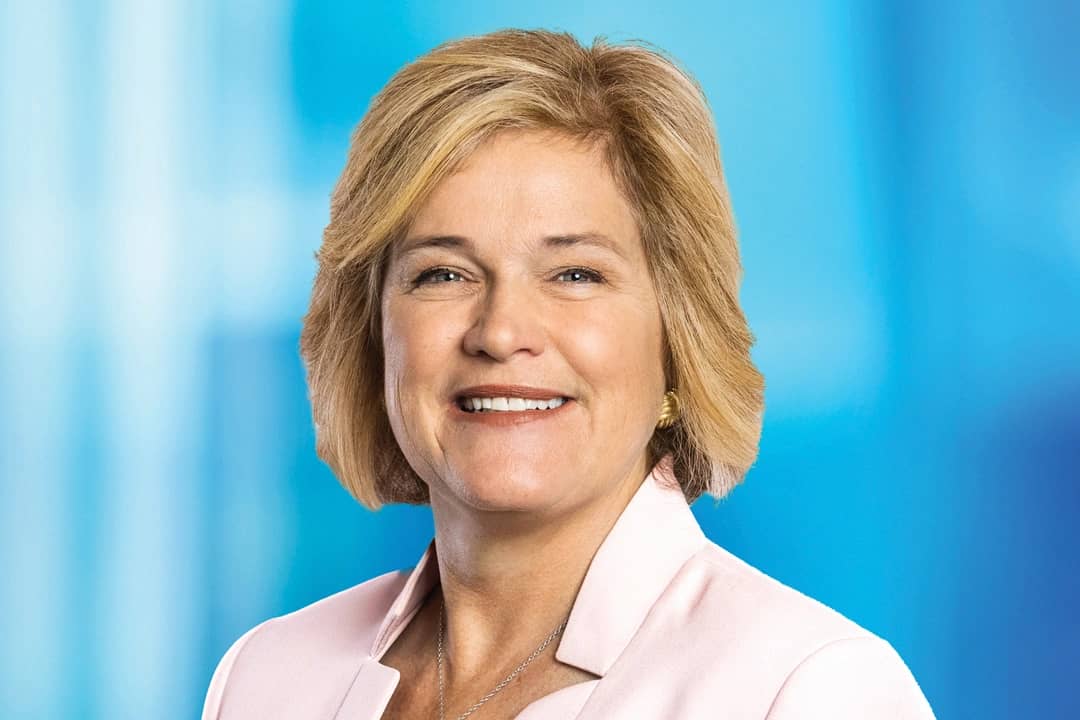
Jenny Johnson
Jenny Johnson is the President and CEO of Franklin Templeton, a global investment management firm. Born in 1964 in Morristown, New Jersey, Johnson has been instrumental in the transformation and expansion of Franklin Templeton, which was founded by her grandfather, Rupert H. Johnson Sr., in 1947. Under her leadership, Franklin Templeton's assets under management have grown significantly, reaching approximately $1.7 trillion. Johnson is renowned for her strategic vision, which includes overseeing critical acquisitions and steering the company through significant changes in the investment landscape. [1] [5]
Early Life and Education
Jenny Johnson was born into a family with a strong legacy in the financial services industry. Her father, Charles B. Johnson, was the former CEO of Franklin Resources, and her mother, Ann Johnson, was a physician. Growing up as the sixth of seven children, Johnson was the only sibling interested in joining the family business. She attended the University of California, Davis, where she initially pursued athletics as a member of the women's basketball team before focusing on her academic pursuits in economics. Johnson graduated in 1987 with a Bachelor of Arts degree in Economics and Physical Education. Following her father's advice, she moved to New York City to start her career in finance. [5]
Career
Johnson began her career in finance in 1987 at Drexel Burnham Lambert as a trainee. However, she soon returned to San Francisco to join Franklin Resources (now Franklin Templeton Investments) in 1988, beginning her journey in the company in its banking division. Throughout her career, Johnson has served in various leadership positions across major divisions of the company, including investment management, technology, operations, and wealth management. In 2010, she was named Chief Operating Officer, and by 2016, she rose to the position of President. [1]
In February 2020, Johnson became the CEO of Franklin Templeton Investments, succeeding her brother Greg Johnson. Her tenure has been marked by strategic acquisitions, such as the notable purchase of Legg Mason and Putnam Investments, significantly enhancing the company's global footprint and diversifying its investment capabilities. Under her leadership, the firm's assets expanded, and Johnson was praised for her role in navigating the firm through the dynamic and challenging investment landscape. [2] [3]
Contributions and Achievements
Johnson has been recognized for her influence and contributions to the financial industry. She has been featured on Forbes’ "World’s 100 Most Powerful Women" list and was named to Barron's list of the "100 Most Influential Women in U.S. Finance". Moreover, she was honored with the Distinguished Leadership Award by the Committee for Economic Development. Her leadership has been instrumental in Franklin Templeton's significant growth and adaptation to advancements in technology and shifts towards private market investing. [4]
In 2026, Johnson was included in CNBC's "Changemakers" list for her impactful strategies and leadership qualities. This recognition reflects her successful navigation of complex financial landscapes and her commitment to maintaining the family business's legacy while innovating for future growth. [2]
Interviews
Leadership, Technology and Asset Management #01
On February 17, 2026, Jenny Johnson, CEO of Franklin Templeton, participated in an episode of Executive Decisions hosted by Steve Sedgwick and broadcast by CNBC International and CNBC International Live. The discussion covered her career within Franklin Templeton, her experience as a member of the company's founding family, technology, leadership, business challenges, and developments in asset management.
Johnson described how her position as a member of the Johnson family influenced expectations surrounding her career at Franklin Templeton. She said her father encouraged family members working at the company to maintain high standards of performance because of the scrutiny associated with family ownership. She also described a client-focused approach to business decisions, in which the interests of clients were treated as a primary consideration.
The interview addressed Johnson's transition into technology-related responsibilities during her career. She recalled initially overseeing e-business activities before assuming responsibility for a broader range of technology functions. According to Johnson, this experience provided a working understanding of technology that she later applied to discussions involving artificial intelligence and tokenization.
Johnson also discussed business difficulties encountered during her career, including problems associated with an auto loan portfolio and a software deployment that resulted in erroneous wire transfers. She described addressing these situations through a series of smaller operational steps and using additional information as it became available. She also stated that executives need to address unresolved decisions rather than avoid them and that changes in circumstances may require previous decisions to be reconsidered.
Regarding work and family responsibilities, Johnson described using a five-year perspective when deciding how to allocate time between competing demands. She also discussed gender in corporate leadership, stating that women may benefit from communicating their career ambitions directly and that senior leaders can influence workplace norms by openly participating in family responsibilities.
The discussion also covered changes in asset management. Johnson identified private-market capabilities and access to data for artificial intelligence as areas that asset managers would need to address. She further discussed Franklin Templeton's involvement with tokenization and stated her view that blockchain-based infrastructure could become part of financial-services systems. [6]
Markets, Leadership, and Innovation #02
On January 27, 2026, Jenny Johnson, CEO of Franklin Templeton, was interviewed on the Insightful Investor podcast in an episode titled “Jenny Johnson: Innovating at Trillion-Dollar Scale.” The discussion covered Franklin Templeton’s history, management practices, acquisitions, investment markets, and the use of technology in asset management.
Johnson described Franklin Templeton’s multigenerational ownership and its influence on the firm’s approach to client relationships and long-term business decisions. She outlined four principles associated with her leadership approach: people, passion, purpose, and persistence. She also described the company’s culture in terms of client focus, collaboration, and continuous improvement, including these factors in the assessment of potential acquisitions and their integration into the organization.
The interview addressed changes in the structure of investment markets, including the expansion of private-market products through wealth-management channels. Johnson discussed the role of financial advisers in developing broader financial plans for clients and described how technology has enabled advisers to provide services beyond traditional investment selection.
Johnson also discussed blockchain technology in relation to asset management operations. She identified shared data records, programmable transactions through smart contracts, and integrated payment mechanisms as applications that could reduce certain reconciliation processes and support tokenized financial products. The discussion included Franklin Templeton’s tokenized money market fund as an example of a blockchain-based financial product.
Artificial intelligence was discussed in relation to investment management and other industries. Johnson stated that companies across sectors could be affected by their ability to incorporate AI into business processes. She also considered the use of AI alongside blockchain-based smart contracts and discussed the uncertainty surrounding investment in infrastructure associated with AI technologies.
The interview covered portfolio construction and investor behavior, with Johnson discussing market concentration, diversification, liquidity, and the effects of compounding over extended periods. She identified emotional reactions to market declines, particularly selling during market corrections, as a recurring issue for individual investors. She also discussed the role of financial advisers in helping clients maintain their investment strategies during periods of market volatility.
Johnson described Franklin Templeton’s acquisition strategy as dependent on the characteristics and scale of each investment area. The discussion included private credit, private equity secondaries, real estate, infrastructure, and venture investments. She stated that acquisitions are evaluated in part according to the compatibility of organizational cultures, client orientation, collaboration, employee retention, and approaches to continuous improvement.
The discussion also examined geopolitical developments, changes in international supply chains, interest rates, and market conditions. Johnson referred to relations between the United States and China, changes in global economic alignments, and developments in regions including Asia and the Middle East as factors relevant to investment decisions. She also discussed areas of the private and public markets that Franklin Templeton considers in assessing potential investment opportunities. [7]
See something wrong?
Average Rating
No ratings yet, be the first to rate!
How was your experience?
Give this wiki a quick rating to let us know!