0% read
Michael Ippolito
Michael Ippolito is the co-founder of Blockworks, a rapidly growing financial media company targeting cryptocurrency and digital asset investment communities. Recognized by Forbes in 2022 as part of its "30 Under 30" in the media category, Ippolito's work with Blockworks has been pivotal in shaping media narratives in the crypto sector. [2] [3] [4]
Early Life & Education
Michael Ippolito pursued undergraduate education at Emory University, where he earned a Bachelor's degree in Psychology from 2012 to 2016. During his time at Emory, he developed a keen interest in strategic thinking and operational efficiency, skills that would later inform his career in consulting and media entrepreneurship. [2]
Career
MKS Instruments
Michael Ippolito worked as a Marketing Analyst at MKS Instruments from June to August 2015 in Andover, Massachusetts. During this period, he worked on the design of the “Pressure Control” section of the company’s website, which was followed by a 22% increase in traffic over two months. He also participated in a localization initiative that identified more than $3.5 million in sourcing-related cost savings. His responsibilities included analyzing sales data for five valves and presenting product design recommendations to management, which served as a basis for later work with blockchain.
Applied Value Group
Ippolito joined Applied Value Group as an Analyst in August 2016 and was promoted to Consultant in April 2017. He remained with the company until June 2018, working in the New York City metropolitan area. As a consultant, he provided advice to Fortune 500 companies on operational and capital efficiency, as well as mergers and acquisitions strategy.
Blockworks
In May 2018, Ippolito co-founded Blockworks with Jason Yanowitz. The company initially organized events related to blockchain and digital assets, including private gatherings for family offices and conferences for financial market professionals, professional service firms, and institutional investors. Its activities later expanded to include media, research, podcasts, and data services.
Ippolito has hosted On the Margin, a podcast featuring fund managers, analysts, and other financial professionals discussing developments, trends, and forecasts in digital asset markets.
In addition to his role at Blockworks, Ippolito has invested in projects related to blockchain infrastructure and operational efficiency. His investment activity has included projects involving execution environments, infrastructure, and the use of technology to improve capital utilization.
Ippolito also uses social media, including Twitter, to publish commentary on developments in the cryptocurrency and digital asset sectors. [2] [3] [4] [5] [6] [7] [8] [9]
Interviews
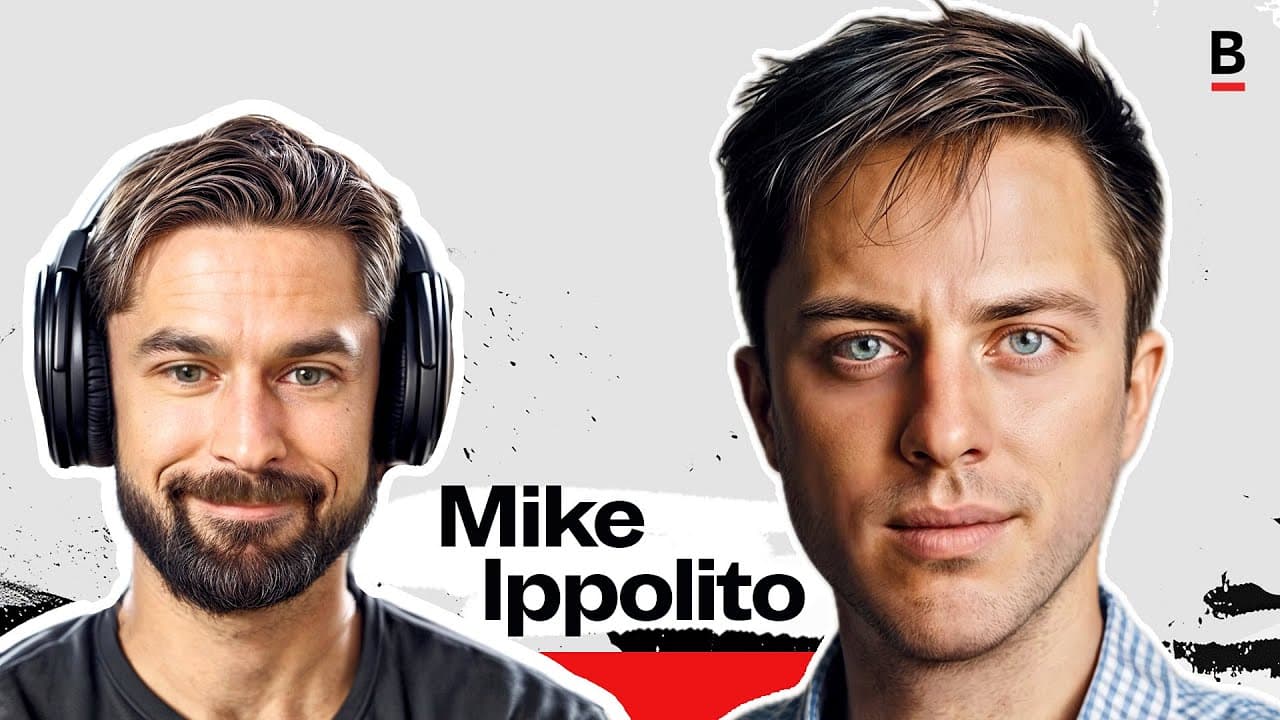
Blockchain Architecture and Market Cycles #01
Bankless hosted a live conversation with Michael Ippolito on February 16, 2024, covering blockchain architecture, Ethereum, Solana, Bitcoin, Layer 2 networks, token distribution mechanisms, and cryptocurrency market conditions.
Ippolito described several blockchain ecosystems as moving toward architectures that separate block production from verification. In his discussion, Ethereum rollups, Solana, and modular networks such as Celestia represented different implementations of this broader architectural direction. He also discussed the use of larger blocks or higher-throughput infrastructure alongside mechanisms that allow lighter participants to verify network activity.
According to Ippolito, the development of blockchain networks is unlikely to result in a single general-purpose chain. He described an ongoing interaction between networks seeking broader functionality and applications seeking greater control over their execution environments. In this model, general-purpose blockchains can become more specialized, while application-specific networks can expand their functionality as their ecosystems develop. He also considered the concept of a fully general-purpose blockchain to be difficult to sustain over time.
The conversation included Bitcoin's development beyond its traditional use as a long-term asset. Ippolito discussed Ordinals and other Bitcoin-based applications as mechanisms that allow users to interact with Bitcoin through additional forms of on-chain activity. He contrasted this with the historical preference among many Bitcoin users for holding assets in cold storage and discussed whether new applications could lead to greater use of Bitcoin within financial and digital asset ecosystems.
Ethereum's Layer 2 environment was discussed in relation to composability and liquidity distribution. Ippolito identified economic incentives as one factor that can limit interoperability between rollups, since individual networks may have reasons to retain users and liquidity. He described the distribution of Ether across rollups as dependent in part on the degree of interoperability that develops between these networks. Higher levels of composability could allow liquidity to remain distributed across multiple environments, while lower levels could favor concentration within particular applications or networks.
Ippolito also examined token airdrops, points systems, and yield incentives used by emerging protocols. He discussed NFT communities as potential recipients of token distributions because these communities can provide identifiable groups of existing users and reduce some forms of exposure to automated airdrop farming. The discussion also considered the role of these incentives in attracting liquidity and users to Layer 2 networks and other protocols.
EigenLayer was discussed in connection with shared security, restaking, and ecosystem participation. Ippolito described the system as having both security-related and ecosystem-related implications. He noted that projects could use shared security to access Ethereum-based capital while positioning themselves within the broader ecosystem. He also discussed the interest generated by EigenLayer among participants outside established cryptocurrency communities, including technology companies and financial institutions.
Regarding market conditions in 2024, Ippolito characterized the cryptocurrency market as being further into the bull cycle than some newer participants might have assumed. He based this assessment partly on the accumulation of unrealized gains across cryptocurrencies, NFTs, and token distributions. In his view, the amount of unrealized value held by market participants could affect behavior as the cycle progressed, particularly if additional retail participation increased market valuations.
The conversation also addressed institutional participation in Bitcoin and Ethereum. Ippolito discussed Ethereum as an asset that could be presented to institutional investors as a technology platform in addition to its monetary characteristics. He noted that Ethereum's smaller market capitalization and the amount of Ether held in Layer 2 networks, staking systems, and decentralized applications could affect the relationship between capital inflows and market price. He also considered the possibility that institutional investors could hold exposure to multiple cryptocurrency assets rather than concentrating exclusively on Bitcoin.
The discussion concluded with broader observations about market maturity, liquidity, investor behavior, and the changing structure of blockchain networks. Ippolito's views emphasized specialization among blockchain systems, the distribution of activity across multiple execution environments, and the role of market incentives in determining how these networks develop. [8]
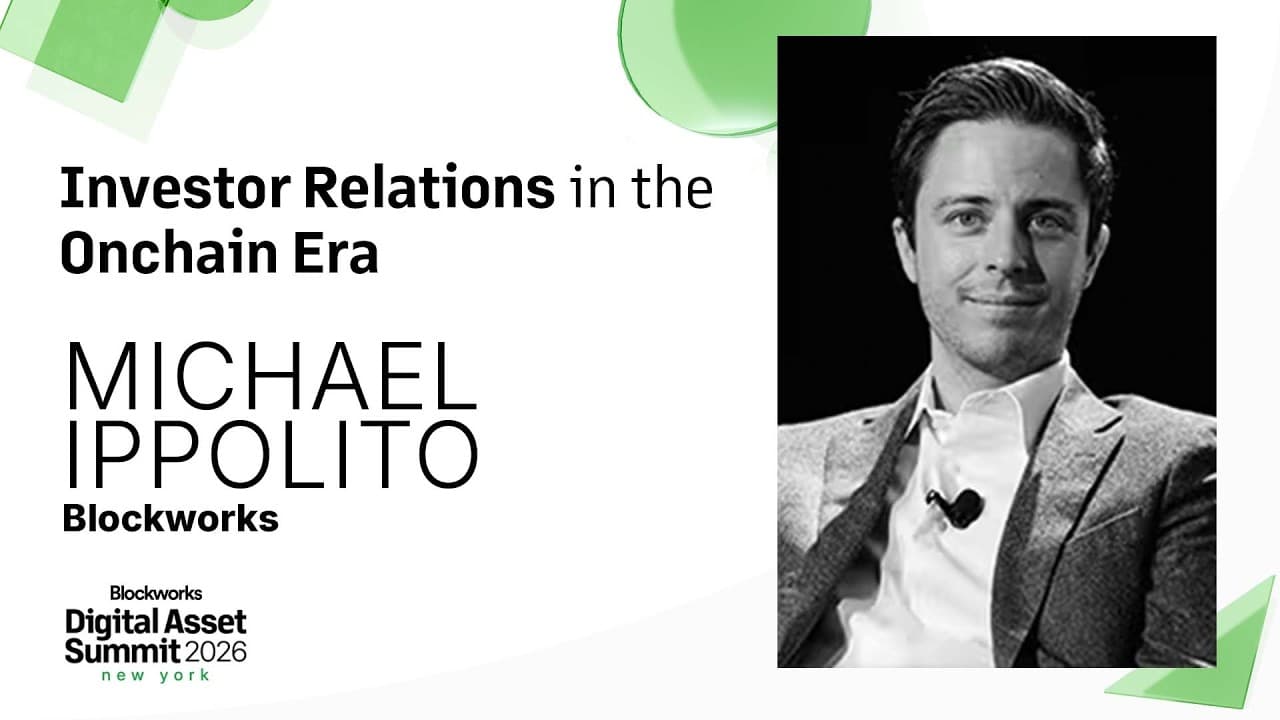
Investor Relations in the Onchain Era #02
On March 24, 2026, Michael Ippolito participated in a panel titled “Investor Relations in the Onchain Era” at DAS New York 2026, published by the Blockworks YouTube channel. The discussion addressed token market performance, investor information, and the development of investor relations practices for blockchain-based projects.
According to Ippolito, the expansion of the cryptocurrency market has not translated proportionally into higher prices for individual tokens. He cited data presented during the panel indicating that the number of tokens in circulation had increased by approximately 35 million while overall market capitalization had remained at similar levels over a four-year period. After accounting for changes in token supply, he stated that the average token price was approximately 80% lower than in 2020.
Ippolito linked this development to a change in the relationship between on-chain revenue and token prices. According to his presentation, on-chain revenue and token prices had previously shown a closer relationship, but this correlation weakened in 2025 despite continued revenue generation. He attributed the resulting uncertainty to two groups of factors: market structure and information availability. The former included the growing number of tokens, fragmented liquidity, and questions surrounding how network activity translates into token value.
The second group concerned the availability and presentation of information to token investors. Ippolito stated that many crypto projects do not provide standardized disclosures, regular reporting, or a consistent source of investor-facing information. He compared this environment with public equity markets, where companies generally provide recurring financial reports, earnings presentations, and other materials through established investor relations channels.
During the panel, Ippolito introduced Blockworks IR, a service presented as an infrastructure for organizing and distributing investor information for crypto projects. The system includes standardized data, quarterly reports, investor calls, and an interface for managing investor relations activities. The presentation also described the use of engagement analytics and on-chain information to provide additional context about investor activity and token ownership.
Ippolito described a model in which investor relations for blockchain projects could make greater use of continuously available on-chain data rather than relying exclusively on periodic disclosures. He contrasted this approach with traditional investor relations practices, which he characterized as primarily centered on reporting, compliance, and scheduled communications. His proposed model included live data, social media, in-person activities, and other forms of direct investor communication.
The panel also addressed the differences between blockchain-based projects and publicly traded companies. Ippolito noted that public companies face substantial costs associated with auditing and compliance and argued that blockchain projects do not necessarily need to reproduce those processes in their existing form. Instead, he pointed to the availability of on-chain operational and financial data as a basis for developing different methods of investor communication.
In his closing remarks, Ippolito described investor relations in the on-chain sector as a function that could incorporate real-time data, automated processing, investor analytics, and broader communication channels. He suggested that investor relations metrics could extend beyond the completion of required disclosures to include measures such as changes in the number of token holders and investor engagement. [9]
See something wrong?
Average Rating
No ratings yet, be the first to rate!
How was your experience?
Give this wiki a quick rating to let us know!