0% read
Nenter Chow
Nenter Chow
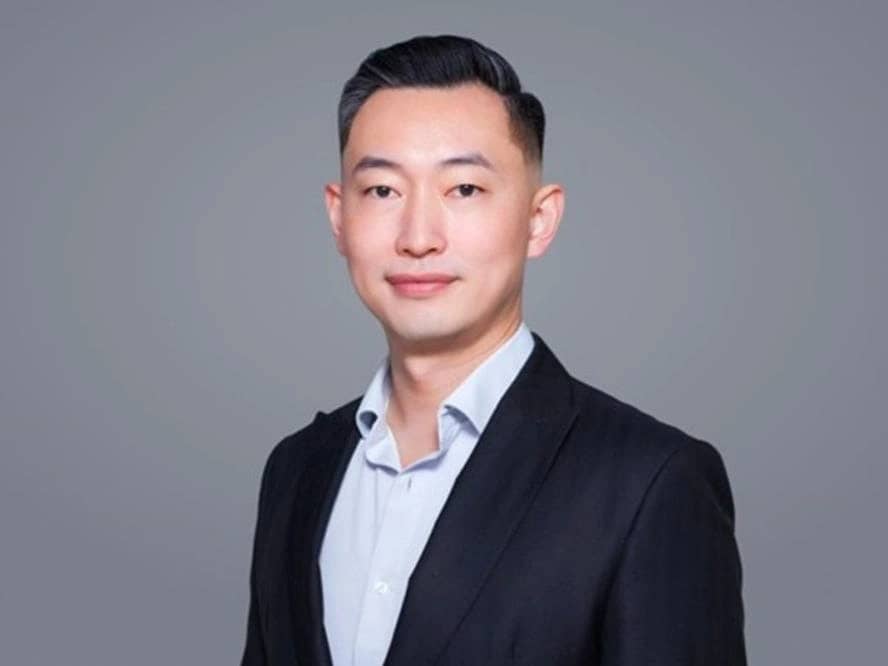
Nenter Chow is a finance and digital assets executive serving as Global Chief Executive Officer of BitMart. His career has spanned investment banking, debt capital markets, corporate strategy, venture capital, and digital assets, with leadership roles at global financial institutions and blockchain companies. [7]
Education
Chow graduated from the University of Michigan’s Stephen M. Ross School of Business with a BBA in Accounting and Finance in 2005. [1]
Career
Chow began his career in investment banking as a Leveraged Finance Analyst at Oppenheimer & Co. from 2005 to 2007. He then joined J.P. Morgan as an Equity Research analyst covering the healthcare services sector before moving to MUFG in 2008, where he worked in debt capital markets. During his eight-year tenure at MUFG, he held several leadership positions, including Regional Head of Asia-Pacific Corporate and Investment Banking for U.S. multinational clients and Head of Latin America Corporate Strategy, focusing on corporate banking, capital markets, and international business strategy. In 2016, Chow joined Bank of China, where he worked in leveraged finance and project finance, advising on corporate financing transactions. He later moved to the Industrial and Commercial Bank of China (ICBC) in 2020 as Director and Deputy Head of Debt Capital Markets and Fixed Income Trading for the Americas, overseeing debt capital markets activities and fixed income operations.
Chow entered the blockchain industry in 2022 when he joined Animoca Brands as a Partner at Animoca Ventures. In this role, he focused on venture capital investments in blockchain, Web3, and digital asset companies. In April 2025, he became Global Chief Executive Officer of BitMart, where he has led the cryptocurrency exchange's global operations, strategy, and business development initiatives. [2]
Interviews
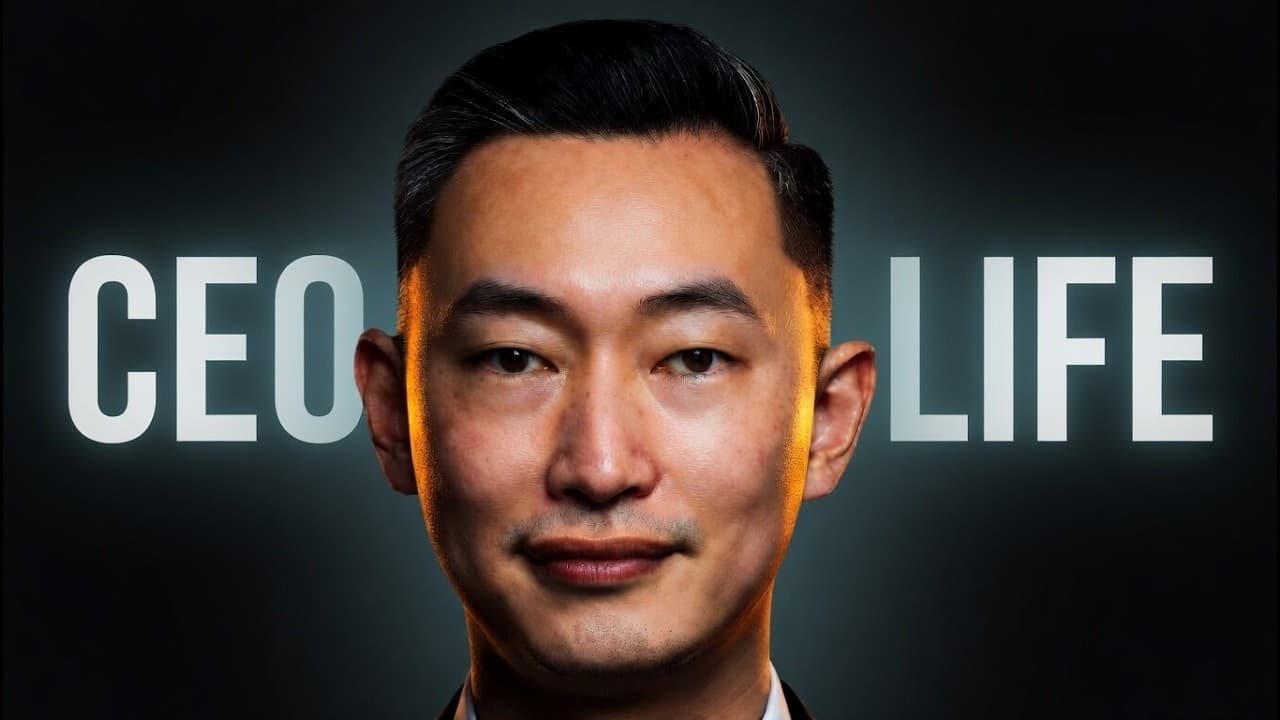
Life as a CEO
In an April 2026 interview on the Chinsanity Show podcast, Chow discussed his transition from traditional finance into digital assets, his views on the financial system, and his role as CEO of BitMart. Chow reflected on his early exposure to the weaknesses of traditional finance, including his experience working at Bear Stearns during the 2008 financial crisis, which influenced his interest in alternative financial systems and eventually led him to invest in Bitcoin in 2016. He described how his belief in cryptocurrency’s potential to reshape finance drove his move into Web3, where he became involved in areas including NFTs, venture investing, and blockchain projects, with experiences in markets such as Shanghai broadening his perspective. Chow also discussed the responsibilities of leading a global crypto exchange, emphasizing the importance of communication, understanding user behavior through data and community engagement, and maintaining curiosity and commitment in a rapidly evolving industry. [5]
Volatility to Vision
In a January 2026 fireside chat at the Global Blockchain Show, Chow discussed his background in traditional finance, the evolution of the cryptocurrency industry, and the future of digital asset markets. Chow highlighted BitMart’s growth as a global trading platform and drew on his 17 years of experience in Wall Street investment banking and venture capital to discuss the sector’s transition from a highly volatile market toward a more regulated and mature financial ecosystem. He described ongoing developments including the expansion of altcoin markets, real-world asset tokenization, yield-generating products, and broader trading services. Chow also discussed BitMart’s approach to building a global organizational culture through regional initiatives, compliance-focused practices, and community programs tailored to different markets. He further addressed the growing role of prediction markets, institutional participation, and regulatory developments, noting that continued adaptation, security, and compliance would be important factors shaping the future of the digital asset industry. [3]
Presentations
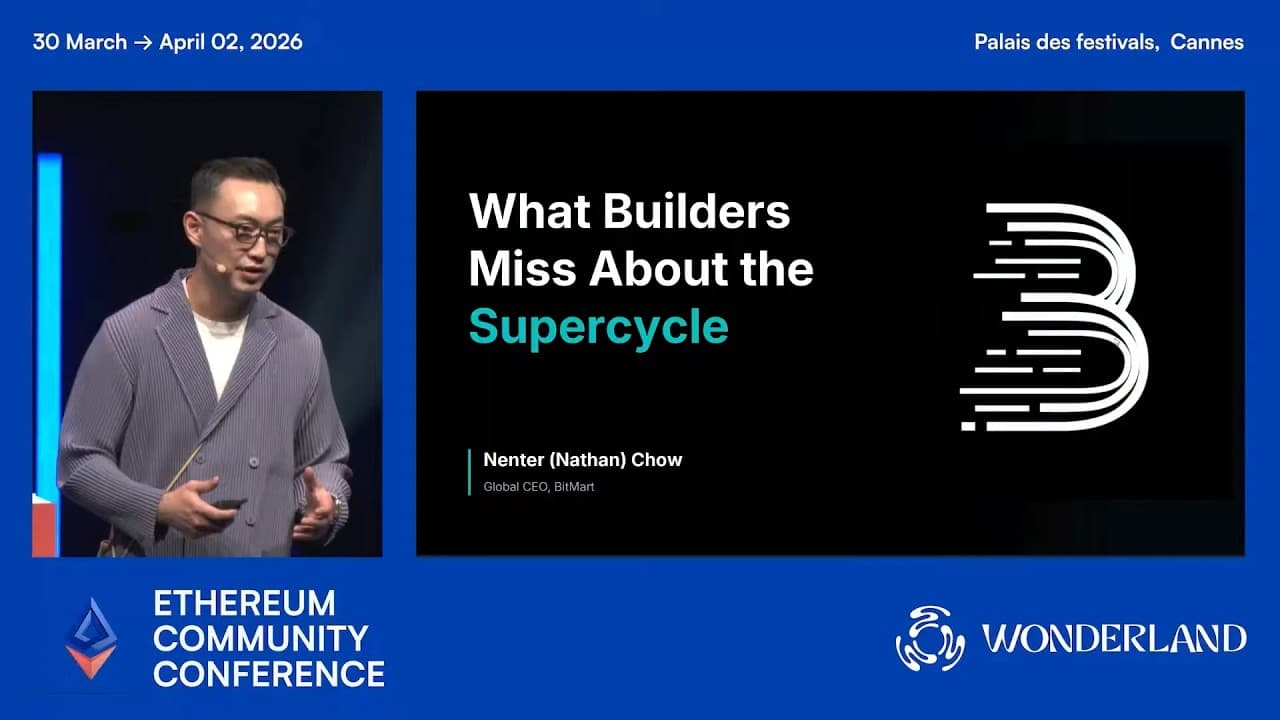
The Supercycle
In an April 2026 presentation at EthCC[9], Chow discussed the growth of crypto markets in the Asia-Pacific (APAC) region and the factors shaping successful blockchain adoption. Chow reflected on his experience in the crypto ecosystem since 2018 and argued that technological infrastructure alone was insufficient without liquidity, user adoption, and real economic activity to support growth. He highlighted APAC’s rapid expansion in on-chain activity, noting the region’s increasing importance for digital asset development, while pointing to regulatory progress in markets such as Japan and innovations in stablecoins, cross-border payments, and real-world asset tokenization. Chow emphasized that builders and investors needed to consider regulatory requirements, user behavior, distribution strategies, and practical applications rather than focusing solely on technological advancements. He noted that institutional investors were increasingly prioritizing projects with clear revenue models, cash flows, and legal structures, and encouraged developers to build localized solutions that address regional market needs and create measurable economic value. [6]
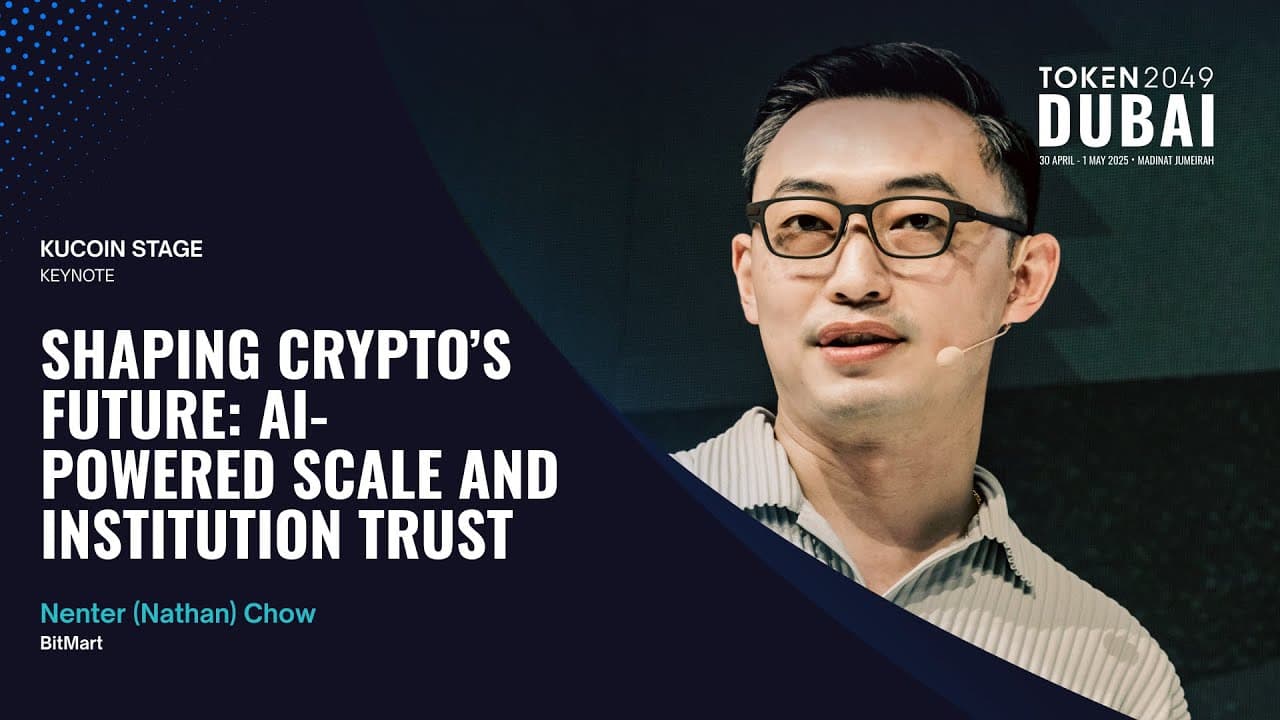
Shaping Crypto’s Future
In a May 2025 presentation at TOKEN2049, Chow discussed the future development of cryptocurrency markets, focusing on the role of artificial intelligence, institutional adoption, and market infrastructure. Chow expressed his enthusiasm for leading BitMart and highlighted the importance of combining AI-driven scalability with greater trust and transparency to support the next phase of industry growth. He noted that crypto markets continued to face challenges including fragmented liquidity, complex systems, and the absence of unified global regulation, but argued that AI could help connect markets, improve efficiency, and optimize trading processes. Chow emphasized the need for clearer separation between trading, custody, and client service functions to strengthen market structure and attract institutional participants. He also discussed growing institutional interest in derivatives, risk management, and regulatory solutions, noting that AI-based analysis of on-chain data could improve transparency, enhance compliance, and support applications such as credit assessment and decentralized governance. [4]
See something wrong?
Average Rating
No ratings yet, be the first to rate!
How was your experience?
Give this wiki a quick rating to let us know!
Edited By
On July 24, 2026. 16:48 UTC
Edit summary:
Updated wiki content and changed events (3 -> 3 items)