0% read
Last updated:
Nitesh Nath
Nitesh Nath is an American technology entrepreneur and quantitative researcher who serves as Chief Executive Officer of DFlow. His career has focused on quantitative trading, market infrastructure, software engineering, and computer science research. [4]
Education
Nath graduated from the University of Illinois Urbana-Champaign with a BS in Computer Science in 2017. He later earned his Master of Science from the University of Chicago. [2]
Career
Nath began his career in research at the University of Illinois Urbana-Champaign, where he completed a machine learning research internship in 2015 within the Department of Computer Science, working on computational biology. He later conducted undergraduate research at the National Center for Supercomputing Applications, focusing on high-performance computing and mathematical research. In 2016, he joined Apple as a software engineering intern, contributing to location-aware technologies, before returning to the University of Illinois in 2017 as a compiler research intern in the Department of Computer Science.
In 2017, Nath joined DRW as a quantitative researcher, where he worked on low-latency quantitative trading systems and market technologies. He remained with the firm until 2021, gaining experience in quantitative research, algorithmic trading, and financial markets.
In 2021, Nath co-founded DFlow and became its Chief Executive Officer. His work has centered on developing internet-native market infrastructure and trading technology, drawing on his background in quantitative finance, distributed systems, and software engineering. Across his career, he has worked at the intersection of financial markets, computer science, and technology infrastructure. [3]
Presenations
DFlow
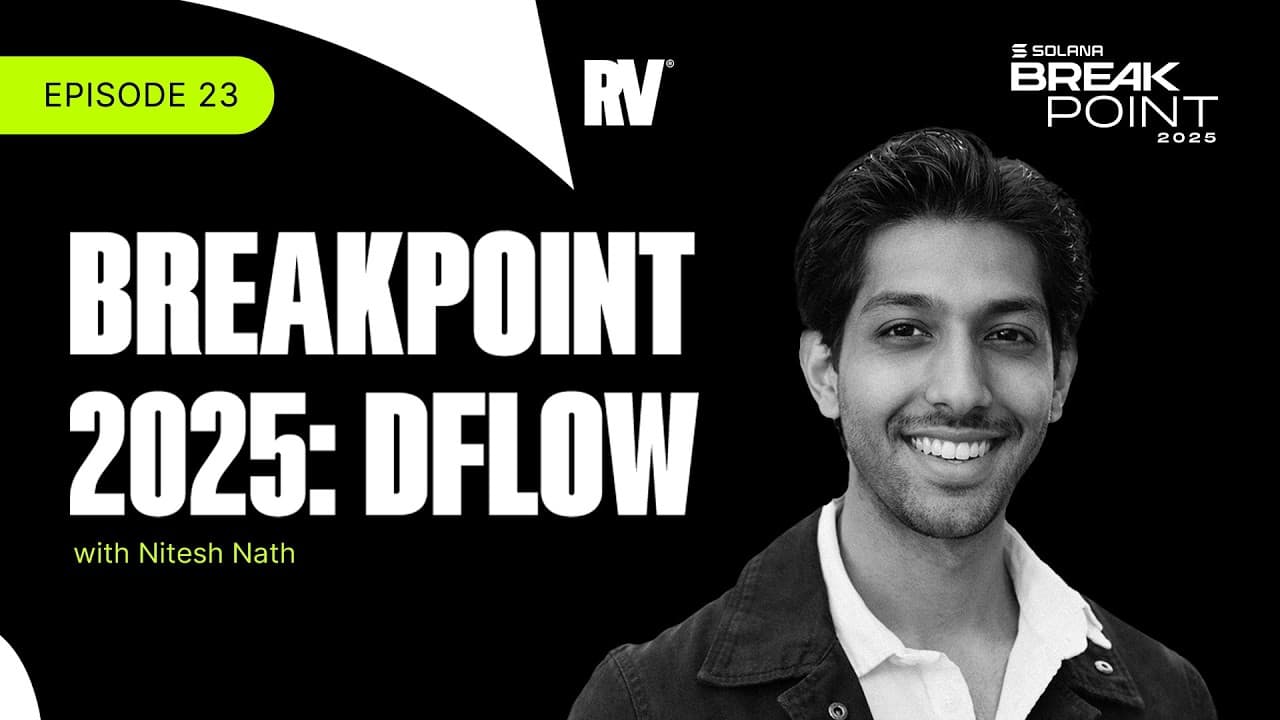
At Solana Breakpoint in February 2026, Nath presented updates on DFlow’s trading infrastructure and product development within the Solana ecosystem. He introduced DFlow’s prediction markets API, which connects Solana-based applications and traders with prediction market liquidity from Kalshi, and discussed the company’s broader focus on low-latency trading infrastructure and decentralized exchange aggregation. Nath highlighted DFlow’s growth, including processing more than $33 billion in trading volume since April 2025 and expanding its user and application ecosystem. He reviewed product milestones such as the launch of the spot trading API, just-in-time routing technology to improve execution and reduce slippage, and the Prop AMM backend designed to support liquidity providers. Nath also discussed the adoption of DFlow’s infrastructure by dozens of applications and explained the rationale behind tokenizing prediction market positions, emphasizing composability with decentralized finance applications and the broader development of on-chain market infrastructure. [5]
Market Microstructure
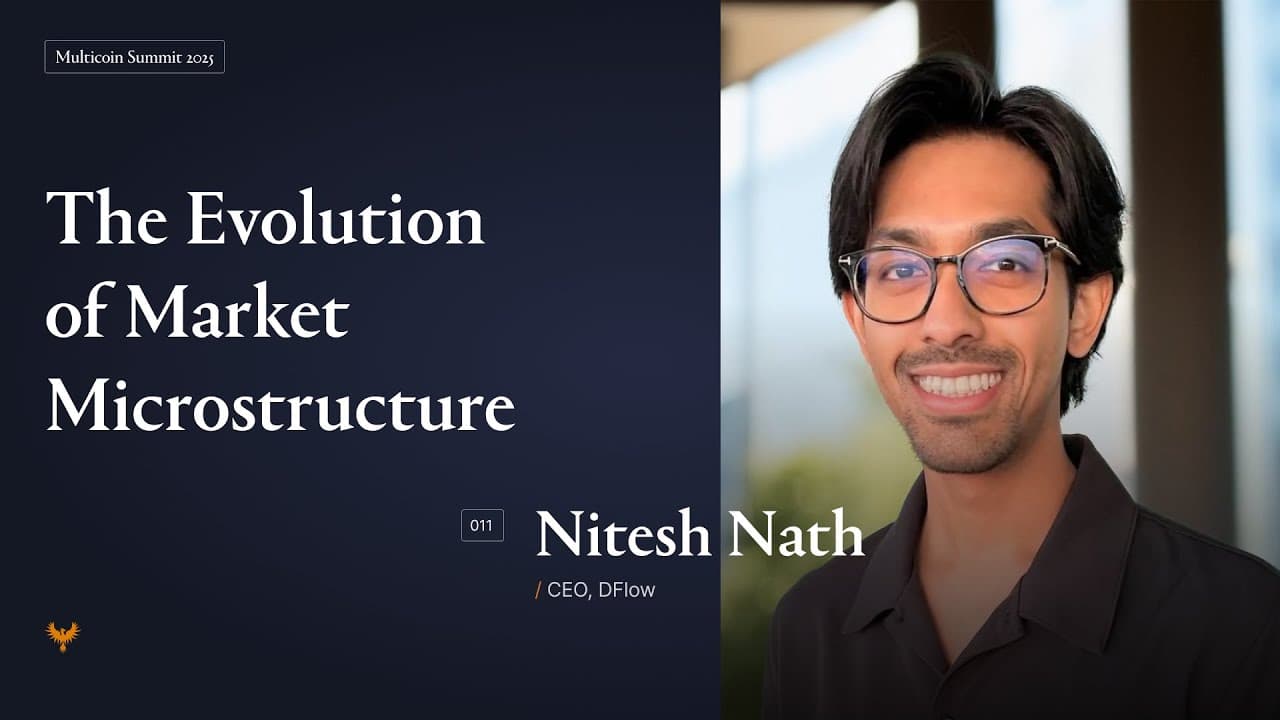
At the Multicoin Summit in December 2025, Nath discussed the evolution of market microstructure on Solana, focusing on the development of decentralized liquidity and trading infrastructure since the network’s launch. He described DFlow’s role in connecting wallets, applications, and institutions to Solana-based liquidity, highlighting the growth of trading activity and participation from retail users. Nath explained that liquidity on Solana is organized through smart contract-based systems, including automated market makers (AMMs) and order books, which collectively form a market graph managed by liquidity providers. He described DFlow’s router as a matching engine that identifies optimal prices by combining trades across multiple liquidity sources. Nath also examined differences between traditional exchanges and Solana-based markets, including the flexibility of decentralized liquidity systems and the absence of certain limitations found in conventional exchange structures. [6]
Internet-Native Structure
At TOKEN2049 in May 2025, Nath presented an overview of internet-native market structure, examining how decentralized finance (DeFi) markets differ from traditional financial markets. He explained that DFlow builds a real-time liquidity graph on Solana and routes trades off-chain, contrasting this approach with Ethereum-based on-chain routing. Nath described the roles of liquidity providers and wallet applications within the trading ecosystem and traced the evolution of market structure from open-outcry trading floors to electronic order books, low-latency trading, and blockchain-based markets. He argued that blockchains create a new environment in which buyers and sellers can interact permissionlessly, while noting that retail users typically access these markets through wallets and aggregators rather than directly. Nath also discussed the increasing use of proprietary automated market makers (AMMs) on Solana, suggesting that decentralized exchanges increasingly function as liquidity providers rather than traditional exchanges. He concluded by examining how dynamic pricing and competition among market makers could reduce trading spreads, increase trading activity, and influence the continued development of decentralized market infrastructure. [7]
See something wrong?

Average Rating
No ratings yet, be the first to rate!
How was your experience?
Give this wiki a quick rating to let us know!
Edited By
On July 30, 2026. 22:21 UTC
Edit summary:
Updated tags (moved Solana to front), renamed category to People in crypto, expanded events 4→8, updated media 3→3 and images 1→1