0% read
Last updated:
Richard Liu
Richard Liu is a technology executive and entrepreneur with experience in software engineering, product development, venture investing, and blockchain infrastructure. He previously held engineering leadership roles at companies including Google and Facebook, co-founded the AI career platform Leap.ai, and later co-founded Huma Finance. [1]
Education
Liu earned a BE in Electrical Engineering from Sichuan University, an MBA from SMU Cox School of Business, an MS in Automation from Tsinghua University, and a Ph.D. in Electrical and Computer Engineering from the University of Florida. [2]
Career
Liu began his career at Verizon in 2001, where he served as a manager and chief engineer before joining Oracle in 2006 as a senior manager working on retail software products and enterprise systems. In 2007, he moved to Target, contributing to initiatives in supply chain management, global trade, and application development. Liu joined Google in 2008, where he advanced from engineering leadership roles to Engineering Director, leading teams that developed and launched products including Google Search Appliance, Google Commerce Search, Google Trusted Stores, Google Offers, and Google Fi. During his time at Google, he built and managed engineering organizations for several new product initiatives and oversaw projects spanning search, commerce, mobile services, and enterprise technologies.
In 2016, Liu co-founded Leap.ai, an artificial intelligence-based career platform, serving as Chief Executive Officer until the company was acquired by Facebook in 2019. Following the acquisition, he joined Facebook to support engineering efforts related to Facebook Jobs and privacy compliance before becoming Chief Technology Officer at Earnin, where he served from 2019 to 2022. Alongside his operating roles, Liu has been a venture partner at Foothill Ventures since 2015, participating in early-stage technology investments following the firm's transition from the TEEC Angel Fund. In 2022, he co-founded Huma Finance, where he serves as Co-Chief Executive Officer and oversees the development of blockchain-based payment financing infrastructure. [3]
Interviews
Huma Finance 2.0
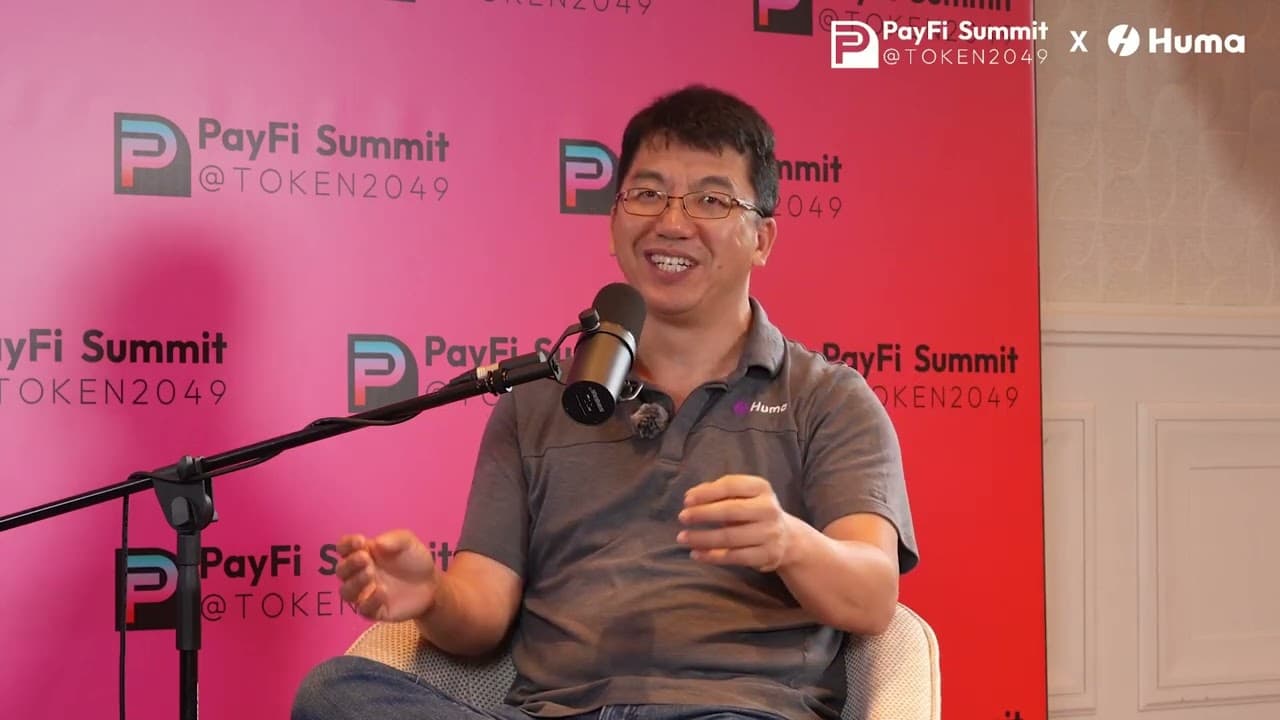
At the PayFi Summit in May 2026, Liu shared his insights on the evolving PayFi sector. He voiced his confidence in presenting innovative concepts, emphasizing that PayFi connects payments with liquidity using blockchain technology to facilitate rapid, global money movements by providing on-demand liquidity, much like a continuously fueled vehicle. Liu explained that traditional cross-border payments are slow and costly due to reliance on prefunded accounts and intermediaries, whereas PayFi streamlines this process with blockchain, enabling near-instant transfers. He highlighted three strategic opportunities: enabling more efficient leverage by looping in DeFi, introducing a reserve system to ensure ecosystem stability, and aligning protocol growth with token demand to promote healthy ecosystem development. Liu also expressed strong optimism about accelerated industry growth, predicting that cross-border payments could transition to real-time processing within five years, driven by increasing industry adoption and regulatory support. Throughout, he underscored the importance of innovation, strategic ecosystem design, and blockchain's potential to revolutionize global payment systems. [4]
PayFi Fireside
At the PayFi Summit 2025 in May, Liu shared his journey from working at Google to founding startups in AI and fintech, including NIP.AI, which was acquired by Facebook, and his experience with blockchain-based payment financing. He explained how Huma Finance transitioned from EVM to Solana, motivated by strong support from the Solana Foundation, which made Solana their home base. Liu emphasized the importance of the PST token, enabling DeFi composability and seamless integration with the Solana ecosystem, fostering a flywheel effect with double-digit yields. He detailed how Huma Finance provides liquidity for cross-border payments, prefunded transactions, and credit card settlements, generating APYs between 15% and 25% by charging small spreads. Liu critiqued the overemphasis on TVL as a metric, advocating for measuring active liquidity, total yield, and transaction volume to better assess ecosystem health. He advised other DeFi founders to stay true to their principles, maintain active utilization caps, and focus on real-world use cases like payment financing, which are understandable and valuable for everyday businesses. Liu also discussed upcoming projects, including efforts to streamline credit card settlement and accelerate global payments, highlighting the potential for crypto to revolutionize traditional finance. Throughout the talk, he expressed enthusiasm for the continued growth of Solana's DeFi ecosystem and emphasized the significance of real utility and sustainable growth over vanity metrics. [5]
Presentations
Huma Keynote
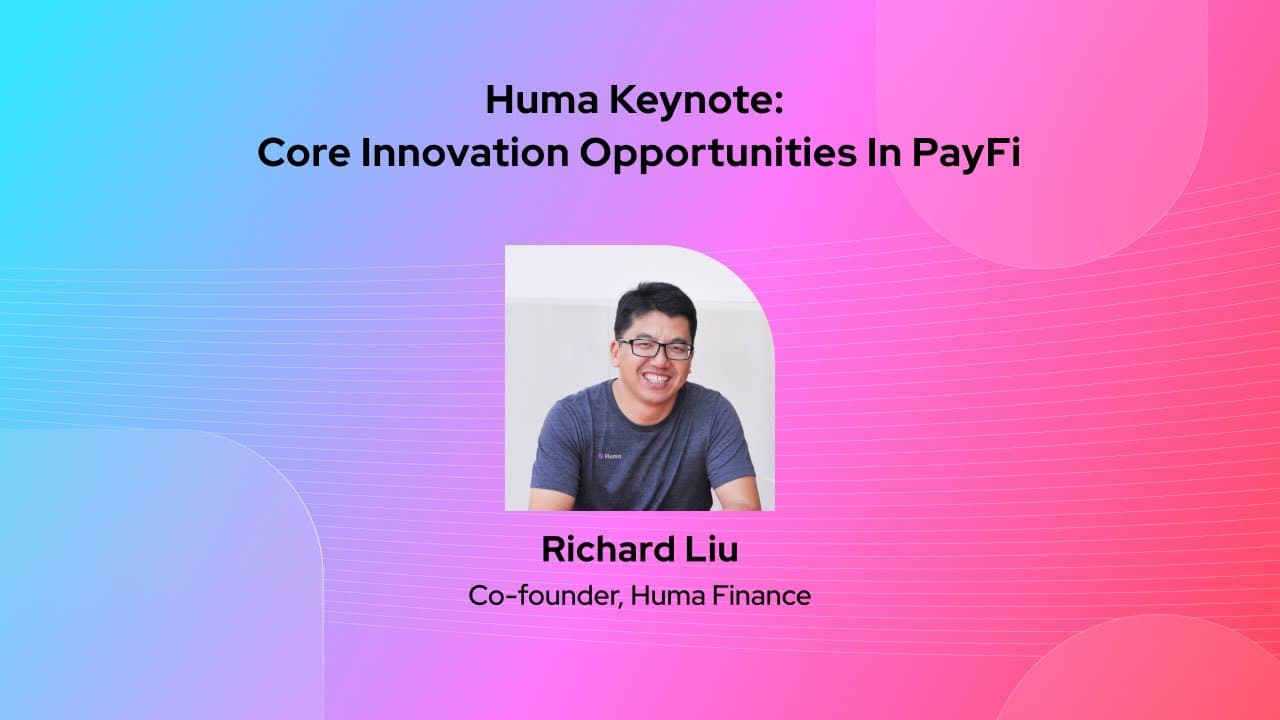
At the PayFi Summit Singapore in October 2025, Liu delivered an enthusiastic keynote, focusing on innovations in cross-border payments and DeFi. He highlighted the transformative impact of internet technology over the past 30 years and emphasized that, unlike information and mobility, money movement remained slow and inefficient, especially in cross-border and B2B transactions reliant on outdated systems like SWIFT. Liu introduced PayFi, a blockchain-based framework that connects payments to liquidity, aiming to accelerate global money movements and reduce reliance on prefunding and intermediaries, thereby increasing efficiency. He discussed the development of a detailed PayFi stack that covers transactions, stablecoin interoperability, shared custody, compliance, and financing, emphasizing the industry-wide shift toward programmable, cross-chain solutions. Liu showcased innovative protocols such as the Huma Pan reserve, which introduces liquidity reserves to enable confident high-LTV looping, and the Huma Vault, designed to optimize token utility and drive protocol growth through integrated staking and yield strategies. He expressed excitement about the potential of these initiatives to unlock significant value, improve capital efficiency, and fundamentally transform the digital payments landscape, culminating in a call to launch them in Q4. [6]
See something wrong?

Average Rating
No ratings yet, be the first to rate!
How was your experience?
Give this wiki a quick rating to let us know!
Edited By
On July 14, 2026. 14:54 UTC
Edit summary:
Updated tags order (Developer first), changed category to People in crypto, expanded events 2→4, updated media (7 items)