Tom Schmidt
Tom Schmidt is an investor, product executive, and entrepreneur whose career has spanned software engineering, consumer technology products, and digital assets. He is a partner at Dragonfly, a venture capital firm focused on cryptocurrency and blockchain technologies, and has served as an advisor to several technology and Web3 companies. [1]
Education
Schmidt graduated from Stanford University with a BS and an MS in Computer Science in 2014. [3]
Career
Schmidt began his career through internships at Ideas To Go, Microsoft, and Apple between 2009 and 2012, working on software development and product-related projects. In 2013, he completed a software engineering internship at DeepGlint in Beijing while studying at Stanford University, where he also served as a CS106 section leader and co-president of the Stanford Venture Capital Club. After graduating, Schmidt joined Facebook as a Product Manager in 2014, focusing on Instagram monetization products. He continued in that role through 2016, working across Facebook and Instagram on advertising and revenue-related initiatives. In 2017, he founded Nugget, a consumer application designed to help users discover products on Amazon, before moving into the cryptocurrency sector.
In January 2018, Schmidt joined 0x, a blockchain infrastructure company, where he worked on product development until the end of 2019. During this period, he also became an advisor to Audius, a decentralized music streaming platform, and later to Betty Labs, a social audio company that Spotify acquired in 2021. In August 2019, he became an advisor to Heracles Corp. In December 2019, Schmidt joined Dragonfly as a partner. At the firm, he has focused on investments in cryptocurrency, blockchain infrastructure, decentralized finance, and related technology sectors while continuing to serve in advisory roles across the digital asset ecosystem. [4]
Interviews
AI Agents x Crypto
On The Milk Road Show in March 2026, Schmidt reflected on the maturation of the crypto industry, highlighting its evolution from the early days of ICOs and experimental projects to the involvement of major financial institutions such as BlackRock, Fidelity, and Morgan Stanley, signaling mainstream adoption. He emphasized the growing intersection between AI and crypto, noting efforts around decentralized data management, agentic payments using stablecoins, and verifiable identity solutions to combat AI-generated misinformation. Schmidt pointed out that local compute advancements, such as open-source models that can run on edge devices, represented promising developments aligned with self-sovereignty. He explained that Dragonfly Capital’s investment approach remained focused on quality projects across infrastructure and applications, balancing tokens and equity and staying flexible amid market cycles. Despite ongoing regulatory uncertainties surrounding prediction markets, perpetuals, and RWAs, Schmidt believed that clearer frameworks would emerge, fostering innovation. He also commented on industry challenges like the October 10th flash crash, viewing it as an expected, non-critical risk characteristic of the nascent asset class. Overall, Schmidt expressed optimism that stablecoins would serve as a foundational infrastructure enabling global financial products, gaming, and innovation, underscoring that purposeful, long-term development was still underway despite market slowdowns and regulatory hurdles. [7]
Crypto 2026
On the Coin Bureau podcast in December 2025, Schmidt shared his perspectives on the crypto market, emphasizing that a sustained altcoin rally would likely require institutional-backed participation and higher-quality tokens. He noted that despite progress in the industry, recent market-structure issues, particularly liquidity and market-maker losses, had caused a temporary downturn, but the long-term outlook remained bullish, especially for Bitcoin, supported by macroeconomic and regulatory developments. Schmidt highlighted the increasing professionalism, transparency, and robustness of the crypto ecosystem, including advancements in prediction markets, real-world asset digitization, and decentralized gambling platforms like Mega Pot, which aims to democratize lotteries. He stressed the importance of regulatory clarity—particularly around tokens and developer liability—which he believed would unlock innovation and institutional participation. Schmidt also pointed out that an oversupply of tokens and declining retail participation hinder altcoin season, suggesting that future growth is more likely to come from institutional adoption and hybrid financial structures rather than retail speculation. Additionally, he expressed optimism about prediction markets' potential to transform information dissemination and event prediction, citing Polymarket as a leading example. Throughout the discussion, Schmidt advised new entrants to focus on pragmatic, real-world applications and to avoid hype-driven behaviors, emphasizing patience and long-term thinking as keys to success in crypto. [8]
Unit of Value
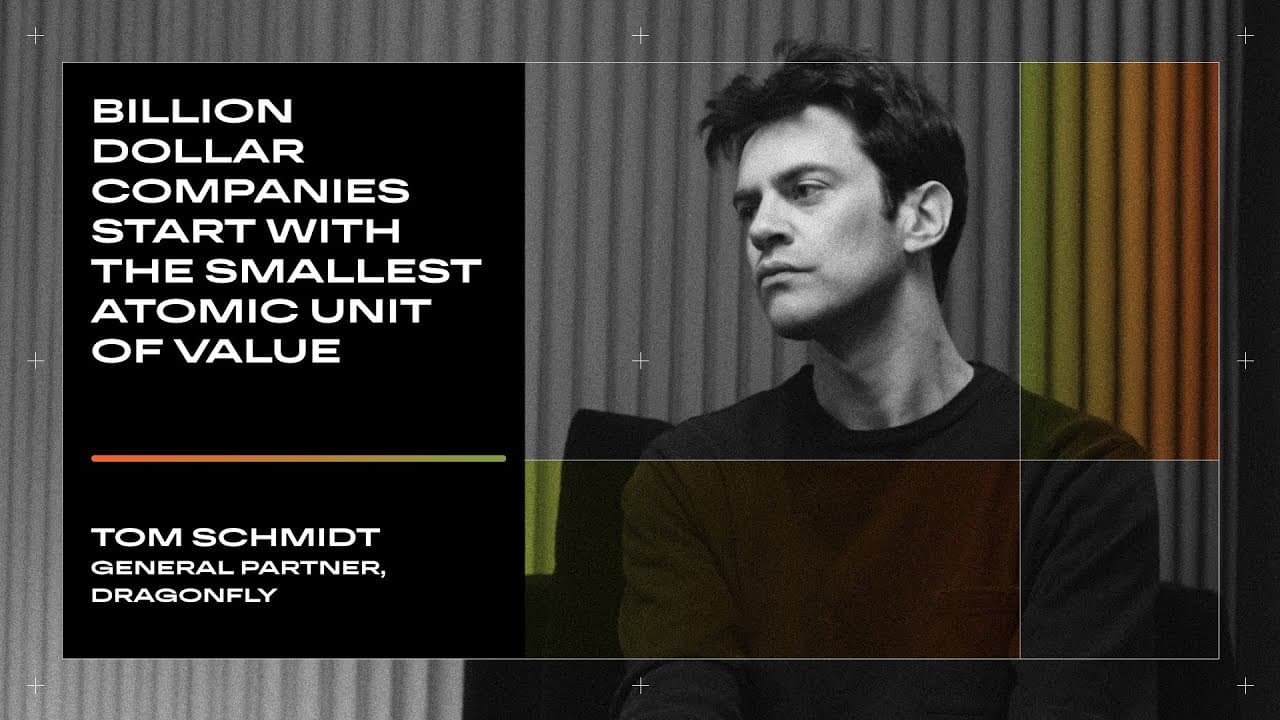
In a December 2025 interview with Aptos Labs, Schmidt shared his perspective on the crypto industry, emphasizing the importance of starting with the smallest atomic units of value, such as simple, deliverable products that can be scaled over time. He highlighted that successful crypto companies often focus on niche markets like stablecoins, prediction markets, or specialized protocols, rather than broad generalizations, to differentiate themselves. Schmidt pointed out that infrastructure protocols with strong developer ergonomics and focus tend to thrive, while tribalism among chains can hinder progress, making it more effective for builders to target new ecosystems or geographies. He stressed the importance of building products that appeal to net-new users through compelling experiences, rather than relying solely on the existing crypto niche, and cautioned against overgeneralizing at the protocol level given market and technical complexities. From an investment standpoint, Schmidt favored bottom-up strategies, focusing on practical problems and real-world adoption rather than speculative, hype-driven projects. He also identified the potential of underrated areas such as onchain gaming and gambling and expressed skepticism toward overhyped sectors like decentralized social networks, which remain challenging to sustain over the long term. Finally, regarding Aptos, he noted its strong developer experience and high performance as key advantages but emphasized the need for content and asset issuance to truly fuel ecosystem growth, cautioning against overreliance on broad infrastructure without targeted user adoption strategies. [9]