Acurast is a decentralized computing network that utilizes smartphones as distributed compute units, providing developers with a verifiable, confidential, and scalable alternative to centralized data centers. The platform enables the execution of applications across a globally distributed infrastructure, with an emphasis on security and interoperability between Web2 and Web3 ecosystems. [1]
Acurast is a decentralized computing network that utilizes smartphones as distributed compute units rather than relying on centralized data centers. The network enables the execution of applications across a globally distributed infrastructure, with an emphasis on verifiability, confidentiality, and scalability. By leveraging mobile devices equipped with trusted execution environments, Acurast is designed to provide secure computation while minimizing reliance on centralized intermediaries.
The network has been deployed through a testnet environment with hundreds of thousands of participating devices worldwide, supporting a range of workloads, including those with higher security or computational requirements. Its architecture aggregates compute capacity from a large number of independent devices across multiple countries, with performance and scalability supported by ongoing testing and transaction processing at scale. [2]
Compute providers in the Acurast network are individuals or entities that contribute computational resources by running the Acurast Processor application on compatible smartphones. These devices execute application workloads, referred to as deployments, on behalf of developers using the network. Participation requires minimal technical setup, including supported devices such as modern Android and iOS smartphones, a stable internet connection, and a continuous power supply to maintain uptime.
In return for providing compute resources, participants receive rewards denominated in the network’s token. Compensation is determined through a performance-based system that evaluates factors such as device capabilities, uptime, and execution activity. Additional rewards may be earned through staking mechanisms, where participants allocate tokens to support network operations, with rewards distributed based on benchmarking metrics and overall contributions to the network’s computational capacity. [5]
The Acurast Processor is a mobile application that enables smartphones to function as compute nodes within the network. These devices execute application workloads, known as deployments, and serve as the primary infrastructure for supplying computational resources. Two versions of the processor are available, differing in configuration and usage.
Processor Core is designed for dedicated use on Android devices, where the smartphone is configured exclusively for compute tasks following a full system reset and a restricted environment. This setup is intended to support continuous operation and consistent performance. Processor Lite, by contrast, operates on both Android and iOS devices and allows users to contribute compute resources without dedicating the device solely to the network, typically running alongside normal usage during idle periods. [10]
Compute providers in the Acurast network receive rewards for contributing computational resources through a structured system tied to token issuance and performance metrics. Base rewards are distributed from token inflation and allocated according to device benchmarks, with factors such as hardware capabilities influencing the share received. These rewards are distributed periodically and are independent of additional participation mechanisms.
Additional rewards are available through staking, where participants commit both compute resources and tokens, with distributions based on factors including stake size, duration, and device performance. Providers that actively execute deployments may receive temporary increases in their reward weighting, which can affect total earnings across both base and staking reward pools. Transaction fees associated with deployments are paid by developers and removed from circulation after execution, contributing to overall supply dynamics. [12]
Staked Compute is a mechanism within the Acurast network that ensures the reliable and consistent availability of computational resources through economic incentives. Compute providers commit device capacity for a defined period and stake tokens as collateral to enforce performance requirements. Providers who maintain uptime and fulfill their commitments receive rewards based on factors such as compute contribution, stake size, and duration, while failure to meet these conditions can result in partial loss of staked assets.
The system also allows token holders to participate as delegators by allocating tokens to compute providers without directly supplying hardware. Delegators receive a portion of the rewards generated by the providers they support, while also sharing the associated risks if performance obligations are not met. This structure links resource availability to financial incentives, with staking serving as both a security mechanism and a mechanism for distributing rewards within the network. [11]
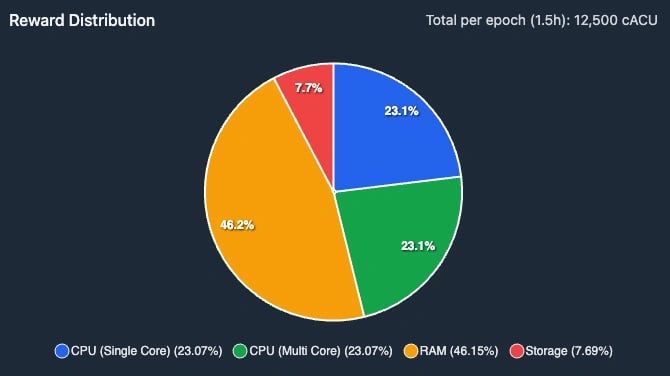
In the Acurast network, compute refers to the processing capacity provided by smartphones running the processor application, primarily determined by hardware components such as CPU, RAM, and storage. A provider’s total available compute, referred to as current compute, represents the aggregated performance of all participating devices and is measured across four benchmark metrics: CPU single-core performance, CPU multi-core performance, memory capacity, and storage.
These metrics are evaluated through periodic benchmark tests conducted automatically on each device, with results recorded and used to determine performance for each reward period. The measured values form the basis for reward distribution and potential penalties, rather than simplified aggregate scores displayed in user interfaces. Each benchmark category is assigned a specific weighting, which influences how rewards are allocated across different performance dimensions, with memory typically carrying the highest relative importance. [3]
The Acurast architecture is organized into three layers: consensus, execution, and application. This modular structure allows for decentralized application deployment with privacy and verifiability, while supporting interoperability across Web3 and Web2 ecosystems.
The consensus layer matches developer deployments to available processors via the Orchestrator and maintains a reputation system that tracks processor performance and incentivizes reliable behavior. The execution layer includes processor runtimes—such as the Acurast Secure Hardware Runtime (ASHR) and the Acurast Zero-Knowledge Runtime (AZKR)—and the Universal Interoperability Layer, which provides modules for interacting with different blockchain and web environments. The application layer hosts Web2 and Web3 applications, enabling use cases that require confidential and decentralized computation. The protocol is implemented using a Substrate runtime with multiple pallets to support network functionality. [6]
The Acurast Orchestrator is a core component of the network’s consensus layer responsible for coordinating the allocation of computational resources between developers and compute providers. It manages deployment scheduling and matches available processing capacity with application requirements through mechanisms such as auctions and resource advertisements. Each agreement between parties is defined as a deployment, which specifies the executable instructions, scheduling parameters, and output configuration.
Compute costs within the network are defined by developers at the time of deployment and are paid in ACU or its derivatives as transaction fees. These fees are used for network operations rather than being transferred directly to compute providers. Instead, providers are compensated through a reward system tied to staking pools, where execution activity contributes to performance metrics that influence reward distribution. This structure separates fee payments from rewards while maintaining incentives for participation in computation. [9]
The ACU token is the central component of Acurast’s economic model, enabling participation, coordination, and governance within the network. It is used to facilitate core protocol functions, including the payment of network fees required for transaction processing and orchestration, helping maintain system efficiency and prevent misuse. The token also supports incentivizing compute providers by rewarding them for contributing resources to the network via a structured issuance mechanism.
In addition, ACU helps secure the network through staking, where participants provide collateral to support reliable, verifiable compute services while earning rewards. The token is also used for governance, allowing holders to participate in decision-making on protocol development and treasury management. Overall, ACU serves as the primary mechanism for aligning incentives and maintaining the decentralized compute network's operation. [8]
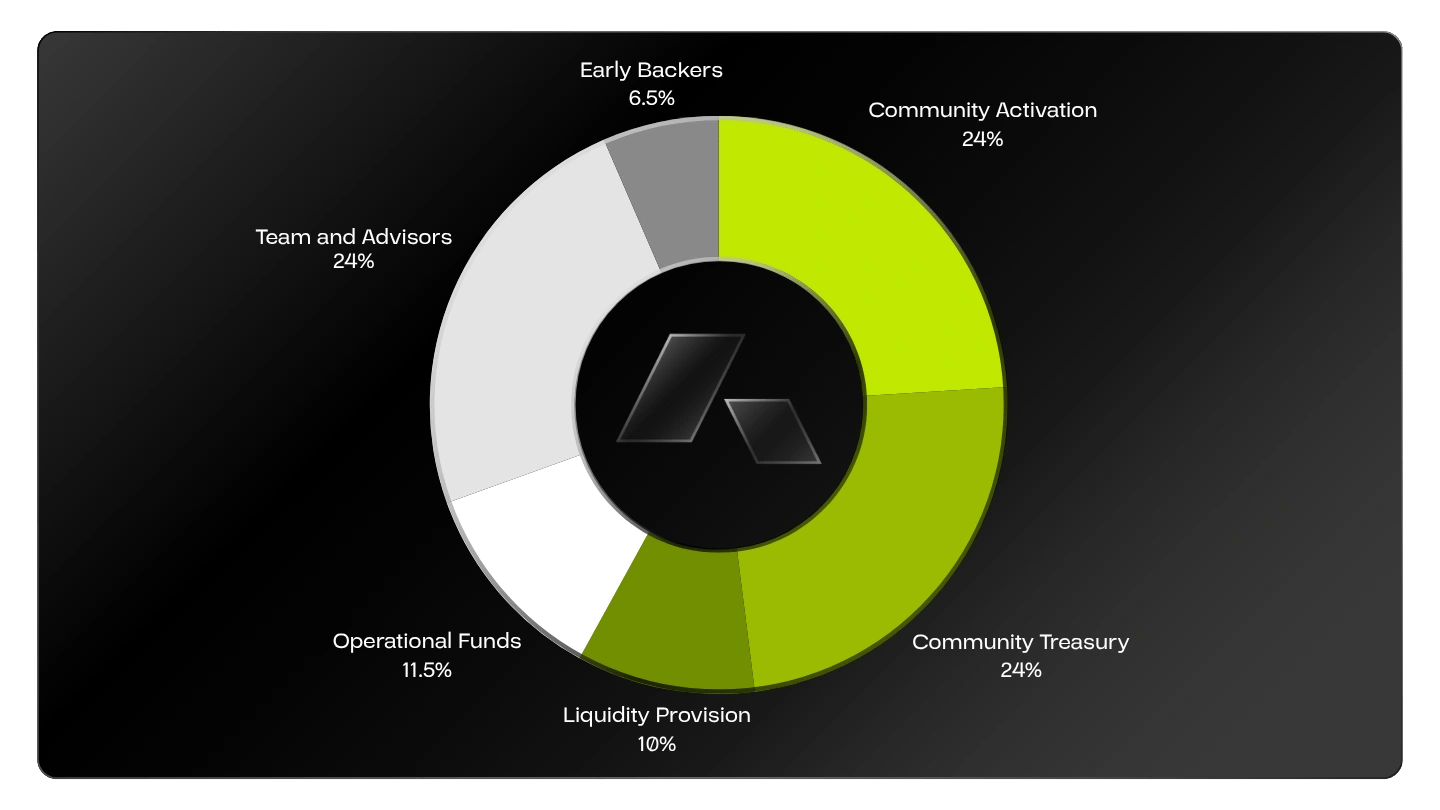
ACU has a total supply of 1B tokens and has the following allocation: [8]