Subscribe to wiki
Share wiki
Bookmark
Ajit Tripathi
The Agent Tokenization Platform (ATP):Build autonomous agents with the Agent Development Kit (ADK)
0%
Ajit Tripathi
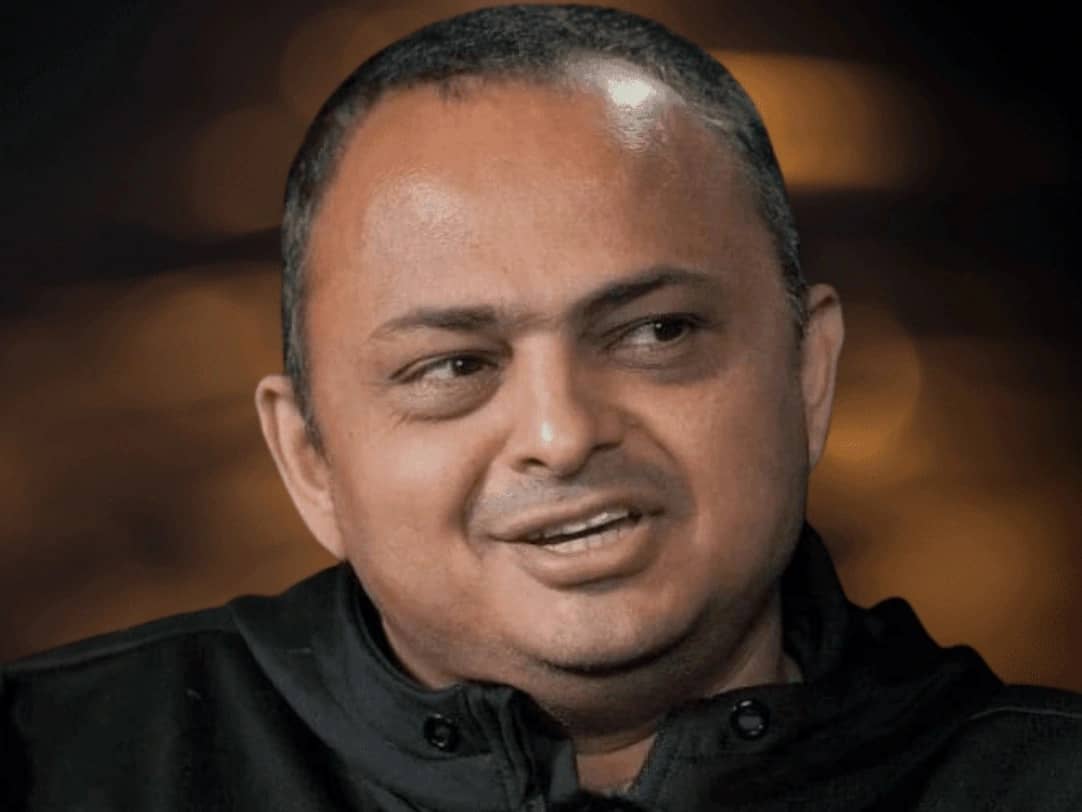
Ajit Tripathi is a decentralized finance (DeFi) expert and technology executive known for his work in bridging traditional financial institutions (TradFi) with blockchain-based financial systems. His career includes leadership roles at major financial firms like Goldman Sachs and Barclays, as well as at foundational crypto projects, including ConsenSys, Aave, and Polygon Labs. [2]
Education
Tripathi earned a Bachelor’s degree in Electrical, Electronics, and Communications Engineering from the Indian Institute of Technology, Kanpur, in 1997. He later attended the International Institute for Management Development (IMD), where he completed his Master of Business Administration (MBA) in 2010. [1]
Career
Early Career and Traditional Finance
Tripathi began his career as a software engineer, working from 1997 to 2005 as a Java and C++ developer for firms such as Bellcore, Eclipse Networks, and Infosys, with positions based in New Jersey and Bengaluru, India. In 2005, he transitioned to institutional finance, joining Goldman Sachs as a vice president. In this role, he managed engineering and modeling teams across Tokyo, New York, and Bengaluru, where he was responsible for delivering risk and compliance systems. After earning his MBA, Tripathi joined Barclays Capital in 2010 as a director. For the next five years, he oversaw large engineering teams tasked with building and maintaining the bank's market
- and credit-risk systems. [4]
Transition to Blockchain and Crypto
In 2015, Tripathi moved into the nascent blockchain industry, joining PwC as a director. There, he built and led the firm’s global blockchain practice, focusing on advisory work, project delivery, and enterprise engagements. He then joined ConsenSys in 2017 as a partner, where he led business development and sales for the banking and financial services sector and contributed to the firm's organizational strategy. In an October 2025 post, Tripathi reflected on this period, noting that after leaving ConsenSys in 2018, he faced significant financial challenges before finding his footing in the crypto space.
Beginning in 2019, Tripathi became an active angel investor in early-stage cryptocurrency startups, offering guidance on growth, strategy, and operations. In 2020, he held a brief consulting role at Binance, focusing on business development to establish banking partnerships in the UK and Europe and supporting the company’s fiat on-ramp and regulatory compliance initiatives. [4]
Leadership in DeFi
Later in 2020, Tripathi joined the DeFi lending protocol Aave as its Head of Business Development. In this role, he was instrumental in establishing institutional and retail partnerships, contributing to protocol strategy, and supporting broader ecosystem growth. A key achievement during his tenure was his contribution to the launch of Aave Arc, a permissioned liquidity market designed to allow institutional clients to engage with DeFi in a compliant manner.
From 2022 to early 2024, Tripathi served as a strategic advisor at Polygon Labs, where he supported the founders' office with recruitment, market research, strategic positioning, and key relationships. He subsequently became the Head of Financial Institutions at Avail, a position he held until early 2026. In parallel, starting in 2024, he took on the role of general manager at Hadron Founders Club, where he oversees organizational development, operations, events, and founder support activities. He is also a supervisor at the WalletConnect Foundation.
In 2026, Tripathi began contract work with Eigen Labs, the organization behind the EigenCloud project. His responsibilities include contributing to community engagement, ecosystem development, and select product-related initiatives. [4]
Interviews
From Tether to STBL
In a September 2025 interview hosted by Tripathi, Reeve Collins discussed the development and evolution of stablecoins, focusing on his creation of Tether. Collins described his early career in the internet industry and his 2013 introduction to Bitcoin, which inspired the concept of a blockchain-based, dollar-pegged currency. He outlined initial challenges in promoting Tether, including regulatory skepticism, and explained how it gained adoption as a tool for inter-exchange settlements and dollar-based trading pairs, particularly during the 2017 ICO boom. The discussion also covered emerging innovations in stablecoins, including interest-earning “universal” designs, and concluded with Collins reflecting on blockchain’s broader potential to transform financial services and advance global financial inclusion. [7]
Blockchain Innovators
In a December 2021 interview with Web3 Labs, Ajit Tripathi discussed his professional background and his decision to join Aave ahead of its wider institutional adoption. The conversation examined the rapid pace of innovation in decentralized finance, with a focus on Aave’s efforts to develop products suited for institutional use, including permissioned platforms and compliance-oriented infrastructure. Tripathi addressed the importance of regulatory understanding and engagement, the potential for traditional financial institutions to benefit from on-chain transparency and automation, and emerging areas of development, including derivatives, real-world asset integration, and enhanced security and privacy mechanisms. [5]
Crypto Regulations
In a November 2021 interview with Cointelegraph, Tripathi discussed the changing perception of cryptocurrency and decentralized finance, noting increased engagement from financial institutions compared with earlier stages of the industry. He described the growth of DeFi alongside broader adoption of crypto-related services and addressed the role of regulation in supporting mainstream integration. Tripathi emphasized the need for informed dialogue between regulators and industry participants, outlined Aave’s community-based governance and decentralization model, and discussed efforts to manage technical and financial risk through audits and testing. The interview also covered Aave’s longer-term goal of building a decentralized financial infrastructure that can interoperate with existing systems while increasing community control over protocol development. [8]
Presentations
DeFi for Financial Institutions
At the Smart Contract Summit in August 2011, Tripathi discussed institutional engagement with decentralized finance, focusing on how financial institutions were beginning to explore DeFi technologies for yield generation and broader participation. He described conversations with banks, asset managers, and regulators about integrating permissionless systems with compliance requirements such as KYC and AML, and noted that institutional interest extended beyond yield to areas including governance, tokenized assets, and risk management. Tripathi highlighted recurring concerns about security, regulation, and scalability, while emphasizing decentralization as a structural advantage for transparency and reducing systemic risk. He concluded by outlining the growing recognition among institutions that open, permissionless ecosystems enable innovation at a pace difficult to replicate in traditional financial systems. [6]
See something wrong?
The Agent Tokenization Platform (ATP):Build autonomous agents with the Agent Development Kit (ADK)