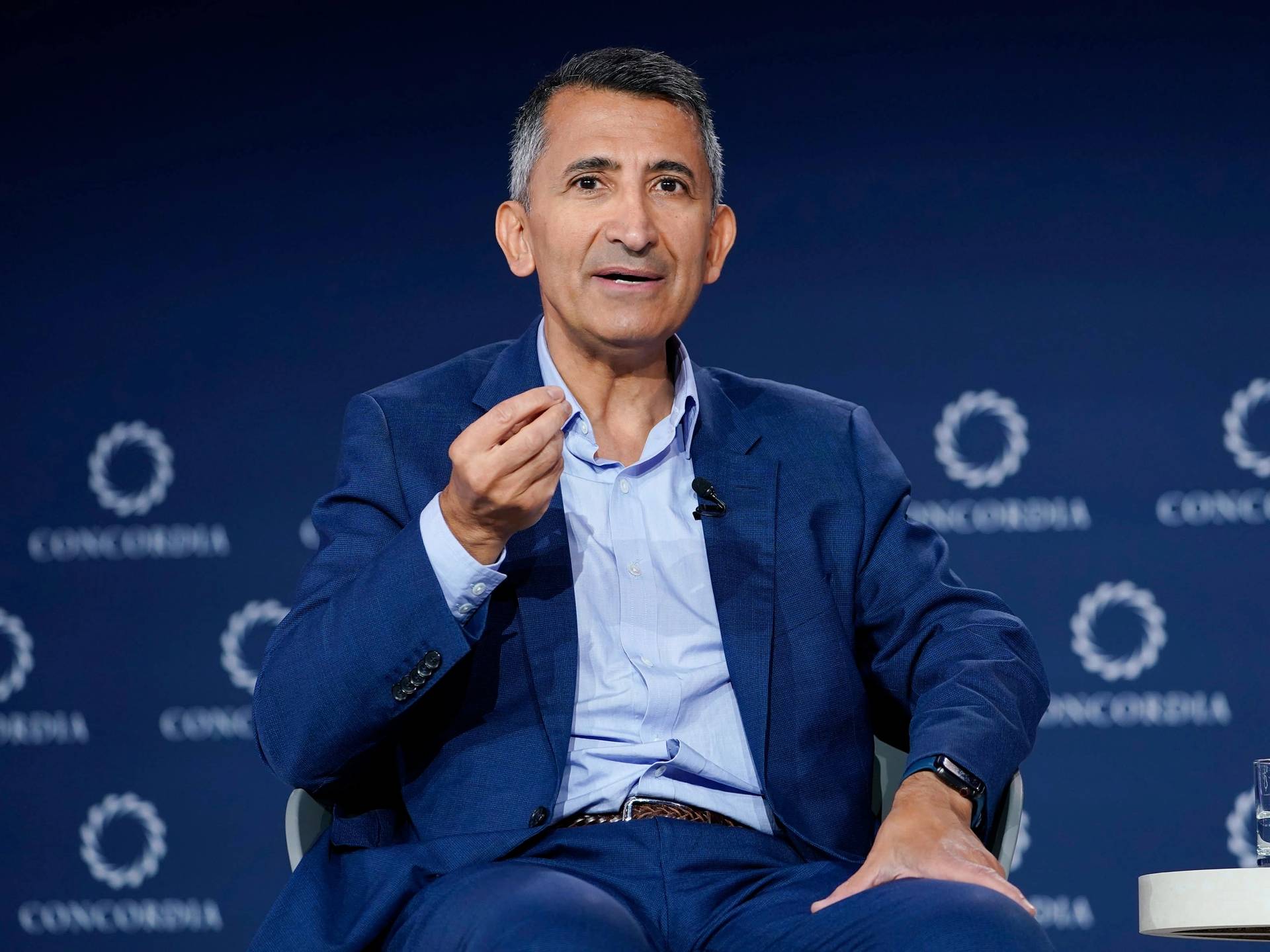
Faryar Shirzad
Faryar Shirzad is the Chief Policy Officer at the cryptocurrency exchange Coinbase [1]. He has an extensive background in international economic policy, having served for 15 years as a partner and Global Co-Head of Government Affairs at Goldman Sachs and held several senior positions in the George W. Bush administration, including on the National Security Council [2]. At Coinbase, he leads the company's global engagement with lawmakers and regulators, advocating for new legal frameworks for the digital asset industry.
Early Life and Education
Faryar Shirzad was born in London, England, in 1965 to Iranian parents [3]. His father, Nasser Shirzad, was a journalist and diplomat for the state of Iran prior to the 1979 revolution. In 1978, his family moved to the United States, and he grew up in McLean, Virginia [1]. He is fluent in Persian (Farsi).
Shirzad attended the University of Maryland, College Park, where he earned a Bachelor of Science degree in Finance from the Robert H. Smith School of Business in 1986 [4]. He went on to receive a Master of Public Policy from the John F. Kennedy School of Government at Harvard University and a Juris Doctor from the University of Virginia School of Law [5].
Career
Shirzad's career has been characterized by its progression through senior roles in law, government, and finance, often at the intersection of international trade and economic policy, which served as a basis for working with digital assets.
Early Legal and Political Career
After graduating from law school, Shirzad began his career as an attorney at the law firm Skadden, Arps, Slate, Meagher & Flom, where he worked in the international trade group [2]. He also served as a policy advisor to Bob Dole's 1996 presidential campaign. In 1997, Shirzad joined the staff of the U.S. Senate Committee on Finance as its International Trade Counsel, serving under Chairman William Roth. In this role, he was the committee's lead legal advisor on international trade policy and legislation [6].
George W. Bush Administration
Shirzad held several influential positions during the administration of President George W. Bush. On May 21, 2001, he was nominated to be Assistant Secretary of Commerce for Import Administration, and he was confirmed by the U.S. Senate on August 3, 2001 [7]. He served in this post until March 2003, where he was responsible for the enforcement of U.S. trade-remedy laws, including anti-dumping and countervailing duties.
On March 13, 2003, he was appointed to the White House staff as Special Assistant to the President for International Economic Affairs, serving on the National Security Council (NSC) [8]. He was later promoted to Deputy Assistant to the President and Deputy National Security Advisor for International Economic Affairs. In this senior role, Shirzad coordinated U.S. international economic policy across government agencies and advised the President and National Security Advisor on all related matters, including trade, finance, development, and energy [9]. During his time at the White House, he also served as the U.S. G-8 "Sherpa," the President's personal representative responsible for preparing for the annual G-8 Summits [10].
Goldman Sachs
After leaving public service in 2006, Shirzad joined Goldman Sachs, where he spent nearly 15 years. He became a partner and served as the Global Co-Head of the Office of Government Affairs, managing the investment bank's public policy and government relations strategy globally [4]. On May 24, 2021, Shirzad announced on LinkedIn that his last day at the firm had been the prior Friday, stating, "After more than 15 years, it is hard to say goodbye... I am very proud of the team and function that we built, and the important contributions we made to the firm and our societies" [11].
Coinbase
Shirzad joined Coinbase as its Chief Policy Officer in May 2021, tasked with leading the company's global policy team during a period of increasing regulatory focus on the cryptocurrency industry [1]. In this role, he oversees engagement with lawmakers, regulators, and multilateral institutions to shape the evolving legal landscape for digital assets. His appointment was seen as a key step in professionalizing Coinbase's lobbying efforts in Washington, D.C., and other global capitals [12].
Policy Advocacy and Stances at Coinbase
As Chief Policy Officer, Shirzad has become a prominent public voice for the cryptocurrency industry, advocating for "clear rules of the road" to govern digital assets. His work focuses on establishing proactive regulatory frameworks through legislation rather than through enforcement actions.
Call for Regulatory Clarity
A central theme of Shirzad's advocacy is the argument that the U.S. needs to pass new, tailored legislation for digital assets rather than applying what he terms outdated securities laws. He has been a vocal critic of the U.S. Securities and Exchange Commission's (SEC) "regulation by enforcement" approach, describing it as "ineffective" and a barrier to innovation that harms U.S. competitiveness [2]. Following the 2024 U.S. election, Shirzad expressed optimism that the political environment was favorable for Congress to "quickly" adopt comprehensive crypto regulation [13].
Engagement with Regulators
Under Shirzad's policy leadership, Coinbase has formally engaged with U.S. regulators to request clearer guidelines. In July 2022, the company submitted a formal Petition for Rulemaking to the SEC, asking the agency to develop and adopt a workable regulatory framework for digital asset securities through a transparent, public process. The petition argued that existing rules are "incomplete and unsuitable" for the unique nature of digital assets [14]. In February 2025, Shirzad announced that Coinbase had sent letters to federal banking regulators, including the OCC and Federal Reserve, urging them to issue clear guidance to ensure that regulated crypto companies have fair access to banking services [15].
National Security and Economic Competitiveness
Shirzad frequently frames the need for clear U.S. crypto rules as a matter of national security and economic leadership. He has argued that a lack of regulatory clarity risks "off-shoring" cryptocurrency innovation, jobs, and technology to other countries, which could diminish U.S. influence and provide less visibility for law enforcement [16]. In a 2025 essay for Horizons journal, he linked blockchain technology to the advancement of "Economic Freedom in the Digital Age," arguing that its principles of decentralization and transparency offer solutions to institutional inefficiencies and lack of financial access [17].
Advocacy Initiatives and Stablecoins
In August 2023, Shirzad announced the launch of the Stand with Crypto Alliance, a non-profit advocacy organization aimed at mobilizing crypto users to advocate for pro-crypto policies and engage in the political process [18]. Shirzad has also been active in the policy debate around stablecoins, pushing back against claims from some in the banking industry that stablecoins threaten bank deposits and financial stability. He argues that this view is an attempt to "build regulatory moats to defend their profit streams from competition" and advocates for a federal regulatory framework to ensure the U.S. dollar's continued prominence in the digital economy [19]. In a July 2025 interview, he remarked on renewed legislative momentum, stating, "We lost 4 years, but the U.S. is back in the stablecoin game" [20].
Controversies
Shirzad's career, particularly his transition from senior government roles to top lobbying positions, has been a subject of public scrutiny.
"Revolving Door" Allegations
Watchdog groups and critics have frequently cited Shirzad's career path as a prominent example of the "revolving door" between government service and corporate lobbying [2]. In late 2023 and early 2024, Senator Elizabeth Warren accused Coinbase of hiring a "small army" of former government officials to "block, delay, and weaken" bipartisan efforts to regulate crypto. Shirzad publicly refuted these claims, describing them as a "willful misrepresentation" of the company's efforts. He argued that hiring officials with policy expertise is a standard and transparent part of the democratic process aimed at creating effective rules, not undermining them [21] [22].
Political Donations and Influence
Under Shirzad's policy leadership, Coinbase's political spending and donations from its affiliated PACs, such as Fairshake, have drawn criticism. Allegations of attempting to "buy influence" arose, particularly concerning the company's engagement with the Trump administration. In late 2025, after critics accused Coinbase of being part of a "corruption factory" following a donation to a fund supporting a project on the White House grounds, Shirzad responded publicly. He clarified that the contribution was made to the non-partisan Trust for the National Mall and stated that Coinbase's political engagement is bipartisan, with the goal of educating policymakers and achieving clear industry rules [23].
Affiliations and Memberships
Shirzad is a member of several foreign policy and international relations organizations.
He is also a frequent speaker at major financial and policy conferences, including the Milken Institute Global Conference and events hosted by the American Enterprise Institute (AEI) [5].
Awards and Honors
In 2010, Shirzad was a recipient of the Ellis Island Medal of Honor, which is awarded to American citizens who have distinguished themselves within their ethnic group while exemplifying the values of the American way of life [3].
Interviews
Regulatory Discussion at the 2026 World Economic Forum #01
On January 19, 2026, during the 2026 World Economic Forum in Davos, Faryar Shirzad appeared in a recorded discussion on the Coinbase YouTube channel concerning stablecoins, United States market structure legislation, and institutional participation in digital asset markets.
In his capacity as Chief Policy Officer, Shirzad described two concurrent developments: the expansion of institutional involvement in crypto-related services and ongoing legislative deliberations in Washington regarding regulatory frameworks for digital assets.
The discussion referenced recent collaborations between Coinbase and established financial institutions. These initiatives were presented as part of broader integration efforts involving brokerage services, stablecoin payment infrastructure, and the tokenization of financial instruments. Shirzad characterized these developments as examples of digital asset infrastructure being incorporated into existing financial systems.
A primary subject of the conversation was Coinbase’s withdrawal of support for a proposed U.S. market structure bill. Shirzad explained that the decision followed a review of the bill’s text and identified provisions that, in his assessment, raised regulatory and structural concerns. One issue highlighted was language affecting the Securities and Exchange Commission’s exemptive relief authority. Shirzad stated that this authority has historically been used by the SEC to address emerging technologies within existing regulatory structures. He indicated that limiting such authority could affect how digital asset and tokenization initiatives are supervised.
The discussion also addressed legislative matters relating to stablecoins. Shirzad referred to the Genius Act, which had established parameters for stablecoin issuance and distribution within the United States. He noted that certain banking groups had sought revisions to elements of that framework during subsequent legislative negotiations. According to Shirzad, these developments formed part of the broader policy debate surrounding digital asset regulation.
Another issue examined was the division of regulatory oversight between the Securities and Exchange Commission and the Commodity Futures Trading Commission. Shirzad explained that each agency is overseen by different congressional committees, which can introduce procedural complexity when legislation spans both jurisdictions. He indicated that questions concerning non-security digital tokens and agency coordination were part of the legislative discussions.
Regarding future regulatory direction, Shirzad described a two-track approach. The first involves pursuing statutory clarification through congressional legislation. The second consists of engagement with regulatory agencies to obtain interpretive guidance within existing legal authorities. He stated that both avenues were being pursued concurrently.
The conversation also included observations about technological development in blockchain systems. Shirzad outlined a distinction between applications focused on transactional efficiency, such as settlement speed, and those involving programmable financial functions. He noted that regulatory outcomes could influence how these technological capabilities are implemented within U.S. financial markets.
The discussion concluded with remarks indicating that legislative negotiations and regulatory engagement were ongoing, with continued dialogue among policymakers, financial institutions, and digital asset firms. [25]
Political Strategy and Crypto Policy #02
On February 6, 2026, Faryar Shirzad, Chief Policy Officer of Coinbase, appeared on the YouTube program Inside Influence, hosted by David Castigignetti and Brody Mullins. The discussion addressed the development of the cryptocurrency sector, regulatory engagement in the United States, and the relationship between digital asset firms and public policy.
Shirzad described cryptocurrency as a software-based system that enables peer-to-peer transfer of digital value. He compared blockchain networks to the early internet, noting that while the internet facilitated direct data exchange, blockchain technology allows for the transfer of unique digital tokens without reliance on centralized intermediaries. He referred to the publication of the Bitcoin white paper as a key moment in establishing a mechanism for digital asset transfer within decentralized networks.
The interview included an overview of Shirzad’s professional background, which includes service on the Senate Finance Committee, positions in the administration of President George W. Bush, and approximately 15 years at Goldman Sachs prior to joining Coinbase. He stated that Coinbase adopted a strategy of engaging with regulators and legislators at an early stage, with the objective of operating within existing legal frameworks while seeking greater regulatory clarity.
A substantial portion of the discussion focused on the regulatory environment during the Biden administration. Shirzad stated that the company and other industry participants faced enforcement actions from the Securities and Exchange Commission, as well as banking-related restrictions affecting firms associated with digital assets. He indicated that these developments led to expanded political activity by industry participants, including support for the creation of the super PAC Fairshake.
Shirzad also referenced the role of grassroots advocacy. He cited the formation of the initiative “Stand with Crypto” and stated that millions of individuals had registered as supporters. According to Shirzad, internal and external polling suggested that cryptocurrency policy had become an issue of interest for a segment of voters during the 2024 election cycle. He stated that these findings were shared with political campaigns.
The conversation addressed international engagement, including Coinbase’s participation in meetings associated with the World Economic Forum in Davos. Shirzad described these events as opportunities for dialogue with government officials, regulators, and business representatives from multiple jurisdictions. He also mentioned the establishment of Coinbase’s Global Advisory Council, composed of former public officials from various countries, which provides input on regulatory and geopolitical developments.
In discussing global financial systems, Shirzad stated that blockchain-based payment systems and stablecoins are being integrated into existing financial infrastructure. He suggested that some countries are evaluating digital asset frameworks as part of broader financial policy considerations. He compared this process to technological adoption patterns in other sectors, including the transition from landline to mobile telecommunications in certain regions.
The interview concluded with references to Shirzad’s family background and early experiences in the United States. These remarks were presented in the context of his professional trajectory across government, finance, and the digital asset industry.
Throughout the program, Shirzad described cryptocurrency as a technology sector that increasingly intersects with legislative, regulatory, and electoral processes at both national and international levels. [26]