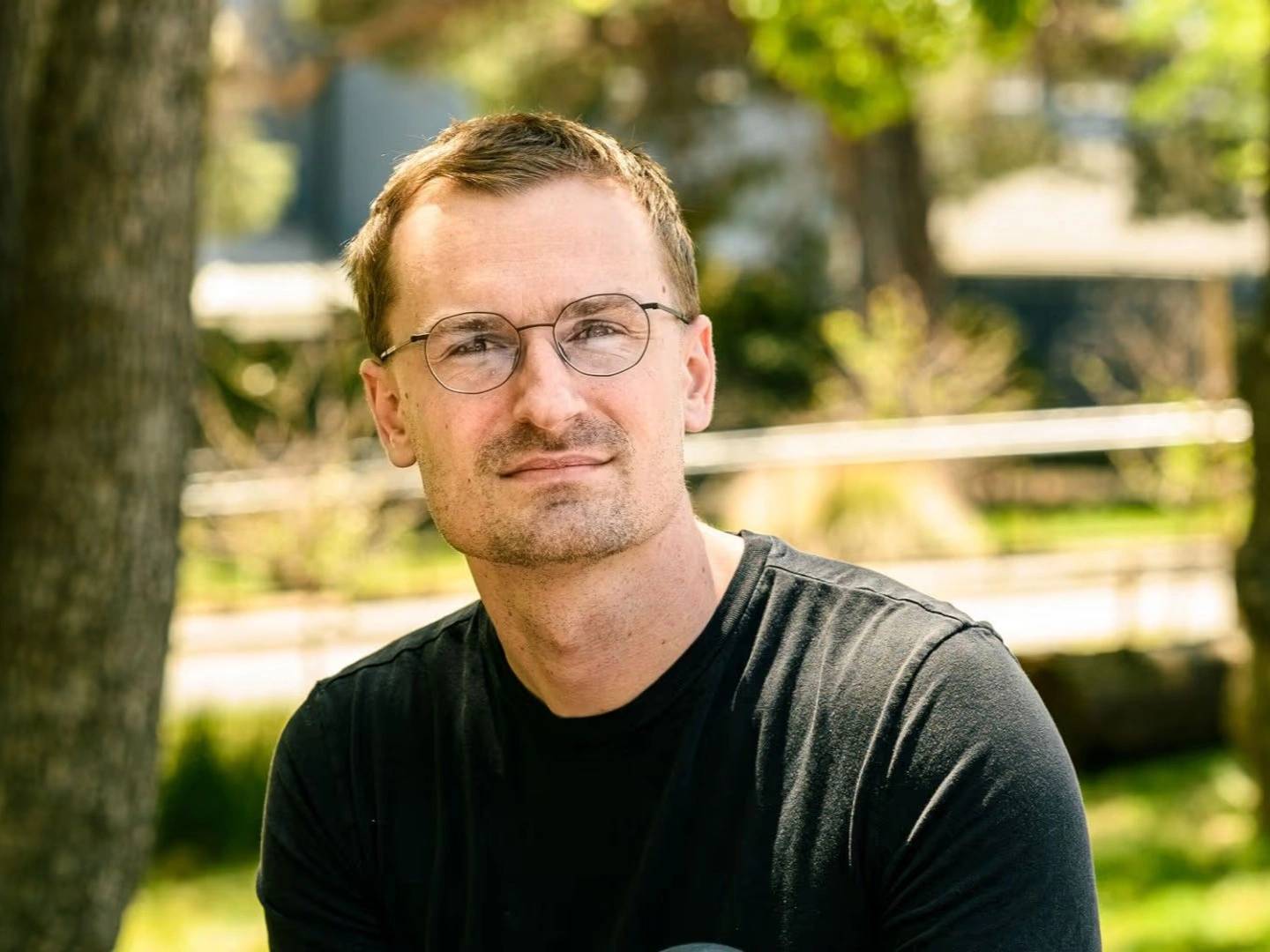
Jesse Pollak
Jesse Pollak is the creator of Base, an Ethereum Layer 2 blockchain incubated by Coinbase. He serves as a Vice President of Engineering at Coinbase, where he leads the Base and Coinbase Wallet teams and is a member of the company's executive team. [1] [2]
Education
Jesse Pollak earned a Bachelor’s degree in Computer Science from Pomona College, where he was involved in varsity soccer, Pomona Ventures, and the Hack! organization.
He previously attended Sidwell Friends School, serving as head of the Environmental Club, a member of the Robotics Team, and captain of the varsity soccer team. [18]
Career
Pollak's early career included a role as an engineer at BuzzFeed. He later co-founded Clef, a company that developed passwordless and two-factor authentication solutions for the cryptocurrency industry. In 2017, Coinbase acquired Clef, and Pollak joined the company as an Engineering Manager, initially leading a small team focused on the Coinbase website. [3] [4] [5]
From approximately 2017 to mid-2021, Pollak served as the Head of Consumer-Facing Engineering at Coinbase. In this capacity, he oversaw the engineering teams responsible for the development and scaling of the company's primary retail products, including the main Coinbase platform, Coinbase Pro, and Coinbase Wallet. During his tenure, his organization grew from a small group to a team of around 200 people. Following this role, Pollak transitioned to become Head of Protocols, where he led the initiative to create and launch Base, an Ethereum Layer 2 network incubated within Coinbase. The Base mainnet officially launched in August 2023. On September 30, 2024, Pollak announced that his role had expanded to include leadership of Coinbase Wallet, a position he had previously held, and that he had joined the Coinbase executive team. [6] [7] [8] [9] [18]
Base
As the creator and leader of Base, Pollak has overseen its development into a prominent Layer 2 network. Base is built on the open-source OP Stack, developed by the Optimism collective, and is designed to offer a secure, low-cost, and developer-friendly environment for building on-chain applications. Pollak's vision for the network is encapsulated in its core principles: to be "a bridge, not an island," emphasizing interoperability within the broader blockchain ecosystem. [10] [11]
Under Pollak's leadership, Base has pursued several strategic initiatives. At the BaseCamp conference on September 15, 2025, he announced that the team was "beginning to explore" the launch of a native network token. This marked a significant shift from the project's previous public stance, which had consistently stated there were no plans for a token. The stated rationale for this exploration was to accelerate the decentralization of the network and expand opportunities for builders. On the same day, Pollak also announced the launch of an open-source bridge to the Solana ecosystem, allowing for the transfer of assets between the two networks to enhance cross-chain utility. [10] [12]
Philosophy and Public Stances
Pollak is a vocal advocate for increasing blockchain adoption, frequently stating his mission is to "bring a billion people and a million builders onchain." His core belief, often summarized by the phrase "onchain is the next online," posits that blockchain technology represents the next evolutionary stage of the internet. He has also articulated a development philosophy he calls "the Base way," which emphasizes building in public and collaborating openly with the community. This approach was highlighted when he announced the early-stage exploration of a Base token, stating that despite advice to keep the plans private, the team chose to "do it in the open" and "figure it out together" with the community. [9] [12]
A central tenet of Pollak's strategy for Base is a "creator-first" approach. He has publicly stated that creators and developers are the ecosystem's top priority, arguing that financial and trading activity is "downstream of creativity." This philosophy suggests that by fostering an environment for innovation and building, a sustainable on-chain economy will naturally emerge. He prefers using the terms "onchain" and "offchain" over "decentralized" and "centralized," arguing the former are more accurate descriptors for modern systems that often contain elements of both. [13] [7]
Public Debates and Controversies
Sequencer Regulation
In September 2025, following comments from U.S. Securities and Exchange Commission (SEC) Commissioner Hester Peirce suggesting that Layer 2 networks with centralized components could face regulatory scrutiny as exchanges, Pollak publicly articulated a technical counterargument. He explained that the Base sequencer's function is to order transactions on a first-in, first-out basis and batch them to the Ethereum mainnet for settlement. He distinguished this from the function of a financial exchange's matching engine, which pairs buy and sell orders. Pollak emphasized that trade logic and execution occur at the application level within smart contracts built on Base, not at the sequencer level. He also noted that users retain the ability to bypass the Base sequencer and submit transactions directly to the network via Ethereum's Layer 1, a feature designed to ensure censorship resistance. [14]
"Content Coin" Campaign
In April 2025, Base's official account on the social media platform X initiated a marketing campaign where a post was automatically minted into a tradable token named "Base is for everyone" using the Zora protocol. The token experienced extreme price volatility, reaching a market capitalization of nearly $17 million before its value declined by over 90% within hours. The event drew criticism for its perceived irresponsibility. In the aftermath, a public debate emerged between Pollak and Alon Cohen, co-founder of Pump.fun, who argued that traders are the most important user group in crypto. Pollak defended his creator-first philosophy, reiterating that his focus remains on builders. When community members speculated that the campaign was coordinated to boost on-chain activity ahead of a token launch by Zora, Pollak denied any coordination, stating the campaign was developed and launched internally within a single day. [13]
Interviews
Building Base: Ecosystem Growth and Scaling #01
On May 15, 2023, Jesse Pollak was interviewed by Medha Kothari on Variant’s YouTube channel as part of the Variant Network series. In this conversation, he outlined his views on the creation of Base, Coinbase’s Ethereum Layer 2 network, and on broader approaches to scaling blockchain infrastructure.
Pollak stated that Base was designed as an open and permissionless environment, developed on the OP Stack to support a wide range of applications. He described technical measures related to decentralization, including multi-signature upgrade mechanisms, output proofs, and fault proofs. He also noted Coinbase’s involvement as a core developer of the OP Stack and its participation in an on-chain revenue-sharing arrangement with the Optimism Collective.
Drawing on his experience within Coinbase, Pollak discussed organizational growth, referencing the expansion of the company’s engineering team from a small group to more than 200 members. He emphasized the importance of gradual scaling, suggesting limits on the pace of hiring to avoid integration challenges. He further observed that centralized and decentralized entities can function within the same ecosystem, with Coinbase taking part as a centralized actor engaged in supporting decentralized networks.
Pollak also described a framework for developer participation in Base that expands outward in stages: starting with internal Coinbase teams, then extending to alumni and portfolio companies, followed by crypto-native developers, and finally reaching organizations outside the crypto sector. This approach was presented as a way to broaden adoption over time.
In addition, he referred to Coinbase’s shift from systems managed primarily off-chain toward infrastructure that is increasingly on-chain. He indicated that Base, together with the OP Stack, is part of this transition, which he envisioned as contributing to greater accessibility and interoperability among blockchain networks. Pollak referred to this as part of a longer-term development toward a “super chain” structure in which multiple networks share underlying infrastructure. [20]
Jesse Pollak on Coinbase Base #02
On July 16, 2025, Jesse Pollak participated in The Network State Podcast to outline his views on the creation and role of Base, Coinbase’s Ethereum Layer 2 blockchain. He described Base as an infrastructure aimed at enabling low-cost transactions while operating without a native token, with an emphasis on scalability and usability for developers.
Pollak explained that Base employs optimistic rollups and complementary validation mechanisms, including zero-knowledge proofs and trusted execution environments, to address both cost efficiency and decentralization. He characterized the system as one designed to increase the range of possible blockchain operations, referred to as “verbs,” such as buying, selling, minting, or staking, that can be implemented by developers across different applications.
He linked the development of Base to wider concepts of digital governance and network states, suggesting that blockchain technologies can provide frameworks for online communities, property rights, and alternative forms of organization. In this context, he mentioned initiatives such as the Network School and Base Batches, which are intended to provide training, mentorship, and support for developers in various regions.
The discussion also addressed the integration of real-world assets, including equities and stablecoins, into blockchain systems. Pollak presented this as a step toward aligning traditional markets with onchain infrastructure. He concluded with remarks directed at builders, noting the importance of technical training in areas such as statistics and computer science, and emphasized that participation in the blockchain ecosystem can take multiple forms, not limited to founding companies. [19]
Strategic Refocus of Base Toward Global Finance (2026)
In July 2026, Base creator and Coinbase executive Jesse Pollak outlined a major strategic shift for the Layer 2 network following what he described as a difficult start to the year for the ecosystem. Pollak acknowledged that Base’s earlier thesis that onchain social applications and creator-focused experiences would drive mainstream crypto adoption had not materialized as expected, stating, “we made the right bet on builders, but obviously the wrong bet on social.” [21]
He pointed to the decline of sectors including creator coins, social applications, and parts of the onchain creator economy as evidence that the market had evolved differently than anticipated.
Pollak said Base had consequently fallen behind in several areas that became increasingly important to the market, including perpetual futures, prediction markets, tokenization, and enterprise payments. In response, he shifted his attention away from consumer-facing applications and back toward core infrastructure development, contributing directly to initiatives including Azul, Beryl, B20, privacy technologies, and ledger improvements.
As part of the strategic transition, Pollak announced that responsibility for the Base App would return to Coinbase, where entrepreneur and investor Cobie would oversee its future development. Pollak stated that his focus would instead center on establishing Base as “the blockchain for global finance”, with ambitions for the network to become a foundational settlement layer for global economic activity.
Pollak identified three strategic priorities for Base in 2026: trading, payments, and AI agents. These include supporting tokenized assets and financial markets, expanding stablecoin payments for both consumers and enterprises, and enabling AI agents to participate directly in economic activity using blockchain-native payments infrastructure. He argued that “better money is more than enough” to drive mainstream adoption, highlighting stablecoins, prediction markets, perpetuals, and tokenization as the primary catalysts for onboarding the next billion users to crypto.
Despite the shift in strategy, Pollak reaffirmed Base’s commitment to developers and ecosystem participants, emphasizing that “builders are the backbone” of the network and reiterating support through initiatives such as the Base Ecosystem Fund, Base Layer, and Base Batches. Reflecting on Base’s evolution, he stated that the team would continue to “try stuff, make mistakes, and adapt in public” while pursuing its long-term vision of building an open global economy onchain. [21]