Subscribe to wiki
Share wiki
Bookmark
Pranav Garimidi
The Agent Tokenization Platform (ATP):Build autonomous agents with the Agent Development Kit (ADK)
0%
Pranav Garimidi
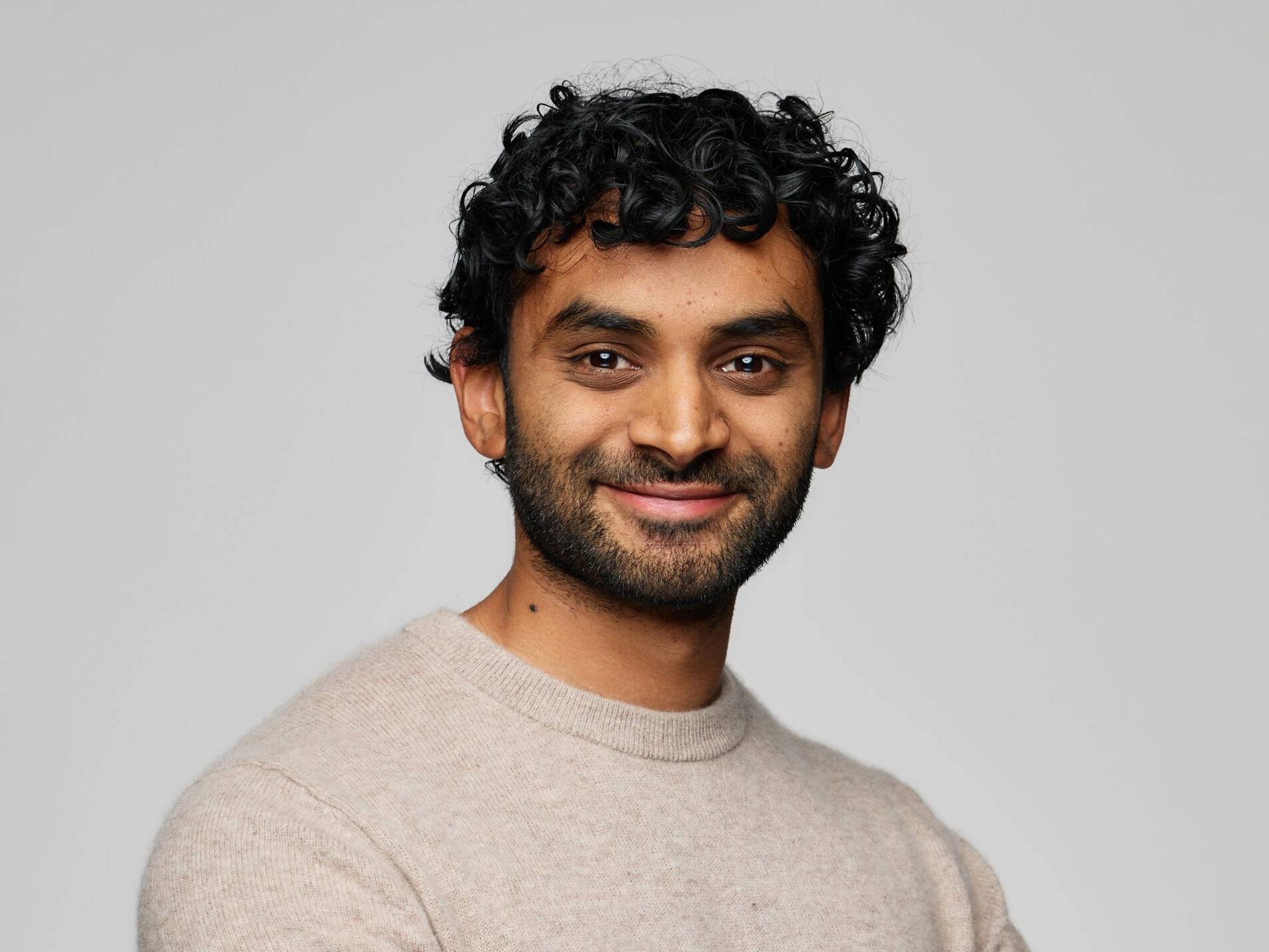
Pranav Garimidi is a technology professional and Research Partner at the venture capital firm a16z crypto. He is known for a wide range of contributions across blockchain technology, with research and commentary spanning mechanism design, Maximal Extractable Value (MEV), zero-knowledge (ZK) proofs, developer infrastructure, and the intersection of cryptocurrency and artificial intelligence. [1] [2]
Education
Pranav Garimidi graduated from Columbia University with a degree in Computer Science. [1]
Career
Pranav Garimidi's career history also presents multiple distinct paths leading to his work at a16z crypto. One path outlines a background in traditional finance and crypto investment, starting as an Investment Banking Analyst at Goldman Sachs from July 2019 to July 2021. Following this, he served as Vice President of Principal Investments at Galaxy Digital for just over a year before joining a16z crypto in August 2022 as an Engineering Partner. [4]
A different career trajectory highlights experience in software engineering at major technology companies. This includes internships as a Software Engineer at Facebook in the summer of 2020 and at Google in the summer of 2021. [1] In addition, he had an internship on the crypto team at Robinhood from June to September 2021 before he joined a16z crypto in August 2022. [2]
At a16z crypto, his role is described with several titles and responsibilities. As an Engineering Partner, he is responsible for conducting technical diligence on potential investments, providing technical guidance to portfolio companies on topics like protocol architecture and security, and researching emerging crypto technologies. [2] [4] In his capacity as a Research Analyst and Research Partner, he focuses on economic problems within blockchain protocols, including mechanism design, incentives, and market design. He has held a position at the firm since mid-2022. [1] [3]
Research and Areas of Focus
Garimidi's work covers a broad spectrum of technical and economic challenges in the blockchain space.
Mechanism Design and Game Theory
A primary area of Garimidi's research is mechanism design and algorithmic game theory, particularly as applied to blockchain economics. His work investigates the stability and fairness of transaction fee mechanisms, such as Ethereum's EIP-1559, especially in adversarial settings where block producers act as strategic participants rather than passive actors. He analyzes how block producers submitting their own transactions can manipulate fee markets and impact the intended behavior of the protocol. [1]
This focus extends to Maximal Extractable Value (MEV), where he analyzes its economic consequences and researches methods to mitigate negative effects like front-running and consensus instability. His academic work has also addressed the fair allocation of indivisible goods among multiple agents. [1]
Consensus and Decentralization
Garimidi is a proponent of advanced consensus protocol designs aimed at enhancing security and decentralization. He has presented research on "Multiple Concurrent Leaders" (MCL), a model where multiple proposers are elected to create blocks for the same slot simultaneously. He argues that this approach can significantly improve censorship resistance, as a transaction censored by one leader could be included by another. It may also help mitigate MEV by reducing a single leader's exclusive power and improve network latency by allowing geographically dispersed leaders to participate effectively. [5]
His research in this area also touches on geographic decentralization, which emphasizes the need for a blockchain's validators to be distributed across diverse physical and political jurisdictions to guard against regional outages, government coercion, and monopolistic control by data center providers. [5]
Developer Infrastructure and Zero-Knowledge Proofs
Garimidi has articulated the thesis that the cryptocurrency industry is in its "dial-up era," marked by poor user experiences and high costs. He argues that the primary bottleneck preventing the development of better applications is the underdeveloped state of developer experience (DevEx). He advocates for focused investment in developer infrastructure—including tools for smart contract development, data indexing, and wallet management—as the most critical step toward mainstream adoption. In a video for a16z crypto, he stated, "Our thesis is that if we can improve the developer experience, that will be the single most important lever to unlocking the next generation of applications in crypto." [2]
His technical work in this domain includes research into zero-knowledge (ZK) proofs and decentralized identity, which are considered critical technologies for improving privacy and scalability on blockchains. This work was reportedly conducted under the guidance of cryptographer Dan Boneh at Stanford. [2]
Crypto and Artificial Intelligence (AI)
Garimidi is also active in the emerging field at the intersection of crypto and AI. He has explained that the value proposition is not merely placing AI models on a blockchain, but using cryptographic techniques like ZK proofs to enable verifiable inference. This allows users to confirm that an AI model ran correctly without needing to trust the entity that ran it. He also explores the creation of transparent and decentralized economies for AI agents, contrasting this with the centralized models controlled by major technology companies. On this topic, he has said, "We're talking about a fundamental shift in how we build and interact with intelligent systems." [4] [3]
Publications and Academic Work
Garimidi has co-authored several academic papers focused on mechanism design and resource allocation.
-
“Transaction Fee Mechanism Design with Active Block Producers” (July 2023)
-
Co-authored with Maryam Bhrani and Tim Roughgarden, this paper analyzes the design of transaction fee mechanisms when block producers are strategic participants who can submit their own transactions. [1]
-
“Deterministic Budget-Feasible Clock Auctions” (2022)
-
Published in the SIAM Symposium on Simplicity in Algorithms, this paper was co-authored with Eric Balkanski, Vasilis Gkatzelis, Daniel Schoepflin, and Xizhi Tan and explores the design of a specific type of auction format. [1]
-
“PROPm Allocations of Indivisible Goods to Multiple Agents” (2021)
-
Presented at the International Joint Conference on Artificial Intelligence, this work with co-authors Artem Baklanov, Vasilis Gkatzelis, and Daniel Schoepflin addresses problems in the fair and efficient allocation of indivisible items. [1]
See something wrong?
The Agent Tokenization Platform (ATP):Build autonomous agents with the Agent Development Kit (ADK)