Jeff Yan
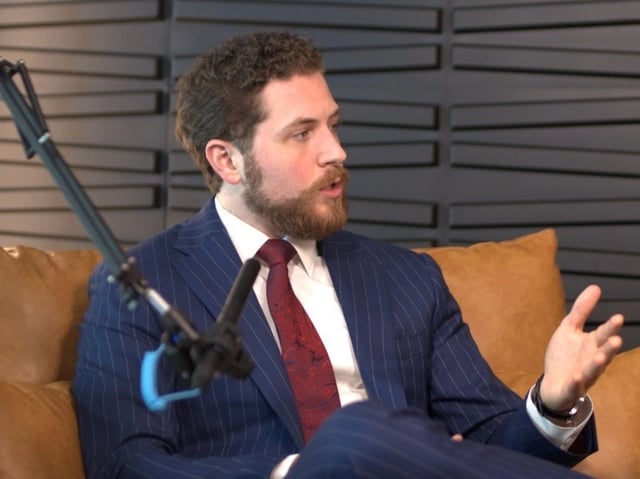
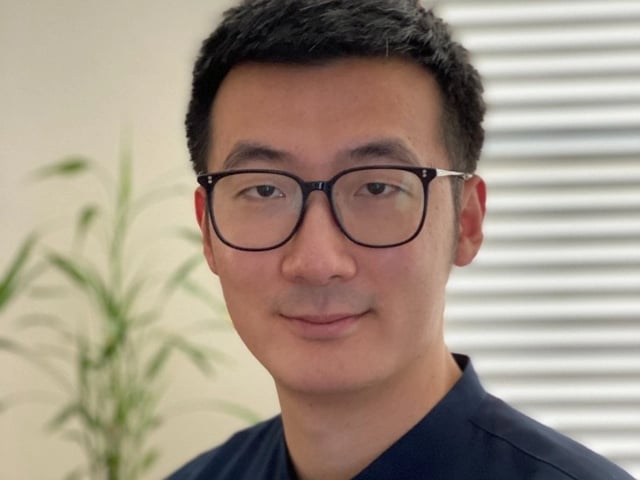
Jeff Yan is the founder of Hyperliquid, a decentralized exchange for perpetual futures built on a custom Layer 1 blockchain. He is the only member of the Hyperliquid team who does not use a pseudonym.[15][16] With a background in mathematics, computer science, and high-frequency trading, he transitioned from traditional finance to the crypto space. Yan bootstrapped Hyperliquid entirely with profits from his prior trading firm, rejecting all venture capital in order to build a community-focused platform.[13]
A long-form profile by Colossus (April 2026) provides additional detail on Yan’s trajectory and motivations. It highlights his view that projects must be built "for users, not VCs" and records a guiding family idiom he cites: "Beyond the person, there are greater people; beyond the sky, there is more sky."[19] In a February 2026 interview, he characterized Hyperliquid’s HYPE distribution as a $1 billion community airdrop that later grew to around $10 billion in value, arguing that the scale of this transfer increased the team’s responsibility to keep improving the protocol rather than celebrating the windfall.[20]
Education
While in high school, Yan competed in advanced mathematics and physics contests. In ninth grade, he was selected for the U.S. Mathematical Olympiad training team, placing him among the top 50 high school students in the country. He later taught himself physics and calculus after developing an interest in the subject from watching Richard Feynman's lectures. He earned a spot on the US Physics Olympiad team, winning a silver medal in Estonia and, in 2013, a gold medal at the International Physics Olympiad in Copenhagen, ranking 24th in the world at age 18.[15][17]
Yan later attended Harvard University on a full scholarship. As a freshman, he ranked first out of 150 students in the Data Structures and Algorithms course (CS 124). He graduated with a bachelor's degree in mathematics and a master's degree in computer science.[15][13][17]
Career
Yan completed internships at Google X, Tower Research Capital, and the self-driving car company Nuro.[15] After graduating from Harvard, he participated in the inaugural internship program at Hudson River Trading (HRT), a high-frequency trading (HFT) firm, where he consistently placed in the top two. His fellow interns included future founders of major AI companies, such as Alexandr Wang of Scale AI, Jesse Zhang of Decagon, and Scott Wu of Cognition, many of whom he knew from high school Olympic competitions.[18] He joined HRT full-time at the end of 2017 but left after eight months to pursue his own ventures, questioning the value he was adding to the world.[13][15]
Colossus' April 2026 profile adds timeline details and personal anecdotes. Yan moved to Puerto Rico at the end of 2019 and built the anonymous market-making firm Chameleon Trading from an initial $10,000, growing it rapidly over roughly two and a half years before closing it after the FTX collapse to pursue a decentralized alternative. He launched Hyperliquid at the end of February 2023. The profile also recounts that the Hyperliquid team relocated to Singapore by spring 2024, a decision made in part at Token2049 as regulatory uncertainty mounted. Colossus records Yan saying he left HRT because he "questioned the value" he was adding and wanted to build infrastructure that created broader user ownership and safety in markets.[19]
In April 2018, driven by the rise of cryptocurrency and Ethereum, he co-founded Deaux, a blockchain-based prediction market, at a Binance Labs incubator. The project, which pioneered the concept of off-chain matching with on-chain settlement, was eventually shut down after failing to gain user adoption, reaching only about 100 users.[15][1]
At the end of 2019, Yan moved to Puerto Rico and started the crypto market-making firm Chameleon Trading with an initial investment of $10,000. For two and a half years, the fund grew by several thousand percent annually, allowing Yan to achieve financial independence by age 27.[15] Chameleon was described in profiles as a large anonymous trading business in the crypto space.[15] The collapse of FTX and Terra in late 2022 served as a key catalyst for Yan, who shut down the profitable firm to build a superior decentralized alternative for traders seeking self-custody. This led him to launch Hyperliquid in February 2023. In the spring of 2024, the Hyperliquid team relocated from Puerto Rico to Singapore due to regulatory uncertainty in the United States. For his work on Hyperliquid, Yan was named to CoinDesk's "Most Influential 2025" list.[13][14][1][15]
Hyperliquid
Yan founded Hyperliquid in February 2023, motivated by the collapse of FTX and the market's need for a high-performance, self-custodial trading platform. The project was built by a team of 11 core contributors and was entirely bootstrapped with profits from Yan's trading firm, Chameleon Trading.[13][11]
Colossus' profile provides additional specifics about Hyperliquid’s early product choices and roadmap. The team introduced the Hyperliquidity Provider vault (HLP) in May 2023 as an on-chain vault running automated strategies to bootstrap liquidity and launched a points program on November 1, 2023 to reward real users and reduce farming. In January 2024 Yan published a four-line manifesto — "No investors. / No paid market makers. / No fees to the dev team. / No insiders." — formalizing the project's neutrality-first stance. The HYPE token airdrop occurred on November 29 (team allocation vested over time and no investor allocation was issued).[19] Yan later described this distribution as a $1 billion community airdrop that ultimately grew to roughly $10 billion in value, framing it as a significant wealth transfer to users that increased the team’s obligation to keep building durable infrastructure rather than optimizing for token price.[20]
The platform is built on a custom Layer 1 blockchain designed to support a fully on-chain order book capable of handling 200,000 transactions per second with near-instant finality. This architecture aims to provide a user experience comparable to centralized exchanges while maintaining the transparency and security of decentralized finance (DeFi).[3][13][11] Yan has subsequently framed Hyperliquid as a general-purpose financial protocol and on-chain liquidity infrastructure layer designed to "house all of finance" and serve as an "AWS of finance" for developers who want access to exchange-grade primitives without running an exchange themselves.[21][22]
Colossus records multiple usage and financial milestones by early 2026: the 11-person core team generated over $900 million in profit in the prior year, cumulative trading volume since 2023 exceeded $4 trillion, and Hyperliquid captured roughly 37% of the decentralized perpetuals market. The HYPE airdrop distributed approximately 31% of supply to about 94,000 early users with no vesting, an event Colossus characterized as a major wealth transfer to users; the token's opening airdrop value exceeded $1 billion and reached higher market capitalizations later.[19]
Key product and incident details from the Colossus profile include:
- HLP (May 2023): an on-chain, protocol-owned liquidity vault used to backstop liquidations and provide automated market-making strategies. During the October 10, 2025 market cascade, HLP backstop-liquidated billions and the vault earned roughly $40 million; earlier (late March 2025) a manipulation known as the "Jelly Jelly" incident forced validator action to delist and settle an attacker, highlighting both the chain's emergency tools and centralization questions around a small validator set.[19]
- Decentralized builder model and HIP-3: Hyperliquid opened permissionless market deployment (HIP-3), enabling third parties to stake HYPE (500,000 HYPE threshold) to deploy perpetual markets and capture a portion of fees. By early 2026 independent deployer markets accounted for a large share of total volume.[19][24]
- Product controls: the platform introduced latency mitigation measures (a "speed bump") and order-matching rules to reduce sniping and give market makers a fair chance to quote, and made the chain programmable (a VM) so developers could build financial applications that use on-chain order books and liquidity.[19]
By late 2025, Hyperliquid had grown to hundreds of thousands of users and a sizable share of decentralized perpetual futures trading. The native HYPE token launched in November 2024, with approximately 31% of the supply distributed to early users.[13][11]
Key developments on the platform include:
- HyperEVM: Launched on February 19, 2025, this Ethereum-compatible virtual machine allows developers to build financial applications directly on Hyperliquid’s blockchain.[2][13]
- Wallet Integration: In July 2025, Phantom Wallet launched its perpetuals trading feature, "Phantom Perps," using Hyperliquid as its core on-chain infrastructure.[2]
- Permissionless Markets (HIP-3) and Ecosystem Protocols: By mid-2025, notable HyperEVM ecosystem protocols included Felix Protocol, a collateralized debt protocol with over $400 million in assets, and HyperLend, a lending protocol with $380 million in assets. HIP-3, which enables other protocols to build and deploy their own perpetuals markets on the platform, launched on mainnet on October 13, 2025, with permissionless markets rolling out through October and November 2025.[2][13][11][24]
- USDH, Kinetiq, and Outcome Markets: As HyperEVM usage grew, the ecosystem added a native overcollateralized stablecoin (USDH), the Kinetiq intent and yield module, and outcome-market primitives that allow trading on event-based payouts, extending Hyperliquid’s stack beyond perpetuals toward a broader suite of on-chain financial products aligned with Yan’s goal of "housing all of finance" on a single protocol.[21]
In July 2025, Nasdaq-listed Sonnet BioTherapeutics announced the formation of a new $888 million entity named Hyperliquid Strategies Inc., which is focused on holding HYPE tokens.[11]
Liquidation System Criticism
During a market crash on October 10, 2025, Hyperliquid's liquidation system faced public criticism. In response, Yan published a technical defense explaining that the platform's liquidation models are designed to minimize systemic risk for all users rather than to maximize protocol revenue from individual liquidations. He also noted that during the high volatility, the platform maintained 100% uptime with zero bad debt.[13][2]
Philosophy and Approach
Across later interviews in 2026, Yan described Hyperliquid’s purpose as building a neutral, programmable financial protocol that can "house all of finance" on-chain and outlive any single company, rather than a closed trading application. He has argued that crypto must solve structural problems in finance before artificial intelligence further automates and concentrates control over markets, presenting credibly neutral settlement and liquidity as a necessary counterweight in the AI era.[21][20] In the same period he warned that crypto faces a "talent crisis" deeper than any market cycle and emphasized a preference for "zero-to-one" product builders who design new mechanisms over teams that chase short-term narratives or incremental feature lists.[23][22]
Rejection of Venture Capital
Yan has taken an unconventional approach to building Hyperliquid by rejecting all venture capital (VC) funding and opting to self-fund the project entirely using profits from his trading company. In early 2024, he turned down a VC funding offer that valued the project at $1 billion in order to maintain the protocol's neutrality. He has stated that his motivation was never primarily financial but to create something valuable, arguing that "If Bitcoin had taken a VC round, I really don't think it would be Bitcoin." According to Yan, VCs often foster an "illusion of progress" by inflating valuations without delivering real utility to users, and he believes VCs holding large stakes can become a "scar on the network." By avoiding external investors, he aimed to focus on what is best for the platform's users and community.[4][5][13][11]
Colossus documents Yan's January 28, 2024 public policy tweet and frames this stance as central to Hyperliquid's early choices: "No investors. / No paid market makers. / No fees to the dev team. / No insiders." He also reiterated the Bitcoin analogy and argued the approach was meant to preserve neutrality and long-term alignment with users rather than short-term growth driven by funders.[19]
This approach is reflected in the platform's tokenomics. When the HYPE token launched in November 2024, its supply was allocated to users (31%), community rewards (38.88%), core contributors (23.8%), and the foundation (6%), with the remainder dedicated to other grants. The significant user allocation was made possible by the absence of VCs demanding priority distribution. All protocol fees are distributed exclusively to liquidity providers and insurance funds, with the development team receiving no share. This strategy has been implemented by a team of 11 full-time members.[4][5][13][11]
Stance on Market Makers
In line with his independent approach, Yan has clarified that Hyperliquid has no private arrangements, profit-sharing deals, or special partnerships with market makers. He has dispelled rumors of such collaborations, stating that avoiding these deals, while potentially slowing short-term growth, was the right long-term decision to maintain the platform's integrity and independence. Yan believes that for a decentralized exchange, it is critical to avoid reliance on internal desks or designated market makers from the outset.[4][6][12]
Colossus amplifies this stance, quoting Yan on the rationale: neutrality and trust require avoiding insider allocations and private market-maker deals so that user interests come first.[19]
The platform's only liquidity pool is the Hyperliquid Pool (HLP), which is protocol-owned and open for any user to deposit into, ensuring no single entity controls it. This approach is part of a broader strategy to let users discover the platform organically and preserve its authenticity and decentralization, rather than driving superficial traction through partnerships.[4][6][12]
Advocacy for Transparent Markets
Yan is a proponent of transparent markets, arguing that they can lead to fairer and more efficient trading. He has defended Hyperliquid's model, which utilizes a fully visible on-chain order book. He challenges the notion that privacy is necessary for better trading execution, suggesting that many benefits of privacy actually stem from the ability to select counterparties. Hyperliquid's system applies this screening while keeping order information public, which helps prevent insider advantages from hidden deals. To address issues like latency arbitrage, the platform's order matching engine deprioritizes fast "taker" orders under certain conditions. This gives market makers a fair chance to update their prices, which encourages them to quote tighter spreads and ultimately provides better prices and liquidity for all users.[7][11]
In response to concerns that visible order data could expose large traders to front-running or liquidation hunting, Yan argues that providing equal access to data mitigates this risk. He explained that on centralized exchanges, insiders can exploit liquidation information, whereas on Hyperliquid, everyone sees the same data, which levels the playing field. He compared the platform's transparency to public ETF rebalances in traditional finance, where visibility does not prevent efficient execution. By distributing order data across many market makers, the system fosters a competitive environment that can lead to better pricing and lower slippage for all traders, including large "whales."[7][11]
In Colossus Yan framed the project-level choice as: "Are you building a finance super app, like Robinhood, or are you building a financial system?... I think an accessible financial system is a better outcome for the world."[19]
Personal Life and Values
Yan is a first-generation Chinese-American who was raised in Redwood Shores, California. His parents, who immigrated from China, divorced when he was in the third grade, and he was raised by his single mother, an accountant. He credits her with instilling in him a guiding principle from a Chinese idiom: "There are people beyond people, and heavens beyond heavens." He speaks some Chinese but is more fluent in English, particularly for technical subjects.[15][17]
Colossus adds further personal color. It notes that he grew up in Redwood Shores with a younger sister, credits his mother’s idiom ("Rén wài yǒu rén tiān wài yǒu tiān") as a guiding idea—translated in the profile as "Beyond the person, there are greater people; beyond the sky, there is more sky"—and recounts personal habits such as a minimalist wardrobe (multiple copies of the same athletic outfit), cutting his own hair, and intensive training routines. The profile also records a moped accident in Puerto Rico that left a scar on his face and notes the security measures Yan adopted after becoming a public figure, including relocating his residence and traveling with personal guards.[19]
In interviews, he has described his worldview as a blend of complementary Eastern and Western values. He credits this dual perspective for combining the "very American way of thinking"—dreaming big and not accepting the status quo—with traditional Eastern values of "humility, doing more than talking, and a strong work ethic." Yan is not motivated by money and lives a minimalist lifestyle, wearing the same outfit daily and cutting his own hair to save time. He maintains an intense work schedule of at least 14 hours per day, sometimes up to 100 hours a week, believing that people are "generally too soft."[12][15]
Personal Safety
Due to his increased public profile as the founder of Hyperliquid, Yan has faced personal safety concerns. Following an incident where he was followed into his apartment elevator, he took significant security measures, including relocating his residence, hiring bodyguards, and being accompanied by two private security personnel when he goes out. The company also moved its office from a co-working space to a more discreet location to address these concerns.[16] Colossus also notes additional security precautions taken after several incidents and the moped accident in Puerto Rico.[19]
Interviews
In a February 2026 appearance on the When Shift Happens podcast, Yan reflected on Hyperliquid’s HYPE launch as a $1 billion community airdrop that later grew to about $10 billion in value and said the team "went straight back to work" rather than celebrating, arguing that the magnitude of the transfer heightened their responsibility to users. He used the episode to argue that crypto "must fix finance before AI takes over," presenting on-chain, transparent infrastructure as a way to preserve fair access to markets in a world where more financial decision-making is delegated to algorithms and large institutions.[20][21]
In a separate 2026 interview hosted by VALR, Yan said that crypto’s "talent crisis is deeper than any market cycle," arguing that the industry’s limiting factor is a shortage of mission-driven engineers and product builders willing to work through down markets. He contrasted this with teams he views as "feature-chasing" and described his preferred approach as "zero-to-one" product building focused on novel mechanisms and infrastructure, such as Hyperliquid’s on-chain order book and HyperEVM, rather than marginal improvements to existing designs.[23][22]
WuBlockchain Podcast
In an August 2025 interview on the WuBlockchain Podcast, Yan elaborated on Hyperliquid's foundational principles and future direction. He reiterated that the project was entirely self-funded, driven by a desire to build something valuable rather than for monetary gain, and to ensure ownership was community-driven. He criticized the common VC fundraising model in crypto as creating "fake progress," where success is measured by fundraising rounds rather than user value. Yan explained that the decision not to list the HYPE token on centralized exchanges stemmed from a lack of capacity and a "laser focus" on core development, trusting that good technology would eventually be listed organically.[12][5]
He also discussed the team's small size of 11 people, emphasizing a selective hiring process focused on finding smart, driven individuals with high integrity, noting that hiring the wrong person is "much worse than not hiring anyone at all." He described his management style as hands-on with technical details but not micromanaging, preferring to give team members full ownership of challenging tasks. Looking ahead, Yan stated that Hyperliquid is transitioning from an application to a protocol, with the goal of making the blockchain a performant and scalable foundation for others to build financial products like stablecoins and tokenized assets. He confirmed Hyperliquid itself would not be issuing these products.[12][6]
Colossus Profile (Apr 2026)
Colossus published an in-depth profile of Yan and Hyperliquid in April 2026 that synthesizes his personal history, product decisions, and the project's early outcomes. Key themes include a shift from trading to building public infrastructure, a deliberate refusal of venture capital and market-maker deals to preserve neutrality, and product choices that favor on-chain transparency and composability (HLP, points program, HIP-3 and builder codes). The profile documents timeline milestones (Hyperliquid launch February 2023; HLP May 2023; points program November 1, 2023; public manifesto January 28, 2024; HYPE airdrop November 29) and summarizes growth metrics and notable incidents such as the "Jelly Jelly" manipulation and the October 10, 2025 market cascade.[19]
Notable quotes from the Colossus profile:
- "Beyond the person, there are greater people; beyond the sky, there is more sky."[19]
- "If Bitcoin had raised VC rounds, I really don't think it would be Bitcoin."[19]
- "Are you building a finance super app, like Robinhood, or are you building a financial system?... I think an accessible financial system is a better outcome for the world."[19]
Winning in Crypto
Yan shared insights into developing Hyperliquid’s decentralized platform to disrupt traditional finance systems on the When Shift Happens podcast. His journey began with experimenting in crypto trading, eventually realizing the potential for decentralized finance (DeFi) after centralized exchanges like FTX collapsed. Hyperliquid, which provides a user-centric platform, avoids typical startup approaches like raising funds from VCs or incentivizing market makers.
Instead, the team prioritizes creating a product that users love, building from first principles. Despite the challenges and risks, Yan is committed to pushing DeFi forward, believing that offering better user experience and truly decentralized systems is the path toward real market change.[8]
Better Perp DEX
On the 0xResearch podcast, Yan discussed the development of Hyperliquid’s decentralized perpetual exchange (perp DEX) and the company’s expansion into launching a Layer 1 blockchain. Initially focused on building a successful perp DEX with a strong user base, Hyperliquid leveraged its team's background in quantitative trading and low-level infrastructure to solve technical challenges such as liquidity and slippage, ensuring a competitive edge over centralized exchanges.
Yan explained that the Layer 1, initially built to support their DEX, now serves as a broader infrastructure for financial ecosystems, attracting users and liquidity. He emphasized the importance of custom-built solutions like the Vault system, which allows users to create decentralized copy-trading strategies. While initially not part of the plan, Hyperliquid's pivot to an Layer 1 was influenced by the realization that existing decentralized platforms were insufficient, particularly following the collapse of FTX. This shift allowed them to create a platform capable of scaling decentralized finance to match traditional finance.[9]
Panels
DEXplosion
At TOKEN2049 Singapore 2023, several DEX founders discussed the growth and challenges of DEXs post-FTX. Yan, Cindy Leo from Drift, Julian Koh from Ribbon Finance, and Suyang Yang from Circuit shared insights into their platforms and the broader DEX landscape. They identified liquidity as a major barrier for DEXs to compete with centralized exchanges (CEXs), noting that liquidity must significantly improve for DEXs to attract institutional traders and power users. They also highlighted challenges such as long onboarding times, the need for smoother user experiences, and the importance of censorship resistance and transparency in the decentralized space.
The founders emphasized that despite these hurdles, DEXs offer key advantages like better privacy, community ownership, and security. They also discussed technical decisions, such as building on custom Layer 1 or Layer 2 solutions to avoid congestion and maintain performance during market volatility.[10]