Leonard (Aster CEO)
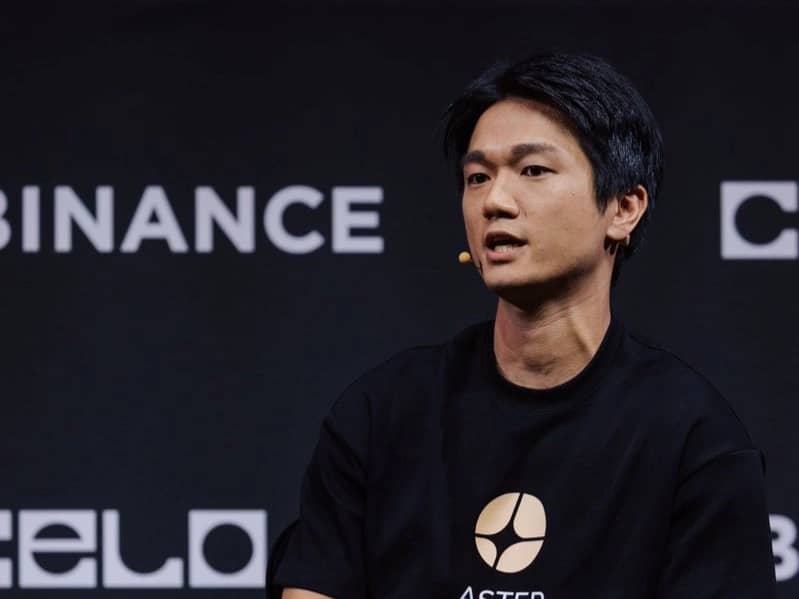
Leonard is the pseudonymous co-founder and Chief Executive Officer of Aster, a decentralized finance (DeFi) project that evolved from a decentralized exchange (DEX) into the development of a privacy-focused Layer 1 blockchain known as Aster Chain. [1] Operating with a low public profile regarding his personal background, Leonard is recognized for his product-focused leadership, a background in traditional finance and software development, and a close professional relationship with former Binance CEO Changpeng "CZ" Zhao, who is an investor in Aster and a personal mentor to Leonard. [2] [3]
Career
Traditional Finance and Early Ventures
Before entering the cryptocurrency industry, Leonard spent approximately five to six years in traditional finance (TradFi). He began his career at an investment bank in Hong Kong, where he worked for about three years on high-frequency trading (HFT) infrastructure. [2] Following this role, he transitioned to software development, building a stock trading risk engine for global equity markets. [2] [4]
Leonard’s early entrepreneurial efforts included several ventures that ultimately proved unsuccessful but provided foundational experience. His first startup was a Peer-to-Peer (P2P) lending platform in China, which served as his introduction to blockchain technology. [2] He also developed a lending platform on the IBM Blockchain Hyperledger ecosystem, an experience he later described as choosing the "wrong ecosystem," and worked on a gaming and NFT platform that he considered "too ahead of its time." [3]
Entry into Crypto and Career at Binance
Leonard was an early participant in the cryptocurrency space, having invested during the Initial Coin Offering (ICO) boom of 2018 and taken part in the Ethereum ICO. [2] [3]
In 2019, he joined Binance as a Project Manager, where he was involved in the development and launch of new products. [5] [3] During his tenure, he worked directly with then-CEO Changpeng Zhao and gained experience in achieving product-market fit and adapting products to market demands. This period established the professional relationship that would later become a mentorship. [2]
Founding of Aster
After leaving Binance, Leonard was inspired by the potential of on-chain trading he observed on platforms like Uniswap, dYdX, and Hyperliquid. [2] [6] This led him to found Aster, which evolved from a previous perpetuals DEX project named Apollo X and was also formed through the merger of two other projects, Apollox and Astherus. The venture secured a seed investment from YZi Labs, a fund in which Changpeng Zhao is a major shareholder. [7] [6]
Role and Vision at Aster
As CEO, Leonard has guided Aster's strategy, identifying himself as a "builder" with a product-first approach. [1] His core philosophy is to replicate the user-friendly interface, deep liquidity, and efficient performance of a centralized exchange (CEX) within a decentralized, on-chain framework. He has stated that he views large CEXs as Aster's primary competitors, rather than other DEXs, and aims to attract institutional and professional traders by offering the security of self-custody. [8] [9]
Leonard has articulated his vision for Aster in several public statements and interviews:
"Our goal for Aster is to bring together the best trading experience on-chain." [6]
"I think there are too many chains right now, to be honest, like we don’t need more of L1, but we do need a better decentralized trading experience." [10]
Strategic Evolution
Under Leonard's leadership, Aster has undergone a significant strategic evolution. The project began as a high-performance DEX on the BNB Chain, designed to solve issues like high gas fees and slow transaction speeds. [5] The project implemented a hybrid trading model with a "Simple Mode" where liquidity providers act as counterparties and a "Pro Mode" with an off-chain order book for trade matching. [6]
In late 2025 and early 2026, Leonard officially announced a major expansion of this vision with the development of the Aster Privacy Layer 1 Chain. [11] He explained the move as necessary to overcome the limitations of general-purpose blockchains and to fully realize the project's goal of a seamless and private trading experience. [8]
Aster Privacy L1 Chain
The Aster Privacy Layer 1 Chain is a proprietary blockchain designed specifically for financial applications, with a strong focus on user privacy. Leonard's vision for the chain is to "reshape the decentralized transaction experience" by making privacy a core feature. [7]
He has stated that privacy is a "fundamental right" for traders, necessary to protect trading strategies from being exposed on a fully transparent order book. [4] The chain is engineered to embed order book logic directly into the protocol layer, with a design philosophy compared to that of Zcash. It aims to combine a high-performance Central Limit Order Book (CLOB) with integrated privacy options, near-zero gas fees, and throughput comparable to a centralized database. The mainnet launch for the Aster Privacy Layer 1 Chain was scheduled for Q1 2026. [9]
Other Initiatives
Leonard has also guided other strategic initiatives at Aster, including:
- "Season 3" Strategy: A strategic phase announced to prioritize spot trading and enhance liquidity, accelerated by an increase in the ASTER token's spot trading volume. [10]
- Asset Expansion: Plans to expand offerings to include Real-World Assets (RWAs) like tokenized gold and stocks, and to improve liquidity for long-tail, small-cap assets. [2] [4]
- "Rocket Launch" Launchpad: An initiative to support and provide liquidity for early-stage projects listing on the Aster platform. [9]
- AI Integration: Exploration of using Artificial Intelligence (AI) to simplify the complexities of perpetuals trading for users. [2]
- Token Buyback Program: Confirmation of a flexible program to use a significant amount of project income for ASTER token buybacks, with a commitment to transparently log all transactions for community monitoring. [10]
Relationship with Changpeng Zhao
Leonard's professional relationship with Changpeng "CZ" Zhao is a significant aspect of his career and Aster's development. The two first met in 2021 and established a working relationship during Leonard's time as a project manager at Binance. [1] After Leonard founded Aster, CZ's fund, YZi Labs, made a seed investment in the project in 2023. [2]
Leonard publicly refers to CZ as a personal mentor and advisor who provides strategic guidance. [7] He has noted that CZ's advice on managing rapid growth was particularly valuable to the Aster team. [2]
Leonard described CZ's management style from their time at Binance:
"He's not just an investor; to me, he’s a mentor. His insights into product development and user focus have been invaluable." [1]
The investment from YZi Labs was clarified as an equity investment for a minority stake in the company, not a purchase of tokens. Any tokens YZi Labs would be eligible for were said to come from the team's 5% allocation. [12]
Public Communications and Controversies
Initially described as a "mysterious CEO" due to his pseudonymous and low-profile nature, Leonard became more public in late 2025. [13] He actively communicates project updates and his vision through the X handle . [2] His public appearances have included speaking at Binance Blockchain Week on the topic of "Perp DEXs and the Freedom to Trade” and confirming a collaboration with World Liberty Financial (WLFI). [14]
In September 2025, Leonard addressed community concerns regarding the on-chain concentration of ASTER tokens. In an interview with Mable Jiang of Trends, he clarified that on-chain data showing a small number of wallets holding 96% of the supply was misleading. He explained that many of these wallets were user deposit addresses, airdrop allocation accounts, or contained locked tokens not controlled by the team. Leonard asserted that approximately 80% of the total supply was locked on-chain and could be publicly monitored, with wallets holding airdropped tokens accounting for about 40% of the total supply. [12]
Interviews
Leonard on Privacy and the Development of Perpetual DEXs #01
On October 23, 2025, Aster founder Leonard participated in an interview with The Block x BNB Chain during a Korea Blockchain Week side event held at the Hanok House. The conversation, conducted by Kelvin Sparks, addressed the development of on-chain perpetual decentralized exchanges and Aster’s approach to the sector.
During the interview, Leonard described the development of perpetual decentralized exchanges as an incremental process shaped by earlier platforms. He referenced projects such as DDX, GMX, and Hyperliquid as examples of previous implementations that introduced different approaches to liquidity provision, order execution models, and trading infrastructure. Within this context, Leonard stated that Aster incorporates elements such as multi-chain compatibility and alternative collateral structures while operating within the broader decentralized derivatives market.
The discussion also addressed the relationship between transparency in blockchain systems and the privacy expectations of traders. Leonard noted that publicly visible order books can expose trading positions, which may allow other market participants to monitor or react to those positions. He indicated that this dynamic has led to interest in mechanisms that allow certain trading details to remain private while transactions are still verified on-chain. As part of this approach, Aster has implemented features including hidden orders and trading environments intended to limit the visibility of specific order details.
Leonard further stated that the project is exploring a Layer 1 blockchain design that may incorporate zero-knowledge proofs. According to his description, such an approach could allow users to confirm the validity of transactions without publicly revealing all associated trading information. Specific technical details were not provided during the interview.
The composition of the Aster development team was also discussed. Leonard described the group as including participants with different roles, such as holders, traders, and product managers. According to his explanation, this structure influences decisions related to platform parameters and risk controls.
The interview also referenced user feedback following Aster’s token generation event. Leonard stated that increased platform usage resulted in a larger volume of user input, which the team reviews when determining development priorities.
When asked about his own participation in trading, Leonard indicated that he primarily identifies as a holder rather than an active trader. He also stated that the platform includes different trading interfaces and leverage configurations intended to accommodate varying trading strategies.
Throughout the interview, Leonard described Aster’s development approach as focused on maintaining platform operation over multiple market cycles while continuing to adapt to changes in decentralized derivatives trading. [15]
Leonard on DeFi Infrastructure and Aster’s Development #02
On November 27, 2025, Leonard, chief executive officer of Aster, appeared on the WuBlockchain Podcast. During the interview, he discussed his professional background, the development of Aster, and his views on the structure and evolution of decentralized finance (DeFi).
Leonard stated that his early career took place in traditional finance, where he worked in the technology division of an investment bank. His work involved building infrastructure for high-frequency trading as well as software systems used for risk management in global equity markets. After several years in the sector, he founded a peer-to-peer lending platform in China. The project did not continue operating, but the experience led him to pursue startup development and explore blockchain-related technologies.
His initial involvement with blockchain occurred during the 2018 initial coin offering (ICO) period. At that time, he began investing in and experimenting with blockchain applications, including development on Ethereum and enterprise-oriented frameworks such as Hyperledger.
Leonard later joined Binance, where he worked on product-related initiatives. In the interview, he described this period as an opportunity to observe operational processes within a large cryptocurrency exchange. He also referenced the emergence of decentralized exchanges such as Uniswap and dYdX, which, according to his account, contributed to his interest in building decentralized trading infrastructure.
During the discussion, Leonard described Aster as a project focused on providing trading services through decentralized infrastructure. According to his explanation, the platform integrates support for multiple blockchain networks and offers trading products including derivatives and spot markets. He also stated that the project has explored the development of infrastructure intended to provide optional privacy features for trading activity.
Leonard addressed his professional relationship with Changpeng Zhao, whom he met while working at Binance. He stated that Zhao later became involved with Aster as an investor through YZi Labs and has maintained periodic communication with the project.
In describing the project’s development plans, Leonard referred to several areas of focus. These included the listing of additional assets, including tokenized representations of real-world assets such as commodities and stock indices, as well as the development of liquidity mechanisms for newly issued digital assets. He also mentioned planned changes related to token functionality, including staking and governance mechanisms, and discussed the possibility of integrating tools based on artificial intelligence for trading interfaces.
The interview also addressed broader issues affecting the DeFi sector. Leonard stated that user trust, system reliability, and operational continuity remain recurring concerns within the cryptocurrency ecosystem, citing previous incidents involving scams and project failures as factors influencing user behavior.
When discussing market conditions, Leonard stated that the price of Bitcoin remained relatively high compared with earlier periods. He suggested that global liquidity conditions may continue to influence the cryptocurrency market. He also stated that projects with operational sustainability and identifiable revenue sources may be more likely to persist through market cycles. [16]