Money Legos
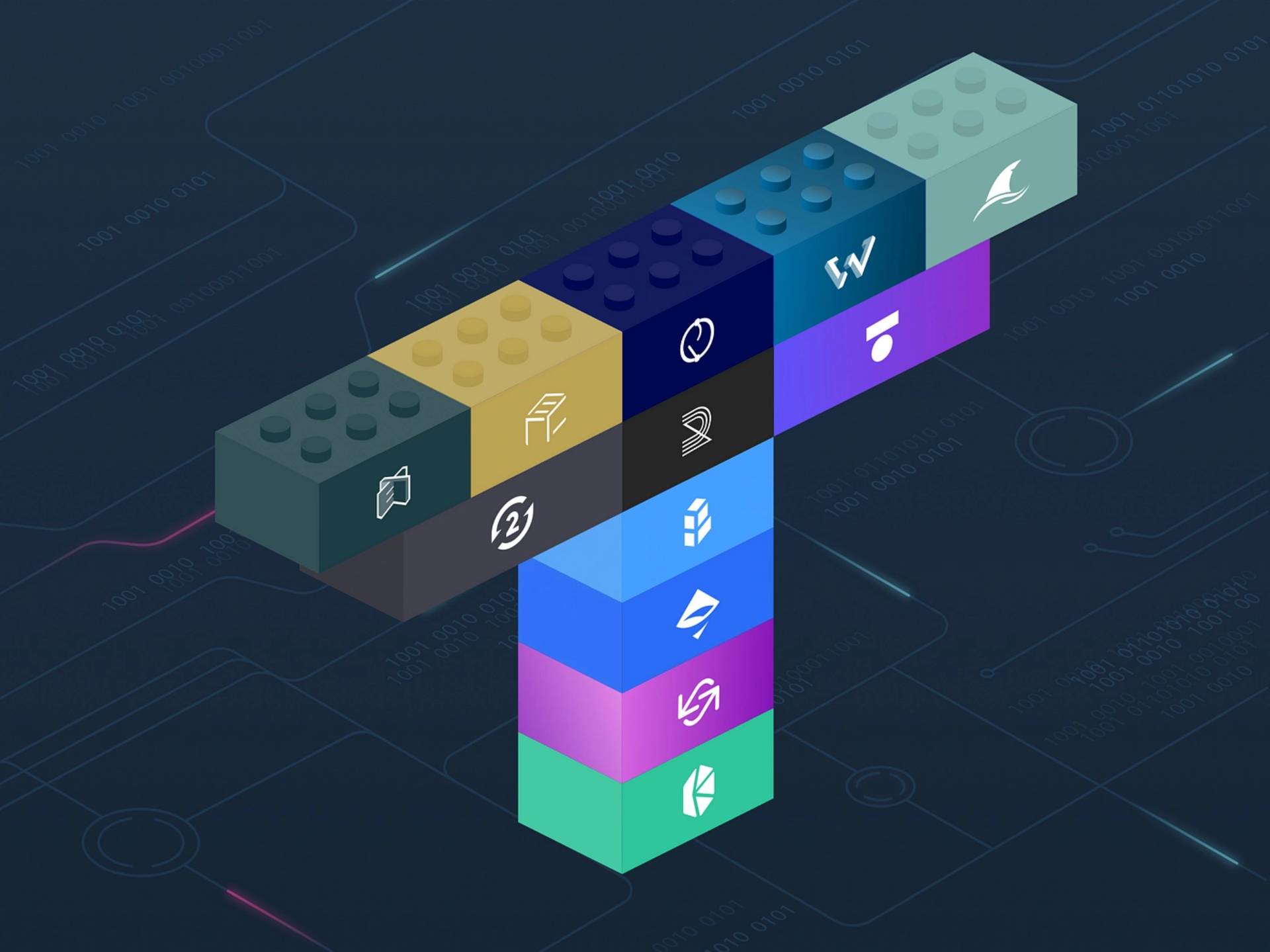
Money Legos is a composability concept that describes the ability of different decentralized finance (DeFi) protocols to interact and function together in a variety of ways, using composable building blocks such as protocols and tokens that can be combined permissionlessly to create new decentralized applications (dApps). They allow different DeFi protocols to interact and function together as part of a larger system, so developers can stack existing components instead of building every feature from scratch.[1][7][2]
Money Legos make it possible to route assets through multiple protocols in a single workflow, improving capital efficiency and accelerating experimentation with new financial products. The same composability also introduces systemic risk, because a failure in one protocol can spread to others that depend on it through shared tokens, collateral, or integrations.[7][2]
Overview
The Money Legos concept describes DeFi platforms and tokens as "Lego blocks," each providing a specific financial function—such as lending, borrowing, swapping, or issuing stablecoins—that can be permissionlessly combined into new multi-function protocols. Because these components are open-source smart contracts, developers can reuse and stack them rather than rebuild core primitives, which improves capital efficiency and speeds up innovation across the ecosystem.[3][7]
Most Money Lego activity originated on Ethereum and has expanded to its layer 2 networks and alternative smart-contract chains, where similar composable primitives are deployed. The same interconnectedness that makes DeFi flexible also creates systemic risk: if one protocol, collateral asset, or bridge is compromised, it can trigger cascading failures in other protocols that rely on it.[2][8]
Composability Concept
In systems design, composability refers to the property of individual components that can be selected, combined, and reused in different arrangements to build more complex systems without changing the underlying parts. Highly composable systems expose clear interfaces and predictable behaviors, allowing developers to assemble new applications by connecting existing modules rather than redesigning them from scratch.[8]
In DeFi, composability describes how protocols and tokens function as interoperable building blocks that can be stacked permissionlessly, such as combining lending markets, decentralized exchanges, and stablecoins into a single strategy or application.[7][8] A related idea is atomic composability, where multiple smart contract calls are bundled into a single blockchain transaction that either fully succeeds or fully reverts. This atomic behavior enables patterns such as flash loans and multi-step strategies, in which users or protocols can borrow, trade, and repay, or move collateral across platforms, within one transaction without leaving partially executed states.[7]
Money Legos in DeFi
Some examples of well-known money legos in DeFi are MakerDAO, Curve, Compound, Synthetix, Yearn, Sushi, and other protocols that can be stacked together in different combinations. Newer building blocks include liquid staking tokens such as stETH and cross-chain bridges or messaging layers, which let Money Legos interact across multiple blockchains rather than only on a single network.[8]
MakerDAO
MakerDAO is an Ethereum-based DeFi platform that allows anyone to create a vault and receive DAI, a highly composable stablecoin, as debt against digital asset collateral. Over time, MakerDAO has expanded beyond early collateral types such as ETH, BAT, and USDC to support a diversified set of on-chain assets, subject to governance-defined risk parameters. DAI, which is minted on the MakerDAO platform, is integrated into a wide range of decentralized applications (dApps), including Curve and Uniswap, where it can be used for trading, lending, liquidity provision, and other DeFi strategies.[3][5]
Curve
Curve, an automated market maker (AMM), focuses on low-slippage liquidity pools of closely correlated assets, such as different wrapped versions of the same token or groups of stablecoins. Its design makes it a key Money Lego for efficient stablecoin and wrapped-asset swaps, and it incorporates protocols like Synthetix and Yearn into its ecosystem to maximize incentives for liquidity providers. Some Curve pool assets include wBTC, tBTC, and various stablecoins, which can then be used as collateral, yield-bearing positions, or building blocks in other DeFi protocols.[5]
Compound
Compound is a DeFi money market protocol that lets users supply assets to earn interest and borrow against their deposits, making it a reusable lending and borrowing Lego. The platform is designed so that both borrowers and lenders can earn a yield from their holdings, with interest rates set algorithmically by supply and demand for each supported cryptocurrency. Developers can integrate Compound’s markets into other protocols, where users may take out collateralized loans in any asset offered by Compound or supply liquidity and receive interest-bearing tokens that can themselves be used in additional DeFi strategies.[3][6]
Aave
Aave is a DeFi lending protocol that allows users to lend and borrow ETH and ERC-20 tokens permissionlessly, with newer Aave markets such as v3 deployed on multiple chains and layer 2 networks in addition to Ethereum. Aave integrates with many DeFi protocols and issues flash loans that rely on atomic composability, allowing users or integrated applications to borrow and repay within a single transaction. Flash loans are used for profit-maximizing strategies such as collateral swapping, arbitrage, and complex refinancing, as well as for managing risk in other protocols. Stablecoins like DAI on the Aave platform can be exchanged for aDAI, a token that accumulates interest while deposited and can sometimes be reused as collateral or liquidity elsewhere in DeFi.[4][5]
Synthetix
Synthetix is a liquidity protocol that creates synthetic assets, known as "synths." Its native token, SNX, can be used to mint synths of assets, including the following: [5]
- Digital assets such as BTC, ETH, etc
- Fiats such as USD, AUD, etc
- Precious metals such as gold
- Stocks such as TSLA
Synthetix employs Chainlink oracles to obtain accurate price feeds and leverages the composable nature of DeFi protocols. This allows for synths to be swapped with zero slippage, even for large quantities of BTC or ETH, using Curve, and for synth positions to be integrated into other DeFi strategies such as lending, liquidity provision, or structured products.[4]
Across these and other Money Legos, composability introduces several risks and limitations. Smart contract vulnerabilities, oracle failures, and bridge exploits can affect not only a single protocol but also any stacked strategies that depend on it, increasing systemic risk as more layers are added.[2][8] To mitigate these risks, developers and communities use measures such as independent audits, bug bounties, conservative collateral and risk parameters, and gradual integration of new assets or cross-chain connections before they become core building blocks in wider DeFi stacks.[8]