Dolphin Network
Dolphin Network is a decentralized AI network that connects users seeking AI computing resources with GPU operators providing available hardware. It supports distributed AI inference, web scraping, and model development through a peer-to-pool network architecture and incorporates the POD token into its network economy. [7]
概述
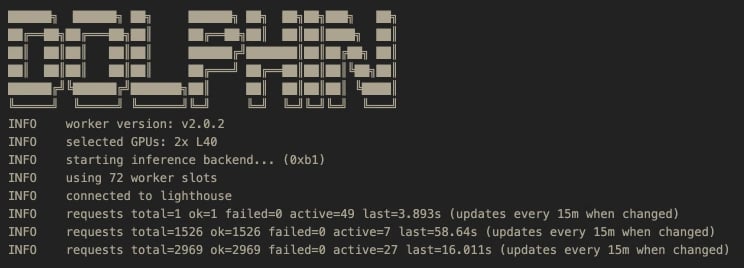
Dolphin is a decentralized AI network that connects users seeking AI computing resources with GPU operators providing available hardware. The project originated as an AI research initiative focused on fine-tuned versions of open-source language models and transitioned to a decentralized network model in 2026. Its architecture uses a peer-to-pool system to distribute AI inference across participating GPUs, with a verification mechanism designed to confirm that network nodes are running the models they report. Dolphin has developed fine-tuned versions of models including Llama, Mistral, Gemma, and Qwen, with different variants supporting uncensored responses, role-playing applications, and adjustable alignment settings. The network has also been used to provide AI inference for Venice.ai and incorporates the POD token within its ecosystem. [1] [7]
功能
AI Models
Dolphin develops a range of AI models based on open-source language models, with different variants designed for different levels of alignment, role-playing, and user control. The Dolphin X1 series is designed to operate without the default content restrictions applied to many aligned models, while retaining the capabilities of its underlying models, with versions including Dolphin X1 8B based on Llama 3.1 8B and Dolphin X1 405B based on Llama-3.1-Tulu-3-405B. Dolphin RP models are intended for creative writing and role-playing applications, while Dolphin S1 models allow users to adjust the level of alignment through request-time settings. Other models in the lineup include Dolphin Mistral 24B Venice Edition, trained on Mistral Small 24B, and Dolphin Yi 34B, trained on Yi 1.5 34B. Dolphin has also published information about training its 405B model using a single B200 GPU node, and its 8B and 24B models are available through its chat interface and Telegram bot. [4] [7]
Distributed Web Scraping
Dolphin Network includes CPU-based web scraping nodes that use the network’s peer-to-pool architecture to distribute web crawling and data retrieval across participating devices. Users can run scraper software on desktop computers or laptops, allowing nodes to load webpages, execute JavaScript, extract content, and return structured data for downstream processing. The nodes use residential internet connections, which can provide geographic distribution and access to region-specific content, while their browser environments support dynamic websites and single-page applications. A Lighthouse router assigns scraping tasks based on factors such as location, connection quality, and node availability, while captured data is processed locally before being sent to the network’s data pipeline. Scraping activity runs in an isolated browser environment separate from the operator’s personal browsing data, cookies, and credentials, and node rewards are based on factors including bandwidth, completed tasks, reliability, and uptime. [7]
Deep Research

Dolphin Deep Research combines Dolphin’s distributed web scraping network with the Tongyi-DeepResearch model to provide automated research workflows. When a user submits a query, the system can discover sources across the web through geographically distributed nodes, render and collect content from dynamic webpages, and process the retrieved material before passing it to the research model. Tongyi-DeepResearch then performs multiple stages of research, including planning, iterative searching, reading, synthesis, and cross-checking, before producing outputs such as summaries, comparisons, timelines, and evidence-based responses. Dolphin’s web chat, Telegram and Discord bots, and API can also detect URLs in user messages, retrieve and process the linked webpage, and provide its contents to the AI model as contextual information. The underlying scraping network can additionally support applications such as web monitoring, regional data collection, AI training data gathering, market research, news aggregation, and distributed uptime monitoring. [7]
Node Identity Verification
Dolphin Network uses several mechanisms to verify the identity and integrity of nodes participating in its decentralized AI network. Node software is distributed as encrypted and digitally signed binaries, with signature checks preventing modified versions from joining the network, while code obfuscation adds another layer against unauthorized modification. Approved AI models are represented by manifests specifying expected tokenizers and serving configurations, with file checksums and sampled runtime tests used to verify that nodes are serving the selected models. The network also monitors hardware identifiers and utilization metrics to verify that inference is being performed on the reported hardware and to help prevent duplicated or spoofed node instances.
Dolphin also uses randomly sampled inference validation and cryptoeconomic bonds to evaluate node behavior after deployment. Validators compare sampled outputs and tokenization data against expected model behavior and monitor performance metrics such as tokens per second and latency, while nodes that repeatedly fail checks can be flagged, suspended, or banned. Node operators can additionally bond staked POD to their accounts as collateral, receiving a reward multiplier in exchange for accepting the possibility of having the bond slashed following confirmed malicious activity. Users can report potentially incorrect responses for additional review, and validators who identify confirmed violations can receive rewards for contributing to network security. Inference consumers can choose whether to use the broader node network or restrict requests to nodes operated by bonded accounts. [7]
POD
POD is the native token of the Dolphin Network and is used across the network’s provider, staking, and security mechanisms. GPU providers earn POD for completing inference and other protocol work, while node operators can be required to bond POD as collateral against malicious or incorrect behavior. Users can stake POD to receive xPOD, an auto-compounding token that incorporates the effects of network buybacks and provides access to daily AI generation credits. Dolphin states that 100% of revenue from inference and API fees is used to purchase POD on the open market, linking token buybacks to network usage. The token therefore connects the network’s economic activities, with inference revenue funding buybacks and POD being distributed to participants who provide computing resources or contribute to network security. [6]
代币经济学
POD has a total supply of 500M tokens and has the following allocation: [6]
- Treasury: 42.93%
- Team: 25%
- Seed: 23.52%
- Uniswap v4 Pool: 8.55%
合作伙伴
- Crusoe Cloud
- Akash
- Lazarus AI
- Cerebras
- Andreessen Horowitz